no direction home

Compass Camera c1937

Toronto. The c1937 sub miniature camera called the Compass is designed in the UK and made in Switzerland. It uses 35 mm film (cut or roll) in a full frame format.

The design is the opposite of the 35mm camera made by Leitz. The Leica is a utilitarian design and fits the hand comfortably. Any added functions like stereo, filters, closeups, levels, panorama aids etc. require accessories. On the other hand,  the Compass is complex to use since all these common accessories are built-in and demand a heavy learning curve.

NB: The title of this post is a line from Bob Dylan’s 1965 single “Like a Rolling Stone” which I have on the album “Highway 61 Revisited” from the same year.

Posted in camera | Tagged , , , , , | Comments Off on no direction home

clock work cameras

a 1996 re-creation of a panoramic photograph using a Cirkut camera

Toronto. Panoramic photographs were popular early to mid last century. Group shots were often the subject of panoramics. Various ways were used to create images with one extra long side – mostly horizontal but occasionally vertical.

Cameras could be steady and their lens and shutter rotated from side to side (eg Kodak Panoram series). Or both camera and film could be rotated (eg Cirkut). A prank that was possible with the rather slow rotating Cirkut camera was to appear twice in a photograph. Someone on the far edge of the group once recorded had time to run quickly in back and appear once again on the far side!

When computers of suitable power came along, a series of overlapping stills could be stitched together to create a panoramic photo. Modern day smart phones simply have an option to create panoramas as you carefully rotate either side to side or up and down following an arrow on the smart phone screen.

Posted in camera | Tagged , , , | Comments Off on clock work cameras

a far wider point of view

Photography at Length

Toronto. Even before Photography there were painted mural panoramas. With the advent of the art of photography various cameras were created to create the super wide angle  panoramas.

My mother had a panorama photograph of her and her first sister taken in 1928 by a photographer in Kitchener. The panorama recorded all the students and teachers at the King Edward (Burton Avenue) School in Allandale. I made a half dozen phots of the parts of the school panorama including the centre portion.

Brian Polden in the UK wrote a 500+ page book called “Photography at Length” The authentic History of Panoramic Cameras. It was published August 2019 by a UK firm “The Bardwell Press“. Journal editor Bob Lansdale assisted the author and confirmed the Canadian content. This brief review was included in the mailing of the current journal issue (45-3).

Posted in book | Tagged , , , | Comments Off on a far wider point of view

wow – movies

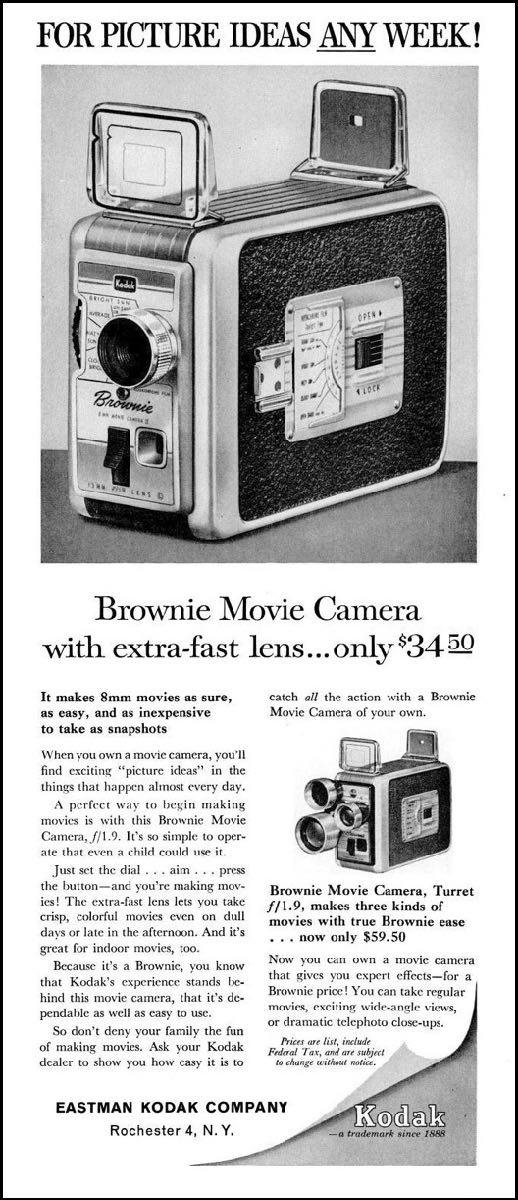
Kodak Brownie Movie Camera ad c1960

Toronto. 8mm home movies were all the rage over a half century ago. Fuelled by cheap equipment, fast lenses, and colour film, movie gear was one dimension of a push for a share of the blossoming post war amateur market.

Not only content to earn sales income from colour film, Kodak entered the 8mm market offering low cost cameras and gear. With well known brands in Kodak and Brownie, the mighty company embraced a future where every camera sold was another market for Kodak’s money-maker:  film.

This 1960 ad from Life magazine (April 11, 1960, p 67) is typical of the ads bought by marketeers in their push for a segment of the burgeoning home movie market.

My father-in-law was using a Brownie like this one to record his vacation trips. But by the time I married, the movie fad had faded for him and I only remember the one movie of his trip out west. My thanks to George Dunbar for this piece of history.

Posted in camera | Tagged , , , , , | Comments Off on wow – movies

stoned

Stonehenge in 1875

Toronto. Stonehenge, that ancient rock pile in south England was and is a mystery. The stones align to let through the sun on the summer and winter solstice (longest and shortest day each year). This month, the BBC news for Wiltshire reported the possibly earliest photograph of Stonehenge – an 1875 family outing by the Routh family. BBC shows this photo plus others.

The missing detail in the sky of this 1875 photo confirms that it is an orthochromatc image – cannot record evenly across the spectrum. Such a sensitive medium would record the blue sky and cloud as black on the negative, and white on a positive image.

This photograph is another reminder of the importance of our art in recording historical times. Note that the outing is not by motor car in 1875, but by horse and wagon! My thanks to long time friend and PHSC member Russ Forfar (of Kominek Camera Repair fame).

Posted in photos | Tagged , , , | Comments Off on stoned

PHSC News for December 2019

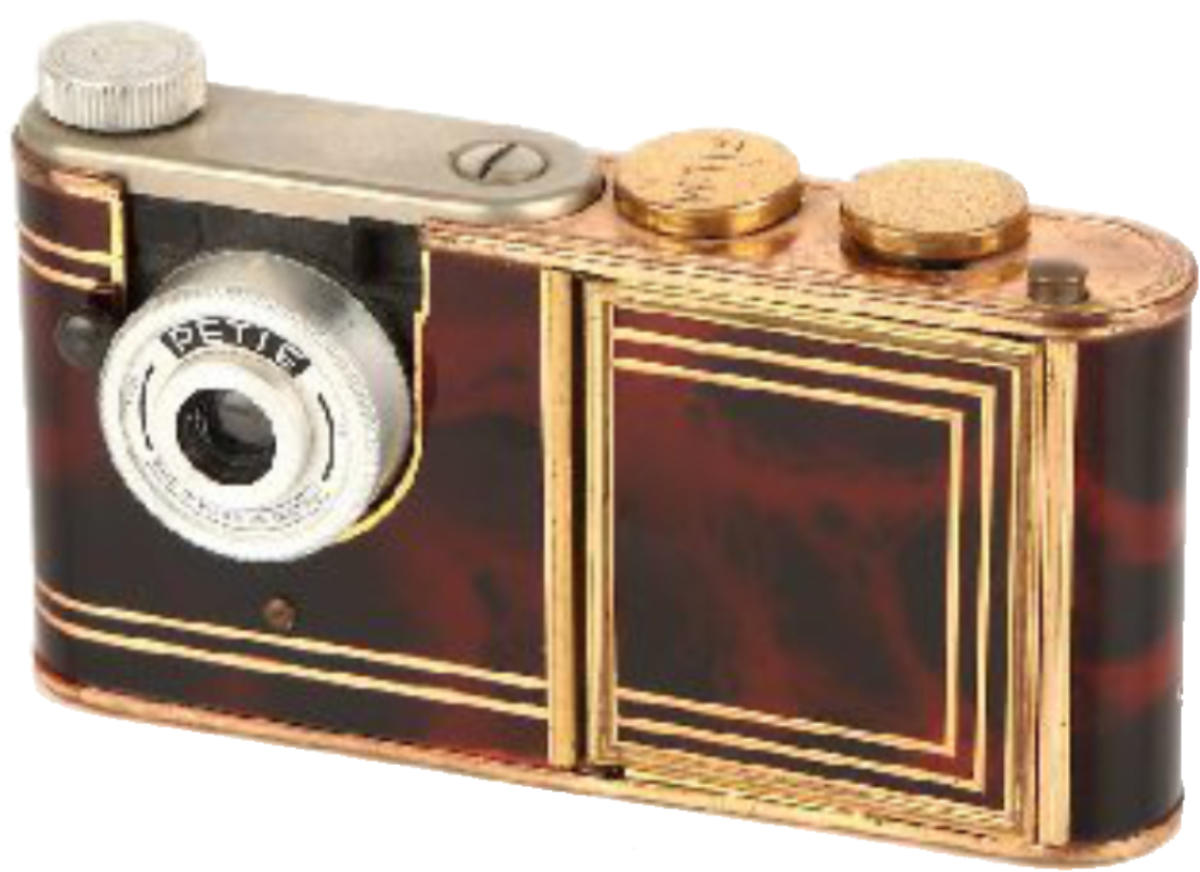
Petie Mini Camera ensemble

Toronto. Hear the bells? It’s Christmas time again and editor Pushchak has used a holiday theme  for her year end publication. What? You didn’t get a personal copy? Drop me a line and I will add you to our list. You can show Newsletter on the subject line, if you wish – no other text is needed.

This issue begins with a teary Christmas, captured by a Georgia photographer followed by a notice for our Annual Show and Tell (and more) meeting.

Photo Book 101 covers a Norwegian photographer (shades of Cindy Sherman!) followed by a review of the “Pursuit of Venus [infected]” exhibition. The Toronto File discusses the issue of pedestrian fatalities and hearing.

This month’s Equipment Review covers the venerable Olympus Trip 35 and the flexibility of manual focusing. Web Links, PHSC Events, and the Vi and Dot columns follow. Dot reminisces to Vi about the time (1934) when Hollywood embraced cellophane as a fashion material. Cue the Classifieds column and its a wrap for this year – fade to black.

Posted in newsletter | Tagged , , , , , | Comments Off on PHSC News for December 2019

close to the vest

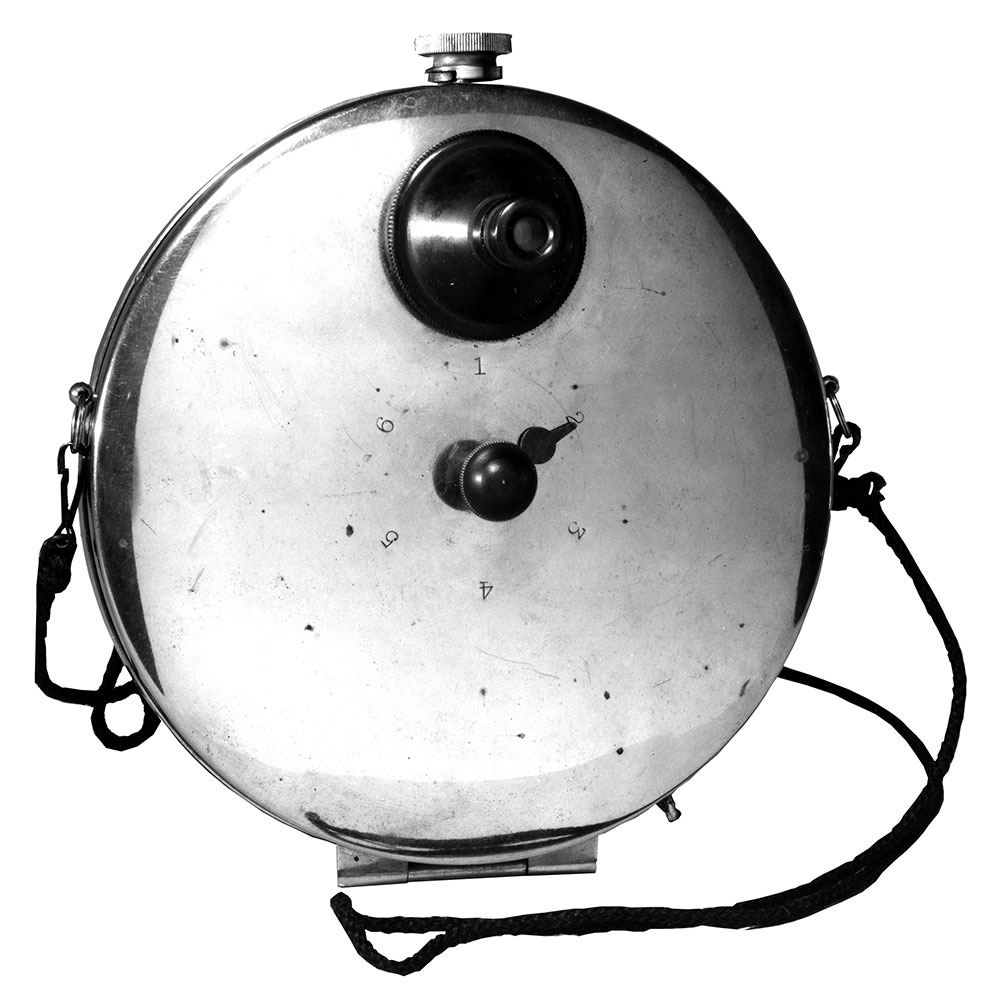
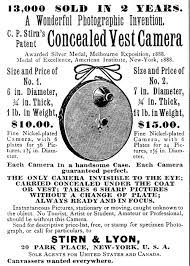
C P Stirn Vest Camera c1886

Toronto. People have always been fascinated with “unusual“,  “spy” and “detective“cameras. We had a C.  Stirn vest camera on the block for the Walter Shean auction in the spring of 2003. Prior to that, there was an ad printed in our journal (06-2), page 3, dated July/August 1980.

The tiny camera was designed to fit behind a vest with the lens acting as one button and the glass-plate control as a second. Six round images could be taken on a single round glass-plate. An auxiliary box had a thread for a tripod.

Journal editor Lansdale added some Canadian content. Bob writes, “John Connon (360 degree pan camera inventor) while in New York was working for Stirn and company to try to get his panorama camera on the market,  became an agent for the Stirn camera in Canada.  His father tried to use it covering a trial and was arrested for trying to take a photograph.

“Stirn came up with the Wonder camera (and stole the patent) to update and replace the Connon pan camera with a simpler system that would appeal to the amateur…, They went bankrupt and nothing became of efforts…..”


Posted in camera | Tagged , , , | Comments Off on close to the vest

Annual Show and Tell meeting Dec 18, 2019

PHSC Show and Tell
this month!

Toronto.As we quickly push on to Christmas and the holidays, its our annual Show and Tell session. Our Toronto meeting date is December 18th this month. Click on the poster at left for details. (Thanks to Sonja for this delightful poster – coming shortly in the December PHSC News newsletter).

Bring you favourite collectible bit of photographica and tell us all about it! Camera, lens, photo, poster, etc., etc.

There is a gift exchange AND a silent auction too!

The public is always welcome. Go to our Programs page for times and directions.

Posted in program | Tagged , , , , | Comments Off on Annual Show and Tell meeting Dec 18, 2019

a head for photography

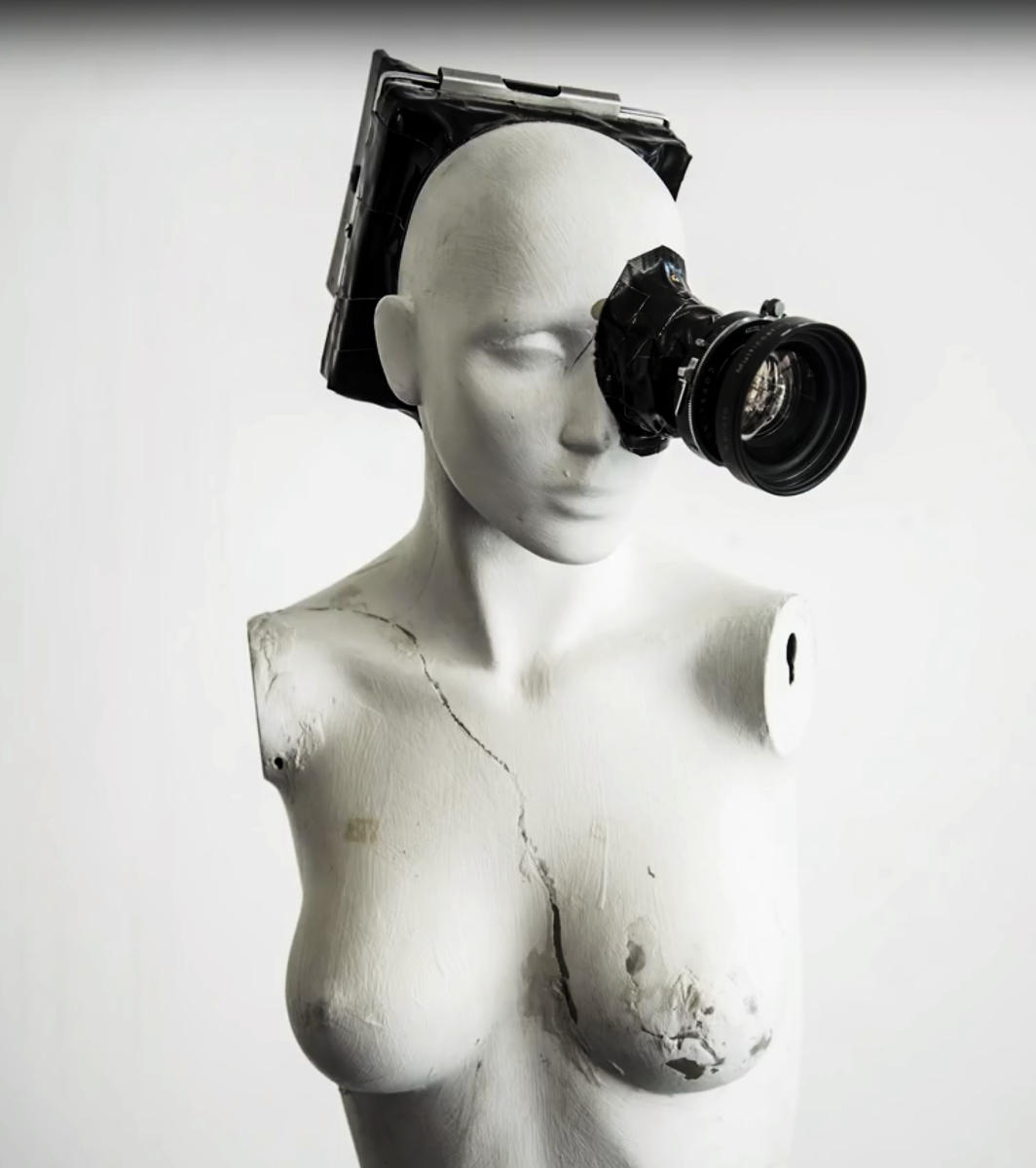
Mannequin Camera – Brendan Barry

Toronto. My friend George Dunbar sometimes finds the most unusual things as he pursues his research into photographic history. This one is a recent topic he spotted.

ILFORD has a film series called ILFORD Inspires. This one is titled Brendan Barry: The Camera Maker. Brendan’s Mannequin Camera is just one of a wild series of home-made cameras covered by this short film.

Brendan’s a UK teacher of photography. The many cameras he makes are used to teach the  principles of photography.Using a Caravan Camera, he takes photos as paper negatives directly on Ilford photographic paper.

As you may remember, Ilford is famous for B&W chemistry and materials. The paper negative is used to make a positive contact print. The film shows Brendan and some of his students using various cameras along with Ilford materials. Take a look at making photos back in the days  before digital.


Posted in people | Tagged , , , , | Comments Off on a head for photography

bye bye flashbulb guy

LIFE ads in March 1960 offer two ways to shoot low light scenes

Toronto. The 1960s were pretty much the last decade for flashbulbs. They weren’t killed by fast Polaroid film as the Polaroid ad implies, but by cheap electronic flash. The electronic flash was pricier up front, but in use, it was cheap and convenient compared with using flashbulbs.

Polaroid with its high speed films and wink lights was  always a niche mark to most photographers and wanna-bees. The two 1960 LIFE ads offer alternative ways to capture scenes in low light. For a while, Polaroid medical products and its positive/negative film for professionals with larger format cameras, became popular.

Thanks to my friend George Dunbar for sourcing these ads that magazines offered in that bygone time before electronic flash and then digital technology eliminated both flashbulbs and Polaroid.

Posted in processes | Tagged , , | Comments Off on bye bye flashbulb guy