the best camera is …

smart phone add-on lenses by

Toronto. … the one you have with you. And today more and more it means the one in your smart phone, a gadget so handy it seldom leaves your side.

To improve the modern smart phone’s single fixed lens camera even more, a company called Olloclip makes clip-on auxiliary lenses to make the built-in lens appear to have a shorter or longer focal length.

AppleInsider recently posted this article on the updated auxiliary lenses. Have a read – if you don’t yet use a smart phone, one of your children or grandchildren do!

AppleInsider is one of the blogs I regularly read for information on Apple and its products and apps. I have a few film cameras like my Leica M4, and a couple of digital cameras but my iPod Touch (a smart phone sans phone capability) is always with me.


Posted in lens | Tagged , , | Comments Off on the best camera is …

metal spiders and close-up photography

Herbie

Toronto. I bought Herbie over a half century ago in this fair city. Herbie is a lucky Danish spider and once had a thread from its tummy for hanging it vertically.

Spider legs (and filaments) were also used in photography. The filaments acted as a fine focussing cross in fancy gadgets such as those that joined a camera body to a microscope.

On the other hand, spider legs once allowed rangefinder cameras to frame and focus small objects down to life-size (1:1). Leitz made and sold many varieties that took advantage of the 5cm and 3.5cm lenses. The design allowed extension tubes to adjust the camera to lens distance while the legs of the spider device set the lens to object distance and framed the area captured. Some could be used with either a screw mount or bayonet mount camera; others were limited to one lens mount design.

Even booklets and brochures that showed how to use these marvellous gadgets, complete with various tables.

Posted in camera | Tagged , , , , , , , , , | Comments Off on metal spiders and close-up photography

‘ave you met M. Pierre?

Angenieux R 11 28mm in an Exakta mount

Toronto. A year ago this past spring, I did a post on the unusual lenses of Monsieur Pierre Angenieux of Paris. Surprisingly, this Paris, France optical company is still in business. The company was founded in 1935 by M. Angenieux.

Angenieux was born in the summer of 1907, a few months before my own father. He went on to create wide angle lenses for SLRs, Zoom lenses, and cinema/video lenses. A few years before his death in 1998, Angenieux sold his company to the Thales Group. The company became Thales Angenieux and since 2013 has sponsored the Pierre Angenieux Excellens in Cinematography each year at Cannes to pay tribute to a Prominent Director of Photography.

Posted in lens | Tagged , , , | Comments Off on ‘ave you met M. Pierre?

digitization approaches to photographic albums

Daphne Yuen on digitizing Museum Photographic Albums

Toronto. PHSC Meeting, Wed, Nov 21 2018 at 7:00 pm
In the BURGUNDY ROOM of the Memorial Hall

 Digitization Approaches to Photographic Albums – Daphne Yuen

Daphne has explored the relationship between photography and object materiality as a central theme throughout her career. She has investigated how photography questions and interprets reality in her photographic practice and academic research. This talk on her thesis (summarized in issue 44-2 of the Photographic Canadiana) investigates the current digitization approaches to photographic albums.  Continue reading

Posted in activities | Tagged , , , , , , | Comments Off on digitization approaches to photographic albums

spoofing photographers

Press Photographer – George Goodman in LIFE

Toronto. The old LIFE magazine had a column titled “speaking of pictures”. In its June 22, 1953 edition, LIFE presented would-be photographer George Goodman in this column. Goodman’s claim to fame was the marvellous series of skits he shot portraying various categories of photographer.

For example, the Press photographer at left was patterned on Weegee (Arthur Felig), a well known character in NYC in the mid 1900s. You may recognize the others shown in his tongue in cheek series in this issue beginning on page 12.

In the preamble Goodman says to his interviewer that he wants to be a magazine photographer. Perhaps it didn’t come about. I could find no mention of this particular Goodman.

Thanks once again to George Dunbar for his patience in sourcing articles and old photos of interest to our members.

Posted in magazine | Tagged , , , | Comments Off on spoofing photographers

a century ago

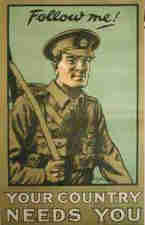
Toronto. A century ago the Great War in Europe was winding down. Many of my ancestors and those of my wife actively participated in the war. I can remember asking my grandfather Kelsey why he joined since he had a good job with the railway.

“It was easy”, he said. “My pay envelope had a notice printed on it, “Your country needs you more than we do”. And off he went to join the CEF. He was injured in Europe and while recovering in Surry he married and had his first daughter – my step-mother. His wife turned out to be a good snap-shooter with a simple Brownie camera. Emigrating with him in 1919,  she photographed and annotated pictures of her growing family. I had the pleasure of having her album for a time before I passed it along to her grand daughter who is the family genealogist on her side of the family.

On Tuesday, November 6th, the Kensington Market Historical Society will host a talk entitled “100 Years Ago: Kensington Market & the Great War“.


Posted in history | Tagged , , , | Comments Off on a century ago

photo-boo

Toronto. Happy Halloween every “body” 🙂 This studio shot is courtesy of my friend George Dunbar who emailed me this morning.

a photographer’s halloween

Posted in miscellaneous | Tagged , , , , | Comments Off on photo-boo

when home movies were analogue

Life May 11, 1953 ad for Kodak 8mm Movie gear

Toronto. Before fancy digital cameras and smartphones became common place, photography needed film. To address the blossoming interest in home movies (and to sell the special movie film) camera companies offered special movie cameras that accepted the tiny reels of 16mm film. 8mm film simply used half the reel. Once used, the reel was flipped and ready to shoot a second time.

During processing, the film was slit length wise and the two pieces cemented together to make a projector-ready 8mm film.  A version of film that was actually the correct width for projecting after processing as was the so called super-8 film with a larger frame size and fewer sprocket holes. Both 8mm versions and the super-8 version suffered from having a frame too small for decent resolution. The earliest version was actually an 8mm film requiring no slitting for projection.

During the great depression, Eastman marketed the first 8mm film to allow people to take movies a lower cost the the earlier 16mm version. 35mm had long been the purview of well heeled commercial movie studios. In 1953, Kodak advertised its economical full colour 8mm film system. This is an ad from the May 11, 1953 LIFE magazine (p 69) and is typical of the advertisements of that era.

Thanks once again to member George Dunbar who sourced this wonderful old advertisement and sent a note around via email. Ironically, we would not have been that interested when the PHSC was formed in 1974 since super-8 was still around at the time and no one even thought smartphones would become a reality. In fact “picture phones” of the period were clunky experimental devices demonstrated by AT&T and Bell Labs. A  short video mentions the “first” commercial radio station (KDKA in Pittsburg) in 1920 but forgets to mention Montreal’s XWA, later CFCF, licensed radio which began a year earlier in 1919 (when I was living in Montreal I often listened to CFCF).

Posted in history | Tagged , , , , , | Comments Off on when home movies were analogue

180 years later

Expo Daguerre
Nov 7, 2018

Toronto. 180 years ago next January the world received the astonishing news that Louis Daguerre had invented a way to capture an image using the power of the sun and more, he had given his method to the world for free (except in Britain which was the natural “enemy” of France – there a license fee was charged).

A dozen years later in 1851, Daguerre died and was buried in the Paris suburb of Bry-sur-Marne, a small village a few kilometres from Paris along the river Marne. Today the tiny village is known for the monument on Daguerre’s grave and one of his dioramas, active and housed in its church.

This village is hosting Arts and Lights, a celebration of Louis Daguerre over November 7th-18th, 2018. On Saturday, November 10th there is a series of lectures about the history of photography beginning at 10 am with our own Dr Mike Robinson of Toronto.

Posted in people | Tagged , , , , , , , , , , , | Comments Off on 180 years later

Emile Zola… photographer??

Emle Zola and friend

Toronto. Emile Zola lived from 1840 to 1902 when he died under curious circumstances. Zola was one of the most famous French authors of his era. He was notorious for his role in the Dreyfus affair. Like many well to do men of his time he had both a wife and a mistress. His mistress bore his two children and his barren widow allowed the children to take their father’s name.

The great actor Paul Muni played him in the famous 1937 Oscar winning biographical movie of his life and times. It wasn’t until May 11, 1953,  when LIFE (p155-164) ran an eight page article on Zola that we learned he was also considered a proficient photographer.

In the late 1800s, photography took root as a serious pastime once dry plates became common allowing the separation of the taking of photographs from the creation and development of sensitive media.  Last year, the Guardian ran an article on the auctioning of Zola’s personal collection.

Once again, a big thank you to my good friend George Dunbar for researching this remarkable story of Emile Zola in LIFE magazine some 65 years ago.

Posted in people | Tagged , , , , , , | Comments Off on Emile Zola… photographer??