number 33 by ZOOM

Toronto. We had another  small meeting. Celio was tied up with family matters, Wayne was unavailable, etc.  Clint masterfully organized our 33rd executive meeting via ZOOM  on Wednesday evening, January 4th, 2023. (Felix (not shown), is our member attending the O3C meetings).
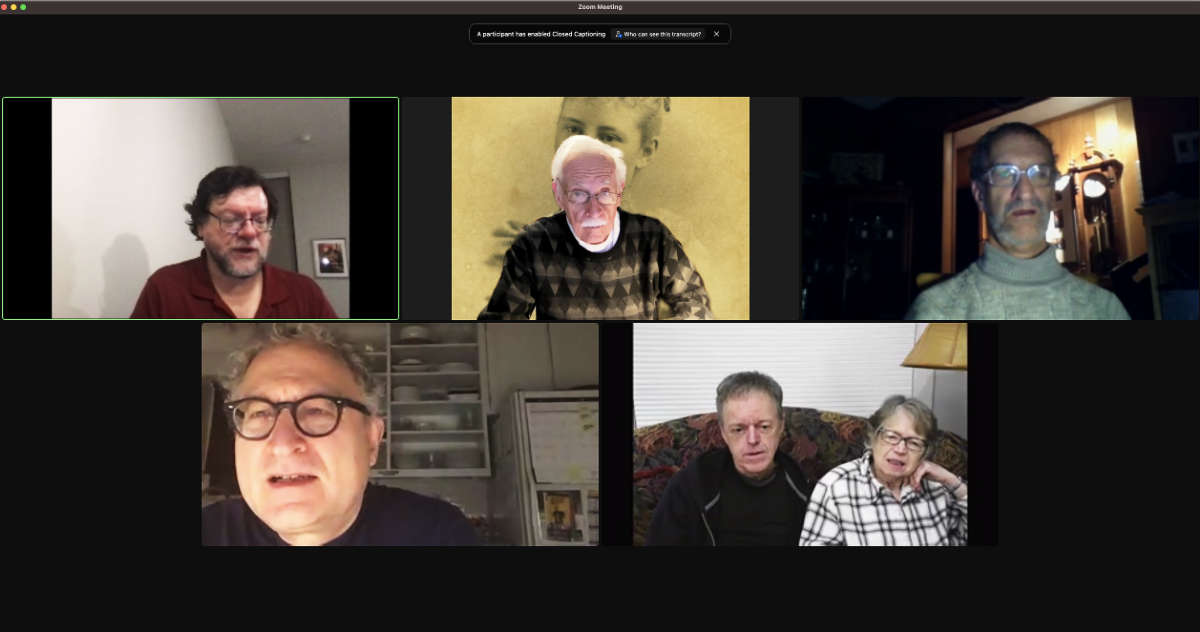
a modest group of executive members led by president Clint

Please note again that our Newsletter needs an editor. Meantime, Journal co-editor, David Bridge will send out a brief notice this month. If you would like a personal copy but haven’t joined up as yet, just drop me a note at news@phsc.ca.

As I mentioned, our membership secretary was unavailable but previously summarized our membership numbers as little changed since the October, 2022 report.

The monthly meeting this month (January) will be a talk by member Lorne Shields instead of Cassie Stiles. We will hear Ms Stiles at a later date. Lorne’s talk will be advertised here and on MaiChimp in a few days.

Our latest auction was held on December 17th. It was well received – an SRO event with all 80 chairs filled with enthusiastic bidders. The success of the auction has overwhelmed us. That and the holiday season has somewhat delayed cheques.

Our latest journal was out as a pdf file shortly before year end and the next issue (due this quarter) is underway using the newest version of Affinity Publisher.

Like I have said many times, “Have a great winter and let’s hope the seventh wave of COVID-19 and its restrictions are very modest at best!”.

Posted in activities | Tagged , | Comments Off on number 33 by ZOOM

discovering photo history

cover shot of a 1909 magazine devoted to photography.

Toronto. Our photo historian, George Dunbar, found another interesting site in his pursuit of photographic history through old magazine articles and advertisements. The site includes many issues of an early 1900s magazine called “Photographic Topics”.

George writes, “Some great, old photo magazines available here [on the HathiTrust Digital Library].”

HathiTrust describes itself as,”Founded in 2008, HathiTrust is a not-for-profit collaborative of academic and research libraries preserving 17+ million digitized items. HathiTrust offers reading access to the fullest extent allowable by U.S. copyright law, computational access to the entire corpus for scholarly research, and other emerging services based on the combined collection.

“HathiTrust members steward the collection — the largest set of digitized books managed by academic and research libraries — under the aims of scholarly, not corporate, interests.”

Posted in history | Tagged , , , , | Comments Off on discovering photo history

the dangers of random sparks

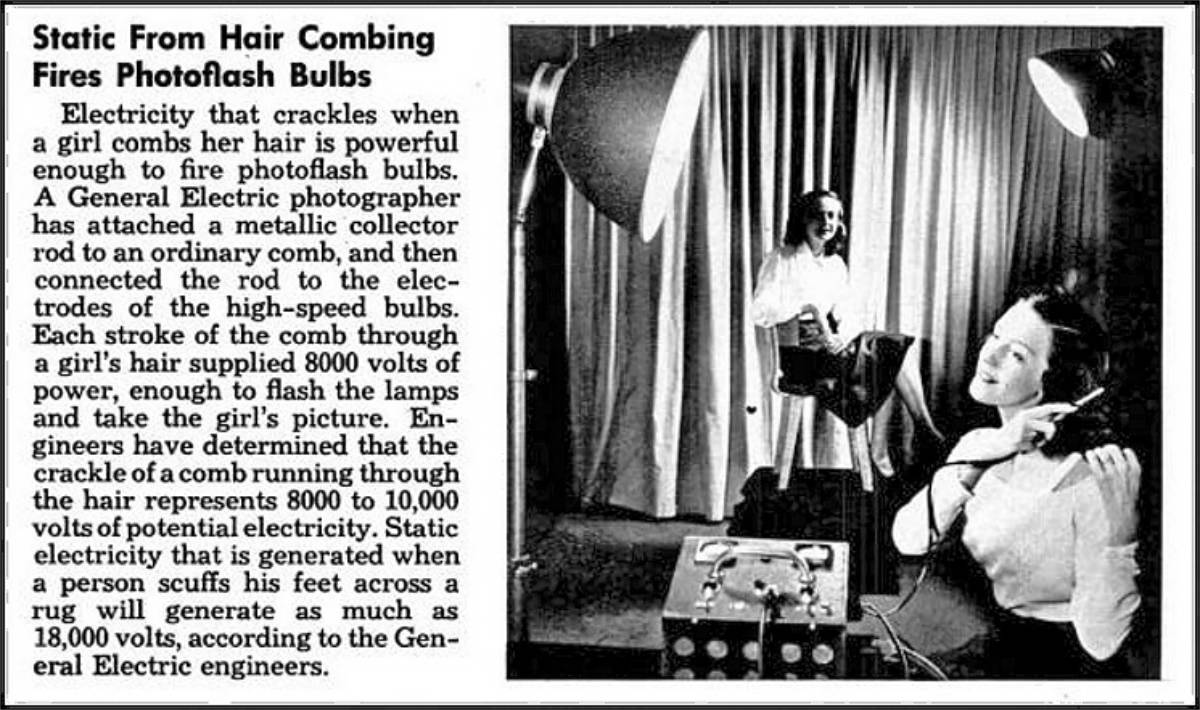
March 1949 article on static buildup from hair

Toronto. As a youth, I once took a winter course and stayed at the King Edward in downtown Toronto. My leather soles scraped along the corridor carpets building up a spectacular static discharge when I came close to metal – like the room’s door knob. I soon learned to hold a metal key and let it discharge the static buildup harmlessly.

Years later we had a guest speaker who reminisced about his best photos, noting how one was memorable also because the flash bulb he went to insert in the holder suddenly went off in his hand causing a serious burn. Like any good photographer, he soldiered on and got his photograph.

My good friend and fellow PHSC member, George Dunbar, came across an article in the March, 1949 issue of Popular Mechanics, which prompted this post.

Posted in history | Tagged , , | Comments Off on the dangers of random sparks

everything old …

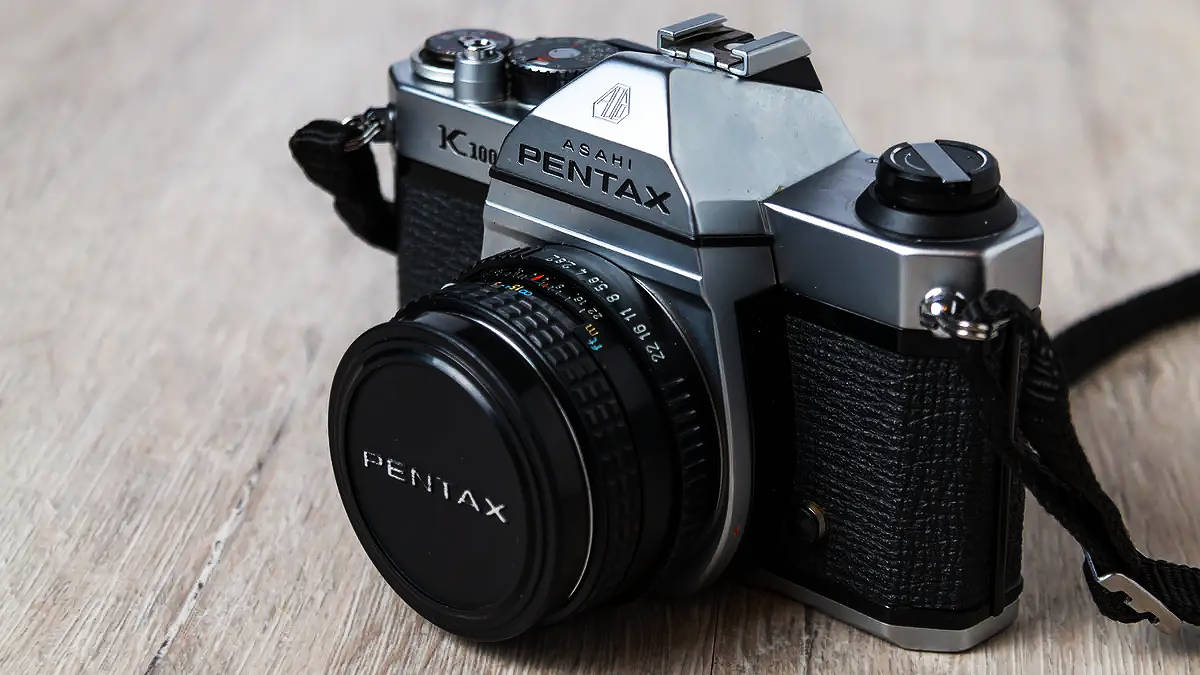
remember the Pentax K1000? – Image is courtesy of Zigmar Stein/Shutterstock.com

Toronto. …is new again.  We owe a big thanks to treasurer John Morden for suggesting this article on a planned renaissance of Pentax film cameras by Ricoh.

Many of us can remember the Pentax line (Ricoh uses the Pentax name on a line of digital cameras) and the photographs taken with Pentax film cameras over the years.

We were thrilled with the advent of digital technology and its progression to speed, clarity, and ubiquity. Some of us did not see the impact the digital era would have on existing technologies like film and film cameras.

It is exciting for those who favour the “je ne  sais quoi” of film prints and doggedly continue to use the film cameras and films (our events often have film cameras and films on hand). Some use a hybrid approach – shoot with film then scan the processed negatives to make digital corrections and printing.

Posted in camera | Tagged , , | Comments Off on everything old …

brave new camera

ad in an American trade journal for the original Leica camera

Toronto. In the 1920s after losing the great war (WW1), Germany suffered a massive bout of inflation and depression. The Ernst Leitz optical house in Wetzlar had mainly made microscopes, objectives, eye pieces, accessories, and the occasional other optical item – like a field camera and rangefinders.

The decision forced on the tiny family business by the crushing inflation of the 1920s was whether to lay off staff or expand its product line. Ernst Leitz himself decided to manufacture Oskar Barnack‘s camera to keep his staff occupied. The tiny camera was christened the “Leica” or LEItz CAmera.

Marketing began in the mid 1920s. The original Leica had a fixed 5cm lens, miniature focal plane shutter, viewfinder,  and a separate rangefinder. The camera was all metal with a sturdy gutta percha coating on the body. It used movie film to make the 24mm x 36mm (1″ x 1.5″) negatives and introduced the idea of a small negative enlarged to make a big print.

A few years later, the entire world crashed into a nearly decade long deep depression. By the mid 1930s, the minicam craze was a world-wide phenomenon and the Leica proved to be very successful for Leitz (minicams caught the mighty Zeiss-Ikon group by surprise and seeing the success of the Leica, it reacted with the Contax line of cameras and lenses).

Note. The title of this post is a riff on Aldous Huxley‘s 1932 book titled, “Brave New World“.

Posted in history | Tagged , , , , , | Comments Off on brave new camera

the flying Dutchman

Toronto. We at the PHSC wish you one and all peace, prosperity, and good health in the coming year of 2023. We associate New Year’s with a party. This one took place over 60 years ago! Back then Bill was the life of the party – this photo was taken indoors with an Exakta VX IIa and a flash.

Posted in history | Tagged , , , | Comments Off on the flying Dutchman

spiking it

LAC print of dignitaries adding ‘the last spike’ in 1885 in BC

Toronto. When I was in high school , I enjoyed playing volleyball and (briefly) announcing.  It is fitting that on the last year of the day we feature an historical event – placing ‘the last spike’ on the CPR line in BC.

We are a very large country geographically, and rather small population-wise. One concession demanded by BC was to be linked by rail to the east within Canada before they agreed to join the Dominion.   Pierre Berton wrote about the 5 years spent building the CPR line west to BC in his book. “The Last Spike“.

The event was guided by an American steeped in railroads – Willian van Horne.Van Horne and family moved to Montreal to guide this massive undertaking by the CPR. Van Horne lived the rest of his life in Montreal where a street was named ‘Van Horne’ in his honour.

The photographs used are courtesy of the LAC and we thank our good friend and fellow photo history enthusiast, George Dunbar for bring them to our attention.

Posted in history | Tagged , , , , , , | Comments Off on spiking it

all sizes great and small

the base for the post title

Toronto. From the beginning of analogue (a sensitive coating and emulsion) most cameras were the size of their negative (or in some cases the positive) as prints (if needed) were contact printed. Glass Plate and film sizes varied to match the camera.

The media was generally  from 16″ x 20″ down. In one case a size of 18″ x 22″ is mentioned. For minicams, the film fell to 2 1/4″ or even 1″ (35mm). When subminiature cameras were introduced the size dropped even further. Prints were also affected. Some tiny positives were inserted into Stanhope jewellery in the 1800s and during WW2, a full page was shrunk to the size of a period on a page making critical information appear quite innoculous.

The odd enlarger emerged in the 19th century allowing photographs taken wth smaller cameras to be enlarged. With the advent of the minicam revolution in the 20th century, enlargers became mandatory so the small negatives could be printed larger and easily viewed.

When digital technology arrived, the ‘film’ was replaced by a sensor and printing was done by computer making the old fashioned enlarger a thing of the past. As time passed sensors increased in resolution, size, and sensitivity while noise continued to decrease.

Note. The post title is a riff on a book by James Herriot, “All Creatures Great and Small“. Years ago, I bought a collection of Herriot’s books which were a charming read. The stories were about rural veterinary practice in England around and before WW2. The author was actually a vet trained in his native Glasgow and practicing in the Yorkshire dales.

Posted in history | Tagged , , , , , | Comments Off on all sizes great and small

self portrait

a chameleon is featured in this 74 year old article

Toronto. Self portraits or selfies are simple today with the ubiquitous front facing smart phone camera. Before that, a self timer allowed self portraits with  tripod mounted cameras.

But how can you capture something that is over in the blink of an eye – like the tongue of a lizard capturing a tasty morsel? An article in the October, 1948 issue of Popular Mechanics shows one way this can be accomplished.

The stand the chameleon is on looks very much like a bit of Leitz hardware to me.

Thank you to good friend and fellow PHSC member, George Dunbar, for spotting this article of by gone days and sharing it with others who cherish photographic history.


Posted in history | Tagged , , , , | Comments Off on self portrait

a new tourist in town

ad for the new Kodak Tourist camera in September, 1948

Toronto. Kodak made many cameras from the in expensive box cameras to the high end minicams. Some of their folders settled into the mid-range with a better, faster lens and a multi-setting flash synchronized leaf shutter.

An example with a few extras is the new 1948 Tourist camera, A camera that folded to become compact but used 620 film and had some minicam features. This September, 1948 advertisement announced its availability and features. The camera was offered with less features at a lower cost. It was replaced by the Tourist II with even more features.

The camera addressed amateurs who believed in Kodak quality and wanted a reasonably priced camera with added features.

Thanks to the diligence and hospitality of good friend George Dunbar, we can share this find. The ad reminds us of those times past when Kodak stood for quality in film cameras and their range was very wide indeed!


Posted in history | Tagged , , | Comments Off on a new tourist in town