the Lomography Konstruktor F camera
Toronto. The folks at Lomography have had lots of success with various cameras, lenses and films for those enthusiasts into film technology (and our pre-COVID [and hopefully soon post] days of fairs and auctions). Shown at left is the Lomography Konstruktor F, as featured on page 1 of our newsletter this month (top right).
The first month of 2021 is rapidly fading as the energetic rollout of COVID-19 vaccines brings a bit of sunshine and hope that all the COVID related restrictions will end so we can get on with life.
However, for January 2021, our editor extraordinaire, Sonja Pushchak, and her team have composed this latest issue of PHSC News (20-07). Take a moment now to read the articles in this issue and ease your personal troubles and cares!
Page 1 begins this issue with Robo Thoughts – a Hollywood remake of the 1985 film “Weird Science“, updated to 2014 and re-titled “Ex Machina“. Next, in place of the usual PHSC Presents, is an essay on dancing robots from Boston Dynamics. Page 3 covers dance art from NYC in “The Incredible Art of We Ourselves“; while page 4 explains how photo advertisements and toys became photo art. Page 5 discusses the recent disturbing anti-democratic antics in Washington by mobs egged on by Trump. David does his tongue-in-cheek Equipment Review, this time on darkroom timers around the era of the GraLab classic, followed by a page of links to the Washington incident, Nikon’s factory move from Japan, and the Canadian works of Paul Strand (illustrated by Strand’s 1915 Wall Street photo, one of my favourites).
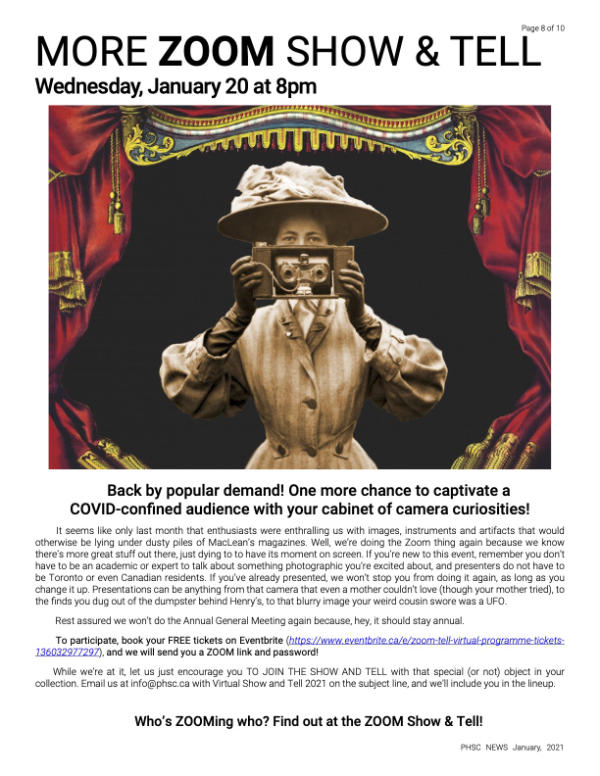
Page 8 features a poster on our forth-coming second S&T via ZOOM. NOTE: if you would like to present something, email me at info@phsc.ca with Virtual Show and Tell January 2021 on the subject line, and I’ll pass it on to Celio. I found out last month that ZOOM is better if you send any images/slides you plan to use directly to Celio so he can post them for all to see during your brief talk.
On page 9, Ivy & Izzy banter about “The Conceptual Burden of Being Chris Burden“. And we wrap up with the ever popular classifieds on page 10.
P.S. As usual, every link shown in the newsletter is a hot link just waiting for your click!
P.P.S. You can visit this issue by clicking here, or by g0ing to the menu item NEWSLETTER at the top of the page. There is a drop down menu that takes you to older issues dating back a couple of decades to the very beginning.