Alfred the editor

cover photo of the 1901 Camera Notes issued by the NYC Camera Club

Toronto. Any photo historian worth his salt knows about the great American photographer Alfred Stieglitz. In the late 1800s Stieglitz returned from Europe and settled again in NYC. He combined the two existing camera clubs in NYC and took over as editor of their magazine, Camera Notes to make the issues more relevant and to bring awareness to ‘fine art photography’.

There are many fine articles and fine art photographs in issues of this magazine after Stieglitz took it over. Take a look.

Our resident photo historian, George Dunbar writes, “Some interesting old photo publications here. [links to the same site as in the earlier post – repeated in this post for your convenience].

“This one [issue] has a note regarding Steichen’s early days…and some advertising from 1901.”

If you haven’t researched the original stories and ads, here is a great place to begin. Enjoy!


Posted in history | Tagged , , , , | Comments Off on Alfred the editor

APS – Jan 16th – Tintype demos

Tintype demos 7-9pm Jan 16, 2023

Toronto. Horst Herget spoke with us at a  monthly meeting before COVID-19 hit (September, 2019). And I recently received an email from him. In it, Horst writes:

January’s ALTERNATIVE PROCESS Social: Tintype demonstrations

“FEATURE: Horst will be demonstrating the wet plate process, from start to finish. His studio will be transformed into an open-air darkroom, allowing those in attendance to appreciate the intricacies of this photographic art.

“ALTERNATIVE PROCESS SOCIAL – APS: A get together to talk, ask questions, and share all things relating to alt photographic processes. All are welcomed.

“WHEN: Monday – January 16th, from 7 to 9pm.

“LOCATION: Daylight Studio @daylight_studio_toronto in Toronto: 28 Industrial Street (off Laird, south of Eglinton), M4G 1Y9, unit 222. The building is painted white, and the main entrance is located at the EAST end (look for the very large ENTRANCE SIGN on the corner of the building) with free parking available in the lot in front.

“TO ATTEND: All are welcome. Please RSVP. A $10 contribution is greatly appreciated.

“CORRESPONDENCE AND UPDATES: If you have question, please contact Horst at horst@horsth.ca or on Instagram @horst.wetplate.portrait.studio.

“FUTURE MEETUPS: APS is held on the third Monday of the month. [Please note that all future Instagram updates about APS will be posted to @horst.wetplate.portrait.studio.]

“ABOUT HORST: Horst Herget is a wet plate photographer based in Toronto. He has been working with this alternative process for over ten years. His day job is working as corporate photographer www.horstherget.com and is owner & operator of Daylight Studio Toronto, @daylight_studio_toronto.”

Posted in activities-other | Tagged , | Comments Off on APS – Jan 16th – Tintype demos

down to the life size

A Leitz BEOON for screw mount or bayonet (M) mount cameras and either a 5cm Elmar or 5cm Summicron

Toronto. Most 35mm film cameras limited close up subjects to a metre. The Leica M series with a Summicron could focus down to 20 inches. Most cameras used extension tubes or auxiliary lenses to capture subjects closer than a metre. Various frames were used to centre the subject and gauge the area in the photo.

When Leitz made the massive post war shift from the old screw mount cameras to the new bayonet mount series (M) they had a dilemma – how to accommodate both versions of camera during the transition period. For the spider legs, they simply made two versions of the extension tubes/leg supports.

Going 1:3 down to 1:1 (life size) Leitz came up with a very sturdy option using the Elmar bayonet (every Elmar had a bayonet to let the lens collapse). A special extension tube would let one use the lens head of either version of the 5cm Summicron lens. Viewing was done with the LVFOO 5x magnifier. Either camera would fit in place of the LVFOO (using the special 1mm ring adapter for the M series). The column height of the stand was adjusted to accommodate the various ratios.

The BEOON was carried in its catalogue from 1959 to 1970 before disappearing from the catalogue although still for sale for a few years. SLR cameras came along making such well engineered and elaborate accessories unnecessary.

Note. The title of the post is a riff on a line in Masefield’s poem, “Sea-Fever“.

Posted in camera | Tagged , , , , | Comments Off on down to the life size

PHSC presentation, January 18, 2023 – History of the Bicycle

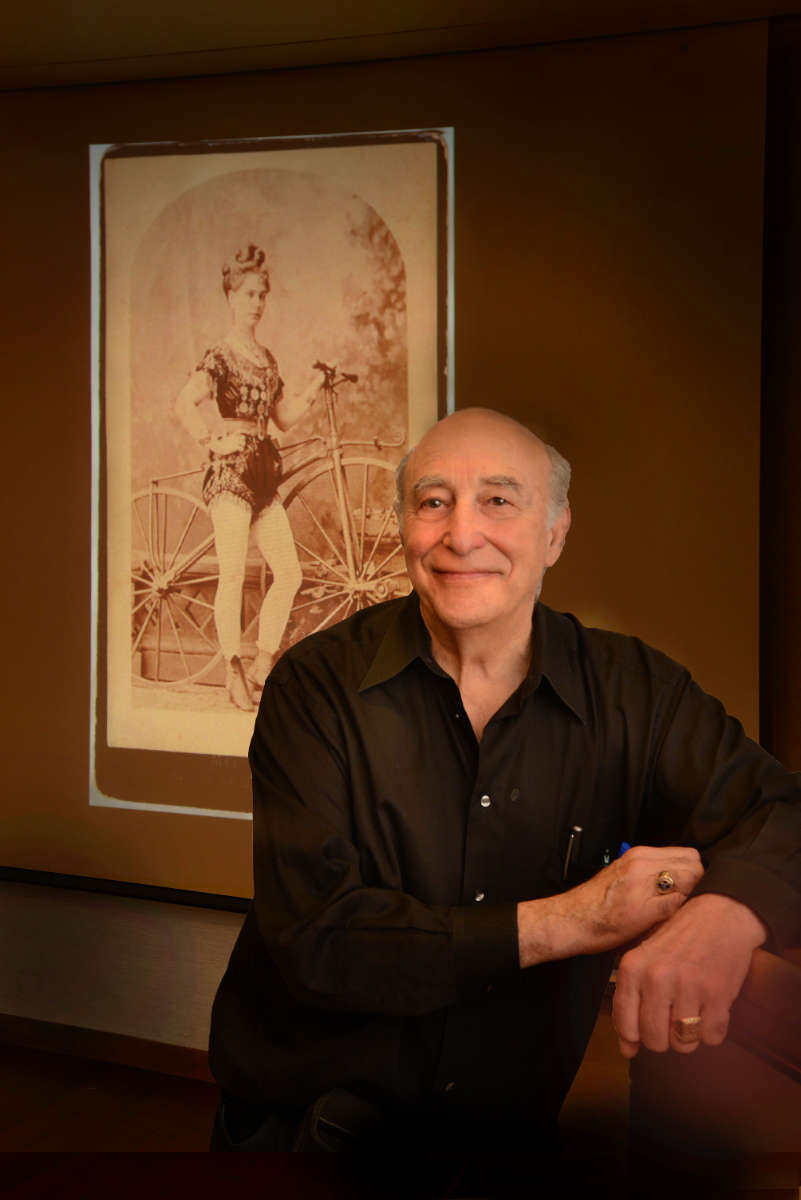
Lorne Shields on Bicycle History in photographs – photograph by the late Robert Lansdale

Toronto.Our January 18, 2023 presentation on ZOOM features member Lorne Shields on the History of the Bicycle – 1st 100 years, We welcome this experienced speaker and expert on bicycle history.

Lorne describes his talk as, “100 YEARS OF CYCLING’S HISTORY FROM 1820 TO 1920 AS CAPTURED THROUGH THE LENS OF THE CAMERA.

“SET OUT IN A CHRONOLOGICAL ORDER WHICH LED UP TO TODAY’S MODERN BICYCLE AS WE KNOW IT.

“SELECTED FROM HIS MOST RARE. HISTORIC, INTERESTING, IMPORTANT AND GRAPHICALLY APPEALING IMAGES.”

If you have’t heard Lorne before, you are in for a pleasant surprise. Here is a bit of background info.:”Lorne Shields, of Thornhill Ontario has been an avid collector and researcher of early bicycling history for some 55 years.  

Some of his collection has been displayed at such organizations as the Smithsonian Institution, the Royal Ontario Museum, Ingenium (Canada’s Science & Technology Museum), Cité des Sciences et de l’Industrie (museum) in St. Etienne, France.  His collection includes virtually every facet of early cycling photographica, ephemera and memorabilia as well as the cycles themselves.  

“Lorne’s specialty and passion is historic cycling photography.  He has given talks on early cycling photographica at various museums, historical societies, universities and symposia in Europe and North America.  A sampling of these venues include The Photographic Historical Society (America) at George Eastman House in Rochester, NY, the Photographic Historical Society of Canada on multiple occasions, the Michigan Photographic Society, the Bicycle Museum of America, Victoria College at the University of Toronto, The Ephemera Society of American in Greenwich Connecticut, Velorama at Nijmegen in The Netherlands and at Guildhall in the City of London, England. 

“His presentations are always crafted to the intended audience. This presentation will cover the history & development of the bicycle from 1820 to 1920. The images have been selected from the most historic, rarest, interesting, important and graphically appealing photographs in his collection.”

If you have any questions, please contact our programme director, Celio Barreto at program@phsc.ca.Reserve your space today at Eventbrite for this ONLINE presentation!.  Note: use the links in the text above, not in the jpeg of the poster (no live links in this jpeg).

Posted in program | Tagged , , | Comments Off on PHSC presentation, January 18, 2023 – History of the Bicycle

Gary is at it again …

Toronto. Our good friend, Gary Perry, sent a note the other day.

In the note Gary says, “Happy New Year! We are happy to announce our next Camerama Camera Show!

“Camerama Camera Show
“Sunday February 05th 2023
“Japanese Canadian Cultural Centre
6 Garamond Ct. Toronto  M3C 1Z5
Show Hours: 10am – 3pm
Entrance at the south side of the building.

“Vendor tables are available. Contact me for information.

“Regards, Gary Perry
Camerama Camera Show
905-550-7477”

CAMERAMA SHOW February 5, 2023

Note: See the post for October 29,2020 to see the source of the title.

Posted in activities-other | Tagged , , , , , , | Comments Off on Gary is at it again …

number 33 by ZOOM

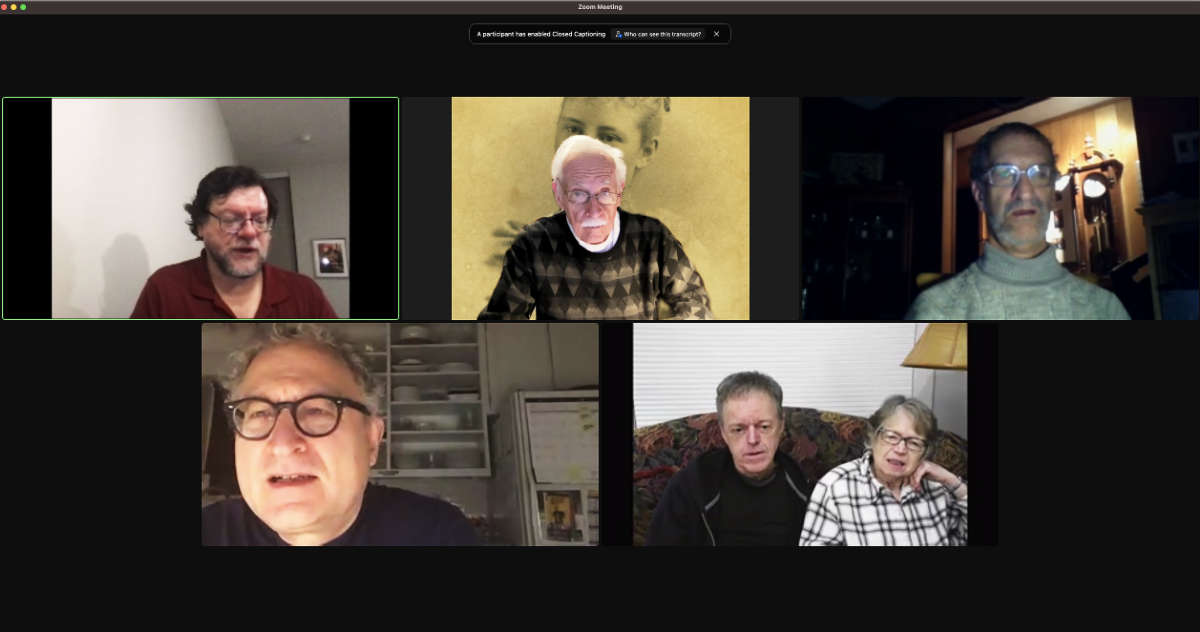
Toronto. We had another  small meeting. Celio was tied up with family matters, Wayne was unavailable, etc.  Clint masterfully organized our 33rd executive meeting via ZOOM  on Wednesday evening, January 4th, 2023. (Felix (not shown), is our member attending the O3C meetings).

a modest group of executive members led by president Clint

Please note again that our Newsletter needs an editor. Meantime, Journal co-editor, David Bridge will send out a brief notice this month. If you would like a personal copy but haven’t joined up as yet, just drop me a note at news@phsc.ca.

As I mentioned, our membership secretary was unavailable but previously summarized our membership numbers as little changed since the October, 2022 report.

The monthly meeting this month (January) will be a talk by member Lorne Shields instead of Cassie Stiles. We will hear Ms Stiles at a later date. Lorne’s talk will be advertised here and on MaiChimp in a few days.

Our latest auction was held on December 17th. It was well received – an SRO event with all 80 chairs filled with enthusiastic bidders. The success of the auction has overwhelmed us. That and the holiday season has somewhat delayed cheques.

Our latest journal was out as a pdf file shortly before year end and the next issue (due this quarter) is underway using the newest version of Affinity Publisher.

Like I have said many times, “Have a great winter and let’s hope the seventh wave of COVID-19 and its restrictions are very modest at best!”.

Posted in activities | Tagged , | Comments Off on number 33 by ZOOM

discovering photo history

cover shot of a 1909 magazine devoted to photography.

Toronto. Our photo historian, George Dunbar, found another interesting site in his pursuit of photographic history through old magazine articles and advertisements. The site includes many issues of an early 1900s magazine called “Photographic Topics”.

George writes, “Some great, old photo magazines available here [on the HathiTrust Digital Library].”

HathiTrust describes itself as,”Founded in 2008, HathiTrust is a not-for-profit collaborative of academic and research libraries preserving 17+ million digitized items. HathiTrust offers reading access to the fullest extent allowable by U.S. copyright law, computational access to the entire corpus for scholarly research, and other emerging services based on the combined collection.

“HathiTrust members steward the collection — the largest set of digitized books managed by academic and research libraries — under the aims of scholarly, not corporate, interests.”

Posted in history | Tagged , , , , | Comments Off on discovering photo history

the dangers of random sparks

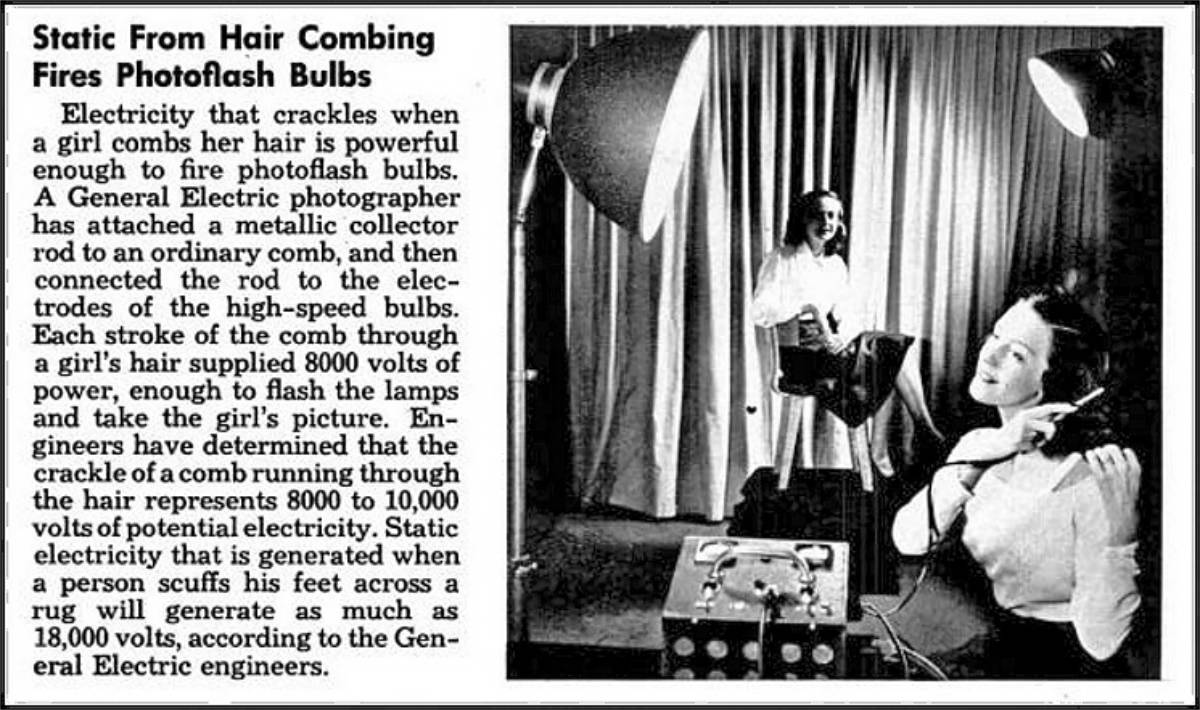
March 1949 article on static buildup from hair

Toronto. As a youth, I once took a winter course and stayed at the King Edward in downtown Toronto. My leather soles scraped along the corridor carpets building up a spectacular static discharge when I came close to metal – like the room’s door knob. I soon learned to hold a metal key and let it discharge the static buildup harmlessly.

Years later we had a guest speaker who reminisced about his best photos, noting how one was memorable also because the flash bulb he went to insert in the holder suddenly went off in his hand causing a serious burn. Like any good photographer, he soldiered on and got his photograph.

My good friend and fellow PHSC member, George Dunbar, came across an article in the March, 1949 issue of Popular Mechanics, which prompted this post.

Posted in history | Tagged , , | Comments Off on the dangers of random sparks

everything old …

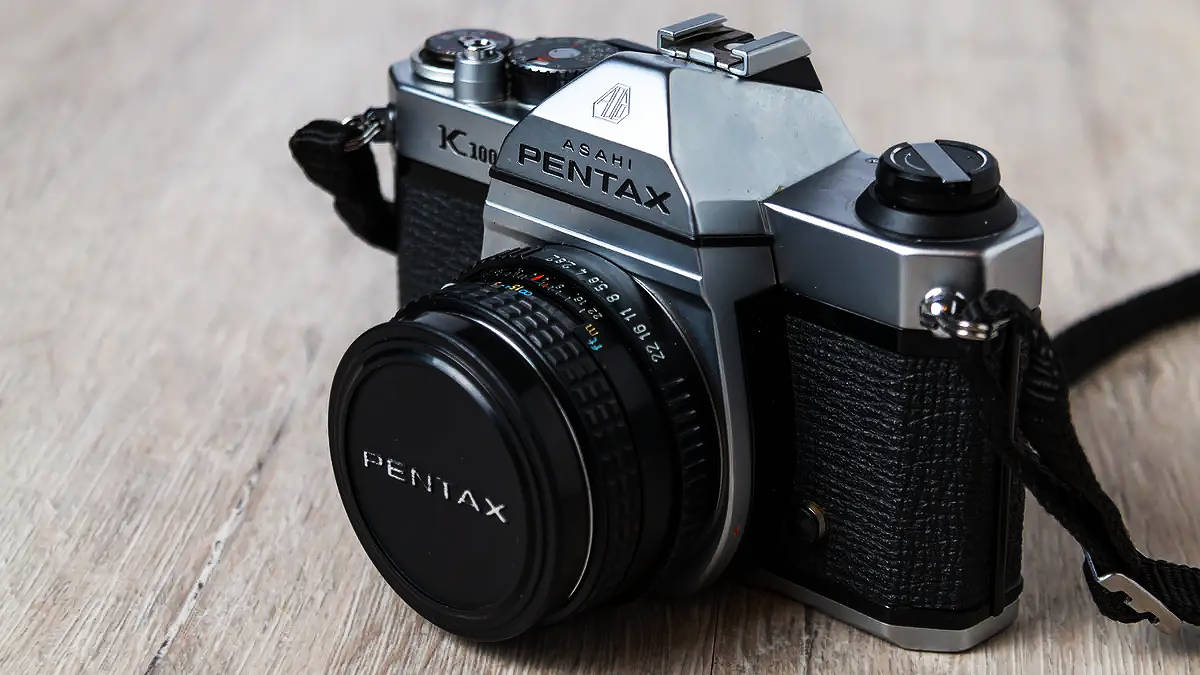
remember the Pentax K1000? – Image is courtesy of Zigmar Stein/Shutterstock.com

Toronto. …is new again.  We owe a big thanks to treasurer John Morden for suggesting this article on a planned renaissance of Pentax film cameras by Ricoh.

Many of us can remember the Pentax line (Ricoh uses the Pentax name on a line of digital cameras) and the photographs taken with Pentax film cameras over the years.

We were thrilled with the advent of digital technology and its progression to speed, clarity, and ubiquity. Some of us did not see the impact the digital era would have on existing technologies like film and film cameras.

It is exciting for those who favour the “je ne  sais quoi” of film prints and doggedly continue to use the film cameras and films (our events often have film cameras and films on hand). Some use a hybrid approach – shoot with film then scan the processed negatives to make digital corrections and printing.

Posted in camera | Tagged , , | Comments Off on everything old …

brave new camera

ad in an American trade journal for the original Leica camera

Toronto. In the 1920s after losing the great war (WW1), Germany suffered a massive bout of inflation and depression. The Ernst Leitz optical house in Wetzlar had mainly made microscopes, objectives, eye pieces, accessories, and the occasional other optical item – like a field camera and rangefinders.

The decision forced on the tiny family business by the crushing inflation of the 1920s was whether to lay off staff or expand its product line. Ernst Leitz himself decided to manufacture Oskar Barnack‘s camera to keep his staff occupied. The tiny camera was christened the “Leica” or LEItz CAmera.

Marketing began in the mid 1920s. The original Leica had a fixed 5cm lens, miniature focal plane shutter, viewfinder,  and a separate rangefinder. The camera was all metal with a sturdy gutta percha coating on the body. It used movie film to make the 24mm x 36mm (1″ x 1.5″) negatives and introduced the idea of a small negative enlarged to make a big print.

A few years later, the entire world crashed into a nearly decade long deep depression. By the mid 1930s, the minicam craze was a world-wide phenomenon and the Leica proved to be very successful for Leitz (minicams caught the mighty Zeiss-Ikon group by surprise and seeing the success of the Leica, it reacted with the Contax line of cameras and lenses).

Note. The title of this post is a riff on Aldous Huxley‘s 1932 book titled, “Brave New World“.

Posted in history | Tagged , , , , , | Comments Off on brave new camera