a KODAK moment

newly weds in Surry, England in WW1 (1917)

Toronto.  From the very beginning, the sine qua non of any portrait photographer or artist was capturing the very essence of his subject. Some images succeeded and some did not. The successes, such as the famous Karsh portrait of  Churchill, are recognized by all. The Karsh portrait shows clearly the English bulldog who refused to back down in WW2.

Here are newly weds in Cheam, Surry c1917 during the Great War (WW1). She was about 17; he was about 20. Have a look carefully and see if the photographer captured the ‘essence’s the young couple. While the portrait is lacking in many ways, it is meaningful to the future families of the couple. It was one of the very few of their personal photographs to survive the hectic world of the Great War.

The title above is a famous catch phrase in its own right. Kodak used the phrase in many advertisements to describe a photo taken with their products showing the excitement in the subject(s). I have no idea if the above portrait used any Kodak products.


Posted in history | Tagged , , , , , , , | Comments Off on a KODAK moment

marble nursery

On the Job: How Metro Works – Smith Monument – courtesy of George Dunbar

Toronto. Like all youths, we were very incorrect. When we passed a cemetery for example, it was called a ‘marble orchard’!

In response to a recent post on work photographs (workin’), my friend George Dunbar replied that he sent photographs over a period of time to the Star for articles about work in Toronto, ‘Your “workin’ ” column reminded me of a series (94 photos) I did for the Toronto Star 30 years ago. It was titled. “On the Job: How Metro Works.”‘

Contributions to a newspaper of the day is just one example of how photographers and photography contributed to local history. Years from now, newspaper archives will proudly display the photographs of the time alongside text.

To his email, George added a single photo. By chance the photo was about a cousin of ours and his family business! The business, Smith Monument Co Ltd, was illustrated by the massive inventory of marble ready for monuments or grave boundary markers. Many of the stones Smith used were from a quarry in Quebec. At Smith, the stones were selected, shaped, polished, and engraved as specified before being placed in the cemetery. Small world.

Posted in history | Tagged , , , | Comments Off on marble nursery

educating photographers

one of the first Exakta books I bought in 1958 (printed in 1955)

Toronto. In the days of film, many cameras came from Europe or Japan. Photographers used the information booklet that came with the camera – often written by folks definitely not use to English – for education. Photographers resorted to books for further education about their choice of camera, or for history, or for learning (development, enlarging, lighting, etc.), or for inspiration (photos or techniques by recognized professionals).

In time, books increased in cost – I took a course a decade ago at Humber. One text book alone cost me  $100 and was obsolete within a few years. I was shocked. Back in the 1960s at university we were up in arms over a small soft cover book deemed mandatory – it cost every student in that class $15.

Books on computers and applications hastened the fall. In a few years newer machines and software updates made those barely used books obsolete. Bookshops and aisles addressing computers and software rose up briefly, then disappeared into the past.

Old books and magazines give us insight into the processes and equipment our ancestors once used. As printed material disappears, we are losing a big  source of history. On the plus side, the internet gives us an ease of searches and an education by short videos – reading and comprehension of complex writing is not really needed.

Another interest I have is microscopes – mostly self-taught by reading very old books purchased at used bookshops both here and abroad (plus a few more recent books put together by other enthusiasts and collectors) … Books on microscopy are hard to find these days.

While books and magazines are still being written and printed, there is less and less choice as the digital era unfolds. Today, rather than buying numerous books and searching their indicies, photographers use the internet for information – both text and videos. But what about history??

Meantime, PHSC events (auctions, fairs, sales) often turn up photography books of historical interest. Drop in on our April 30th auction – you just may be able to give an old book a new home!


Posted in history | Tagged , , , , , , | Comments Off on educating photographers

through a computer darkly

the Abbott family – courtesy of the OGS

Toronto. Another past-time of mine is family genealogy. For over forty years now I have traced ancestors diligently. The other day the society received an email from the Ontario Genealogical Society (OGS) announcing its free online series for this month will focus on Black History in Ontario. Three separate dates and sessions are noted (free but with mandatory registration).

Please join in, especially if you have ancestors with black roots. Dr Julie Crooks was our guest speaker at the February 2018 Toronto meeting. Although the Wikipedia page above says she was born in London, England; she mentioned to me that she is from Ghana in Africa and was educated in England before emigrating here.

Once again, it is photography that lets us see how our ancestors looked and lived. Food for thought!

Note. This post title is a riff on the biblical phrase “Through a glass, darkly” from 1 Corinthians 13:12.

Posted in history | Tagged , , , | Comments Off on through a computer darkly

O to be in Long Branch …

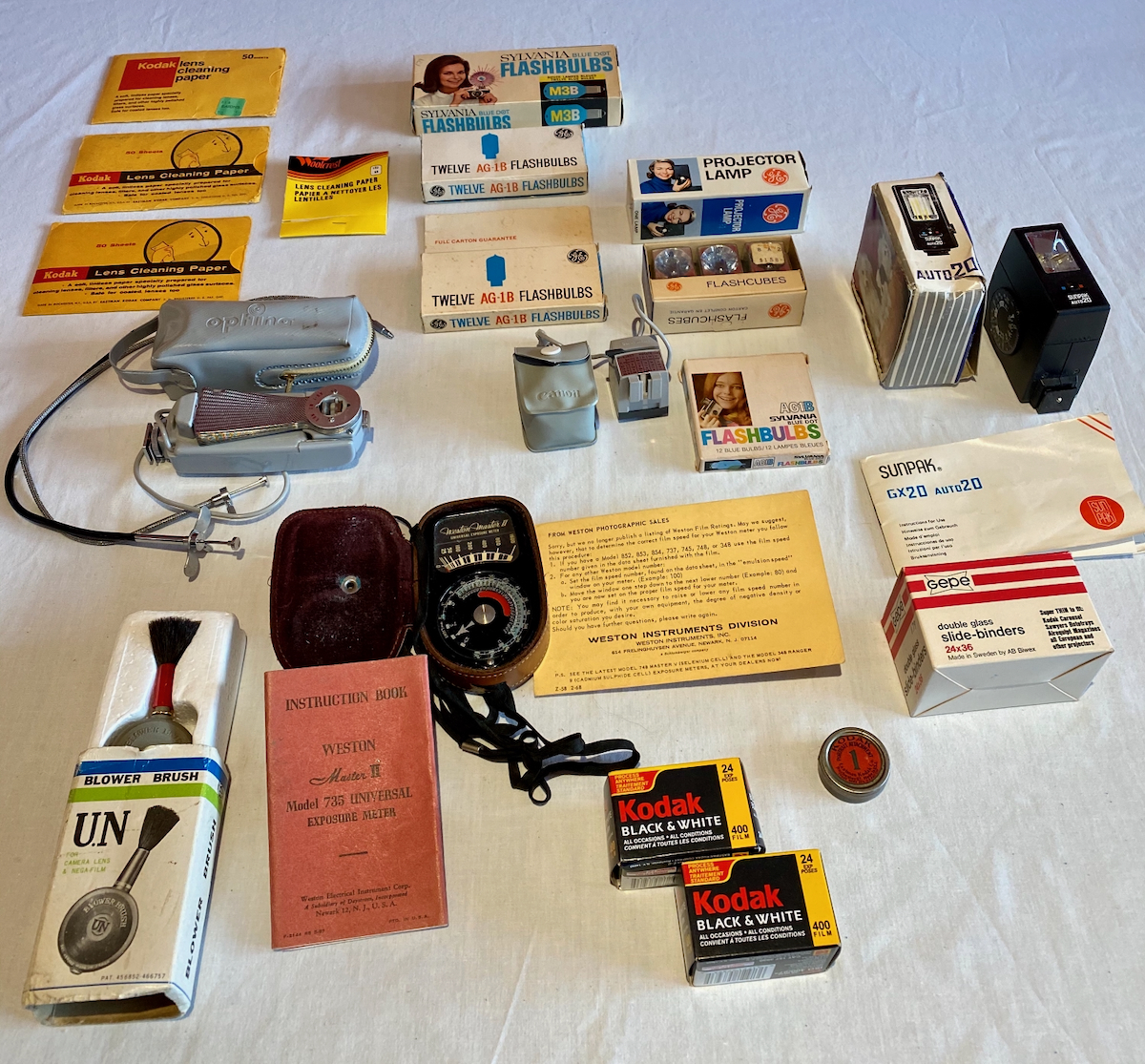
items from a previous auction (spring 2020)

Toronto. … now that April is there. Okay, enough Browning. We are fast approaching this spring’s PHSC Auction. The date is April 30th (Sunday), 2023 at the usual Legion Hall in Long Branch but at a slightly later time.

A poster went out some days back to all with active emails on our newsletter list at MailChimp. Send me a note at info@phsc.ca if you aren’t on the list but would like a copy of the poster and its more complete information.

I will do a post here with the details later this month. The event is noted on the right hand sidebar of this site.

Note. The title is a riff on a line in Robert Browning’s home sick poem, “Home Thoughts, from Abroad“. At the time Browning had left his native England and missed it as spring came along.

Posted in auction | Tagged , , , , , , | Comments Off on O to be in Long Branch …

landscapes, streetscapes, and history

streetscape in a small town c1908. location and photographer unknown.

Toronto. The old landscapes and streetscapes bring visions of history that no one can see in any other way. Years ago, at one of our fairs, I bought some glass plates from Marlene Cook.  Most of the exposed plates came in a paper wrapper annotated by the original owner.

One glass plate negative (reversed here and adjusted slightly for exposure and contrast)  was this street scene. The location and photographer go unnamed as does the full date, street, camera, etc.

The photographer does identify the date as sometime around 1908 – over a century ago. This seems right since the poles are telephone poles and the telephone by then was nearly three decades old – and there is no car in sight, but the street seems to have tire tracks (suggesting a small town where mobile technology hasn’t yet fully materialized). The multi-storey buildings suggest it is a street in a town rather than a village. The naked trees, muddy street, and little bits of snow say it’s early spring.

Being curious by nature, I enlarged a portion of the negative and to my surprise I saw two people in a small horse-drawn carriage plus a number of others using “shank’s pony” (that is, walking – my dad used this term when I was a kid). One large house even has fowl in the yard by the street.

Without the photographer taking this streetscape, we might have had little idea of how our ancestors lived. I bought the plate so I would have an example of exposed glass plates and ended up learning a bit about history.

Posted in history | Tagged , | Comments Off on landscapes, streetscapes, and history

gilding the lily

A whiz-bang flash gun was announced by Kodak for the 1952 market

Toronto. Post WW2, photography literally blossomed with new ideas. Flash bulbs became the rage for solving lighting problem allowing for snaps at night or indoors. Soon all cameras came wth flash synchronized shutters. Many included the soon to be ubiquitous flash gun – mostly connected to the side of the camera, or slid into the accessory shoe.

Some makers determined that the greatest need to ‘improve’ the flash gun was to solve the weak or old battery issue; allow off-camera capability; and provide a multi-flash capability. Kodak was no different. It came up with solutions for each in this one marvellous flash gun!

Many makers (including Kodak) solved the weak/old battery situation by switching to a higher voltage, lower current battery plus a suitably sized capacitor (condenser). The so called B-C flash guns simply took longer to charge as the battery weakened from use, making it possible to use the flash long after the battery’s terminal voltage faltered.

In practice, the battery ‘charged’ the capacitor which in turn ‘triggered’ the flash once a tiny pilot light indicated the capacitor was ‘fully charged’ and the shutter was released.

A cord between camera and flash gun allowed off camera use while other cords allowed multiple flash guns (and bulbs) to be used.

The advent of cheap electronic flash units within a decade spelled the end of flash bulbs – except for special occasions – like Polaroid consumer cameras, and inexpensive small cameras (their initial cost was much cheaper with flash bulbs – and infrequent use). Before a second decade passed, flash guns and flash bulbs all but disappeared from the consumer market when the built-in electronic flash era began.

A tip of the hat to my good friend and fellow PHSC member, George Dunbar, for discovering this January 1952 ad and sharing it with us.


Posted in history | Tagged , , , , , | Comments Off on gilding the lily

workin’

marble cutting saw at a small marble plant

Toronto. When it comes to photographs, we see very, very many portraits and landscapes, but relatively few of workplaces and workers. In time, the workplace photos, how we lived photos, street scenes etc. will grow in importance.

For every few dozen portrait or group photos I have, there is maybe one work photo. I remember one with builders (roofers?), another with geese and a two person cart drawn by a horse, etc. These photos are unique in telling how we worked and lived in times past.

The photo at top left is a small plant in an industrial mall that cut and polished marble slabs. We selected a desired colour suitable for our small bathroom. Once cut, the marble was cut again to hold a small sink. A decade late, the plant had disappeared – except for the few photos taken.


Posted in photos | Tagged , , | Comments Off on workin’

the big smoke in pix

Toronto as Community – front cover of the latest book by Vincenzo Pietropaolo in Toronto

Toronto. The Sales, Marketing & Editorial Assistant at Cormorant Books here in the city, Tiana Trudell, sent the society a note the other day announcing the imminent release of another book by PHSC member and speaker Vince Pietropaolo. The book, titled, “Toronto as Community: Fifty Years of Photographs by Vincenzo Pietropaolo; ISBN 978-1-77086-623-2 • Photography” Hits the bookstores this May. To kick off the sales, “An exhibit of Vincenzo’s work will be held at James Rottman Fine Art (Toronto) for the month of May”.

The news release says, “Toronto as Community represents more than fifty years of photography by Vincenzo Pietropaolo, ‘one of Canada’s pre-eminent documentary photographers’ (Canadian Geographic). The photographs are grouped around short essays that explore Pietropaolo’s particular interests and observations, often questions of social justice, which, in turn, inform the photographs themselves.

“This poetic portrayal of the city of Toronto documents the daily life of ordinary citizens, at work, at play, in celebration, in protest, and in mourning. The book includes images of many parks and natural areas and some of the city’s architecture.

“These images will invoke the reader’s sense of nostalgia, inviting reflection on the city that once was, how it became the city it is, and how it continues to develop and grow into a city of our imaginations.

“As the largest city in Canada and fourth largest in North America, Toronto has become one of the most ethnically diverse cities in the world, with citizens speaking some one hundred eighty languages, with more than fifty-two percent of its residents born outside of the country.

“Vincenzo Pietropaolo has been a dedicated chronicler of Toronto for more than fifty years. His attachment to the city and its people is demonstrated on every page of Toronto as Community. He was a city planner with the City of Toronto for over fifteen years before turning to photography full-time. His focus lies in social documentary photography and photojournalism, and his projects have taken him to many cities around the world. Pietropaolo is an award-winning photographer and has been deemed ‘one of Canada’s pre-eminent documentary photographers’ by Canadian Geographic Magazine. He collaborated with Jane Jacobs by providing photographs for an exhibition based on her seminal book, The Death and Life of Great American Cities. He and his partner live in Toronto, where they are avid urban farmers in their own backyard.”


Continue reading

Posted in book | Tagged , , , | Comments Off on the big smoke in pix

A is for Auction …

camera from the spring 2020 auction before COVID hit us all

Toronto. … B is for Bargain, C is for Collection, D is for Digital, E is for Excitement, F is for Film … and the alphabet goes on. One thing is for certain – you will enjoy the coming Auction by the PHSC whether you are a buyer, a seller, or both!

Our April 30th (SUNDAY) event is at the same place BUT at a slightly later time to allow the Hall to complete a previous event. A poster was released by our newsletter folk giving time details – send me a note at info@phsc.ca if you aren’t on our MailChimp list and want information before I post the details here.

Come along and enjoy the fun – you may find something worthy of your collection or user niche! Something to sell? Let Clint  know in advance (and send him photos). If your offerings are accepted, I will add them to a preview post on this site for you.

Posted in auction | Tagged , , , , , , , , | Comments Off on A is for Auction …