illustrating books, etc.

Still life in SAGE data transmission lab Montreal c1960

Toronto. Books, newspapers, and magazines were illustrated on occasion with lithographs or drawings transposed to engraved plates.

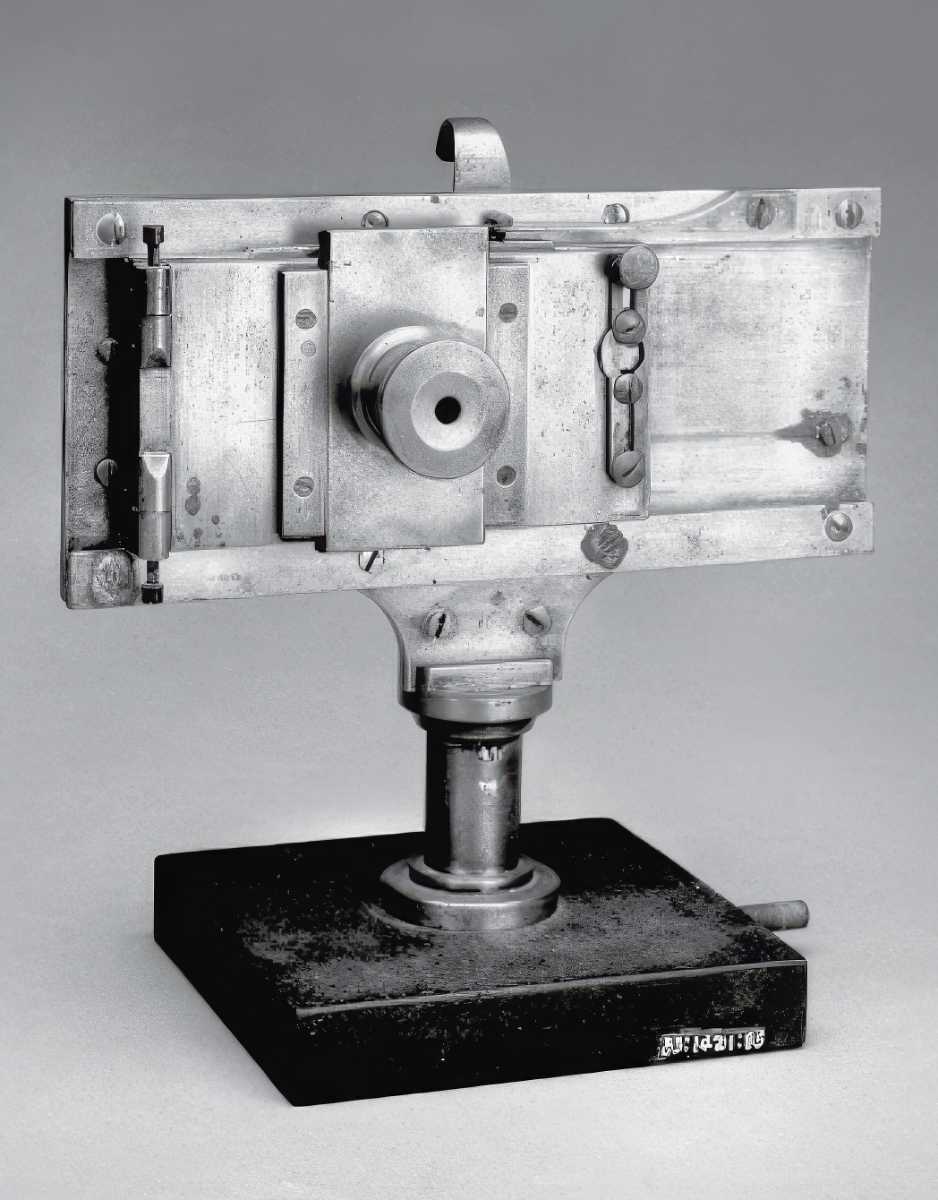
In the 1820s, there was considerable interest in capturing a scene by the effect of sunlight. A young Frenchman, Joseph Nicéphore Niépce, liked lithography but was not a good artist. In the 1820s Niépce tried to get the sunlight to expose a scene on metal, ready for engraving.

His process took many many hours of exposure. He collaborated with another Frenchman, Louis Daguerre who was also interested in capturing scened by sunlight as references for his dioramas. Daguerre and an English gentleman called Fox Talbot were finally successful in ‘permanently’ capturing scenes by sunlight with a few minutes of exposure. The pair independently discovered a way to ‘photograph’ a scene and announced their processes in January, 1839; one in France and the other in England.

Their discovery was a new art – photography. which was a sensation around the world. At first it did not help illustrate books in the way Niépce had hoped. Years later the half-tone process was successfully developed and changed the black and white of printing to the gray shades of a photograph and later did the same for colour photos (CMYK process).

A modern day book “print on demand” service (Wordzworth) has a very clear explanation of how books are illustrated in monotone or colour.

So when you see drawings, photographs and colour photographs in a printed product, think of photography and its help to form our modern world.

Posted in history | Tagged , , , , , | Comments Off on illustrating books, etc.

birds of a feather

a bunch of Mallard ducks in a west end Toronto park during the early spring of 2017

Toronto.  A niche in wildlife photography is populated with birders. As a hobby, a birder fills in a special need. Each year the birder searches for birds in their habitat. When first spotted, the location, date, and species of each bird is recorded (sadly, I am not a birder, but limit bird photos to my back yard or a nearby park) .

In many cases a birder will try to capture a photograph of the bird to later verify the written record. Some of our PHSC members were also birders as was the odd fair table holder. At one of our fairs in the 1980s/1990s, I met one of them. Jim McKeen retired from the hardware sales business. I bought one of his birder lenses – A Schneider Tele-Arton 240mm in a Leica screwmount. (Schneider later came under Linhoff).

The Tele-Arton is a beautiful little lens with coated elements. While the photo at left was taken with the standard zoom lens of the NEX-5 in a nearby park,  I link to the Tele-Arton above and some of my sample shots showing its sharpness.

Be sure to visit one of our spring events this year. You may not find a beautiful little Arton, but you will definitely find cameras, lenses, accessories, books, and photos for your collection and user gear – film or digital! Check the lower part of the right hand sidebar for now. There will be posts closer to each event (and a slideshow of the auction lots – nearly 100 are already set to upload).

Posted in people | Tagged , , , | Comments Off on birds of a feather

projecting dreams

Lot 989 in Spring Auction – old 16mm movie projector

Toronto. Like stereo, the eyes and the brain work together to give one the sensation of motion. In the case of ‘movies’ a phenomenon called “persistence of vision”  transforms the sequence of still frames (about 24 per second) seen by the eye(s) into a sense of motion.

Once film was available, many inventors, including Edison, attempted to add motion to photography. The very earliest efforts went into individual viewing machines and ‘movie shorts‘ recorded on paper or strips of film. The production of longer films led to projection which in turn opened movies to an audience.  At the time sound could not be added directly, only by a physical piano (most common) in the theatre and a sheet music score to match the ‘movie’.

After projection of ‘movies’, major cities world-wide began production of movies for theatres. Reels of 35mm film became the standard with each frame projected briefly. A full reel would run for about 10 minutes. Two projectors and a means to synchronize reels allowed longer and longer movies to be shown. A 10 reel production ran about 100 minutes (1 hour, 40 minutes). By 1928 sound was successfully added to the movies and the silent era was over.

Even before sound, efforts were made to add colour, but it wasn’t until around WW2 that the very expensive colour process could be used successfully. By the late 1950s colour became the dominant means of filming and black and white ‘movies’ fell into disuse except for select art films or special effects. Once commercial film caught on, Film makers like Kodak pushed ‘home‘ movies on 16mm film in North America or 9.5mm film (Pathé) in Europe.

When film faded from use, digital video took over. Movie houses could download a video version and project it as long as it made a profit. The old projector shown here is lot 989 in our spring auction. A later post will add auction details. Plan now to  visit the May 5th event and renew old friendships. You may even add to your collection or user gear!

Posted in history | Tagged , , , , , | Comments Off on projecting dreams

on stereo viewing

Lot 960 in this spring’s auction. A Zeiss stereo viewer.

Toronto. Our brain is a marvellous organ. Each eye sees a scene/person at a slightly different angle. The brain merges these two images to create what we see as a stereo or 3D ‘picture’ of the scene or person we are looking at.

The most gadget-free means to view a stereo card is by ‘free view‘ This technique can often be learned and is easily performed by serious 3D collectors like our Bob Wilson or Stan White. Years ago, Oliver Wendall Holmes created the famous Holmes viewer to allow simple folk like me to easily view stereo cards – used for education decades before TV arrived – and for travel and medical education as well.

Sometimes, such viewers and a bunch of cards were enclosed in a fancy piece of furniture like the Taxiphote. Zeiss joined the game with its own clever viewer (lot 960 above). A professional version was used with reconnaissance photos and hyperstereo to determine the topography of an area (I have such a viewer – looks much like the lot shown plus a special scale and knob for adjustment). Around mid last century the famous View-Master was marketed with seven tiny colour images per disk for the young.

When someone came along with the projection of stereo pairs, so called anaglyph glasses (typically a red filter for one eye and a cyan filter for the other) allowed monochrome stereo to be viewed. Cheap filters and a cardboard frame meant very inexpensive manufacture. For colour, polaroid filters were used.

Check the above links to fill out this fascinating story of how we see in 3D, be it live scenes, stereo cards, stereo movies or stereo TV. One strong effect of modern day cataract surgery  is the sudden restoration of stereo vision, an effect that slowly disappears and becomes common place once again.

And like all things, stereo seems to ebb and flow over time. In the 1900s we had stereo cards. In the 1950s it was 35mm cameras and accessories and books. Then movies; then TV. The last movie I saw in 3D was a far better creation and long viewing times didn’t hurt the eyes. Unfortunately special glasses are still needed for projected 3D whether stills, movies, video, or TV.

Be sure to visit our spring events to add to your collection and user gear. You may not see a special piece of 3D history, but then again … . Posts closer in will cover each event augmenting the data already on the right sidebar of this site.


Posted in history | Tagged , , , , , , | Comments Off on on stereo viewing

flying cameras

St Joseph’s Oratory July 1972

Toronto. This photo of a Montreal landmark, St Joseph’s Oratory on Queen Mary Road, was taken by an Exakta and 135mm Steinheil lens on Kodachrome from a CJAD news helicopter.

Aerial photos have been taken since the late 1850s when Nadar took photographs from a balloon. Since then many photographers have taken on this delicate branch of the art. Such photography was prominent in major wars as the images – sometimes in stereo – mapped the progress of the war and helped plan future strategies.

We were treated to an overview of the more modern use of aerial  photography by the late George Hunter who recounted his experiences in our January, 2003 Toronto meeting. He and his camera were later photographed by Bob Lansdale using the then relatively new digital technology.

Image collectors can browse their collections and see if any of the images were taken in the air. All collectors can visit our spring events to pick up images and gear to augment collections and/or user gear – film or digital.  Events are listed to the right of this website and will be posted closer to the actual dates.

Posted in history | Tagged , , , , , , , , | Comments Off on flying cameras

flight of fancy

Jan 1924 helicopter in France sets record for 8+ minutes airborne

Toronto.  The cut line for the photograph at left says, ” Raúl Pescara’s 16-bladed helicopter leaves the ground at Issy les Moulineaux, France, to attempt the world endurance record in January 1924. Pescara’s flight set a new record, staying airborne for eight minutes, 13.8 seconds.”

The photograph demonstrates once again how photography can bring history to life. Who knew that a century ago eight minutes and change in the air in a helicopter was a life time. Today we take for granted all the helicopters wandering around in the air for umpteen hours at a time.

This image and the link to the Atlantic magazine’s photo site for 1924 is courtesy of my good friend and fellow PHSC member, George Dunbar. While the photos seem to be mostly American and French, they show how great photography is as a means to augment written history. Image collectors can see from this link that photographs covered more than portraits and landscapes.

Posted in history | Tagged , , | Comments Off on flight of fancy

Executive Meeting No 45 via ZOOM

PHSC President Clint Hryhorijiw

Toronto. March is heading into hot weather – we held our 45th ZOOM executive meeting last Wednesday of which this a brief recap.

The latest PHSC newsletter by editor Katrin Faridani is due out in March. For any viewer wishing a  personal copy, drop me an email at news@phsc.ca and I will add you to the MailChimp list.

Membership Secretary Lilianne Schneider continues to handle the membership records. Contact her via info@phsc.ca if you have any questions.

We need volunteers at our meetings and events. Send us your name here: info@phsc.ca. And I will see our president is informed.

Our journal is available in pdf format after notification from MailChimp to your inbox. If  you have UNSUBSCRIBED  to MailChimp, you will not receive journals or other info. Nor can we reinstate that specific email address for you  –  MailChimp blocks renewal by me of such addresses (a form, not yet on our site, could allow you to reactivate it). Also, if you change email addresses, please tell us as MailChimp flags such old addresses as CLEANED and cannot add your new address automatically.

*By the way, note that as of 2022, our membership year ends December 31st.* Also as of 2024, memberships are $35/$100 1 yr/3 yr Canadian regardless of the member location (one of the perks of pdf format for our journal).

The March Toronto meeting will be  a special talk from Japan by Dutch journalist and photographer Kjeld Duits  via ZOOM on the 20th.  We will notify those on our MailChimp list how to join the event. If you are not yet on MailChimp, please contact Clint or Celio via info@phsc.ca for connection details. We will forward the message. Further details about this event will be in a post on this site closer to the 20th.

Co-editor David Bridge and partner Louise Freyburger are currently writing issue 49-4 of Photographic Canadiana.  The issue is scheduled for release around late March, 2024. PS: Please renew or join now if you haven’t already. See the MEMBERSHIP menu above and/or our PayPal button at right.

Remember, we notify members via MailChimp as each new journal issue is released. If you are a member but HAVE NOT seen the notification since you registered/renewed, please email me at info@phsc.ca. The most recent journal (49-3) was issued the end of last year.

And remember – next week is supposed to be warm …

Posted in activities | Tagged , , , , | Comments Off on Executive Meeting No 45 via ZOOM

ZOOMing into the future

effect of focal plane shutter on sports car – 1912 Grand Prix France by Lartigue

Toronto. When COVID hit, the PHSC resorted to online meetings, finally settling on ZOOM for executive meetings.

At the time, ZOOM did not offer a means to control visitors nor did it offer any statistics. After investigation for programme use, our Programme Director recommended EventBrite as a front end to ZOOM for presentations online.

Both ZOOM and EventBrite continued to evolve their software and business plans. We discovered this past February that we could no longer edit our account in EventBrite to set a specific meeting date. As a workaround, we used our MailChimp list and ZOOM (plus notifying an added select few people). This approach will be repeated for our speaker, Mr Kjeld Duits who is a Dutch journalist and photographer living in Japan. He will speak on Mar 20th about photography in Japan.

Meeting details will be sent to all current addresses on our MailChimp list (WARNING – unsubscribed or cleaned addresses will NOT get any notice by MailChimp). Meantime our Programme Director is investigating the newer ZOOM options, which appear to offer features we once obtained via EventBrite, and simplify hybrid meetings.

The photograph at left is a well known photo taken by M Jaques-Henri Lartigue in 1912 at a race in France. I first saw it in the Time-Life series on Photography.  While we can’t promise you will find such epic photos in our coming events, you will see many collectibles and user gear. A post will offer more information as the date approaches.

Posted in activities | Tagged , , , , | Comments Off on ZOOMing into the future

made in Japan

A slide from Celio’s Nov 20, 2019 talk on photography in Japan

Toronto. Back in November, 2019 Celio Barreto spoke on Japanese photography and its history in Japan. Today as our Program Director, Celio has arranged for Kjeld Duits, a Japan based Dutch journalist and Japanese historian to speak to us this month.

Mr Duits is well known for his extensive knowledge of photographic history in Japan. We welcome his coming talk via ZOOM to all who are on our MailChimp list ( and a few more)


Posted in program | Tagged , , , | Comments Off on made in Japan

down the line

a CNR yard engine circa mid 20th century (During or just after WW2)

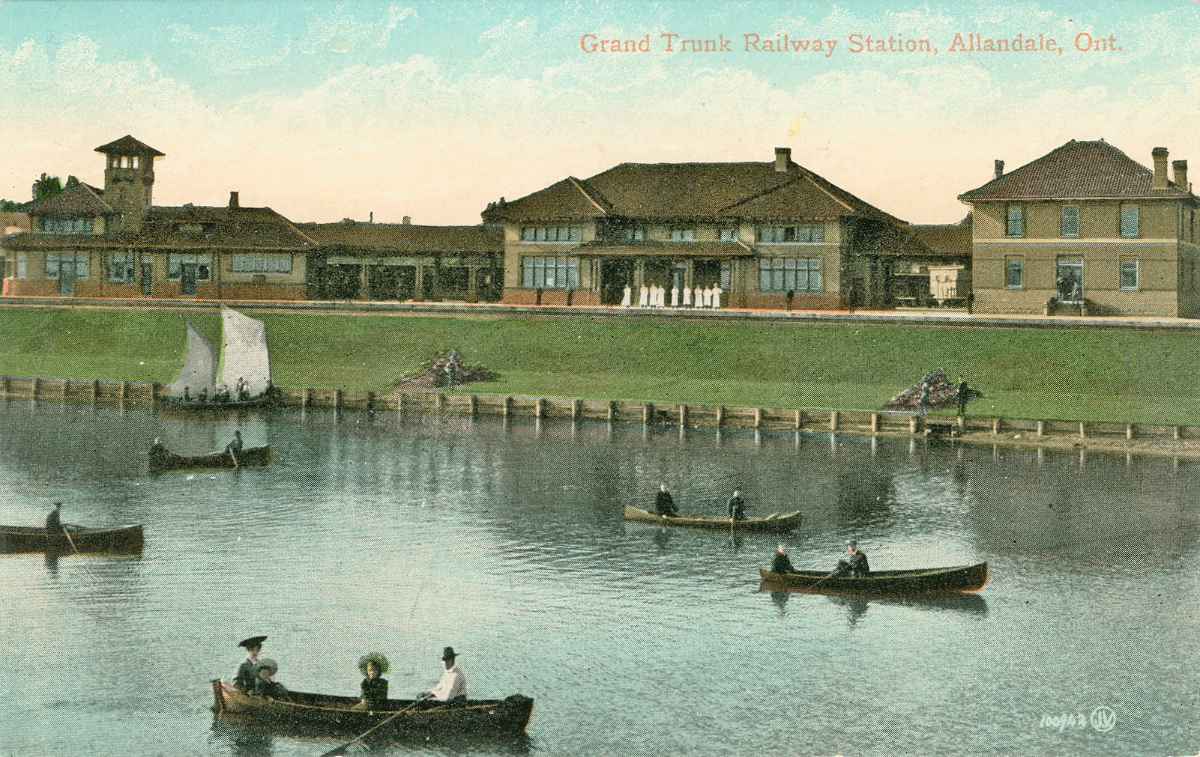
Toronto. One specialty by photographers is photographing trains, lines and train stations. In our January 2016 meeting speaker Ralph Beaumont and his ‘sidekick’ Rod Clarke presented the story of  “Heckman’s Canadian Pacific“.

For many decades trains were the prestigious way to travel – until private automobiles and commercial aircraft took over. Even today, Canada has a nostalgic system call VIA rail running from Montreal to Vancouver over a mix of old CPR and CNR railway lines. When I travelled on it to Vancouver over two decades ago, the leisurely wealthy still owned private railcars that could be hooked to the train. On the way home, a tardy private car in Edmonton caused a long delay the train never overcame. The VIA train was hit by a farmer’s truck in rural Saskatchewan early in the morning – fortunately with no human casualties.

The railways are special to Canada. The Dominion was formed in 1867 to fend off any problems generated by the American Civil war. To attract British Columbia to the fold, the young country promised to join the colony to the rest of the dominion with an all Canadian line called the Canadian Pacific Railway (CPR) – ironically completed and run by a great American railroader named  W C Van Horne who moved to Montreal where he lived and died.

A few decades later, the federal government formed a second country wide line called the Canadian National Railway (CNR) formed with many of the small regional railways.  Ironically two of the largest railways in North America today are the CPR and CNR – neither government owned!

Photo collectors may already have ‘train’ photos in their collection. Photography collectors of all stripes need to attend our spring events to find more items for their collections (or user gear) and to meet old friends. Check the right hand sidebar for dates and places. Posts will be made closer to the events.


Posted in history | Tagged , , , , | Comments Off on down the line