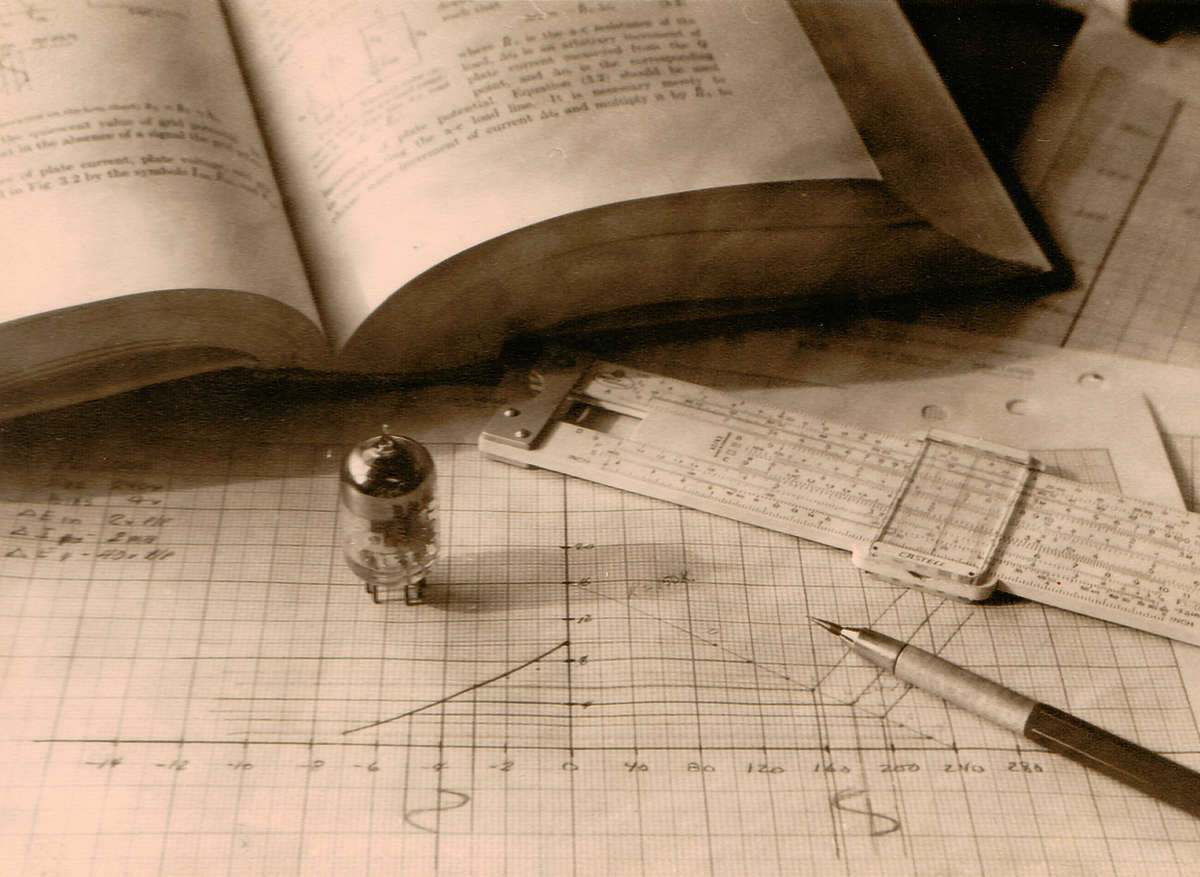
Still life in SAGE data transmission lab Montreal c1960
Toronto. Books, newspapers, and magazines were illustrated on occasion with lithographs or drawings transposed to engraved plates.
In the 1820s, there was considerable interest in capturing a scene by the effect of sunlight. A young Frenchman, Joseph Nicéphore Niépce, liked lithography but was not a good artist. In the 1820s Niépce tried to get the sunlight to expose a scene on metal, ready for engraving.
His process took many many hours of exposure. He collaborated with another Frenchman, Louis Daguerre who was also interested in capturing scened by sunlight as references for his dioramas. Daguerre and an English gentleman called Fox Talbot were finally successful in ‘permanently’ capturing scenes by sunlight with a few minutes of exposure. The pair independently discovered a way to ‘photograph’ a scene and announced their processes in January, 1839; one in France and the other in England.
Their discovery was a new art – photography. which was a sensation around the world. At first it did not help illustrate books in the way Niépce had hoped. Years later the half-tone process was successfully developed and changed the black and white of printing to the gray shades of a photograph and later did the same for colour photos (CMYK process).
A modern day book “print on demand” service (Wordzworth) has a very clear explanation of how books are illustrated in monotone or colour.
So when you see drawings, photographs and colour photographs in a printed product, think of photography and its help to form our modern world.