Christmas ad for a Leica c1950

Leica IIIf ad
LIFE, Nov 1950

Toronto. Some time  back I did a post on Leitz finally getting  internal flash sync in their cameras. George Dunbar came across this LIFE ad in their November 27, 1950 issue suggesting the new Leica IIIf and a Leitz flash gun would be the ideal Christmas gift.

I bought my first Leitz flash gun model CEYOO (just like that in the ad) from Ted Sheppard at the November 1978 meeting of the PHSC in Toronto. At the same meeting, Ted sold me a white nylon CTOOM flash bracket that mounted the flash beside the camera leaving the shoe free for other accessories like a viewfinder.

Ted had recently retired from Simpson’s department store in Toronto where he headed the camera department and at the time of my purchase was president of the Toronto chapter of the PHSC. He originally collected antique telephone gear.

The Leica model IIIf had come to market around September of 1950 when I was in high school. After the war Leitz made lenses and cameras mostly from parts on hand in their factory until they could recover. Based on the IIIc, the IIIf was their first post war camera design and emphasized built-in flash synchronization, a feature already touted by their competitors.

Like earlier Leitz cameras and accessories, the IIIf and CEYOO were well engineered and beautifully  manufactured. A truly professional camera and flash gun.

Posted in camera | Tagged , , , , , , , | Comments Off on Christmas ad for a Leica c1950

the world’s most exciting camera in 1950?

1950 Polaroid Camera
LIFE Oct 30, 1950 Ad

Toronto. In its October 30th, 1950 advertisement in LIFE magazine, Polaroid touted its camera as “The World’s Most Exciting” and “this year’s most wanted [Christmas] gift“. While this was typical marketing fluff, Polaroid was right. In a world used to waiting days or weeks for picture results,  the picture in a minute camera was truly remarkable.

Sadly, the cost of the film and one-off print were far too costly for most casual users, content to take a few shots each holiday and vacation and wait patiently for the results. Many of the early buyers used the famous Polaroids for a roll or two then quietly placed their costly purchases on a back shelf to be forgotten.

I have had such cameras donated to me gratis by friends, parents, uncles etc. Each camera like new, and some more recent donations after sitting on a shelf for a decade or more still had usable colour film and batteries – with a little touch of photoshop… Of course serious professionals used Polaroid materials to check framing, setting exposure, lighting, etc or for x-rays, astronomy and other important situations. Use the search word “polaroid” in the upper right search box for other Polaroid Posts on this site.

Thanks to George Dunbar for sourcing this LIFE Ad from over a half century ago!

Posted in camera | Tagged , , | Comments Off on the world’s most exciting camera in 1950?

Cowan’s American History: Premier Auction June 22nd

Lot 252, 1/4 plate Daguerreotype Estimated Value $1,500-$2,500 (USD) Cowan’s June 22, 2018 Auction

Toronto. I had an email from the Daguerreian Society a few days ago on the 14th announcing the latest Cowan’s American History Premier Auction  this Friday, June 22nd in Cincinnati, Ohio. Featured are numerous dags, ambros, tintypes, and albumen photographs (like the fireman at left). Click on the Cowan’s site for full details and catalogue.

The email states in part, “Cowan’s is pleased to offer several outstanding collections of early photography in its June 22 American History Premier Auction including the first parts of the Steve Roden Collection: Music in Vernacular Photographs and Charles A. and Frances Swedlund Collection of Early Photography.

“The Charles A. and Frances Swedlund Collection of Early Photography is an extensive collection of upwards of 1,000 daguerreotypes, as well as ambrotypes, tintypes, and albumen photographs. The collection is the culmination of nearly four decades of selective collecting and features one of the most remarkable assemblages of postmortem daguerreotypes to be offered to the public in recent memory.

“Part I of the Steve Roden Collection: Music in Vernacular Photographs offers an exceptional selection of music-themed photography from the man who literally wrote the book on the subject. The collection includes several hundred cased images, CDVs, cabinet cards, and real photo postcards dating from the mid-19th to mid-20th century featuring musicians and bands posed with their instruments, unique musical creations, and early listening and recording devices. Many of the photographs offered in the collection are illustrated in the book, …i listen to the wind that obliterates my traces: music in vernacular photographs, 1880-1955, published by Steve Roden in 2011.”


Posted in auction | Tagged , , , , , , , , , | Comments Off on Cowan’s American History: Premier Auction June 22nd

Weegee in comics

Weegee from the Guardian, UK

Toronto. Arthur Fellig was a cigar smoking, messy, rumpled NYC night crime scene  photographer in the 1930s and 40s. He was the subject of many articles as a Speed Graphic camera toting shameless self promotor. Now he has been immortalized once again, this time according to an article in the Guardian as the protagonist in a graphic novel!

My thanks to George Dunbar for sourcing this unique article on Weegee! Do a Google search on Weegee and biography for added information


Posted in people | Tagged , , , , , , | Comments Off on Weegee in comics

early photography

Watkins Standard c 1890
actinometers for cameras and enlargers.

Toronto. PHSC co-founder John Linsky sent me an email the other day suggesting this excellent site for early photographic cameras and equipment. Early Photography as the site is named, is based in the UK and as such is weighted towards British and European gear.

The site spans a wide period of time from the 1850s to a century later, the 1950s.  Lots of photos of each category and descriptive text. Take a look!

The page on the Watkins Standard Actinometers is typical of the site with many illustrations, technical listings, and an essay on the family of actinometers that preceded the well known Watkins Bee (the Bee came to market in 1902 although the Standard continued to be sold for nearly two more decades).

I have a couple of Wynne’s Infallible meters, an 1893 competitor. And the Wynne’s Hunter model, first offered in 1914. The meters were fascinating to me as they seemed to be built into a pocket watch case. And where did I get such little marvels of historic times past? At our photographic-fairs, of course!

Posted in history | Tagged , , , , , , | Comments Off on early photography

Magical Mystery (Makeover Studio) Tour

Yvette Bessels on
UK Makeover Studios

Toronto. PHSC Meeting, Wed, June 20, 2018 at 7:00 pm
In the BURGUNDY ROOM of the Memorial Hall

Magical Mystery Makeover Studio Tour – Yvette Bessels

In May of 1967, the Beatles released Sgt. Pepper’s Lonely Hearts Club Band as an LP which I promptly bought. In November of that same year the famous band released the sound track of the movie Magical Mystery Tour as an LP.

Come out and hear Yvette’s experiences working in UK Makeover studios during the hey-day of the famous makeover fad. Yvette’s own words were tuned and used by editor Sonja Pushchak in our latest newsletter on page 2. Yvette may seem familiar to you – she is our program director and a serious wet plate photographer in her own right.

The public is always welcome. Go to our Programs page for directions.

Posted in program | Tagged , , , | Comments Off on Magical Mystery (Makeover Studio) Tour

Newsletter PHSC News 18-2 (June 2018)

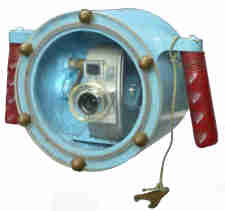
Underwater housing for
home movie camera.
Click camera for PHSC News

Toronto. Editor Pushchak has served up another tasty treat for readers of her well received PHSC News. The June 2018 edition was distributed  on Friday morning to all those who subscribe (want your own copy? just email me and ask!).

We start with a 1949 layout by the late Vogue photographer, Clifford Coffin. Page two as usual features the next PHSC speaker, in this case our very own Yvette Bessels talks about her experiences in a couple of UK makeover studios.

The equipment review covers early digital cameras, the Olympus  SP320 in particular. Web Links discovered three nifty sites: Dorothea Lange photos of the great depression (for the FSA); history of the QEW, Toronto’s famous 4 lane expressway built before the second world war and still busy, very busy today; and finally the US National Parks Service archives (the parks alone are beautiful).

We say good-bye to Ask Phinny in this issue with some thoughts on the ill-fated giant elephant called Jumbo. Click on the camera above or here to see these and all the articles and columns in this issue!

Posted in Uncategorized | Comments Off on Newsletter PHSC News 18-2 (June 2018)

in my merry automobile …

LIFE Sept 11, 1950 – the 1906 Delavan Run

Toronto. We had many home grown automobiles like the McLaughlin in Oshawa, the Tudhope in Orillia, the Whippet, etc. Some like the Brooks Steamer had American roots long before the auto pact or NAFTA. All are gone now or absorbed by American car companies.

In the September 11, 1950 issue of LIFE magazine, the editors posted a series of pictures of American automobiles of 1906. It was a number of separate photos  to record a special travel event.

In the early 1900s, wealthy folk bought the new autos and formed auto clubs. The cars shown here were owned by the society folk of McHenry County in Illinois who celebrated a 20 mile run to the Delavan Hotel in Wisconsin one Sunday. The 25 cars used by the 98 members who made this particular trip for a great meal and a night out were recorded with a revolving camera owned by a Chicago photographer who was at the hotel that night.

The original panorama print was six feet long. The LIFE copy shot from the old print was cut up for the magazine! The roads? They were made for the bicycles popular from the mid  1800s, not the brazen new autos! Just ask member Lorne Shields, a bicycle historian and one of our speakers next fall.

Posted in events | Tagged , , , , | Comments Off on in my merry automobile …

colour photography in WW1

WW1 colour aircraft Sept 1916

. We seldom think of colour photography dating back to the earliest days, but it did. Louis Ducos du Heron born in 1837 predicted all the colour processes ever used. We (I) never think of colour photography before the late 1930s when Kodachrome was invented. Earlier processes existed beginning with the autochrome in the very late 1800s and early 1900s. The first commercial processes were additive, slow, grainy and costly.

Subtractive process improved the speed and set the scene for colour prints in the 1940s and later. By the 1970s easy home processing of prints took off for a short while.  Today, we wouldn’t even think of black and white other than a niche product give the huge number of TVs, computer monitors, digital cameras and smart phones with high resolution colour screens.

Shannon Perry first spoke to us on WW2 colour photographs back in late 2011. Thanks to Russ Forfar who alerted me of a Daily Mail article on WW1 colour photography.

The cut line on the aircraft photograph I used here reads,”French Captain Robert de Beauchamp stands alongside his British Sopwith fighter in September 1916, after returning from a bombing raid on Essen in Germany.

The picture was taken shortly before his death at Verdun. According to Le Souvenir Français, an organisation which remembers France’s war dead, Beauchamp ‘was the first to organize and execute long-range bombing, showing, in the accomplishment of these missions, an energy, a tenacity and a daring that was unparalleled’.

Use the search word colour in the upper right search box of our site to see more about colour.

Posted in history, processes | Tagged , , , , | Comments Off on colour photography in WW1

photographer Alan Mungavin takes a shower in 1950

Whoops!

Toronto. Well George Dunbar has spotted another funny photo-related essay! In the July 10th, 1950 LIFE magazine issue (6th bullet down in link), British photographer Alan Mungavin set up to take a photo with an old shutterless field camera. As Mungavin carefully backed up to expand his scene, he fell backwards into what looks like a wading pool!

The lens cap is still in place suggesting the only shot taken was of a rather wet photographer …


Posted in people | Tagged , , | Comments Off on photographer Alan Mungavin takes a shower in 1950