and its number 31 by ZOOM!

Toronto. I made the executive meeting this time (president Clint called to check-up just as I was on my way). I managed some rather cryptic notes this time and can cover things as I wait for David’s very prompt minutes. The photo below shows Christopher Creighton in action. Chris will be our speaker for the  November Event.
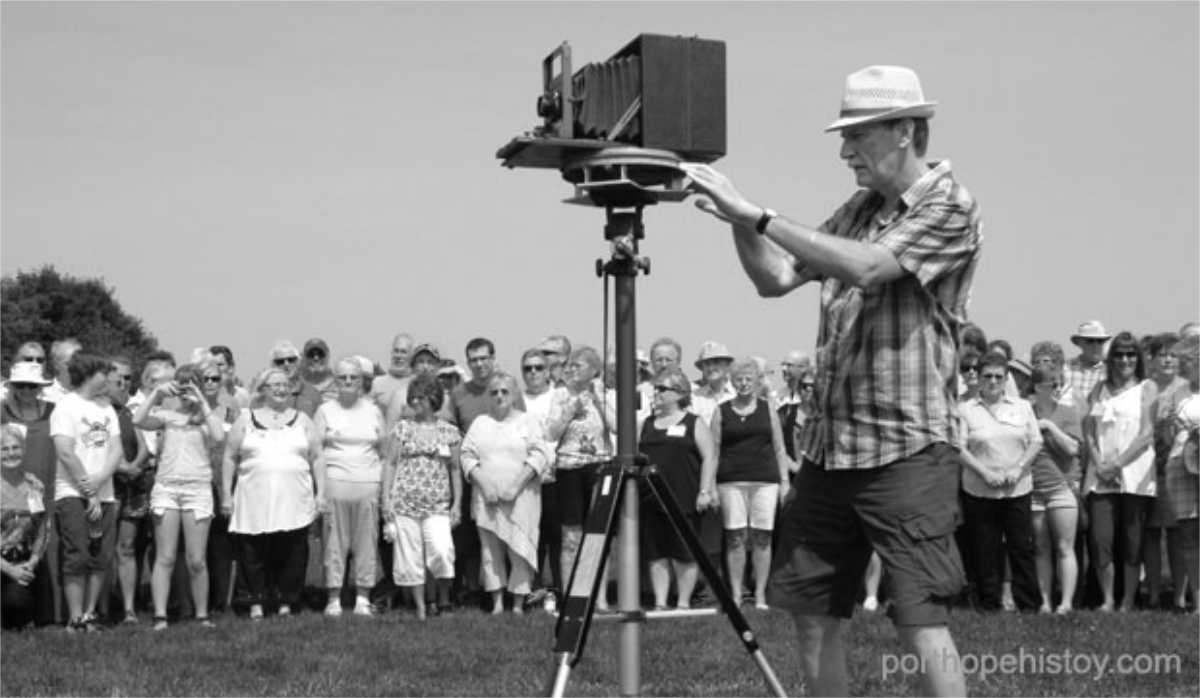
Christopher Creighton setting up his panoramic camera at the Town Park, Sunday August 5, 2012.  Photo by Mark Clayton – courtesy of Port Hope History

The 31st executive meeting via ZOOM was held on Wednesday evening, November 2nd. Celio has worked his magic for a speaker line-up well into next year. While he provided a  schedule in some detail, I just noted the most imminent speaker (above) – November’s Christopher Creighton. His talk is titled: “Cirkut & Panoramic Photography with Christopher Creighton”. The talk is already up on Eventbrite and will be posted here very shortly.

While we plan to continue the PHSC Newsletter, the November 2022 edition must be skipped since David is tied up on the next issue of the journal (and some technical issues between Affinity Publisher and Windows 10). Nevertheless, if you would like a personal copy but haven’t joined up as yet, just drop me a note at news@phsc.ca.

Our membership secretary summarized membership as of October 31st. Also of note, an active investigation is underway for an alternative meeting locale with all the amenities of Memorial Hall plus faster, more reliable internet facilitating joint in person and ZOOM meetings.

We are doing another auction this fall on December 17th at the usual place in Long Branch (south west Toronto). It will offer mainly estate lots (and hopefully member lots too). Details and photos will be posted as they are known.

Regretfully our VP Ashley Cook is departing for greener fields. In the interim, Les Jones has agreed to fill the position pending a full time VP. Meanwhile, the Instagram posts by Ms Mina Markovic are being very well received by readers of that platform (the link to our Instagram page is here at the right top).

Like I said before, “Have a great fall/winter and lets hope the seventh wave of COVID-19 and its restrictions are very modest at best!”.

Posted in activities | Tagged , , , | Comments Off on and its number 31 by ZOOM!

and Taylor makes 12

TAYLOR, Zachary (1784-1850)]. Half plate copy daguerreotype portrait of the 12th President of the United States.

Toronto. One thing the USA has going for it is the sheer number of daguerrotypes, related ephemera and other items of famous people. The availability of these historical objects, including the photos is open to anyone who searches them out. A frequent source of auction announcements is our sister organization, The Daguerreian Society.

A case in point is the two-day auction today and tomorrow hosted by Hindman.  The Daguerreian Society on its site writes, “Hindman’s November 3-4 American Historical Ephemera and Photography Auction contains over 630 lots of early photography, militaria, broadsides, imprints, manuscript material, and other ephemera dating from the 17th century through the early 20th century.

“Day One contains property from many prominent, well-respected collectors and dealers in historical memorabilia, including George Sanders, William H. Itoh, James C. Frasca, and the Estate of Carroll J. Delery III, formerly the “Historical Shop.” Highlights include more than 85 lots of photography, weaponry, uniforms, and accoutrements from the Civil War and Militaria Collection of George Sanders; military reports, maps, post-war letters from Union and Confederate officers, and other papers gathered by Union Army officer Louis-Philippe-Albert d’Orléans, comte de Paris, while conducting research for his book History of the Civil War in America; and a half plate copy daguerreotype of Zachary Taylor.

“Day Two features an exceptional selection of 18th-20th century broadsides, ephemeral Americana, and historical documents from the Collection of James Milgram, M.D. The collection is highlighted by the first Confederate imprint, The Union is Dissolved; the earliest and rarest Lincoln assassination reward broadside, $30,000 Reward. Description of John Wilkes Booth!; and an illustrated recruitment broadside entitled, Irish Brigade 2d Regt. to be raised in Philadelphia, seeking volunteers for Company C of the 115th Pennsylvania Infantry.”

Posted in history | Tagged , , , | Comments Off on and Taylor makes 12

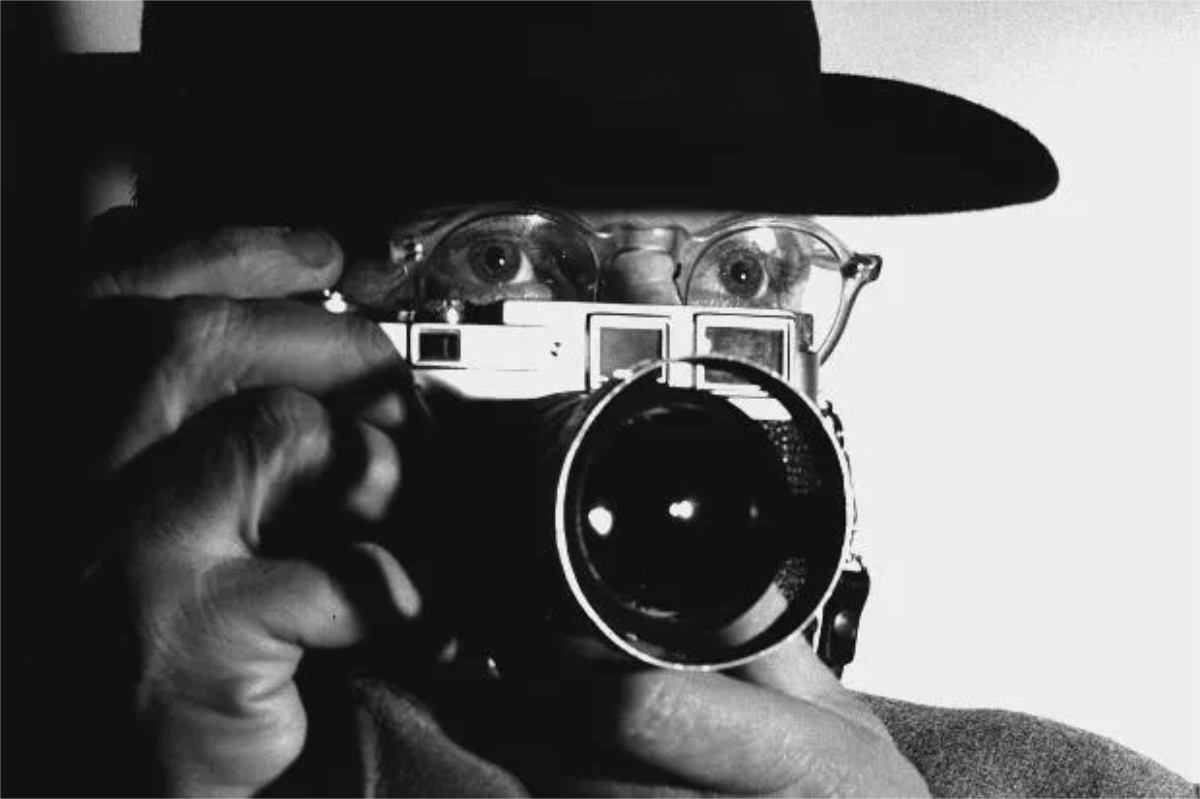
rapide, Henri le Leica

Bresson, courtesy of Casual Photophile

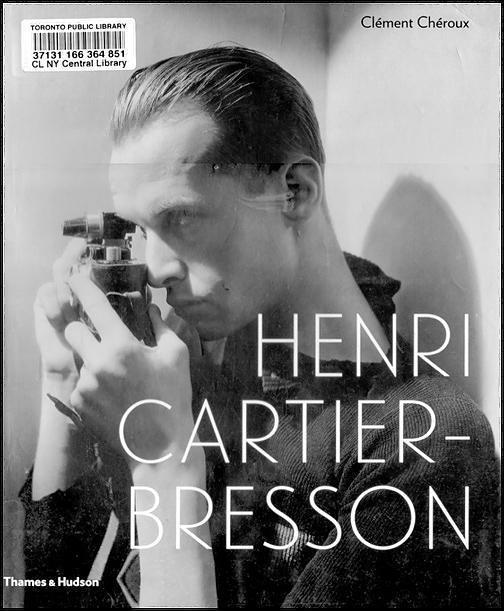
Toronto. My good friend, George Dunbar, discovered a very well illustrated  bio of that famous French street photographer, Henri Cartier-Bresson.

George writes, ”  A wonderful bio of Henri Cartier-Bresson’s amazing career was published in 2014 (Henri Cartier-Bresson, Here and Now….by Clément Chéroux). The large, 400 page volume contains 500 illustrations, many of which have been published for the first time.

“Certainly, this book will please the many admirers of such a world-famous artist and photographer. Published in USA by Thames & Hudson Inc., 500 Fifth Avenue, New York, NY 10110. Fortunately, this book is also available from the Toronto Public Library.

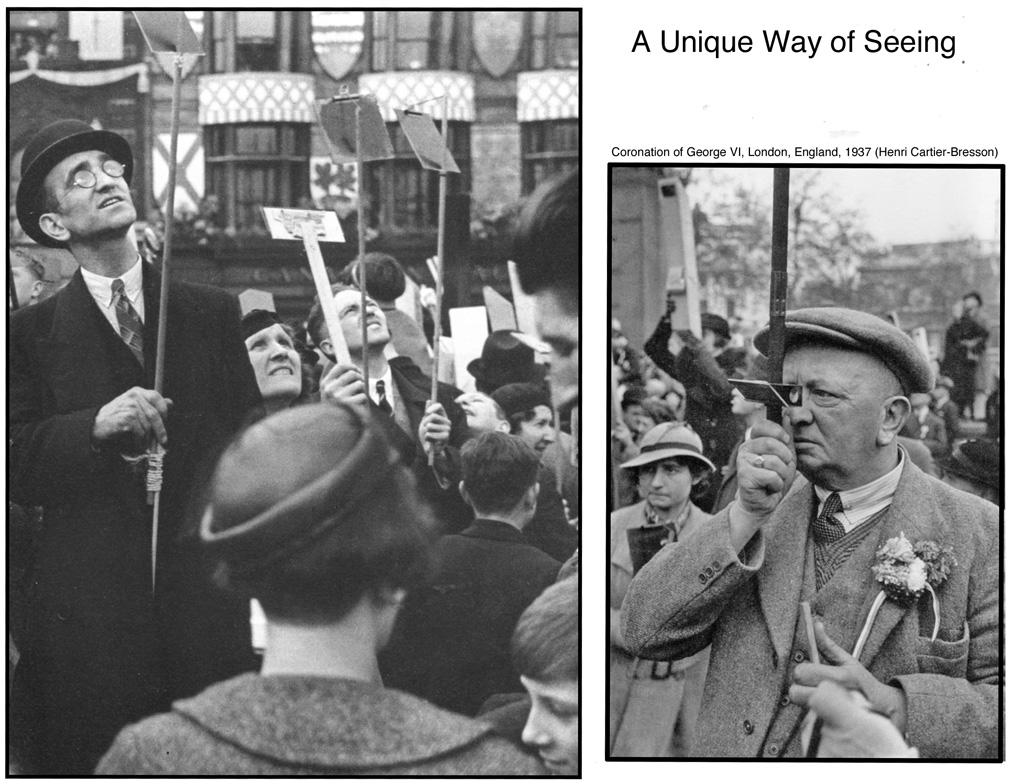
“Below, the cover and a couple of images with my caption that ambiguously refers to these photos as well as the photographer’s well-known talent. P.S. I hope there is no copyright problem here, since this is an educational message intended to promote the book’s readership.”

Note: The post title is a riff on an old ad, “Quick, Henry … the Flit” that offered a solution for those summertime pests, house flies and mosquitos.

Posted in book | Tagged , , , | Comments Off on rapide, Henri le Leica

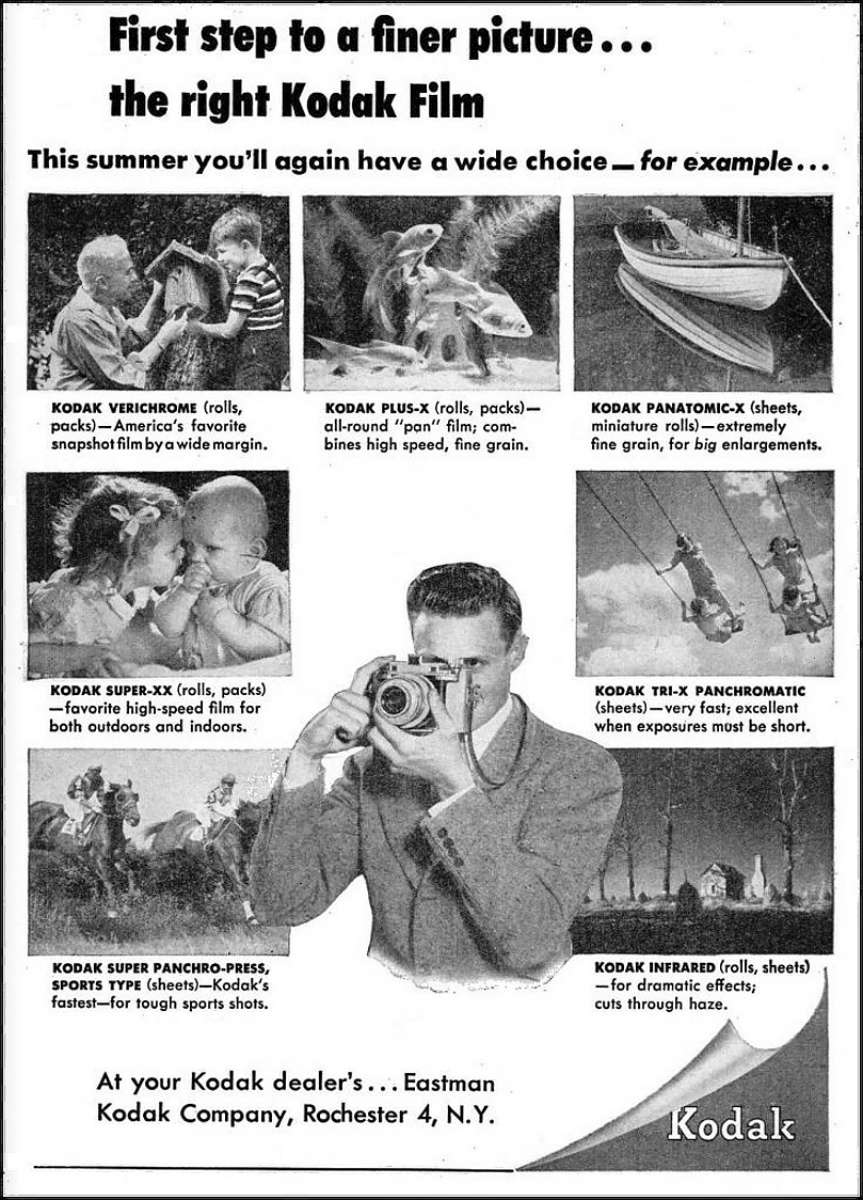
first step to a finer picture …

a Kodak ad from the May, 1946 Popular Mechanics magazine

Toronto. And you thought it was the photographer and his skill (or according to some naive people, the camera). But the FILM? Or the maker of the FILM? REALLY?

In a May, 1946 ad, Kodak assured all the wanna-be photographers that indeed it was not only the RIGHT film, but the RIGHT KODAK film that made all the difference! Sadly for Kodak but happily for the rest of us, it was the photographer and his skill set that made the difference, be he professional or a talented amateur!

A big thank you for our good friend, George Dunbar, who bravely shared this link from the days when Kodak was the mighty king of photography! Today, we have tons of smartphones, each with its own digital camera taking 1,000s of images with neither film nor discrete camera. Most of these images are taken by people who vaguely, if  at all, recall the impact of the once mighty Kodak organization on photography.

Posted in history | Tagged , , , | Comments Off on first step to a finer picture …

Bill struts his stuff

Notman image, c1875-78. Montreal Harbour view from the Custom House

Toronto. Some members collect mostly images. And a very small number of those folk seek images for a select studio(s) or images using a specific process. George Dunbar came across this article called, “Photography in Canada” and thoughtfully shared it with us. As a growing nation dominated by two behemoths (first the UK and then the USA) there are all too few articles about Canadians in all walks of life.

Back to photography and image collecting. A popular set of studios were those of William Notman. Mr Notman was so diligent in recording his work that much of it is in a museum in Montreal (McCord Museum associated with McGill University) and readily available to scholars. From time to time we have had folks from the museum join us to talk about the holdings.

The particular image shown here is identified as, “From the Custom House, Montréal.    William Notman, circa 1875-78, albumen print showing Montreal at the end of the age of sail, when it was the hub of the Province of Canada’s economy. (courtesy NGC).”

I  found the dating rather odd, since the Province of Canada ceased to exist in 1867 when the Dominion of Canada was formed and the Province of Canada became Ontario (Upper Canada, Canada West) and Quebec (Lower Canada, Canada East). Montreal was indeed the ‘hub of the economy’ back then. An uncle on my wife’s side once said the age of sail continued to the end of the 1800s. His father (my wife’s grandfather) joined the British Navy and sailed on ”square riggers” in the late 1890s/early 1900s. Like many technological innovations changes in ship design began many decades earlier.

Posted in history | Tagged , , , , | Comments Off on Bill struts his stuff

lunch anyone?

remains of a late 1920s DeVry ‘Lunchbox’ camera ‘on ice’ for 85 years. Courtesy of Leslie Hittmeier

Toronto. Our secretary, Louise Freyburger, was browsing the news Friday when she came across an article on CTV News about old cameras discovered recently  in a Yukon glacier in the KLUANE NATIONAL PARK AND RESERVE. 

A cache of equipment belonging to explorer Bradford Washburn, including three of his cameras, has been retrieved from a Yukon glacier after 85 years.

The cameras and other gear were left behind in early 1937 by legendary American mountaineer Bradford Washburn.

Searching for more information, she discovered an article on the subject at the CBC written a day later and titled, “Expedition finds cache of cameras on remote Yukon glacier, 85 years after mountaineer left them behind” by Ms April Hudson.

This is an exciting story involving glacier analysis, ice changes over time, and last minute discoveries. Both the CBC and the CTV articles are well worth a read, not just by us camera nuts, but by everyone! Well done Louise. Great diligence and detective work to seek out more articles. And anyone familiar with the DeVry name knows they were strongly involved in educational movie making and showing with both projectors and cameras.

Posted in history | Tagged , , , | Comments Off on lunch anyone?

Fred’s Back

Boys on Shed, 1962 – Fred Herzog
Old Vancouver, characterized by wooden houses, was a favourite subject before it was swept away by developments in the 1970s

Toronto. Most places have their famous artists. In Vancouver’s case, it was photographer Fred Herzog who took street shots of that city in the last century. The Guardian featured Fred in an article titled, “Lost Vancouver – in pictures“.

The photo article begins, “From squats to shops selling logger boots, from clapped-out wooden houses to neon hotspots, photographer Fred Herzog blazed a trail for colour as he captured half a century of change in the Canadian metropolis.

When Fred died at 88 a few years back, I did this post. Fred’s street scenes bring back memories of our Pacific coast province and it’s largest city, Vancouver. My eldest and her family lived there for a few years before returning to Southern Ontario and ##$$%%^ snow – lots of snow.

My thanks to my good friend and fellow PHSC member, George Dunbar, for this trip down memory lane courtesy of The Guardian article.

Posted in history | Tagged , , , , , , | Comments Off on Fred’s Back

star struck

diagram of world’s largest digital camera courtesy of CNET

Toronto. My friend Russ Forfar, up in the wilds around Tobermorray sent me this interesting link on CNET. The article titled, “Inside the World’s Largest Digital Camera” was written by Andy Altman on Oct. 23, 2022.Altman begins the article, “Scientists in Northern California are putting finishing touches on the world’s largest digital camera. They recently took off the lens cap and invited CNET to take a rare look inside.

“Engineers at the SLAC National Accelerator Laboratory have spent the last seven years building the Legacy Survey of Space and Time, or LSST, camera. The camera is the size of a small car and weighs about three tons, and at five feet across, the lens holds a Guinness World Record. Watch the embedded video to see our visit inside the clean room with the camera.” Watch the brief video in the above article – well worth the time.

The massive sensor is 3,200 megapixels! Far bigger than the sensors used on current smartphone cameras. It is wonderful to see the scientific community moving to large scale digital technology. When the Atlantic cable was rolled out mid last century, Bell used vacuum tube amplifiers rather than the relatively new transistors since vacuum tube the chronology was well understood, well tried, and well tested.

A tip of the winter cap goes to Russ for shearing this interesting article with us. NB. the digital camera is about the size of a car – unlikely to be used by the professional photographers. But, if it anything like computers, it should shrink to pocket size at a modest price by late this century :-).

Posted in camera | Tagged , , , , | Comments Off on star struck

shining Leitz on the human condition

Portugal, 1976. The silent operation of the Leica allowed Josef Koudelka to shoot unnoticed. This shot is taken from his book Exiles. Photograph: Josef Koudelka/Magnum Photos

Toronto. Before photography, we relied on paintings and sketches, like those of Hogarth in 18th century London, to depict the human condition. Later in the 19th century when photography found its legs, some enterprising photographers, like Mathew Brady  (American civil war wet plate photographer) and the FSA folk in the early 20th century who recorded the impact of the ‘dirty thirties’ added photography to the tools used to record the human condition.

This accelerated in the thirties and beyond when the minicam craze set in and small negatives became the predominant means to capture live events. At the high end, the Leica cameras (made by Leitz to keep its microscope and optical factory in operation through the depression), Contax (the reaction of Zeiss to the upstart Leitz), and the myriad of firms that merged to form Zeiss-Ikon (mid 1920s) established an era of photographers who could shoot photos on the run.

George Dunbar, in his pursuit of photographic history discovered this article in The Guardian written by John Naughton back on August 24th in 2014. Fortunately George shared the article with us.

Posted in history | Tagged , , , , , | Comments Off on shining Leitz on the human condition

candlelight’s no longer a pain

Candlelight early 2011

Toronto. In the days of film, candlelight was so dim and the media so slow that only a tripod could keep the camera steady. Inanimate objects or perhaps adults could stay still enough but children and animals were utterly hopeless as subjects.

Fortunately we entered the digital era a few decades ago and suddenly between the much faster ISO sensors and optical stabilization technology, candlelight became a potential illumination source.

By this century, digital technology had improved so much that even hand held shots by candlelight became possible – like this example taken with a Sony mirrorless camera.

Note. The title of this post is a riff on Melanie’s c1970 album, “Candles in the Rain“, and her song, “Lay Down (also called Candles in the Rain)”.

Posted in processes | Tagged , , , , | Comments Off on candlelight’s no longer a pain