Lorne Shields featured in Rochester

Our Lorne Shields will be presenting a lecture on “Capturing the History of the Bicycle in Original Contemporary Photographica” hosted by the Central Library of Rochester & Monroe County, Literature Division, via ZOOM on October 30th. It’s a free session.  Register for this event here:  https://calendar.libraryweb.org/event/11086245

Lorne Shields by the Rochester Library Oct 30th, 2023

Posted in activities-other | Tagged , , | Comments Off on Lorne Shields featured in Rochester

gooey stuff

terriers in a glass plate slide

Toronto. The positive/negative process most common in plate/film photography uses a characteristic of silver halides (silver salts). This characteristic is a sensitivity to light. The more light, the more silver halide bonds that are broken leaving more tiny atoms of metallic silver that appear black to the eye.

When a coated plate or film or paper is exposed to light, a latent (invisible) image is formed. A far more intense light exposure brings out a visible image (printing out paper). Certain chemicals called developers can change the latent image to a visible image. To work, the developer must be slightly alkaline. Water or a weak solution of acidic acid will stop development. The fixer chemistry washes away the unexposed silver salts rendering the image more or less permanent. A water bath washes away all residual chemicals (fixer, etc.) helping to make the image permanent.

To eliminate the paper grain and improve resolution glass plates and later optically clear films were used. The initial problem was that the silver salt solution would not stick. Various optically clear solutions that did stick to both the base material and the sensitive solution were used successfully.

From the beginning of photography efforts were focussed on improving sensitivity, increasing resolution, softening contrast, and capturing natural colours directly. The earlier processes were so slow a sensitive plate had to be created shortly before exposure.

)Initially, the sensitivity was only at the high end of visible light (blue) and higher. Over time chemical additions to the light sensitive emulsions brought about sensitivity to the full spectrum of visible light (partly sensitive plates/films were called orthochromatic; full spectrum sensitive plates/films were known as panchromatic and had to be developed in total darkness).

When wet plate photography arrived (our logo is the etching of  a wet plate itinerant photographer with his gear on his back) the sensitivity was increased BUT only if the plate was created, exposed, and developed while still wet. Mathew Brady used a horse-pulled darkroom to record the American civil war. Even wet-plate media sensitivity was too slow for any sort of action shots.

When dry plate photography and later films came along, the sensitivity was improved to the point were instantaneous photos could be taken and later developed. A shutter was necessary to control the sub-second exposures. Years later the sensitivity reached the point where tripods were unnecessary in daylight.

Today with digital technology, slow sensitivity is just a foot note in history. Most digital cameras have a lowest sensitivity (ISO 200) that was once considered fast, and later still normal speed.

Posted in history | Tagged , , , | Comments Off on gooey stuff

a darkening day

watching and capturing the 1912 total solar eclipse in Lisbon

Toronto. Today, we are rather blasé about solar eclipses. but how were they handled over a century ago? A dark shield was still needed to protect eyes, but the cameras as shown here were far different. This scene of a pending total eclipse of the sun was taken back in 1912 in Lisbon.

You can see bright shadows so the eclipse has not yet happened. The most interesting fellow is the one with the huge field camera extended for a long focus lens, and firmly steadied with a tripod, a little ‘table’ on top of the tripod and two weights as anchors on the floor to keep the legs from slipping.

The two folk at left appear to be using a dark filter glass while one of the two at right makes notes and the other peers into some kind of device. The photo is here on Facebook (make sure you are member, or join up for free) and was copied from this site. English translation of the Portuguese is offered.

A thank you is in order for my good friend George Dunbar for finding this interesting site/photo and sharing it with us. NB. There are a few Facebook ‘channels’ devoted to the history of photography including our own.

Posted in history | Tagged , , , , , | Comments Off on a darkening day

a Kodak projector – I swan

1955 ad for a Kodak Signet 35mm slide projector

Toronto. Here is another pre-carousel projector from Kodak as shown in this rather wordy ad from the October, 1955 issue of Popular Mechanics. To promote the line of 2×2 transparency slide films,  Kodak made and sold well-designed and well-built 35mm projectors.

Thanks is due to my good friend George Dunbar for spotting this advertisement and sharing it with us. Sadly, all film projectors – Kodak or not – are passé in these days of digital wizardry. Digital files and digital projectors have replaced the films and bulky film projectors of yesteryear. Mind you, our fairs and auctions are often a good place to spot a film projector to add to your collection.

NB. The title of this post is a riff on the homophones “Signet and cygnet“.  While pronounced the same, the meanings differ.  The first spelling, with a capital ‘S’, means an official seal especially used in the UK (and a 1950s Kodak projector). The second spelling means a young swan.

Posted in history | Tagged , , , | Comments Off on a Kodak projector – I swan

rhymes with rhinos

article in September 1955 shows Bushnell 7×50 binoculars used as a telephoto lens

Toronto. This article in one of the fall of 1955 issues of Popular Mechanics magazine is a puff piece for Bushnell binoculars.

The article notes how the binoculars can be attached to a camera as a telephoto lens creating a ‘560mm’ equivalent lens. The article states that “ordinary binoculars cannot be used because of their low relative-light efficiency”.

I imagine the low efficiency comes from older or cheaper binoculars without coated lenses. Around the same year 7×50 coated lenses binoculars made in a small German factory were attached to a Minox camera with an adapter and worked quite well.

Regardless of the promotion of the Bushnell brand, the idea of using binoculars as a telephoto lens via an adapter was a terrific idea back in the days of  prime lenses and film. It was a wonderful alternate use for binoculars.

My thanks to my good friend George Dunbar for spotting and sharing this article. PS: I still have my 7×50 binoculars but the Minox is long gone, swapped for a screw mount Leica.

Posted in history | Tagged , , , | Comments Off on rhymes with rhinos

brother, can you spare $2.98 US?

Oct, 1955 ad for a HIT-like camera marketed by a Chicago firm

Toronto. Post WW2, any miniature camera was usually called a ‘spy’ camera. Many American marketing companies brought in finished cameras from Occupied Japan and flogged them State-side. Usually the cameras were claimed to be ‘precision’ or ‘precision-made’ although most were just gussied up miniature box cameras.

The cheap price often included rolls of ‘miniature film’, a camera case, and a developing service – or a list of where to take the tiny exposed rolls of film.

For the camera collectors, many of the unnamed cameras are simply grouped as ‘HIT-like’ referencing a tiny Japanese import from the likely maker.

This October, 1955 ad in Popular Mechanics is for one such ‘gold-plated’ model sold directly by the importer, Modern Merchandise Co., in Chicago (you could buy three and pay even slightly less per camera)!

Thanks once again to George Dunbar for spotting this advertisement and sharing it with us.

NB. The post title is a riff on a “dirty ’30s” song from 1932, “Brother, Can You Spare a Dime” sung here by der Bingle (Bing Crosby). My own copy is by Joan Collins.

Posted in history | Tagged , , , | Comments Off on brother, can you spare $2.98 US?

YAR (yet another rangefinder)

a novel rangefinder for the Graflex ‘Pacemaker Graphic’ camera line

Toronto. Graflex had a great line of large format cameras, ruggedly made, and very popular. Many professional news and street photographers used one of the cameras day or night.

One perceived shortfall was the lack of a means to focus accurately in poor light. An add-on rangefinder solved the issue and gave an optional means of gauging camera – subject distance.

To counter the use of an add-on rangefinder, Graflex came up with this illuminated version. Basically, two light breams were projected on the subject and by focussing the lens, the beams could be merged. An ad in the June, 1955 issue of Popular Mechanics describes the way the rangefinder works.

The concept of using battery powered light beams seems to have been somewhat short lived. Most rangefinders I have seen or used relied on the photographer’s eye to merge the desired subject. My thanks to good friend George Dunbar for spotting and sharing this bit of photographic history.

Posted in history | Tagged , , , | Comments Off on YAR (yet another rangefinder)

catch the wave II

a 1955 ad for the Delta Stereo by Lennor in Chicago.

Toronto. A recent post, “catch the wave“, spoke of Kodak’s technique to ‘monetize’ the latest popularity of stereo in the 1950s. A brief (very brief) competitor emerged in 1955 – the Delta Stereo by Lennor Engineering Co in Illinois.

The company’s product line targeted the same population as Kodak. However, instead of promoting the line, this ad in the October, 1955 issue of Popular Mechanics addresses wanna-be salesmen and distributors. Sadly, the call seems to have fallen on deaf ears. McKeowns lists the Delta Stereo in its 11th edition as a 1955 offering and suggested the price in 2001 was about the original 1955 value – more if the viewer was included.

Like Kodak, Lennor touted (colour) stereo as the ‘newest craze’. Lennor omits any mention of the earlier rise in the stereo fad, stereo’s history before and after photography was announced (1839), or even details of its products. Instead Lennor focusses on its ‘powerful new kind of selling program’ and encourages replies from the marketing side of the line.

Thank you to good friend and fellow history buff, George Dunbar, for finding and sharing this moment in photographic history.

Posted in history | Tagged , , , , | Comments Off on catch the wave II

.. and the kitchen sink

all – except the kitchen sink –  is a Kodak product

Toronto. In the mid last century, Kodak was a giant in the photographic industry. The Feb 1955 Popular Mechanics ad shows just how all encompassing mighty Kodak was here in North America.

The ad offers many darkroom tools that amateurs can even use in a temporary darkroom like the kitchen! The ad shows dad helping his child in the kitchen darkroom thanks to all the tools and ideas from Kodak (the days before it was not politically correct to suggest gender was male only).

A big thank you goes out to my good friend and fellow PHSC member, George Dunbar. George discovered and shared this Kodak ad with us. For those like myself who both shot photos and did the darkroom work, this ad brings back memories. In my case, most of my darkrooms had no running water since it was available a few steps away. Beside which, it is hard to imagine my mother back then letting a KID use her kitchen as a darkroom …

Posted in history | Tagged , , , | Comments Off on .. and the kitchen sink

attention film fans

Help save 120 roll film

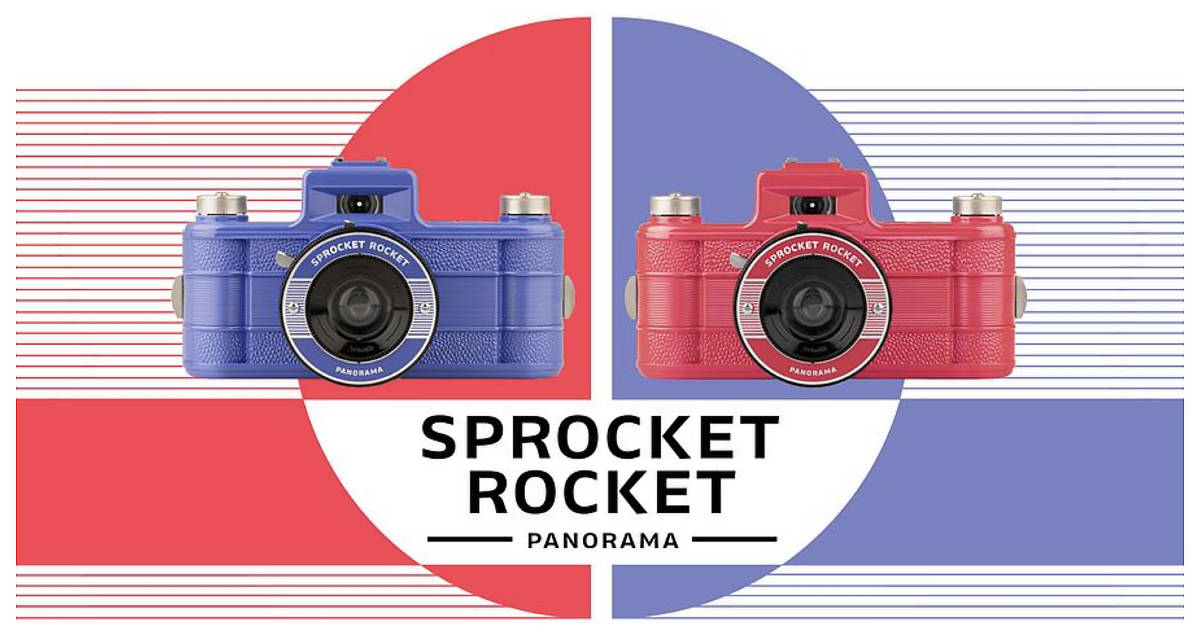
Toronto. A note from Birgit Buchart of Lomography fame announces a price cut for 120 roll film to spark sales of their medium format films.

So if you use the old technology in 120 roll format, please dig into your pocket now before all 120 rolls go the way of Kodachrome …

For the rest of us, remember 120 film was used for professional cameras like Hasselblad, Rollei TLRs, etc. and gave great oversize square transparencies (2 1/4 in per side).


Posted in activities-other | Tagged , | Comments Off on attention film fans