six things to know

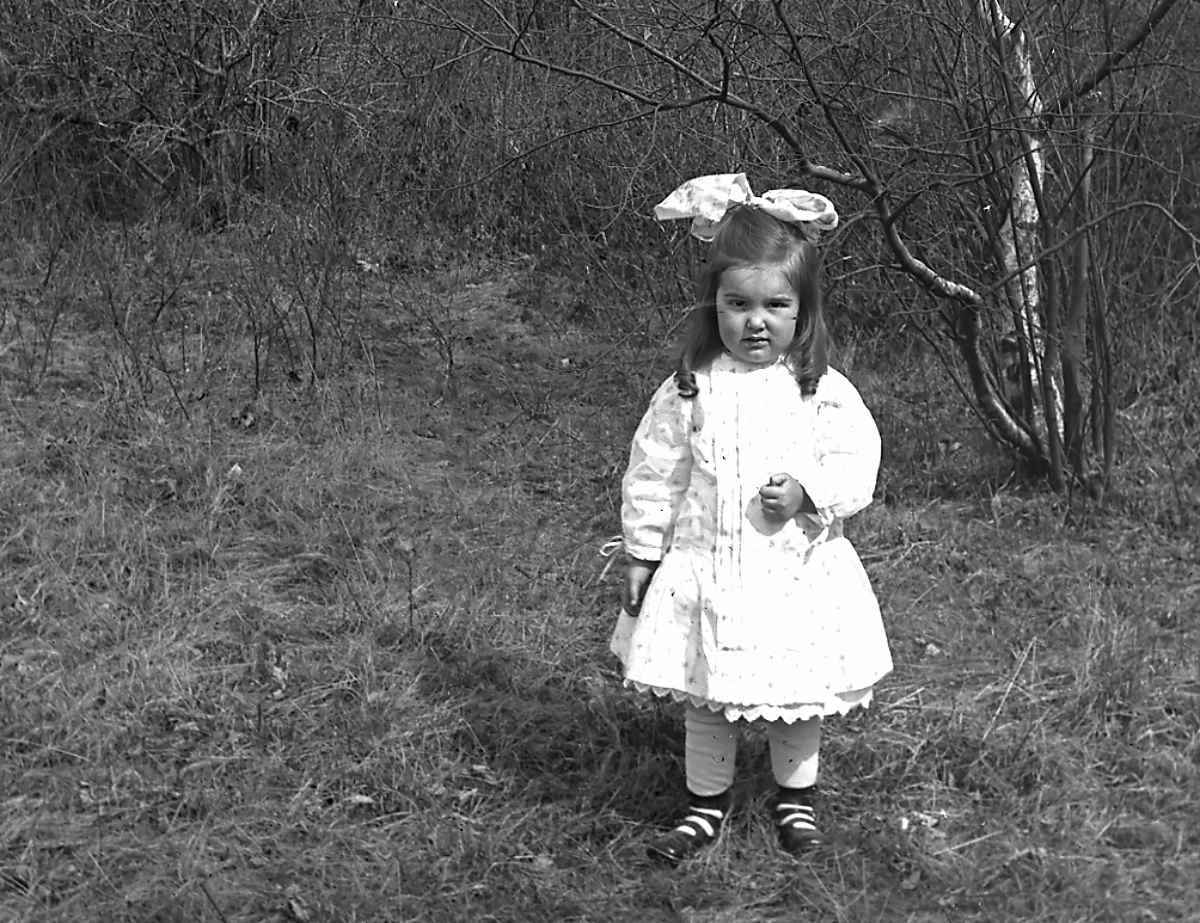
The famous Dorothea Lange c 1930s courtesy of the National Gallery of Art in Washington

Toronto. In the course of browsing the web for photo history, George Dunbar came across the American “National Gallery of Art” website in Washington DC. Included on the site was this article on Dorothea Lange, “Who Is Dorothea Lange? 6 Things to Know“.

Ms Lange was the subject of a few earlier posts on this site (I managed to misspell her first name). While her memorable photos are in Washington, collectors may have copies and her technique is always worthy of careful attention.

A thank you to my good friend George for spotting and sharing this site with us.

Posted in history | Tagged , , | Comments Off on six things to know

for the image collector – Jan 24, 2024

tintype of Studebaker Works c1850-60 courtesy of Michael Lehr (ML Antiques)

Toronto. Michael Lehr of ML Antiques sent me an email recently to announce their first auction. A typical lot is this (shown at left) full plate tintype of the Studebaker Works, a supplier of wagons during the American Civil war.

In his notice, Michael writes, “Welcome to the first Michael Lehr Antiques auction Saturday, January 27th, 2024. My inaugural auction will feature a diverse collection of historical and rare photographic treasures. Whether you’re a seasoned collector or just starting out, there will be something for everyone in this curated offering.

“I have prepared a captivating auction lineup that includes a half plate scenic daguerreotypes by George Johnson which captures the essence of California gold mining.  We will also offer a half plate daguerreotype of a stone bridge under construction. Additionally, portraits and post-mortem daguerreotypes by quintessential 19th century artists by Mathew Brady, CR Williamson, and Southworth & Hawes among others will provide a glimpse into the past, with a rich tapestry of historical moments frozen in time.

“A range of tintypes, showcasing a range of occupations such as a banner girl, a sausage maker, and a blacksmith.  Another standout is the full plate tintype of the original Studebaker wagon factory who produced 1000s of coaches for union troops in the civil war, a testament to the industrial history of a bygone era.”

You can see and read a sampling of the images offered by Michael. Serious image collectors should definitely check things out!

Posted in activities-other | Tagged , , , | Comments Off on for the image collector – Jan 24, 2024

when Kodak was King

drawing of the Eastman (Kodak) Automatic Shutter which was affixed to many of the company’s simple box cameras.

Toronto. For much of the 20th century, Kodak and photography were synonymous. By the mid 20th century Kodak was among the biggest – if not the biggest – in the industry, world-wide. Home base was Kodak Park in Rochester.

George Dunbar, in his pursuit of photographic history came across this remarkable site in Rochester, run by the Rochester Public Library, and graciously chose to share it with us. Amongst many things on the site are a number of Kodak ‘trade’ catalogues. Have a browse and see why Kodak became such a force in photography.

The sound and action of the Eastman Automatic Shutter shown at left may be familiar to many of you (Topaz Photo AI was used to enlarge the drawing and resulted in some rather weird edges and screw heads). The catalogue describes the shutter operation as follows, “To make a snapshot, press down lever”B”  [top left unmarked lever].  To make a time exposure: press down lever ” A ” once to open, and again to close the shutter. That’s all there is to operating the Eastman Automatic Shutter. It is always set.

“The lever “C ” operates the [lens] stops, of which there are three.”

As a child, many of us remember the shutter moving back and forth as the lever “B” was pressed over and over. One press was all that was needed to create about a 1/15 second exposure on the film.

Posted in history | Tagged , , , , | Comments Off on when Kodak was King

Executive Meeting No 43 via ZOOM

PHSC President Clint Hryhorijiw

Toronto. A little chilly out these days! ZOOM lets us meet yet stay indoors and warm.

The latest PHSC newsletter draft by editor Katrin Faridani is ready for review. Those who want a  personal copy of the newsletter but haven’t yet joined the PHSC can drop me an email at news@phsc.ca to be added to our MailChimp list.

Our new Membership Secretary is Lilianne Schneider. If you have some time to help as a volunteer at our meetings and events, drop me a note using this email address: info@phsc.ca. Since we now issue the journal only in pdf format, we are investigating the effect on our records. Remember, if  you UNSUBSCRIBE  to our MailChimp list, you will not receive any journals or other info. And if you change email addresses, please tell us as MailChimp flags such old addresses as CLEANED and cannot add the new address automatically.

*By the way, please note as of 2022, our membership year ends December 31st.** Also as of 2024 memberships are $35/$100 1 yr/3 yr Canadian regardless of the member location (one of the perks of pdf format for our journal).

Our next Toronto meeting is February 21st. We will have a “Show and Tell” meeting via ZOOM. Further details willl be in a post closer to the meeting date.

Co-editor David Bridge and partner Louise Freyburger are writing the next (49-4) issue of Photographic Canadiana.  This issue of our journal is scheduled for release in the first quarter of 2024.

It is important that you are notified as each new journal edition is released. If you are a member but HAVE NOT seen any notification for any journal issue since you registered/renewed, please email me at info@phsc.ca.

And remember to bundle up if you are in the colder part of the world!

some members at the Jan 2024 Executive Meeting

Posted in activities | Tagged | Comments Off on Executive Meeting No 43 via ZOOM

lots of stuff …

A Zorki 4 camera with Cyrillic lettering – made in a Moscow suburb from a recent Auction lot

Toronto.  As we start another new year, PHSC has began to get some dates firmed up. Our next Toronto Meeting will be a Show and Tell on ZOOM next month (February, 2024); The next auction takes place May 5th at the Legion Hall in south-west Toronto (Long Branch) and the spring fair is set for May 26th at the Trident Hall in south west Toronto.

Check this site as the dates approach – added details will be shown. Meantime, enjoy the weather! And the Zorki 4 shown at left. It was in a lot we (PHSC)  auctioned this past fall.

One of the songs back over a half century (1959) ago by Johnny Horton talked about the weather Canada is experiencing just now (hello, Edmonton), “When it’s Springtime in Alaska, it’s 40 below“.

Posted in activities | Tagged , , , | Comments Off on lots of stuff …

what the heck?

a 28mm f/6.3 Hektor wide angle lens

Toronto. Around 1931, Leitz decided to make their tiny Leica an interchangeable lens camera and produced the first few new focal length lenses. Within a year, the Leica’s film to lens mount distance was standardized and thereafter any screw mount lens could fit any screw mount camera (or M-series with an adaptor).

The lens aperture was often designated by the name of the lens (Elmar, Summar, Summitar, etc.). The Hektor seemed to be an odd ball: The 73mm Hektor was f/1.9; the 135mm Hektor was f/4.5 and the 28mm lens was f/6.3.

The f/6.3 wide angle Hektor, shown at left, came out in 1935 and was offered for two decades. It was only made in a screw mount version. The tiny lens was the first Leica lens of 28mm focal length and competed with the then already available Zeiss 28mm f/8 Tessar lens for the Contax. At the time, a faster lens design would have compromised either resolution or angle of view, vignetting the edges of the tiny 1 x 1.5 inch negative.

According to Dr Wright in his Checklist manuscript, The little lens was optically better and coupled to the Leica rangefinder. And the name? Rumour has it that lens designer Max Berek named the Hektor lenses after his dog!


Posted in history | Tagged , , , , , , | Comments Off on what the heck?

more on making it better

Leitz VAROB enlarging lens from the 1930s

Toronto. When Leitz made special enlarging lenses, the first such lens was the VAROB made from about 1933 through 1939. Some people considered the VAROB lens an Elmar lens in a special barrel for use on an enlarger.

Others, like Dr Alex Wright in his Checklist manuscript suggest it is a different lens design. Dr Wright, had an ‘optical expert’ inspect the VAROB and noted at least the rear element differed from the Elmar in ‘curvature and glass’ while the front element seemed identical to an Elmar.

For those who wished to use the camera’s Elmar lens (once it was made removable), special rings like the VALAU and later the VALOO were made to assist the darkroom techie in adjusting the aperture – hard to do in daylight let alone in the dark on an Elmar sans any special ring.

Posted in history | Tagged , , , , , , | Comments Off on more on making it better

remember when

Canadian Kodak Company at Mount Dennis some 90 or so years ago courtesy of the city archives

Toronto. George Dunbar sent me this shot of the Kodak Canada campus in Mount Dennis (now part of Toronto) around 1930. You can see the fields that are no longer empty. My uncle and my father had a garage (auto wreckers) in nearby Weston at the time.

The mighty Kodak Company was devastated by the digital era and filed for bankruptcy a decade ago in 2014. Both here, and at Kodak Park in Rochester, most buildings were razed. Here, one building remains (#9). It will become a station on the new cross-town subway system – after a short relocation move and a much longer renovation  time.

My thanks to George for this image from one of our exchange members and the memories it invoked.


Posted in history | Tagged , , , , , , | Comments Off on remember when

Dail M for …

my 35mm Summicron lens bought in Montreal. It was the most used lens on my M4 camera.

Toronto. … Dr Mandler. The late Walter Mandler was a world renown camera lens designer. The link takes you to his eulogy by Rolf Fricke. This eulogy was published in volume 5-2 of the PHSC newsletter in May, 2005.

Dr Mandler came to Midland briefly to help establish Ernst Leitz Canada and decided to emigrate here and live in nearby Moonstone, Ontario.

In one issue of  The Viewfinder – journal of the prestigious LHSA – there was speculation that Dr Mandler had designed a new 4 element 5cm f/2 lens for the Leica. He wrote a reply noting that the new lens did not replace the 6 element version (which I have) of the Summicron but was intended for the KE7 – the US Military version of the Leica M-4 camera.

According to Dennis Laney (Leica Collectors Guide, Hove, 1992) the lens was marked “ELCAN 50mm f/2”. He goes on to say its design is similar to that of the 90mm f/2.5 Colorplan projection lens. Dr Mandler, in his reply to the LHSA, explained that the Military RFQ did not give points for the high resolution of the Summicron and a redesign was cheaper than supplying the better performing Summicron lenses.

Note: The post title is a riff on Hitchcock’s 1954 thriller. “Dial M for Murder“.

Posted in history | Tagged , , | Comments Off on Dail M for …

photography for the masses

sample of photo editing in Lightroom courtesy Doug Hansgate

Toronto. Within months  of when photography began, word of the new art spread around the world. Studios (and charlatans) soon sprung up catering to people desiring a ‘likeness’. To be successful in this new art one needed to be technical and artistic.

One over-riding goal of photography was to open the art to more people. In the 1870s, dry plate technology reduced the technical expertise needed to make a good photograph. One could buy dry plates, expose them later and develop or have them developed even later still. The famous Kodak camera and the innovation of roll film made photography practical for even more practitioners. The first half of the 20th century saw improvements in films, cameras and lenses. It was possible to take many photos in daylight and have the film processed and printed. The age of the family photographer was on us.

With digital photography it became even easier to photograph (technically but not artistically). And when smartphones with their ‘free’ built-in cameras that made generally technically perfect photos took over, everyone had a decent camera.

Today, many folk after trying their smartphone or digital camera wish to make better photographs. To this end, folks like those on YouTube, or pros like Brian Matiash and Doug Hansgate offer classes or hands-on lessons using Lightroom or other editing tools to crop, adjust, tone, etc. Hands on classes are also offered teaching proper lighting techniques, framing, etc.

Digital technology and smartphones mean all can have a camera today that is nearly technically perfect – given enough light. But would-be photographers still need the ability to recognize the changes needed and the skill to make those changes to go from a mundane photo to a striking one!

Note: The title of this post is a riff on the rather sarcastic Karl Marx opinion on religion.

Posted in activities-other | Tagged , | Comments Off on photography for the masses