Ryerson’s RIC has an open house this month

Recent Acquisitions at the RIC

Toronto. The Ryerson Image Centre has frequent exhibitions. On the 28th of this month (September, 2018), the RIC has an open house presenting the Recent Acquisitions to the RIC collections.

Come out from 11 am to 4 pm and see what is new in your university’s RIC.


Posted in events | Tagged , , , , , | Comments Off on Ryerson’s RIC has an open house this month

dix ans de Passion

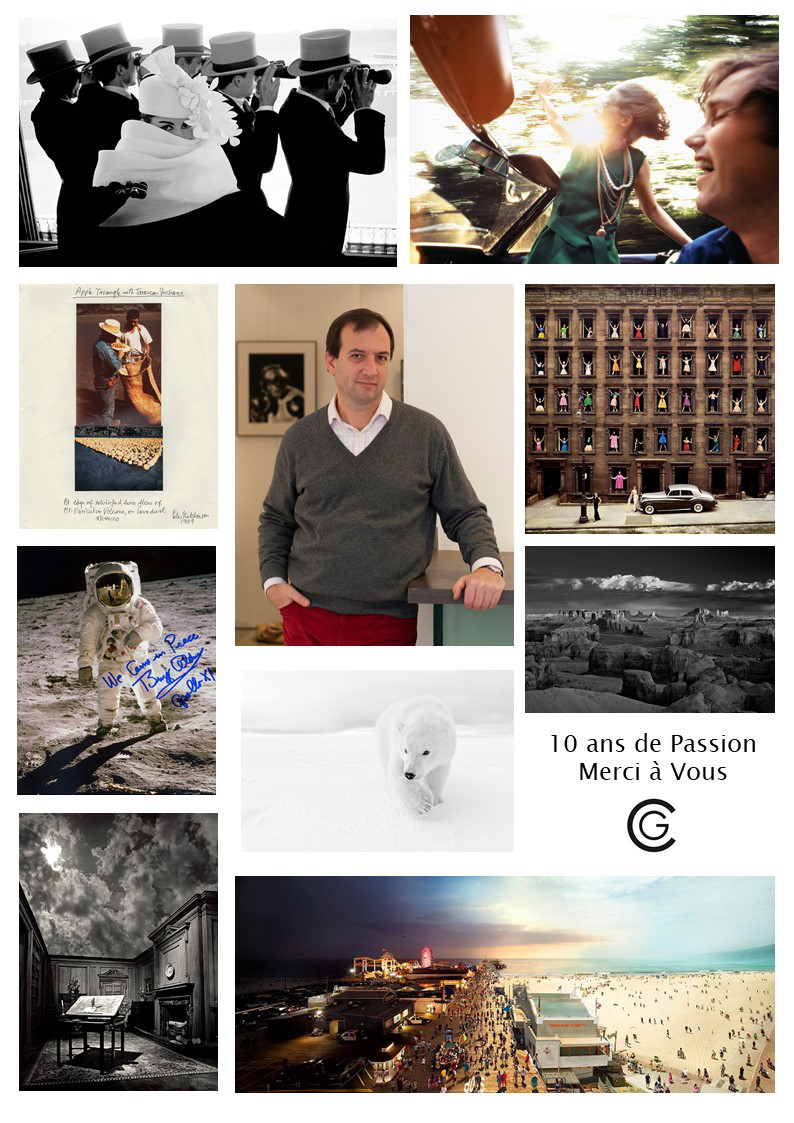
Toronto. To celebrate its first decade as a gallery, Galerie GADCOLLECTION in Paris, France, is posting a series of works for exhibition and sale this month from September 4th to October 2nd.

Details are posted here on its website. You can click any picture to see the whole series being offered.

Check it out and add to your collection with some fine prints from Europe.

Posted in events | Tagged , , , , , | Comments Off on dix ans de Passion

wind beneath my wings

SOAR Drone Photo Contest 2018

Toronto. Bette Midler sang this plaintive song for the sound track of the 1988 movie Beaches. It is appropriate for this post on the SOAR photo contest.

We have had inexpensive small drones supporting cameras for many years now. SOAR invites you to submit your drone photos. Let your imagination soar!

Posted in activities-other | Tagged , , , | Comments Off on wind beneath my wings

scooping the war

Lieutenant Ken Bell of the Canadian Army Film and Photo Unit digging a slit trench in the Normandy beachhead, France, 10 June 1944.

Toronto. A few days back George Dunbar dropped me an email about an  article in the magazine/website Canada’s History called Scooping the War. Those of us who are old enough or who were blessed as news photographers know full well how important a “scoop” was in the days when newspapers ruled .

One of the photos on the Canada’s History site is of a young Ken Bell in Normandy that fateful year (shown at left). The late Ken Bell spoke to us on two occasions: March of 1986 on his photographs of the Dancers in the National Ballet and some time earlier on his war experiences.

Bob Lansdale also put together this comprehensive pdf of the June 1944 D-Day raid on the shores of France as initially reported in  our journal last year.

Posted in people | Tagged , , , | Comments Off on scooping the war

Struan on Advanced Fashion Photography

Fashion Photography Class at Ryerson. Click image for larger view.

Toronto. Drop by Ryerson this September to learn about fashion photography from Struan – a master.

Details of course CDFP 381 are shown on  this Ryerson web page. We posted his spring classes back in April with this post that links to his site too.

Ryerson has grown rapidly here in Toronto and has an enviable program and post graduate program in Photography. The Toronto photographer Struan is one of many professionals at this remarkable city university.

Posted in activities-other | Tagged , , , , | Comments Off on Struan on Advanced Fashion Photography

Ohio Picnic Sept 16th

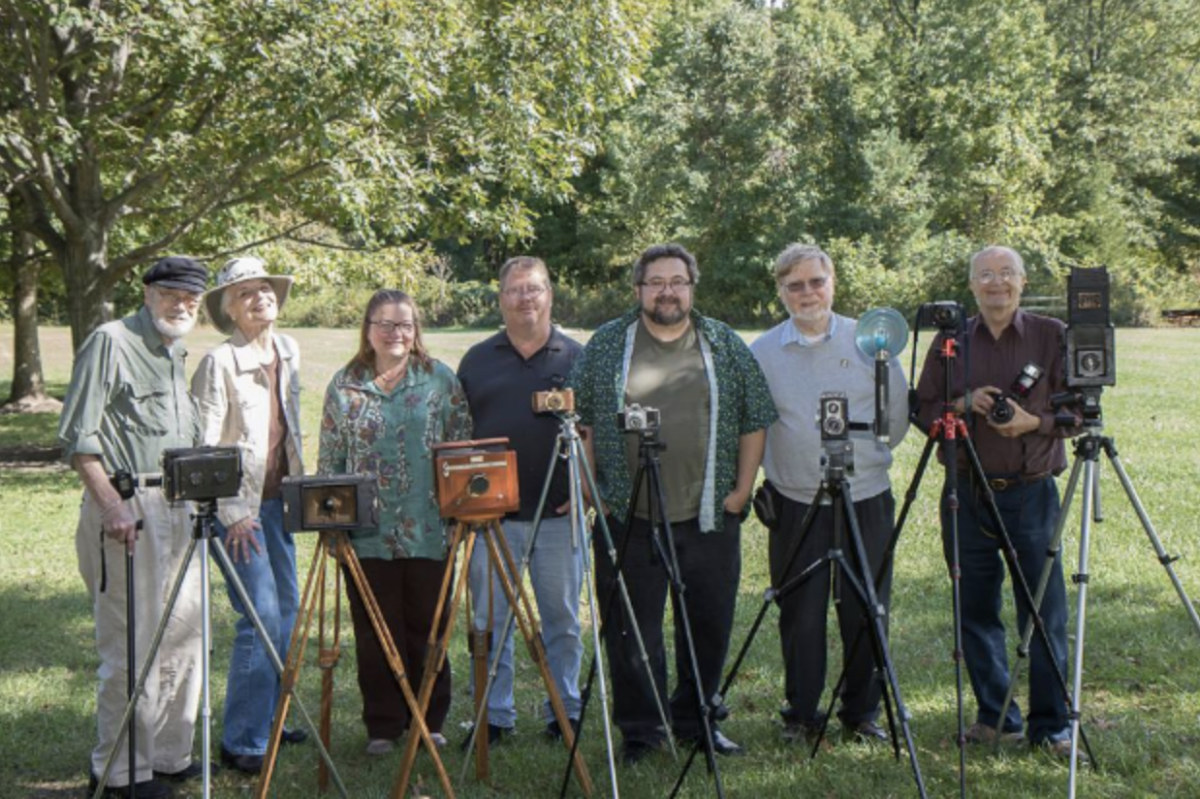
Members of the OCCS ready to picnic

Toronto. Heading to Ohio this month? Join the Ohio Camera Collectors Society on Sunday September 16th at their annual picnic.

Email them at occs@insight.rr.com for times and location and to RSVP. The invitation is shown here. Details of the OCCS are on this site.

Posted in activities-other | Tagged , , , , | Comments Off on Ohio Picnic Sept 16th

easy as I, II, III

A prewar black enamel Leica II camera and Elmar lens.

Toronto. Did you ever wonder why the original Leica I with a “hockey stick” infinity lock and a non-interchangeable 5cm lens (or any I or II for that matter) is so darn hard to find? The answer lies with the old Leitz factory. In 1930, when Leitz came out with interchangeable lenses, owners of the original Leica Is could return them to the factory and have the lens and lens-mount replaced.

In a similar fashion, Leitz would retrofit Leicas at the factory to add slows speeds and/or built-in rangefinders. Only a careful scrutiny of serial number tables can show if your III, or IIIa, or IIIc, or IIIf began life as a I or II model. All changes were factory made. Leitz sold versions designated as models I or II to allow people to buy less expensive models of the Leica. Accessories were sold to add slow speeds or a rangefinder ability if it was later deemed needed and a factory retrofit was not practical.

Similarly, while post war lenses were usually coated to improve contrast, prewar and war time lenses were often returned to the factory post war and coated.  This made the contrast far better but made dating a lens difficult unless a serial number list was in hand (that too was an issue since some lenses were assembled post war from prewar parts).

Posted in camera | Tagged , , , , , | Comments Off on easy as I, II, III

retrofitting lenses

ISOOZ screw-mount to M-mount lens adaptor

Toronto. When Leitz came out in 1954 with the wildly popular M3 camera, they took into account the money Leica fans had tied up in auxiliary lenses and accessories. While the M series camera bodies were thicker than the older screw-munt bodies, the actual film to lens mount distance was 1mm shorter and the diameter of the body opening for the lens slightly larger.

This meant a thin tube could be mounted by bayonet to the M3 and threaded on the inside to take a screw-mount lens!  The tubes came in various styles and  were cammed to automatically set the bight line viewfinder frame. Wrong adaptor? No problem! Just use the tiny lever on the camera front to change the bright line to match the lens. Even today (2018) an adaptor will allow older Leica lenses and accessories to fit a modern day camera with a Leica screw-mount style lens mount.

The various original 1mm lens adaptors are ridiculously expensive today!

Posted in camera | Tagged , , , , , , , , | Comments Off on retrofitting lenses

do you see what I see

RASAL multi lens sports finder c1935 in black enamel

Toronto. When Leitz marketed their famous little Leica in 1925, it had a squinty little 5cm viewfinder that remained unchanged for the life of the screw mount cameras.  Worse,  by 1930, Leitz had added lenses of other focal lengths and made the Leica interchangeable.

To compensate for this, the company offered a slew of better viewfinders which could be slipped into the accessory shoe. Most could be adjusted for vertical parallax correction. These gave the photographer a clearer view of his subjects and framed the captured area for lenses besides the traditional 5cm lenses (Elmar, Summar, Summicron, etc.).

The viewers came in sports frame versions like the RASAL example shown above. Many had means to adjust to various focal lengths like the VIDOM, VIOOH, or the Leitz NY IMFIN, usually known as an Imarect. Many viewers offered bright lines marking the boundary of the focal length while allowing the photographer to see subjects about to enter the field of view. Some where collapsible to make them more compact to carry. Continue reading

Posted in camera | Tagged , , , , , , , , , | Comments Off on do you see what I see

made in the shade

Left the FIKUS for Leica lenses from 35mm to 135mm; right FISON for the 5cm Elmar

Toronto. Stompin’ Tom wrote a song of the same name in 1986. (And, yes, I have the CD too.) Before the second world war, lenses were uncoated as optical coating was still to be invented. When Leitz made the Leica interchangeable in 1930, it offered a number of lenses. To help the contrast, sunlight had to come from behind the photographer. This was common advice to all amateur photographers.

Lens hoods or sun shades helped as long as the sun did not actually hit the film. Leitz marketed many different types of hoods over the years. Some came with the lens, like the hood for my Summicron, and some did not, creating a modest after market. Above I show the variable lens hood, the FIKUS and the fixed 5cm hood for the Elmar, the FISON. These examples are both post war but both hoods were offered from the  1930s. While mine are marked Leitz Germany, the original design was by Leitz NY!

Today, we never worry about such trivialities. Either the smartphone comes sans hood or the digital camera includes that seldom used accessory.

Posted in lens | Tagged , , , , , | Comments Off on made in the shade