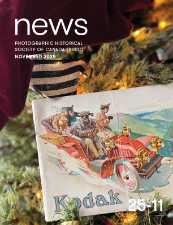
cover shot – Niagara Falls c1891

Niagara c1891 (American Falls and Goat Island) by John Zyback – half a stereo pair

Toronto. Editor Bob Lansdale went to great lengths to source the cover shot for each journal issue – giving precedent to Canadian content.

For issue 25-2, Bob returned to Niagara Falls using one of a stereo card pair taken by John Zyback of Niagara. Bob describes the shot as follows, “As with covers on the first issue of our journal in March 1975 and Souvenir Issue of May-June 1984, marking the society’s tenth Anniversary, we have chosen to return to Niagara Falls for the illustration on our Special 25th Anniversary issue.

“John Zyback of Niagara Falls, Ontario was much praised for his dynamic views of the Falls winning a Silver medal at the 1891 convention of the Photographic Association of Canada. The St. Louis and Canadian Photographer singled him out for special mention.”

Collectors of photographica, you may discover a Zyback photograph at a PHSC event, or other interesting items for your collection. Our next event, described in issue 25-7 of PHSC News (our newsletter), is the Fall Fair on October 19th this year.

Posted in history | Tagged , , , | Comments Off on cover shot – Niagara Falls c1891

remembering Walter …

Walter Kluck in his office at Leitz Canada with a Leica M4-P. Circa 1980 – courtesy of LHSA article

Toronto. Continuing with the exchange member  ‘guest’ article to celebrate our 25th anniversary year [1999], editor Bob Lansdale chose this piece from the Leica Historical Society of America (LHSA) titled, “Long Live the Leica M! A tribute to Walter Kluck, 1922-1996″ written by Rolf Fricke just across the lake.

Rolf’s article is highlighted by these words.”Oskar Barnack invented the Leica camera in 1914. Ernst Leitz II marketed it in 1925. Ludwig Leitz and Willi Stein updated it with the Leica M3 in 1954. Walter Kluck at Midland, Ontario saved the Leica M line from extinction in 1976.”

And yes, the famous ‘M’ line lives to this day as a fine digital camera! When the article was published, Bob had an M6 in his arsenal and often got positive comments on the quality and sharpness of his prints taken with a summicron (f/2) 35mm focal length lens. I have the same Mandler designed lens, but on an M4 camera.

In his tribute to Walter, Rolf begins, “It is because of Walter Kluck that the M-Leica is alive and well today. M-series rangefinder Leicas flourished until the seventies, when Japanese single-lens-reflex cameras reached a dominant level of popularity among photographers, thus reducing the demand for rangefinder cameras. Lower quantities and rising manufacturing costs made production of rangefinder Leicas uneconomical in the historical town of Wetzlar, Germany, the traditional home of the Leica.

“This led to the painful decision to discontinue Leica rangefinder cameras, retaining only the new line of Leicaflex cameras. The end of Leica M camera production in Wetzlar would, in turn, trigger the cessation of Leica M lens production in Midland.

“That decision was about to be implemented when Walter Kluck, the enterprising president of Ernst Leitz Canada Limited, vigorously campaigned for the transfer of Leica M4 camera production to Canada. Leica M lens production accounted for a major portion of Leitz Canada’s business, and its cancellation would mean serious difficulties for that company. The manufacture of other optical products (like military and specialty optics) was still too small to absorb the cancellation of Leica M lenses.

“Besides, Kluck was totally loyal to Leitz, and he firmly believed in the Leica M system. He was also deeply concerned with protecting the jobs in the Midland plant, so he did what only a courageous manager would dare to do in such a situation—he forged ahead.” …

To read all  of this article, view the issue 25-2 pdf file on the free members-only DVD/thumb drive. To join the PHSC, look above or at right to ‘Membership’. Email any questions to Lilianne at member@phsc.ca. And be sure to attend all our 2025 events (the October 19th fair is next). While we can’t say you will find that special old Leitz/Leica bit for your collection, we can say you will see old friends and some items to perfectly complement your collection.

Posted in history | Tagged , , , | Comments Off on remembering Walter …

three for the money …

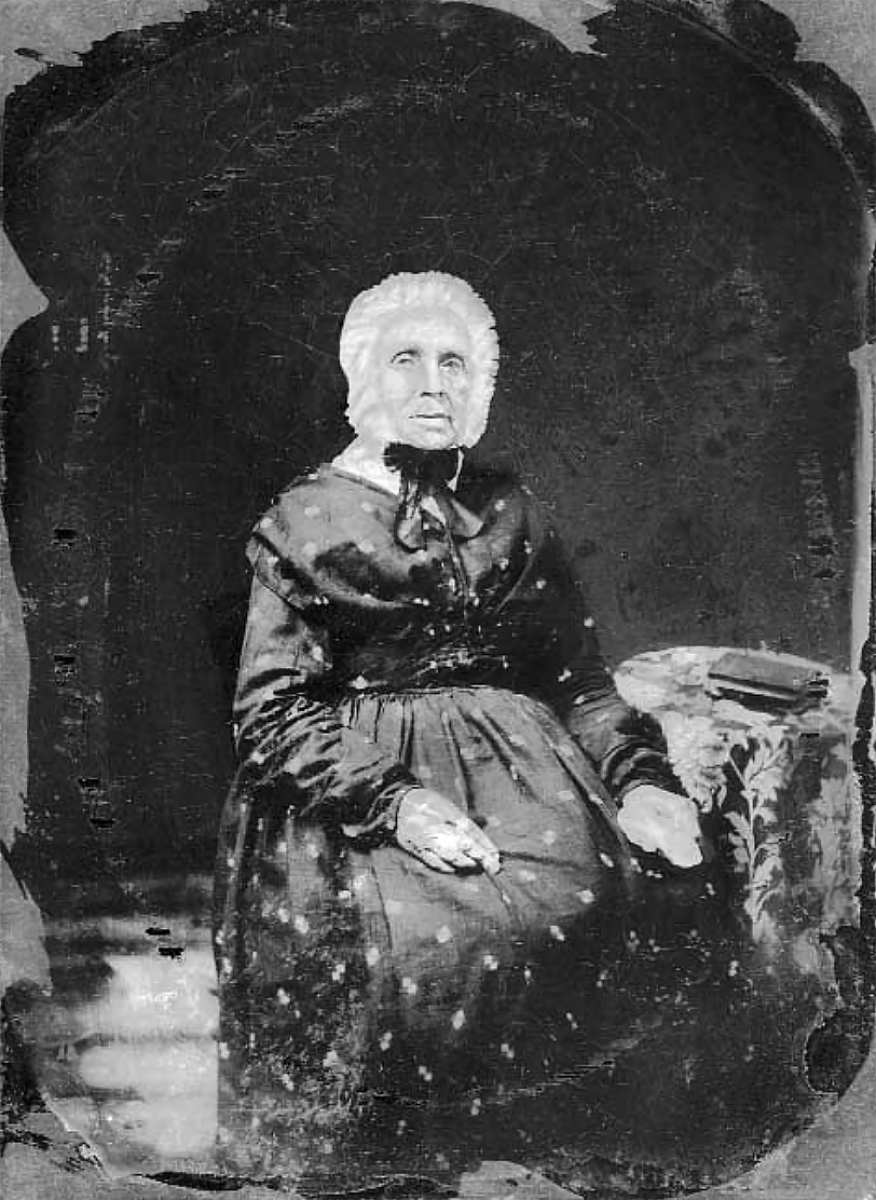
a trio of sitters on a tintype in the mid 1800s

Toronto. As collectors of photographica know, tintypes have been around for years as a cheap means to capture a likeness (mid 1800s to mid 1900s). Easily mailed – no glass to break – and fast to make, tintypes became popular at vacation locales like seasides, fairs, carnivals, and even on the summer streets to capture the likeness of visitors.

I picked up this tintype (at left) about 47 years ago at one of our fairs. Photographica collectors can augment their collections at our 2025 events, Our fall fair is next on the agenda on October 19th.

The fair poster is shown in the PHSC News 25-7 and will be posted here with details closer to the event. Mark your calendar and make sure you visit our famous fall fair!

Posted in history | Tagged , | Comments Off on three for the money …

1974 and all that …

Linsky by Lansdale

Toronto. Look at our web site header and you will see my note “founded 1974”. Did you ever wonder why I chose that year to display as our founding year?

Issue 25-2 of our journal explains it all in an article by then editor, Bob Lansdale who interviewed the society’s founding president, John Linsky. Bob illustrates his article with numerous photos covering the first quarter century of our society.

The article begins, “Talk with any of the founding officers and members of the PHSC and they will tell you that the past twenty-five years have slipped by too fast; but that quarter century has left a trail of valuable memories as the Society has moved from project to project, from success to success.

“It all started in the summer of 1974 when John Linsky, while strolling on Eglinton Ave. West, spotted a collection of old cameras displayed in the window of the Canadian School of Photography. Intrigued, he introduced himself to the proprietor, Larry Boccioletti and found they had a mutual interest in collecting photographic memorabilia and saw the need for a collectors society in Toronto.

“Weeks later, John brought fellow collector, Morris Fischtein, into the circle who offered to support the idea of forming a club.

“As Larry recalls the events, ‘I had the experience of forming the Photographic Historical Society of New York in 1969 so could see the real benefits of pulling together a group of like-interested camera collectors here in Canada.

“As fate would have it, my school of photography ‘went down the tube’ so I had a lot of free time on my hands. In discussions with Morris we laid down the basic plan of attack; Morris was too busy to offer time for the project but agreed to bank roll the initial expenses with a cheque for $100 – a tidy sum which I certainly wasn’t capable of covering in my circumstances.

“I set to work each day, phoning people I thought might be interested in such a club, asking if they knew any others with similar interests. Pretty soon there was a list of some 150 names from which were selected 100 to receive a letter explaining our aims and inviting them to a meeting at the Constellation Hotel in Rexdale (northwest Toronto). Newspaper ads also promoted the founding meeting of October 23rd, 1974’”.

Want to see and read more about the founding and first quarter century of our society? It’s all there in the 25-2 pdf file on the free members-only DVD/memory stick. Join today with cheque (see above) or PayPal account/credit card  (see right). Just see “Membership” and follow the instructions. Send an email to Lilianne at member@phsc.ca if you have any questions.

NB. The post title is from a booklet I once had called “1066 and All That“. It is a spoof on English history.

Posted in activities | Tagged , , , | Comments Off on 1974 and all that …

what’s an Alexanderplatz?

Lomography’s Alexanderplatz Edition

Toronto. To all you film junkies out there, Lomography announces their latest release- the Alexanderplatz edition of a film camera. Lomography cameras tend to be film based and simple to use, but with features that allow the user to experiment.

For more elaborate film cameras – or to complement your collection be it film, digital, photos, etc. visit our 2025 events. Next up is the fall fair on October 19th this year. See the issue 25-7 newsletter for the poster. Closer to the date we will post details and the poster here as well.

Posted in activities-other | Tagged , , | Comments Off on what’s an Alexanderplatz?

memories …

PhotoEd’s coming Memory Issue

Toronto. Many families collected old photos in an album, or shoe box, etc. A lady I once knew routinely captured her growing family and took the time to put the photos in an album. The photos trigged memories to family members and showed how mothers and fathers looked in their younger years. Sometimes there were surprises, like an early pet previously unknown to later generations.

The next issue of PhotoEd magazine recognizes the value of photographs – the issue will feature “Memories” and is called the Memory edition.. Check out the link to see what’s coming – and at top left is a link to back issues of this newsletter too.

Of course you can go to PhotoEd magazine and see what print offers, plus read the digital issues. Inspiring photography for image collectors and more. By the way, visit  our 2025 events and add to your collection. Next date is October 19th for our famous fall fair. Details will follow in a post closer to the event – and can be seen now (for the impatient) in issue 25-7 of our newsletter.

Posted in history | Tagged , , , | Comments Off on memories …

a weird lens

an unusual lens signed as from a Montreal dealer

Toronto. In issue 25-1 (June 1999), Bill Belier has a very strange lens in his column “A Treasure from My Collection“. Bill explains, “This month’s “treasure” comes from Gerard Spiegel of Scarsdale, New York. A member of P.H.S.C. for over twenty years, he is well known throughout the photographic fraternity as a collector and writer.”

Bill contacted our then editor, Bob Lansdale, to share Gerald’s letter and inquiry. Gerald writes, “In the enclosed Polaroid you will see a brass-tube lens with an end cap with a pivoting shutter plate and slot for five Waterhouse stops. The stops are numbered with the opening diameters in millimeters from 10 through 48. The pivoting plate[ is marked] “6 1/2 IN”; directly below is an egg-shaped logo engraved “Hearn & Harrison, Montreal”.

“The entire front end screws neatly  to the end of the tube, but there is no flange or other provision to mount the tube to a camera body. The lack of a mount is not a problem as Simon Wing regularly used a “press fit”, where a tube would be forced into a fabric-lined hole in a lens board.

“It’s the Hearn & Harrison name that I cannot locate. This has the earmarks of a tintype lens, and if it didn’t have the unique front end, I would have assumed it was off a four-tube brass lensboard with a 6 1/2” focal length.” …

Members read more of Gerald’s letter and its outcome in the pdf file for issue 25-1 on the free members-only DVD/thumb drive. See above and at right under “Membership” to join. Questions can be emailed to Lilianne at member@phsc.ca.

Posted in history | Tagged , , | Comments Off on a weird lens

moving shadows at home

Vitak – earliest movie projector for home use

Toronto. As mentioned in an earlier post, in issue 25-1 we have a collection of reprints from exchange organizations. This one originally appeared in sixteen frames – the journal of the Movie Machine Society (MMS). In “The Vitak Story”, Alan Kattelle, tells the story of ‘America’s First Home Movie Projector’.

Alan begins his tale, “The next time you are planning a trip into New England, you owe it to yourself to include a stop in the pleasant town of Bucksport, Maine, located north of Portland at the head of Penobscot Bay.

“Bucksport is the home of Northeast Historic Film, an non-profit organization founded in 1986 by David Weiss and Karen Sheldon, dedicated to the collection and preservation of film and videotape of interest to the people of northern New England.

“The organization is housed in what used to be the 70 year-old Alamo Theatre, which has been transformed under the leadership of David and Karan into a modern movie theatre and a state-of-the-art film archive, with holdings of over four million feet of film and video tape. Much of the archive is available to qualified researchers.

“Natalie and I visited “Northeast” last summer looking to renew our friendship with David and Karan and seeing all the progress since our first visit, several years ago. After the pleasantries, David remarked that someone had called to say they had a Vitak projector, and David wondered if I was familiar with that machine?” …

Of course members read the issue 25-1 pdf file on the free member-only DVD/memory stick and learned about the 1902 Vitak home movie machine and the beginning of motion pictures for the home. See Membership above or at right to join, Email your membership questions to Lilianne at member@phsc.ca.

Posted in history | Tagged , , | Comments Off on moving shadows at home

freaky fotos

Spirit photograph by Édouard Isidore Buguet

Toronto. In the 1800s, people became fascinated with the dead and tried to see if ghosts existed and if so could they be photographed. … Well, with that kind of opening, savvy photographers leapt in to action and created photographs with ‘ghosts’ . …

As a result, today, collectors of old photos occasionally have a few ‘ghost’ photos in their collection. These photos were often taken in the UK and America. The temptation to double expose a plate began almost as soon as photography. Perhaps the early examples were simply accidents but they soon led to the smarter photographers creating ghosts or spirits on their plates on purpose (and for profit).

Drop by at our 2025 events to add to your collection. Lots of interesting items abound, even if you don’t spot any ‘ghosts’ 🙂 The next event will be our famous fall fair on October 19th at the Trident Hall on Evans at Islington. Free parking at the hall and nearby, good food, good companionship, and a great chance to expand your collection.  Details in PHSC News 25-7 now out. A poster and details will appear here near the end of next month.

NB. The post title is based on the title of Jamie Lee Curtis’s opus Freaky Friday and its sequel, Freakier Friday which Ms Curtis touted on Stephen Colbert’s Late Show a few nights ago.

Posted in history | Tagged , , , | Comments Off on freaky fotos

everything is relative …

Allandale Ontario Station c1906 or earlier. A slight crop of the original postcard by The Valentine and Sons’ Publishing Co. #100942

Toronto. …When this charming postcard of the GTR station in Allandale was sold, Grand Trunk trains delivered passengers to/from Toronto; This end of Kempenfeldt bay was clean, sail boats floated along on a summer’s breeze and people ate a hearty meal at the station restaurant.

Today, GTR and its successor, CNR, no longer deliver passengers; The ending ‘d’ was dropped from Kempenfelt bay; the end of the bay is/was polluted; the pleasure sail boats have departed; a dirty 30s government dock was build and allowed to deteriorate; and the restaurant is no more.

In the 1840s daguerreotypes were considered marvellous. Portraits could be taken in minutes and the final product delivered to the sitter in under an hour. And it was cheap compared to a miniature (painting).  No one cared that the colour was lost unless hand painted. No one cared that it was a one-off image. It was remarkable that a sitting took only a few minutes. So short that special clamps and furniture were sold to briefly hold the subject steady.

Today we capture an image in full colour in sub-seconds; view it and if acceptable send it anywhere in the world seconds later. Who ever hear of minutes to capture a portrait and then mail it (the original!) to another taking days, weeks or months! Indeed things are relative – and we are so spoiled!

Posted in history | Tagged , , , | Comments Off on everything is relative …