a Russian Vivian Maier?

a Russian Vivian Maier?

Toronto. Vivian Maier was a Chicago nanny who quietly photographed the world around her but never showed the results. Her works were discovered posthumously and surprised viewers when the prints revealed her talent and professional eye.

Recently, a similar find was discovered in Russia by Asya Ivashintsova-Melkumyan. This time it was her mother, Masha Ivashintsova, (1942 – 2000) who left a legacy of over 30,000 photos discovered after her death by her daughter. The website, mymodernmet.com reported this find back on March 19, 2018 in an article by Jessica Stewart titled Interview: Woman Discovers Over 30,000 Secret Photos Left Behind by Her Mother.

My thanks to my good friend Russ Forfar deep in the wilds of Southern Ontario for sharing this Modern Met article with me.

Posted in people | Tagged , , , | Comments Off on a Russian Vivian Maier?

stereopticon

Toronto. Over the years people have christened their weird and wonderful optical marvels with odd names like “stereopticon” for a mechanical projector of 3D and 2D images. When I looked up the definition of the name in a dictionary, it was described as, “ a slide projector that combines two images to create a three-dimensional effect, or makes one image dissolve into another“.

This particular stereopticon was found reported in the February 1920 magazine “Electrical Experimenter“. The device was made and marketed by General Electric as the “Owen Automatic Stereopticon“.  A patent for a similar device with a vertical slide tray (USPTO No. 1,296,583) was assigned to Frank L Oleson of Chicago in 1919. The number  of mechanical components in both designs suggest the trouble-free “life time” operation was a bit optimistic.

Frank L Oleson patent for an Automatic Stereopticon c1919

It’s easy to see why this cumbersome machine disappeared when 35mm transparencies and projectors hit the market (perhaps even earlier). My thanks to my good friend George Dunbar for bringing this bit of photographic history to my attention.

Posted in history | Tagged , , , , , | Comments Off on stereopticon

Zoomin’ into 7th heaven

Toronto. We held our seventh COVID-19 inspired exec meeting via ZOOM (This could be the beginning of a wonderful friendship as Rick said in Casablanca). A big thanks to Celio for arranging the meeting once again. Key changes are shown below. Toronto is in stage 3 at present as we enter the second wave of COVID-19. Sadly ALL events are cancelled at least until 2021. Our monthly meeting venue (North York Memorial Hall) is closed to events by the city until at least December 31, 2020.

PHSC News will go out shortly for October. Sign up at news@phsc.ca for a free pdf copy. Members get specials plus the journal via pdf. Contact me if you are a member and HAVE NOT seen the pdfs. Some members have unsubscribed to MailChimp; some emails are invalid; and others have no email on file with the society. Any questions? Just drop me a note at info@phsc.ca (we are looking at alternatives to in person meetings).

Posted in activities | Tagged , , , | Comments Off on Zoomin’ into 7th heaven

that’s how the light gets in – II

Petzval Portrait lens – first popular photographic lens design – early 1840s

Toronto. When the Daguerreotype process was announced in January 1839, it was so slow that only still life and landscape views could be recorded. The news of the process speed resulted in a two direction thrust: chemically, to enhance the process in order to increase its speed of recording; and optically, to design a much faster portrait lens for the camera.

The decision to improve the portrait lens speed was via an announced award by the “Society for the Encouragement of National Industry“. Their challenge was taken up by amongst others, Chevalier and Petzval. Chevalier’s design won gold (but was soon forgotten), while Petzval’s, at the university in Vienna where he taught, won silver and went on to be a great success. In spite of no design experience, Petzval designed an f/3.6 lens of 150mm focal length with the prescribed flat field, etc. The submitted lens was manufactured in Vienna by the optical house of Voigtlander and later by many other optical houses. This lens was about 20x faster than the original Chevalier lens. (See the previous post on Chevalier’s 1839 lens.)

And like I said in that post: To read more, pick up a copy of Rudolf Kingslake’s “A History of the Photographic Lens“, (1989) or  Josef Eder‘s epic “History of Photography” (1932, 4th edition) translated by Edward Epstein and published in 1945 by Columbia University with the Dover reprint in 1978.

NB. The title is a line from Montrealer Leonard Cohen’s song/poem  “Anthem“. I have enjoyed his music and poems for over a half century now. This version is from his last world tour and was recorded in London, England.

Posted in history | Tagged , , , , , , , | Comments Off on that’s how the light gets in – II

that’s how the light gets in

Wallaston c1812 Meniscus for cameras

Toronto. Did you ever wonder how Chevalier managed to make the first camera for Daguerre complete with a lens before 1839 ? The lens had been designed a quarter century earlier c1812 by the  Englishman Wollaston as a landscape lens for the then popular Camera Obscura. It was a simple meniscus design with the concave side facing the scene. The primitive lens was about f/15 in today’s terms.

The meniscus design resulted in a flatter field of view than any previously used Camera Obscura lenses. However; the meniscus when used on a Daguerreotype camera was not great as its chromatic aberration was too high (and too variable with focusing distance). For example, when the human eye saw warmer colours were in focus on a ground glass, the resulting image on the daguerreotype plate was out of focus (the medium was more sensitive to the cooler blue colours). By 1839, Chevalier had solved the chromatic aberration problem by adding a second element cemented to the first allowing the focus on the ground glass to match the focus on the silvered plate.

To read more, pick up a copy of Rudolf Kingslake’s “A History of the Photographic Lens“, (1989) or  Josef Eder‘s epic “History of Photography” (1932, 4th edition) translated by Edward Epstein and published in 1945 by Columbia University with the Dover reprint in 1978.

NB. The title is a line from Montrealer Leonard Cohen’s song/poem  “Anthem“. I have enjoyed his music and poems for over a half century now. This version is from his last world tour and was recorded in London, England.

Posted in history | Tagged , , , , , , | Comments Off on that’s how the light gets in

sand in the works

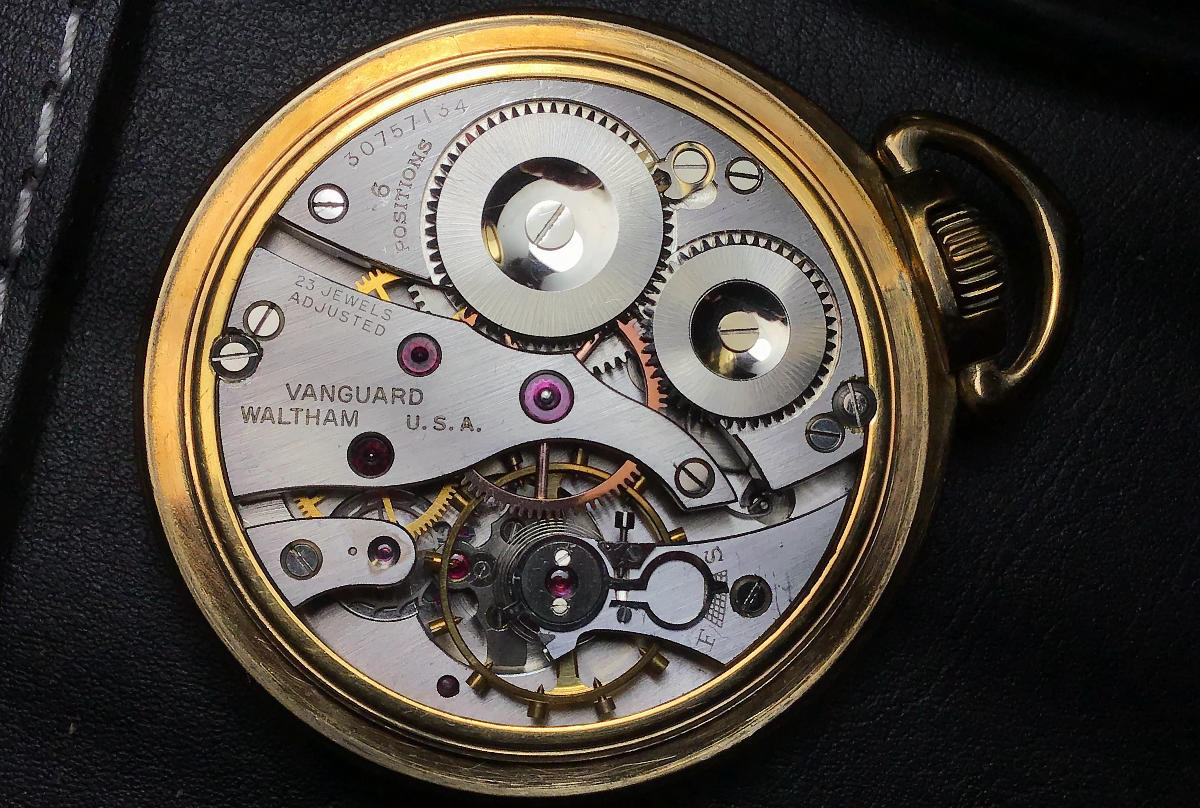
Hamilton 23 jewel pocket watch

Toronto. The digital revolution is driven by sand. Silicon is nothing more than reconstituted sand, after all. We in photography are all too aware of the severe impact digital has had on our industry. Film, chemicals, darkrooms, traditional cameras, lighting etc. have all but disappeared (into our fairs and auctions; in to member collections).

But think about other industries. This hit home the other day when I used my iPod Touch to check the outdoor temperature. Good bye thermometers and the factories that made them and their sales at wholesale and retail.  40 years ago I would have looked at the outside thermometer next to my kitchen window. Today, I pull out my iPod Touch and a quick flick of my finger tells me whether to add a sweater or coat before going outdoors.

Books? Magazines? Newspapers? All traditional copies are quietly disappearing as are the publishers, printers, stores, pulp makers, fine paper makers, reporters, photographers, managers, and everyone else who relied on the hard copy publishing industry for jobs.

Almost any industry you can think of was impacted by the digital revolution. The internet has taken news, education, research, entertainment, etc. by storm. Over the years, every industry somewhat felt the impact of change, but not this strong; not this wide. As consumers we benefit from cheaper cameras, cheaper images, cheaper communications, better transportation, better computers, etc., but at a short term severe cost to those who produced the now obsolete things we once consumed.

The world is indeed in a revolution just as Alvin Toffler predicted in his monumental Third Wave and Future Shock books over half a century ago. The name of this post is a riff off an old British saying, “a spanner in the works” which the Beatles’ John Lennon revised as “A Spaniard in the Works” for a book title.

Posted in history | Tagged , , | Comments Off on sand in the works

who ya gonna call – II?

Fotron 828 roll film camera from a LIFE ad

Toronto. Who ya gonna call when you want people in middle class America to know about your fresh egg and do some digging? LIFE magazine, that’s who! In the March 8, 1969 issue, a full page ad on page 19 touted this odd camera – sans price – and advised readers to send in the postage-free card, or if missing, send the ad’s coupon to Triad  Corp down in sunny California for details.

Never heard of the camera? I had’t either. Turns out the features advertised were rather pricy. The camera was sold by door to door “salesmen” for “$150 to $300 and up” according to an old paper edition of McKeown’s price guide (nearing two decades old now).

The plastic camera used the 828 film in special cartridges to make one inch square negatives or transparencies. The camera was somewhat clunky and ugly looking but had fully automated workings, electronic flash, rechargeable batteries, etc. To many photographers, the fact that it was sold outside camera shops at wildly varying prices, and by cold calling door-to-door salesmen, marked the camera’s ill fated sales campaign as “the greatest photographic ‘rip-off’ of the century” – again quoting my old copy of McKeown’s. Today, internet information is just as unkind to this camera.

The title of this post is from Ghostbusters, a favourite film of mine, and was first used a couple of months back in a post on this site that talked about information sources for collectors of photographica.

Posted in history | Tagged , , , , , , | Comments Off on who ya gonna call – II?

something to sit upon

Photographic Canadiana Special Supplement Vol 1-4

Toronto. Well, what do you know? Here is another special members-only supplement (vol 1-4). This one is on posing chairs of all things. In a more leisurely era, a studio portrait took a few seconds of absolute stillness to capture. To make it easier for the subject(s), firm props like chairs, were available to hold (or sit upon).

Vol 1-4 was sent out last Friday afternoon to all current members with an email address. If you did NOT get a copy, please email me at info@phsc.ca and I will send you a copy after verification of your membership. Not YET a member? well, for heaven’s sake! Grab your plastic and register via PayPal on the upper right of this page!

This is a reprint of a 1994 publication in California. The preamble inside the front cover states, “The advertisements and illustrations in this supplement originally appeared in The Photographist, number 101, the journal of the Western Photographic Collectors Association (WPCA) in 1994. The WPCA was affiliated with the University of California Museum of Photography and stopped publishing circa 1996, going into dissolution in 2001. For the story of the history of the WPCA, see the article in Special Supplement Vol. 1 No. 1.

“In an effort to make this material available to collectors, historians and those interested in the history of photography, this content was digitized by the Photographic Historical Society of Canada (PHSC) and Milan Zahorcak in 2019 and 2020 for distribution to PHSC members as a seven part series. The first instalments were about magic lanterns (two parts), and shutters . Subsequent issues of the series, forthcoming in the following months, are, flash lamps and two parts covering early enlargers. If you have any questions or would like higher resolution scans of any of the images, please contact the PHSC at info@phsc.ca.”

Posted in history | Tagged , , , | Comments Off on something to sit upon

PhotoEd Online Fall 2020

Black and white in colour by Joel Yagi in Ottawa courtesy of PhotoEd magazine

Toronto. Rita has another great issue of PhotoEd magazine online. Have a look at all the great portraits and more! And remember, the print edition of PhotoEd is different than the online issue.

We heard about the new issue when Rita sent this message out via MailChimp. By subscribing you support Photography in Canada as well as getting an edgy well designed magazine each time.

You are here because pf an interest in photographic history or collecting. Be sure you visit Rita Godlevskis at PhotoEd too!

Posted in Uncategorized | Tagged , , , , , | Comments Off on PhotoEd Online Fall 2020

don’t let the light get in

Zeiss Box Camera from Engles auction May 2010

Toronto. Cameras are all the same in one sense whether they cost pennies or thousands of dollars: they are a light tight box separating a light sensitive medium from a lens so that any object at infinity is in focus on the medium. The light sensitive medium can be coated on to metal, glass, paper or plastic.

A shutter at the focal plane or in the lens is set to determine the duration of the exposure while an aperture in the lens establishes the depth of field and aids the shutter in deciding the quantity of light hitting the sensitive medium.

In the late 1800s and most of the 1900s, during the time of film material, a shutter was essential for successful exposure. Before dry plates, exposure was in seconds or longer and a lens cap, hat, etc. served instead of a shutter. A bellows or other mechanism allowed the camera to focus on objects closer than infinity.

NB. The title of this post is a riff on the song, “Don’t Let the Rain Come Down“, a 1964 song based on the much older English nursery rhyme, “Crooked Little Man” (which delighted me as a child). This is the calypso version sung by the Serendipity Singers.

Posted in history | Tagged , , , , , | Comments Off on don’t let the light get in