a tap in time

A tap in time saves the snapshot

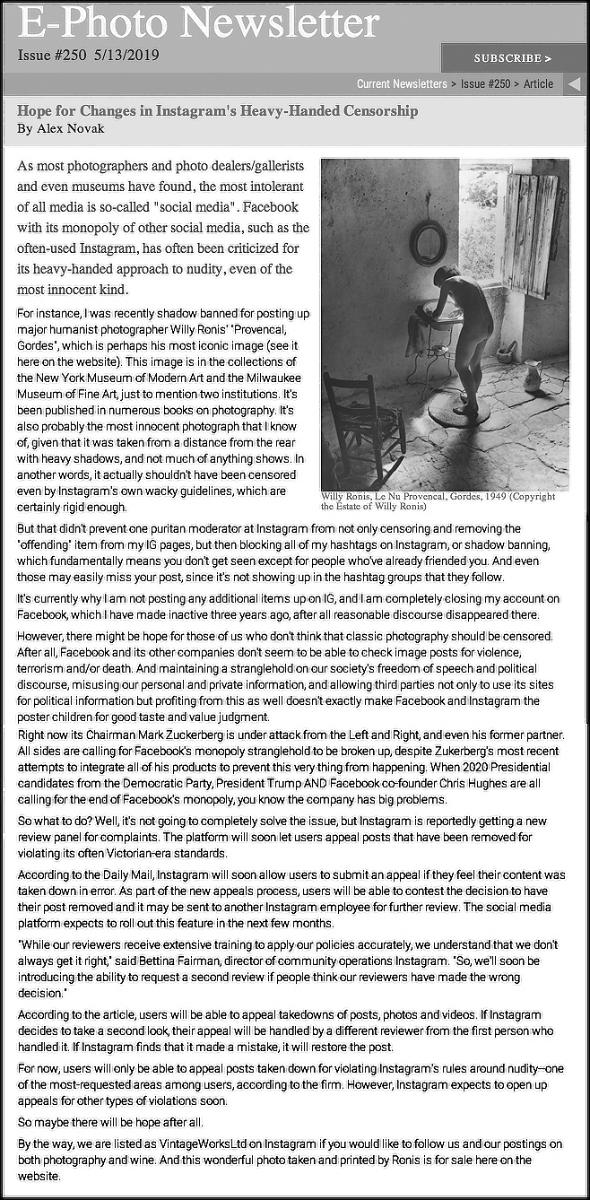
Toronto. The old Kodak excelled at deciding what problems affected their customers and how to solve them. Ads like this LIFE ad in the issue of September 25, 1970 addressed one problem and silently showed how two others were solved. Drop-in Instamatic film solved the film loading issue while tiny flash cubes meant fewer flash bulbs to carry and customers were able to shoot four fames before changing bulbs.

This ad shows the problem of flash batteries dying while the camera was set aside and how it was resolved. Instead of battery power, the shutter triggered a tiny spring loaded wire that tapped a piezoelectric crystal transforming mechanical power to electrical power and igniting the flash bulb.

Thanks to George Dunbar who suggested this ad showing a revolutionary means to solve the customer’s dead flash battery problem. The title is a riff on that old saying, “a stitch in time saves nine“.

Posted in history | Tagged , , , , , | Comments Off on a tap in time

how about photos in ten minutes?

Taking fast photos before polaroid and smartphones

Toronto. 1941, war-time, and as the lawyers say, “time is of the essence”. Traditional photography took hours or days between the taking and the viewing of the results. But how do you get the results taken, and then viewed many many miles away just in a few minutes?

Trust the Americans to figure out a way! This article in the May, 1941 issue of Electronics magazine shows how a combination of military aircraft, high speed processing, special paper and radio facsimile combine to take and transmit military images to far away control centres in just a few minutes.

This was long before digital technology in smartphones made sub second transmission of high resolution colour images next door or around the world so simple a child could (and often does) do it. Ah! tempus fugit (as the Romans once said)!

And thanks to friend, PHSC member, photo historian, and very active retired industrial photographer and videographer, George Dunbar for sharing this remarkable bit of sleuthing.

Posted in history | Tagged , , , , , | Comments Off on how about photos in ten minutes?

Photographic Canadiana Vol 46-5

Our journal Volume 46-5

Toronto. Enjoying the sudden cold spell (at least here in the big smoke)? Yesterday, members WITH an email address received another delightful magazine via pdf. It  is  the Photographic Canadiana 46-5 dated February 2021 – April 2021.

This is a 20 page delight in full colour as  envisioned by editor Bob Lansdale to help create the excitement we all feel as we await an end to yet another round of this rotten  pandemic. As 2020 (and 2021 so far) are definitely weird, we are doing 5 issues. Editor Lansdale completed his opus of Vol 46 (hard copy version) and is working with our printers to print and package it. Copies will be sent to those members who have no email address and those wishing to have a hard copy.

Drop me a line at info@phsc.ca if you are a member and haven’t received this special pdf edition. Not a member? Easy-peasy, just break out your plastic (VISA, MasterCard, etc.), follow the rules at the upper right of this page and sign up via PayPal (no PayPal account needed – we will pay the modest fee). Membership is an incredible bargain. Period!

Posted in journal | Tagged , , , , , | Comments Off on Photographic Canadiana Vol 46-5

Lorraine Monk 1922 – 2020

Ms Monk from the G&M article

Toronto.  We were saddened to learn that Ms Lorraine Monk died December 17th, 2020 at 98. Her life was recorded in this Globe and Mail obituary by Judy Stoffman printed exactly a month ago.

Lorraine was our keynote speaker at the 10th anniversary seminar in 1984. She was the subject of some Photographic Canadiana articles and spoke at an early Toronto meeting. Lorraine was our very first Lifetime member with free copies of Photographic Canadiana. Lorraine worked hard to promote Canadian photography.

Lorraine was heavily involved with the National Film Board (NFB) and was an accomplished author as noted in more detail in the above links. She will be missed by us and all Canadian photographers.

My thanks to editor Bob Lansdale for bringing this to my attention as we no longer have any newspapers delivered, relying instead on TV. Sadly, TV news is basically  COVID-19 and entertainment liberally sprinkled with commercials ad nauseam and little or no in depth reporting or obituaries other than sports and entertainment figures for the most part. The internet occasionally fills in the blanks.

Posted in people | Tagged , , | Comments Off on Lorraine Monk 1922 – 2020

fries with that?

Franka Solida c1954 courtesy of the J Noir website

Toronto. We often think German cameras like Zeiss, Zeiss-Ikon, Rollei, Leica, Nagel, Retina etc. but what about Franka (not hot dogs)? On J. Noir’s site, many cameras are described including those of the Franka Kamera Werk in Bayreuth, Germany, at one time the largest maker of cameras in the area.

At our Vol. 2, ZOOM and Tell, this month, member Jeri  Danyleyko showed her Franka Solida camera. The FKW was established early last century and operated until 1966. Many of the firm’s cameras were private branded before being offered for sale. This included a line of Montgomery-Ward cameras.

The Solida series were medium priced models with a bellows, lens and leaf shutter reminiscent of pre WW2 Peggy or Retina cameras. Some pricier models have Schneider-Kreuznach Xenar lenses!

Posted in camera | Tagged , , , , | Comments Off on fries with that?

do-si-do and allemande left …

Dos-a-Dos tricycle and family. Image © Lorne Shields

Toronto. .. familiar words to square dancers everywhere, but did you know a special version of a “bicycle” for two in the early days was the dos-a-dos or back-to-back tricycle (photo is c1880).

Member and cycling expert Lorne Shields showed this example photo at the recent ‘ZOOM and Tell Vol. 2‘ held at this month’s online Toronto Meeting of the PHSC. If you need a copy, or have a copy, or want to know more, drop me a line at info@phsc.ca and I will pass your message along.

Posted in history | Tagged , , , | Comments Off on do-si-do and allemande left …

RIC plans for 2021 (COVID-19 considered)

RIC Gallery Plans for 2021

Toronto. The Ryerson Image Centre Gallery announcement for early 2021 (Jan-Feb-Mar) given the current restrictions for COVID-19 has been released. This is the link to details.

Thanks to John Morden, our treasurer and newsletter guru for suggesting this post.


Posted in activities-other | Tagged , , , , | Comments Off on RIC plans for 2021 (COVID-19 considered)

what the heck is an Eholt?

Eholt BC faded photo. Click for corrected version by R. Lansdale

Toronto. Well, as it turns out, Eholt is a ghost town miles east of Vancouver in BC. The little railway town was founded in the late 1800s. It survived until 1948, when the local post office closed, leaving the last 17 residents to their fate. Nothing remains today except a roadside plaque, memories, and the odd faded photograph.

At our Vol. 2 Zoom and Tell this month, Dr Irwin Reichstein in Ottawa, told a tale of finding an old faded print of the tiny town and using Photoshop to increase the contrast and detail showing the buildings, trains, people and even laundry hanging on a line. Our editor, Bob Lansdale used a high resolution scan from Dr Reichstein to adjust the contrast and detail once more using separate levels for the three channels (R, G, B) giving the detail you can see by clicking on the thumbnail at left.

Thanks to both Dr Irwin Reichstein and editor Lansdale for this remarkable photograph and its practical restoration by Photoshop using two different methods.

Posted in photos | Tagged , , , , , | Comments Off on what the heck is an Eholt?

somethin’ flashy

Ad in Jan 1941 Electronics magazine for flash synchronizer insulation materials

Toronto. Did you ever hear of the ‘National Vulcanized Fibre Company’ (NVFC)? Neither did I. However, parts using that company’s products played a key role in the use of flash in photography.

A number of companies in the early 1940s through 1950s sold specialized gizmos that synchronized the shutter release and flash triggering. These gizmos used the special insulation products provided in bulk to factories by companies like NVFC.

The camera maker usually sold flash guns (also made with these special insulation products) as accessories, while lens makers added built-in leaf shutters that included a flash trigger and connector. Remember, this was in the era of discrete components (usually big enough for all to see and hand hold).

This ad on page 48 of the January 1941 Issue of Electronics magazine was sent to me by my good friend George Dunbar who discovered it while perusing old magazines for photographically historic material.

Posted in history | Tagged , , , , , , , | Comments Off on somethin’ flashy

computational photography

Computational Photography by How-to-Geek

Toronto. Photography is a continuously evolving technology. Have you ever wondered how those smartphones could even begin to compete with digital cameras? These tiny marvels are a computer in your pocket just bursting with apps and technology. A phone and a camera are but two features.

The blog “How to Geek” sets out to tell you how smartphone cameras use computational photography to revolutionize the art of the photo. In the article “What Is Computational Photography?“, dated January 19, 2021, author Vann Vincenti gives you the basics. Have a read! This technology is a long way past Daguerreotypes, plates, films, etc. of yesteryear – a mind boggling way!

Posted in processes | Tagged , , | Comments Off on computational photography