come a little bit closer

Mallard duck taken with a Tele-Arton lens and SONY NEX-5

Toronto. Sometimes when we see a shot, a closer view crops out extraneous stuff while keeping the subject still and in focus. Instead of moving closer (possibly frightening the subject), we can use a zoom lens at the tele end to mimic a closer shot.

While today we are accustomed to using zooms rather than prime lenses, it wasn’t always the case. For many years after their introduction zooms suffered from short variations in focal lengths, high cost and geometric distortion. As a result prime lenses of long focus or telephoto design were quite common.

Around 1985, I bought a Tele-Arton  f/5.6 240mm Schneider lens. The screw mount lens (mis-engraved as ‘Arlon’) attaches to a Leitz Bellow II. The previous owner, Jim McKeen sold it to me at one of our Photographica Fairs. Jim was from Hamilton and had a hardware store in that city. His passion was birding and he once used the lightweight lens to capture images of birds in the area.

I took this shot years later with a mirrorless digital camera and conversion ring. The equivalent focal length is about 360mm. The original  image is very crisp, and in good focus and contrast (coated lens elements). Compared to a standard lens of 50mm, I can get an image that appears to be about seven times closer.

If you would like a Tele-Arton  or another tele-lens for use or your collection, you may find it at one of our events this year – dates and places are shown in the right hand side bar. The most current coming event is our April 30th Spring Auction.

Note: the title of this post is a 1964 song made popular by Jay and the Americans who sing it here.

Posted in history | Tagged , , , , | Comments Off on come a little bit closer

feeling blue

Arthur Dow’s cyanotype of the Ipswich, Mass. river curtesy of ‘The Local News (Ipswich)

Toronto. There are a number of 1800s photographic print processes. One is obvious even to the uninitiated. Cyanotypes can be recognized by their tell-tale blue shades. A more modern equivalent is last century’s ‘blue prints’ offering electrical, architectural, etc. data for the many workers on a project. Blue prints are also easy to spot with their white lines on a blue background.

My good friend George Dunbar writes, “For anyone interested in American art, especially cyanotypes … Three cyanotypes are displayed in this art review by my writer friend, Bob Waite.” With this message is a column in Massachusetts area’s ‘The Local News‘ by Bob Waite called, “ARTHUR WESLEY DOW WOWS THEM IN ST. PETE“.

Read the column ands learn more about the late Art Dow of Ipswich and his work as an artist, and photographer, etc.

Posted in history | Tagged , , , , | Comments Off on feeling blue

Chiyoda edition film camera announced

Lomography’s latest camera (film)

Toronto. Lomography is a familiar name to all film buffs in this time of digital technology. Birgit Bucharest sent the PHSC a note the other day announcing Lomography’s latest film camera, the ‘LomoApparat Chiyoda Edition’ shown here.

To reserve your camera (out in June/July) visit the Canadian Lomography store here. If you are in the States, the site will offer to switch you down there in the land of US Dollars.

Notice the background? Japanese Cherry Blossom trees in full bloom. My neighbour has had one for years and I noticed it is blossoming. In fact, Toronto’s High Park is well known for its many Cherry Blossom trees – all beginning to show their splendour with the beautiful pink blossoms that announce spring!


Posted in activities-other | Tagged , , , | Comments Off on Chiyoda edition film camera announced

sky high

Six Glaciers in Alberta behind Lake Louise. Taken about two decades ago with a Leica M4

Toronto. In the early days of minicam photography, mountain scenery was thought to be popular with travellers. Companies like Leitz made special lenses to use in the mountains with their cameras.

The lens designs put lighter weight over aperture (usually a smaller maximum aperture  as mountains had an abundance of light). Focal lengths were likely medium telephoto.

Slower and shorter focal length lenses were already available and relatively light. For example, the 5cm Elmar (joined a few years later (1935) by the 3.5cm Elmar and 2.8cm Hektor).

A typical special design for travellers was the 105mm f/6.3 ‘Mountain Elmar’.  While not especially successful when first offered (only about 4,000 ever made – 1932 to 1937), it is now desirable to collectors.

In the haze of the above photograph is Abbott pass – location of the first recorded fatality from mountain climbing in Canada. On the climb down, my daughter and I dropped in at the nearby Tea House for refreshments.

I took the photo  twenty years ago probably with a Canadian designed and manufactured 35mm Summicron lens. I used ASA 800 Kodak negative colour film.


Posted in history | Tagged , , , , | Comments Off on sky high

faking it

THE ELECTRICIAN by eldagsen (Berlin) courtesy of PetaPixel.

Toronto. Les Jones sent me an email the other day about Berlin-based “photomedia artist” Boris Eldagsen. Boris won one of the prestigious World Photography Organization’s Sony World Photography Awards with his photograph called “THE ELECTRICIAN” from his series “PSEUDOMNESIA Fake Memories“.

Boris DECLINED the prize. He explained that while the photograph appears to use an old photography technique, it was actually ‘co-produced’ with the aid of AI (artificial intelligence) image generators.

We once said ‘a camera doesn’t lie’ – not any more! The more tech-savvy folk amongst us realize that ‘AI image generators’ are the buzz words of today. About 40 years ago, computers were just too slow and memory too small to run any serious AI app. Today, this is simply not the case. Even my desktop setup has more capacity than an entire data centre back in the 1980s!

You can read the full article titled,”Artist Refuses Prize After His AI Image Wins at Top Photo Contest” here or on PetaPixel.

Posted in history | Tagged , , | Comments Off on faking it

dance with me, Henry

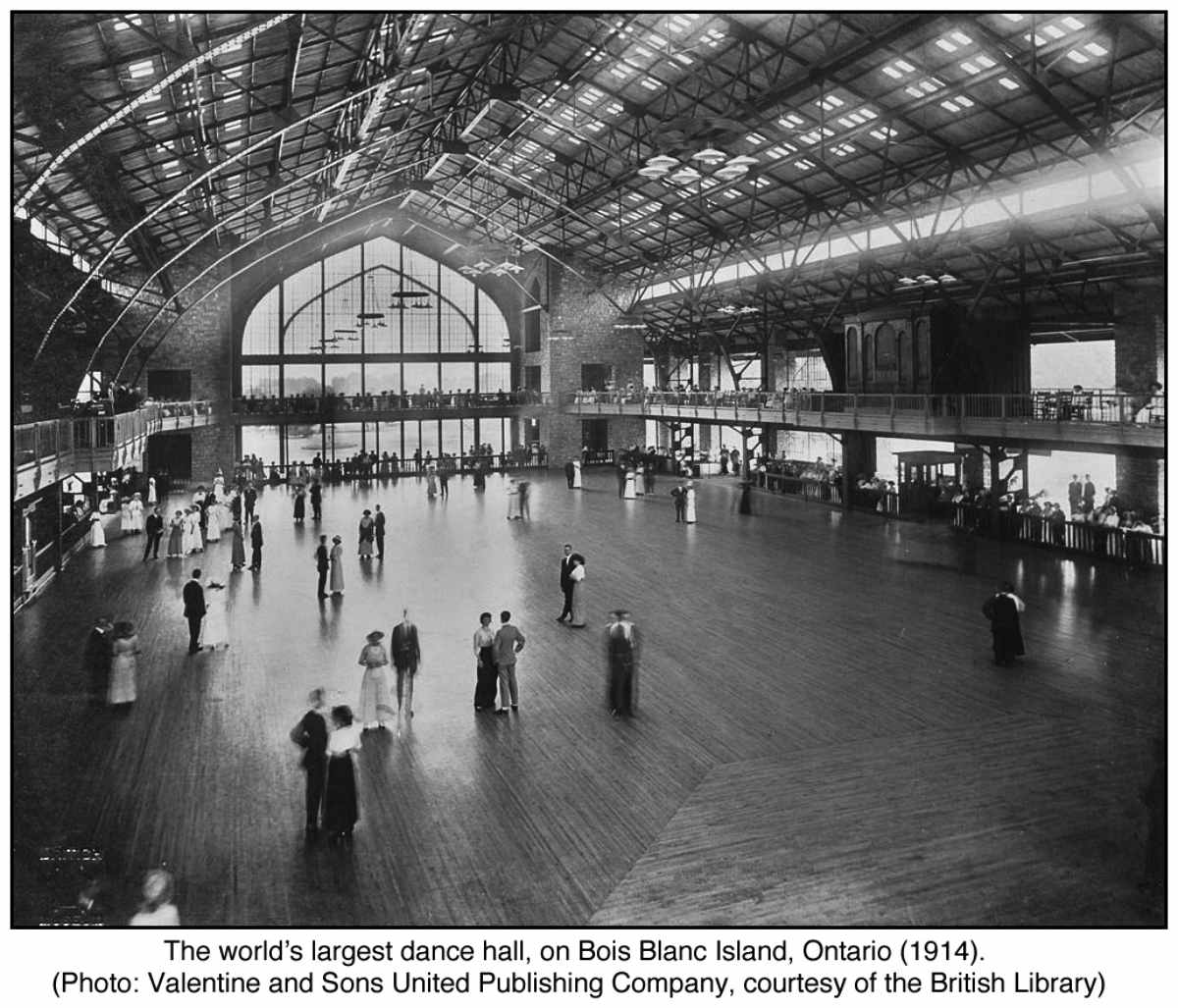
world’s largest dance hall in 1914 on Bois Blanc (White Wood) Island in Ontario

Toronto. You may be surprised that in 1914, the world’s largest dance hall was in Canada! The island,  a popular resort today, is a bit south of Windsor, Ontario.

This photo and the related story were discovered by my good friend and fellow photo-historian, George Dunbar. George writes, “I’d never before heard of this, the World’s Largest Dance Hall.”. More information and photos are here on the Canadian Geographic web site.

The title for this post is a 1955 song sung here by Georgia Gibbs. I can remember listening to the catchy tune on our old kitchen radio back then.

Posted in history | Tagged | Comments Off on dance with me, Henry

not all bees buzz …

Wood Bee in c1899 by F B Jones courtesy of the Cramahe Twp. Public  Library

Toronto. My good friend, George Dunbar, sent over this century plus photo with the following words, “This image was published in How Firm a Foundation: A History of the Township of Cramahe and the Village of Colborne in Cramahe’s Digital Archives (3bk), p.114. The caption reads: ‘Wood bee at Salem, 1899’.

“In early settlement days, neighbours often got together to help one another with big projects. These lumbermen were photographed by Dominion Photo and View Co. of Brighton, F.B. Jones, photographer. —Cramahe Township Public Library”

I am familiar with rural community ‘bees’ from readings as a kid. An aunt and uncle on a farm brought in the wheat one year during my visit with my parents. They used machines jointly paid for by them and neighbouring farmers who pitched in at each farm to help with the labour. Team effort! As a small-town kid, I was fascinated just watching the work.

Note: For those unfamiliar with Cramahe Township, here is the location courtesy of Google’s map feature. It sits between the eastern end of Rice Lake and Lake Ontario near Colborne (west)and Brighton (east).

Posted in history | Tagged , , , | Comments Off on not all bees buzz …

Auction Sunday April 30, 2023

Spring 2023 Auction this April 30th

Toronto.  Spring is here and it’s Auction time again! Our spring INDOOR AUCTION is on TODAY, April 30th, 2022 down in the Long Branch area of Toronto at the usual venue BUT at a slightly later time (see poster) – free parking and free admission.

This General and Estate (Consignment) Auction features goodies for both film and digital folk – photographs, cameras, lenses, accessories, books, and more. Come out and enjoy this event while adding to your collection or user gear! Click on the AUCTION tab here or in the menu bar above for directions.

Everybody is welcome. Consignment lots at the door or in advance.  Lots are both general  and ESTATE – really good items, some rare these days. First come first serve.

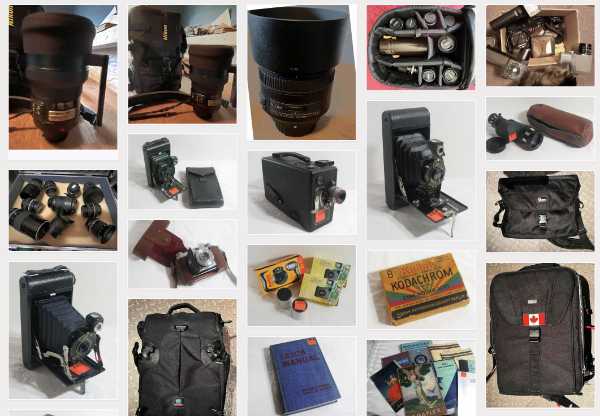
We owe a big thanks to Clint for photographing the lot examples shown here (samples were added as they arrived – second batch uploaded of films and some darkroom stuff – third batch uploaded – and the fourth batch – and a final fifth   batch with a lot of Nikon lenses!). Click on the photo below, then on the beautiful NIKON 200mm lens, and then on any lot icon to see it larger. Your left/right arrows will work to move from one enlarged photo to another. NB If you see a red tag, it’s the lot number. Enjoy!

Posted in auction | Tagged , , , , , , , , , , | Comments Off on Auction Sunday April 30, 2023

an instant collection

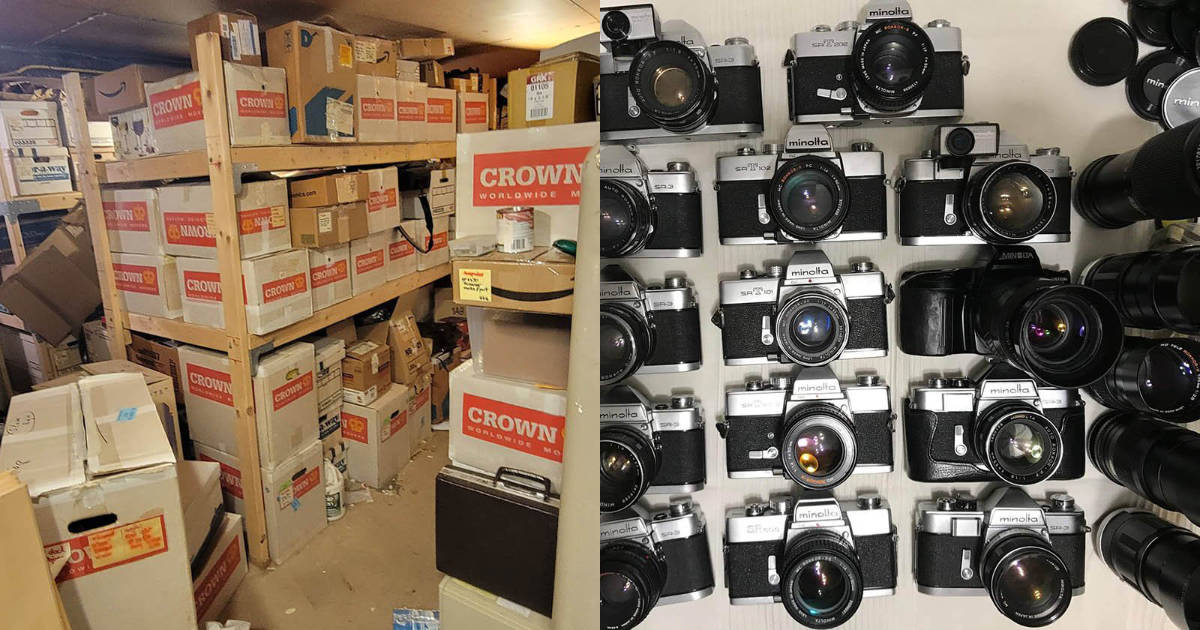
an instant camera collection courtesy of Petapixel

Toronto. Les Jones sent along an interesting note the other day from a Terry and Kim Kovel (the auction folks) newsletter. Dated April 12th, the Kovels article is called, “Take a Picture: More than 1,000 Cameras Found in Abandoned Storage Locker“. The news article was attributed to Petapixel.

The Petapixel article is by Michael Zhang dated February 27th and titled, “Couple Finds Trove of 2,000 Cameras and Lenses in Storage Unit“.

The find was down in Massachusetts and either the Kovel or Petapixel version is a good read.

A big thanks to Les for suggesting the Kovels link. Les is talented himself as both a sports photographer and author. Les has held many positions in the PHSC, not the least of which was president. Instant collection, anyone?


Posted in activities-other | Tagged , | Comments Off on an instant collection

dem plates, dem plates, dem dry plates

illustration from Shannon Perry’s article in Scientia Canadensis (44-1 2022)

Toronto. Member Jeff Ward from up Halifax way writes, “A correspondent informed me that the issue of Scientia Canadensis devoted to photography and science is now available online.”

The issue was edited by guest editor Joan Schwartz and featured some or the people who once spoke at a PHSC monthly meeting (including Dr Schwartz).

The magazine link is here on érudit. A menu bar item lets you switch to French (FR) if you so desire. The article links are not especially obvious – just click on the article title (a hand appears before you click). There is some precis etc. text, and the article comes up in what looks like the Google reader. You can down load each article in PDF format.

Note. The post title is a riff on an old American Negro spiritual, “Dem Bones” which I heard sung on the radio when I was a kid.

Posted in history | Tagged , | Comments Off on dem plates, dem plates, dem dry plates