bare ruin’d choirs

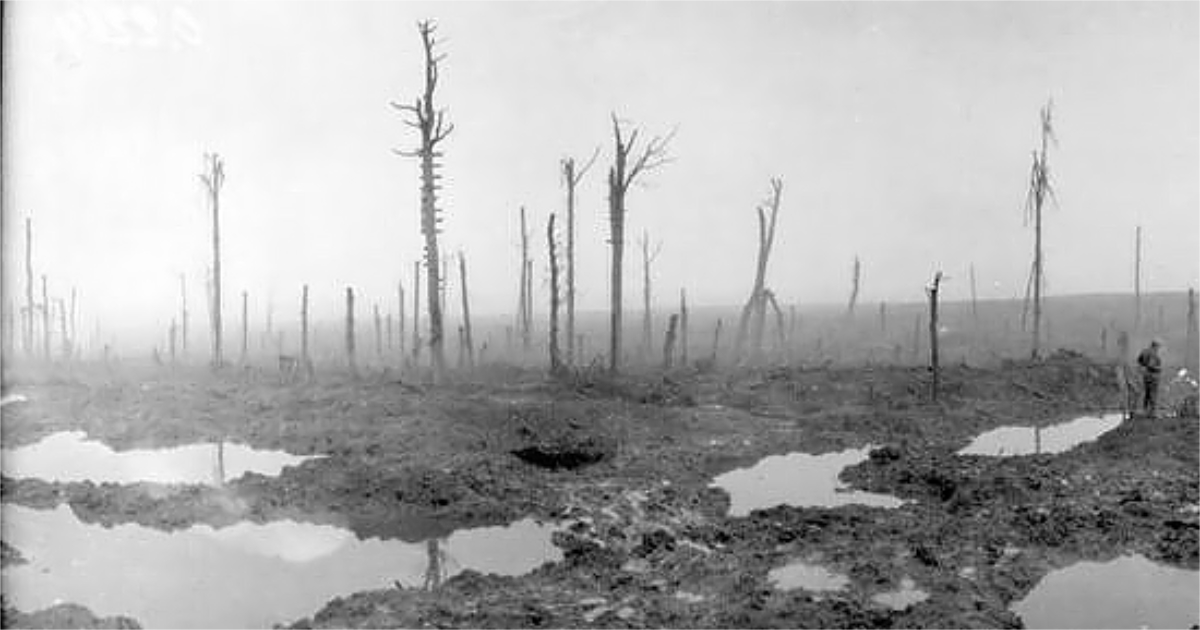
The battle of Passchendaele in Belgium in 1917

Toronto. Anyone who studied Shakespeare will recognize the title of  this post as part of a line from one of his sonnets (#73). It is fitting to use it in a post noting the importance of photography and photographers in war-time settings.

The image at left was taken at a famous Canadian battle in Belgium during WW1. Films have been made of the WW1 conflict, poems written, books written, and plays produced. We owe a huge debt of gratitude to those brave souls who swapped a gun for a camera to record the events of the wars for future readers and viewers. You can see more images here at our war museum.

I had uncles and grandfathers in both world wars. One uncle was in the American army; the rest Canadian. Fortunately only a couple of more distant relatives died in those horrific  battles.

Food for thought: War is brutal and continues to breakout – even today. Photography is an immense help in showing us just how terrible such conflicts are. Words and drawings alone cannot convey the impact upon us all.

Posted in history | Tagged , , | Comments Off on bare ruin’d choirs

bicycles can be dangerous

Toronto. Our executive meeting on Wednesday evening, May 3, 2023 was the 36th held via ZOOM. We were regaled by Celio and his tale of teaching his children to ride a bike, only to fall victim to a spill. He finally managed to get an x-ray and ultrasound plus medication. His was a horror tale about the effect of many events including COVID on our over burdened medical staff.

Our April meeting via ZOOM with Cindy Motzenbecker was the best ever attended! Note that our May Toronto meeting has been moved to THURSDAY May 18th at a local gallery for the book launch by Vincenzo Pietropaolo. Details will follow in a few days.

our executive at the 36th ZOOM meeting

Our Newsletter is still in need of a more permanent editor. Interested? Got a way with words? Then drop us an email at info@phsc.ca! Meantime, journal co-editor, David Bridge will send out a brief newsletter as soon as a few things are clarified. Nevertheless, if you would like a personal copy but haven’t joined up yet, drop me a note at news@phsc.ca.

Our membership secretary was unavailable this time. The membership report for April  will arrive shortly.

The spring auction was a big success, thanks to the many volunteers, and especially our president Clint who was both auctioneer and photographer of most of those lots I posted here on the web. Treasurer John Morden will be issuing cheques to sellers once he completes all the nitty-gritty calculations. Well done all!

Hard on the heels of the spring auction is our spring photographica-fair on SUNDAY May 28th at Trident Hall. Please join us and augment your collection – or even your user gear (film or digital). See the May posts and sidebars for current information!

Our next  journal will be out as a pdf file shortly. Co-editor David Bridge gave the exec an overview of the status and work in progress.

Spring is coming. The trees are in blossom. The grass needs cutting again.  Meantime,  the seventh wave of COVID-19 and its restrictions seem to be just a bad memory.

Posted in activities | Tagged , | Comments Off on bicycles can be dangerous

a fair day in May

back at the old haunts and day –  Sunday, May 28th

Toronto. I know it’s cold and wet this week, but in a few weeks the weather here will be warm and dry (hopefully).

With warmer times in mind, we are looking forward to our spring fair this year. The really good news is that it will be held at Trident Hall as before – and on a   Sunday – this time on May 28, 2023. Lots of parking. Lots of food. Lots of great things.

See Clint or Mark for table reservations. Those without tables are most welcome to visit and browse for additions to their collections or even user items for both film mavens and the digital folk.

More details and a poster will go up here later in the month.

Posted in fair | Tagged , , , , , , | Comments Off on a fair day in May

history’s little helper

1987 book on the 1985 discovery of the Titanic lost off Newfoundland in 1912

Toronto. When I was a little kid, I looked at my uncle’s books in awe. One was a story of the Titanic – mostly text with some line drawings. After the ship sank, the author could only speculate on the results in the briny deep.

Seventy three years later, the wreck of the Titanic was found and in two years this book was published with many fabulous colour photos. For the first time we could learn about the fate of the ‘unsinkable’ Titanic and see the remains via remote photographs.

Photography came to the rescue of historical events other than ship wrecks like that of the Titanic. Over the years, line drawings illustrated books, magazine, and newspapers. And then along came photography making the line drawing more accurate. Finally a process allowed the photos to be reproduced in the printed matter. Today high resolution colour photos are routinely used both in print and in electronic media.

This was just another way that photography helped mankind, in this case recording historic events. You can buy the photos in the book but they are all copyright Getty Images and offered at rather steep prices. The book is out of print but available used. This site lists publication as 1988, but mine is a 1987 hard cover …

NB. I wrote this post thinking about Canadian balladeer Gordon Lightfoot who died May 1, 2023. Here is Gord singing, “Wreck of the Edmund Fitzgerald” which I have on a CD.

Posted in history | Tagged , , , , | Comments Off on history’s little helper

keen photos

Violet Keene Perinchief, African Appeal, Phyllis Marshall, ca. 1935, gelatin silver print with hand retouching. The Minna Keene and Violet Keene Perinchief Collection, The Image Centre, Gift of the Sturrup Family, 2020

Toronto. TMU (a.k.a. Ryerson) has an innovative gallery called, “The Image Centre“. Their exhibition until this summer features many photographers.

Their collections include a Canadian mother-daughter team, “Minna Keene and Violet Keene Perinchief“. Shown at left is an example of that holding called ‘African Appeal’ taken by Violet Keene Perinchief. The image is a gift in 2020 by the Sturrup Family.

Photographs by both mother and daughter have appeared in our journal over the years. To see the actual photos, drop in at the TIC (if these images interest you, join the TIC email list).

My thanks to my good friend, George Dunbar. George suggested the Minna and Violet link to the TIC. Thanks,


Posted in history | Tagged , , , , , | Comments Off on keen photos

a list of firsts

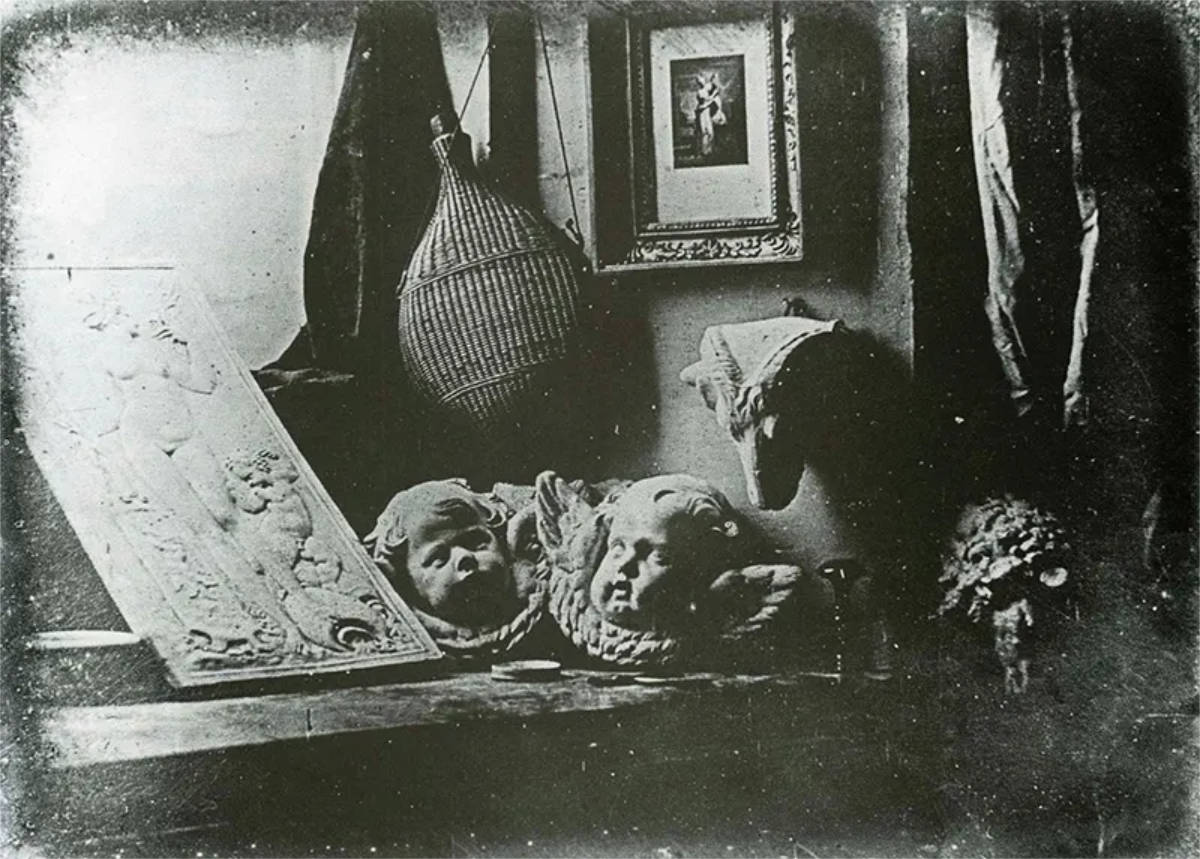
A c1837 still life daguerreotype by Daguerre while he experimented with the as yet announced process

Toronto. When first announced few photographs were readily available. In short order however, the number of photographs (and photographers) mushroomed as the new phenomena sped ’round the world. Today, we see literally millions of photographs.

Some History of Photography books have illustrations of the ‘first’ photograph in various categories. It seems that this passion of identifying the ‘first’ in each category quickly disappeared as the art matured – until now.

In the course of his research, George Dunbar came across a web site that bravely tries to list the many photograph ‘firsts’, especially those that happened long after 1839. Have a  look at the article, “Famous First Photographs in History: From the Oldest Photo Ever to the First Photo Shared on Internet” on the, ““, web site.

Note that the photos and text are of interest to all who research photography. The material on the site is somewhat marred by the incessant advertisements. In any case, I appreciate my good friend George’s generosity in sharing the above link with me (and the society).

Posted in history | Tagged | Comments Off on a list of firsts

photo history in a nutshell

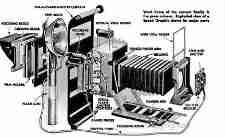
an exploded view of a 1952 Speed Graphic from an article in the Popular Mechanics July 1952 issue.

Toronto. Since the previous post discussed digital photographic history, I thought this post could look at analogue photographic history. A brief condensed version was written last century by two folks – Valentino Serra (Photographic Illustrator), and Beaumont Newhall (Curator at GEH). Beaumont Newhall is well known to many of the readers of this site for his books on Photographic History.

The article, beginning here on page 72 of the PM July 1952 issue, is courtesy of Popular Mechanics and Google books. It was suggested by my good friend and fellow photo historian, George Dunbar. George found this article while searching magazine advertisements for interesting material on the photographic industry. Please note the article is copyrighted material.

If you enjoyed this article, but haven’t bought Beaumont Newhall’s books, be sure to keep an eye out for them (search used bookstore or visit one of our events – you might get lucky!

Posted in history | Tagged , , | Comments Off on photo history in a nutshell

the start of it all

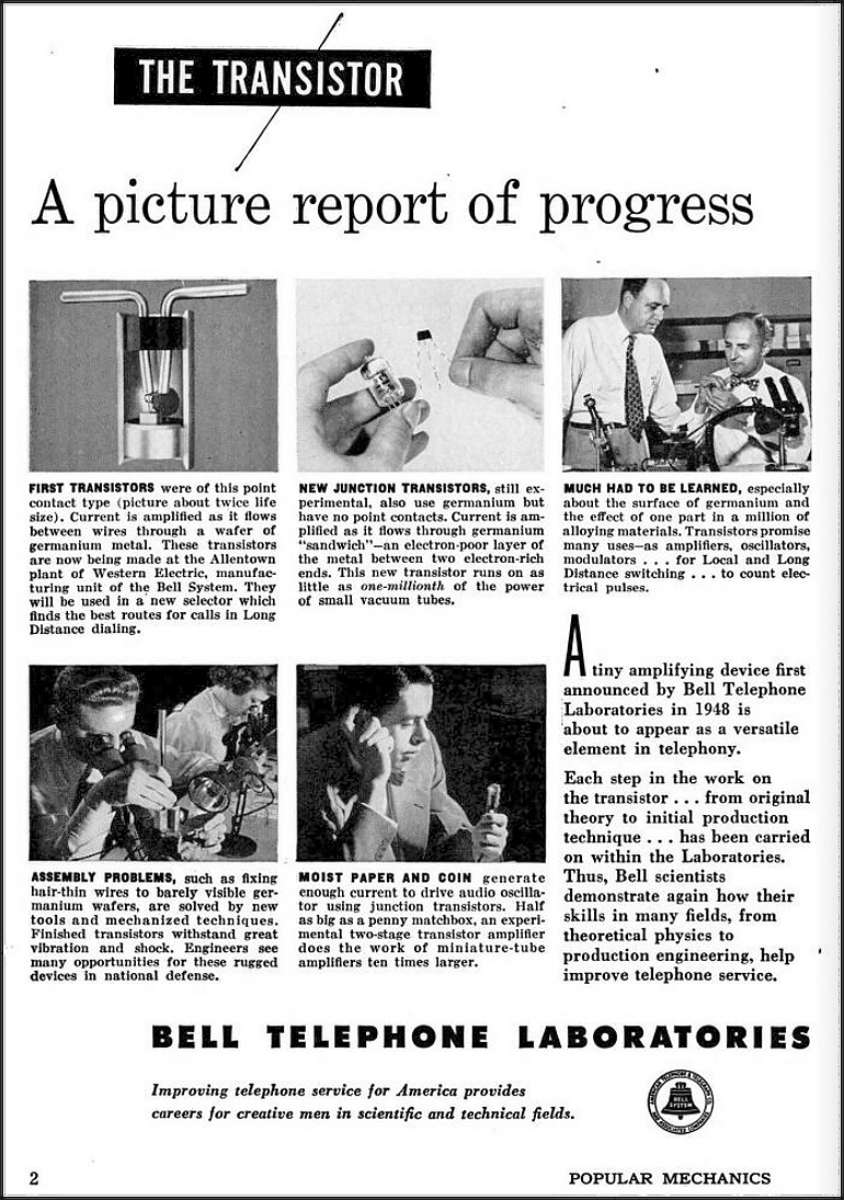
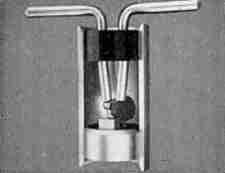
the point contact transistor invented by a trio of Bell Labs Scientists

Toronto. And by all, we mean digital photography, not the 1839 analogue photography (metal, glass, film, paper plus liquid solutions). When radio and electronics began early last century, vacuum tubes did not exist. A few years later, on into the mid last century, vacuum tubes were invented and systematically improved and reduced in size. But even the smallest of vacuum tubes was far too big and limited in function for use in this century.

In 1947, Bell Labs in New Jersey announced the invention of the transistor (TRANSfer resISTOR). At 1/10 the size of a miniature vacuum tube, it replaced a triode tube in audio amplifiers. Transistors evolved rapidly, to geranium, then silicon, and both power handling, and the usable frequency continued to rise. To make operations even faster, integrated circuits with many transistors on a tiny chip came on the scene (This evolution affected makers too. For example, Intel began operations, not as a transistor company, but as a maker of integrated circuits).

Rapid miniaturization followed Moore’s law. Miniaturization and integration in each new design eventually resulted in literally millions of tiny transistors on a small chip. In the latter part of the last century we began to see solid state sensors which created full colour images from reflected sunlight and indoor lights. The image size was rated in pixels (Picture Elements).

Today even cell phones (smartphones) have solid state cameras built-in. Professionals and more advanced amateurs use digital cameras. Film cameras and technology is still in use by a small niche of enthusiasts who extol the quality of an analogue image over an image digitally created. For digital cameras, “development” is by computer applications either in the phone or on the desktop/laptop. Since digital camera began life nearly three decades ago, it is time we began collecting the pivotal designs before they become too expensive.

A down side to the speed and convenience of digital devices is the inability to get parts or repairs in later years whereas mechanical cameras can be repaired and continue to function well beyond their date of design, manufacture, and sale.

My thanks to good friend George Dunbar, for sharing the Popular Mechanics July 1952 ad by Bell Laboratories talking about the transistor four years after it was first announced. A few years later transistors became common in the retail market and in appliances of the day. Like photography itself, vacuum tube products and solid state devices were offered side by side for many years.

Posted in history | Tagged , , | Comments Off on the start of it all

who is this guy, anyway?

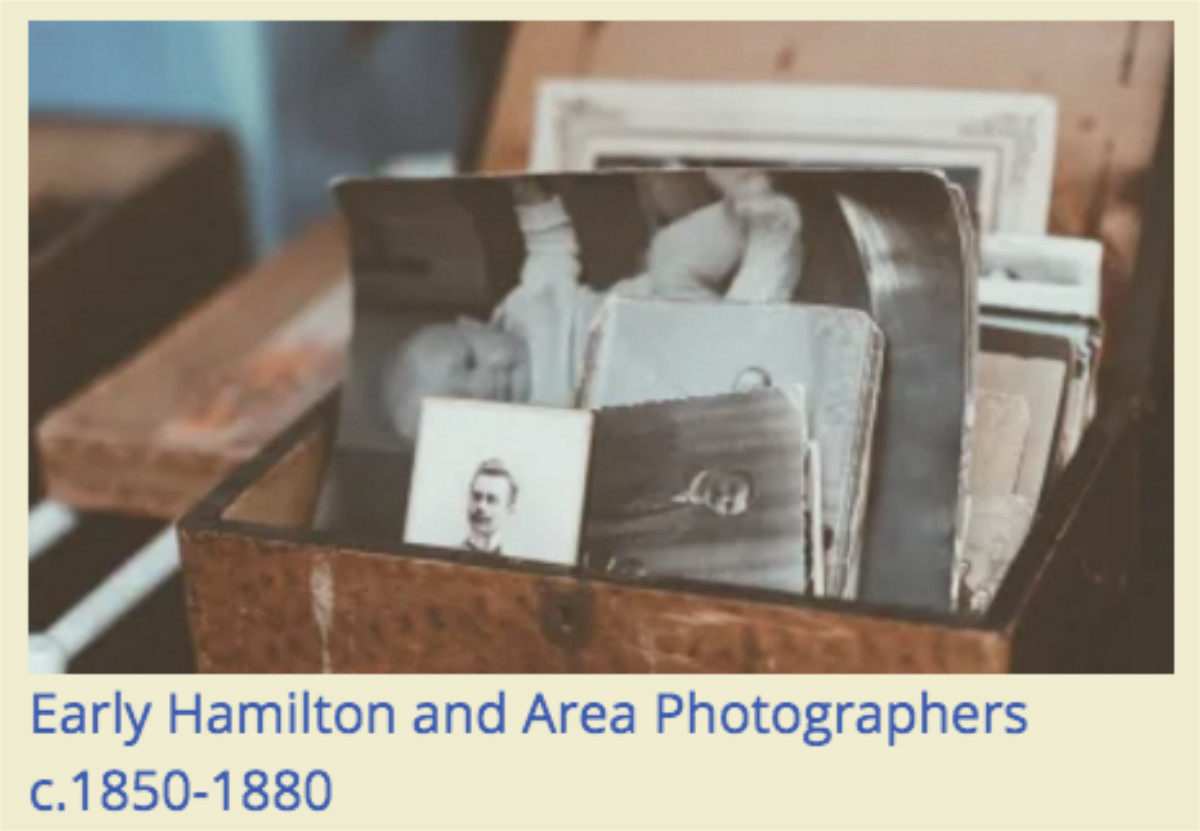
A great place to checkout early photographers in the Hamilton area.

Toronto. Over the years we have had many studios and photographers in Canada. It takes a lot of digging to unearth facts today like location of studio, kinds of photos, personal history, etc. Some large and well known studios like Notman and Karsh appear in  numerous books.

Some like Notman even recorded details and numbered photos. The museum associated with McGill University in Montreal, the McCord Museum, has a large collection of Notman prints and a record of known numbers (plus other historic prints).

Do you collect photos? Ever wonder about the photographer? Try asking at your local archives or historical society. If your guy operated in the Hamilton area, The Flamborough history folk may have some information for you.

Our thanks to that good friend and fellow member, George Dunbar, for sharing this marvellous find with us.

Posted in history | Tagged , , | Comments Off on who is this guy, anyway?

squaring the circle

1952 ad for the American made TLR called the Ciro-flex

Toronto. When collectors think of TLR design, they usually think ‘Rollei’. Other firms also made cameras in the TLR design. Most of these cameras seem to follow Rollei in general layout and style.

To hop on the minicam bandwagon, the famous professional camera maker of ‘Graflex’ fame bought up a small American competitor who made and sold the Ciro-flex cameras. Graflex advertised the economic TLR line as “How to take the guess out of picture-taking” in its April 1952 Popular Mechanics ad.

My thanks to my good friend and fellow photo-historian, George Dunbar, for suggesting this idea and providing the ad from Popular Mechanics.

I think of the post title as a TLR format (square) and the ‘circle of confusion‘ (circle). The mathematical meaning is explained by the wikipedia article. Loosely, it means to join two things usually thought to be mutually exclusive.

Posted in history | Tagged , , | Comments Off on squaring the circle