90 dollars, 90 dollars, do I hear 100?

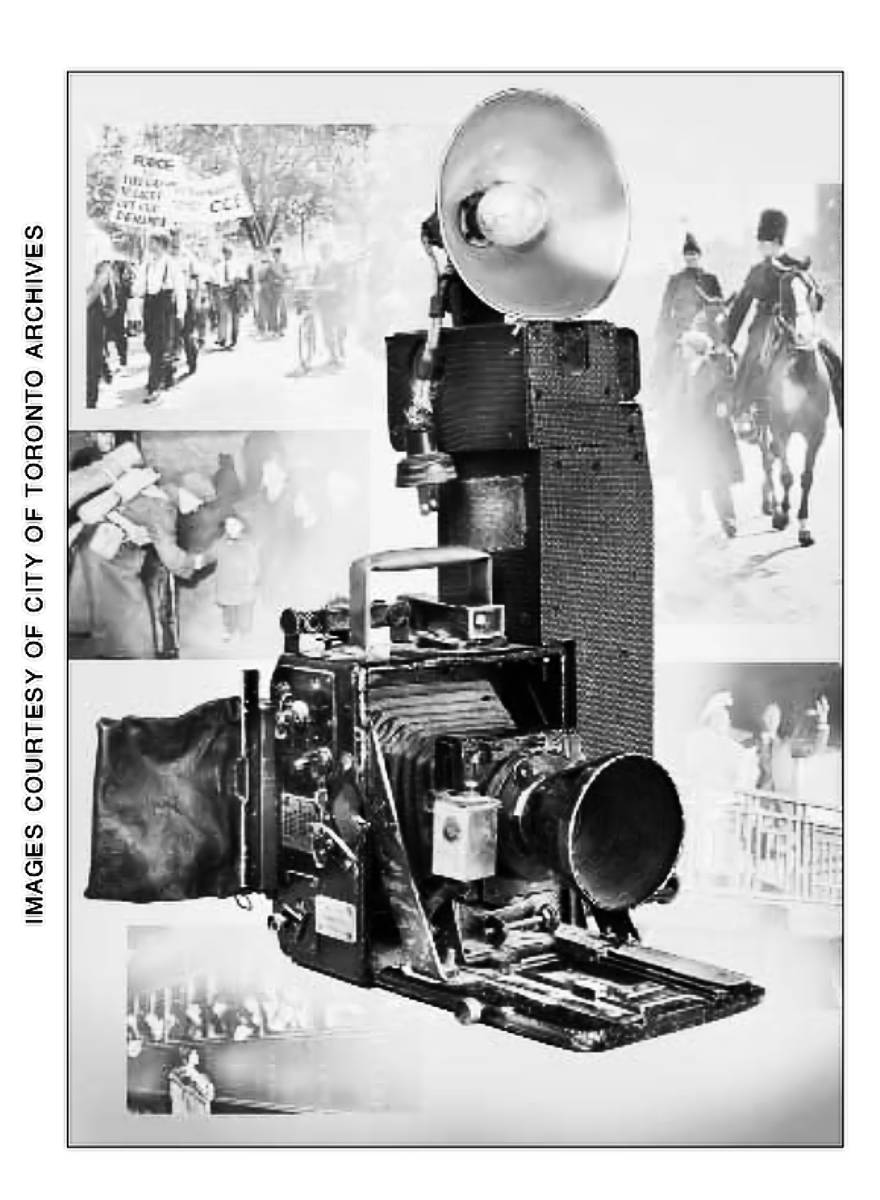
a studio camera in the fall 2015 auction nine years ago

Toronto, Ahhh, that time again! In a few short months it will be spring and auction time again. As details of our May 2024 auction unfold, we will add them to this site.

Meantime, snuggle up – cold weather is forecast! Hard to imagine since we are bereft of snow here in the city – noise, eternal work blockages, bicycle lanes, but no snow (and little parking).

This interesting old studio camera was auctioned nearly a decade ago. Be sure to pencil in our May auction date (May 5th) – you may find just what you need to augment your collection or user gear. Usually we have both film and digital stuff to be auctioned.

Posted in auction | Tagged , , , , , | Comments Off on 90 dollars, 90 dollars, do I hear 100?

a vicarious trip to France – today

photograph – lot 122 Hôtel Drouot, Paris, France

Toronto. While you wait so patiently for our spring auction this coming May, why not visit an auction in Paris, France being held online until TODAY?

I received an email yesterday morning from Christophe Goeury about an auction of cameras and photographs at an auction house in France (see the auction lots here). The auction house is called Hôtel Drouot.

The current bid or starting price for each lot is published in Euros, but be aware that the lot sale price may exceed the current/starting price. This auction house also sells things besides photographic memorabilia.

Posted in activities-other | Tagged , , , | Comments Off on a vicarious trip to France – today

a bar walks into an archive …

a small grocery store c1946 in Quebec. About a decade later bar codes began up here identifying each product.

Toronto. … well, you may know the story. If not, my good friend, George Dunbar, offers this wording from the LAC up in Gateaux, QC (once called Hull), “Library and Archives Canada (LAC) – 2024 marks the 50th anniversary of the barcode! The first Canadian scan was at a grocery store in Dorval, Quebec in 1974.”. Dorval is a suburb of Montreal and home to its closest airport.

The photo here, also from the LAC, is a typical Quebec ‘corner’ grocery store back in 1946. Note the casual smoking in the store and the tobacco advertising. As a kid, I remember being sent to just such a store in a small Ontario town for groceries.

We consider the bar code common place today and regularly see the shop owner or cashier casually scan each item purchased. A computer ‘reads’ the scan and prints the appropriate product name and price. Gone are the days when the owner/cashier typed in the product  price to a cash register or wrote the details in a carbon paper receipt book.

Photographs are the basis for these work place events, now long past (at least in grocery chains and large stores). Every product has a unique bar code and a price as decided by the seller. Collectors of photos often value such work place photos either as part of a collection or the focus of one.


Posted in history | Tagged , , , | Comments Off on a bar walks into an archive …

PHSNE 2022 Journal

PHS of NE Journal 2022 available in print and online

Toronto. One of our exchange organizations, The PHS of New England is celebrating 51 years this year. A 2022 issue of its annual “Journal” featuring Simon Wing and other “Photographers, Innovators, and Entrepreneurs for Nine Decades” is available in either hard copy or digital format.

Like many photo history organizations today, the PHSNE conducts relevant presentations via ZOOM. The latest event is today (Feb 4, 2024): “Curating 1 Million Photos at the Cape Ann Museum with speakers Trenton Carls & Maegan Squibb – Sunday, Feb 4, 2024, 7:30PM EST on Zoom”.

Feel free to join the PHSNE and see this and all meetings since October, 2020. A selection of older videos appear on Youtube.


.

Posted in activities-other | Tagged , , | Comments Off on PHSNE 2022 Journal

a day in the far north …

c1928 an uncle with arctic fox pelts in Manitoba – photographer unknown

Toronto. I received an email a few weeks ago from my good friend and fellow PHSC member, George Dunbar, about the late Canadian Photographer Richard Harrington. A book of his Arctic photographs taken around 1948-1953 was featured in Canada’s History magazine. The book was self titled and appeared in an article by Phil Koch called “Intuit Life in Transition“. The article states “Posted January 10, 2024”.

The arctic fox pelts photo from the book struck a chord! An uncle with a similar cape of white arctic fox pelts (image at left) was snapped  by an unknown photographer around 1928. Back home, he generously gave us one of his pelts. It was made into a stole.

Photographs of the people and landscape of the far north are part of our history, not simply collectible images. Some years back I saw a series of Inuit portraits taken by that iconic photographer, the late George Hunter and on display at Mississauga City Hall. George was a fabulous photographer, amateur pilot, and raconteur who spoke at our Toronto meeting years ago.

Posted in history | Tagged , , , , , | Comments Off on a day in the far north …

I, said the photo, beginning to fade …

a digital photo with fake fading

Toronto. Digital technology brought with it many amazing changes to the photo industry. One of which is the plethora of software tools available today to improve and resurrect old photographs – along with an ethical issue.

My long time contributor and good friend, George Dunbar, asked a very good question, “Should archived images from online sources ever be subject to alteration?”

After some thought and discussion, we agreed that improvements like increased contrast and sharper focus could help one gain more information from the photograph, BUT not if the posted photo was intended to be for sale or was archived with the intent to show the impact of time. A photo for sale must be shown ‘as is’ lest the prospective buyer be fooled; while archiving demands some consistency and standards.

Click on the small icon at left to see a before and after adjustment of a faded print archived by the University of Guelph. Our thanks goes to George for his sharing of the photos and link.

Note: The post title is a riff on a line from the old Pete Seeger song, “Who Killed Norma Jean” about the death of Marilyn Monroe. Seeger’s song is reminiscent of a much older nursery rhyme, “Who killed Cock Robin” that is itself based on an even earlier rhyme.

Posted in history | Tagged , , , | Comments Off on I, said the photo, beginning to fade …

close call

iPhone 13 Pro + Reeflex G-Series Macro Lens courtesy of Brian Matiash

Toronto. One of my favourite past times is closeup photography. With the digital era this is like Dickens and his “Tale of Two Cities” – “It was the best of times, it was the worst of times …”. Digital technology makes colour images far more crisp but the auto focus makes it very hard to capture a sharp image of what you see.

Modern day Smartphones are very often the camera of choice and in Brian Matiash’s latest “lightroom everywhere” blog, he offers the article, “My Must-Have Smartphone Photo Gear” showing the photographer of today (amongst other things) how to get closeup shots with a Smartphone.

No, digital technology and Smartphones aren’t quite history yet, but give them a few more decades and voilà! Histoire!

By the way, this is the start of BHM,  2024 edition.

Posted in camera | Tagged , , , , | Comments Off on close call

the Scots who pioneered photography

Early Scottish photograph courtesy of the National Gallery of Scotland via BBC News

Toronto. George Dunbar writes, “The Scots Who Pioneered Photography” [is] A BBC review of a 2017 show at the National Galleries of Scotland. Many unique and unusual images here.”

Indeed, this fine 2017 review brings to mind many Scots famous for their imagery in the early years of the new art. The review begins, “More than 200 of the oldest photographs taken in Scotland are to go on display at the National Galleries of Scotland [in May, 2017].

“The influential partnership of David Octavius Hill and Robert Adamson lasted for less than five years before the premature death of Adamson, aged just 26. But it produced thousands of images which are admired by photographers to this day.

“Within four years of the invention of photography being announced to the world in 1839, Hill and Adamson had mastered the new medium and were producing innovative work from their studio in Edinburgh.”

Click on the BBC article for further information and a sampling of images from those heady days when Daguerre and Talbot reigned supreme in the art world.


Posted in history | Tagged , , , , | Comments Off on the Scots who pioneered photography

did ja ever …

a Century Studio Master camera from the early 1900s (December, 2007 photograph)

Toronto. … see any of deez? When photography began some enterprising folk opened studios to make and sell a ‘likeness’. People wore their Sunday best clothes and flocked to the local studio for a family portrait which was pricy but affordable which could not be said of a comparable painting.

Studios continued to exist throughout photographic history. They exist even today for that large or commemorative photo be it of an individual, family or group.

The maker of the dry plate studio camera shown at left was bought by various firms and eventually became part of Kodak’s Folmer and Schwing division. Cameras like this one labelled as made by the Century Camera Company were likely made around 1900.  The desired size of the contact print or finished Daguerreotype dictated the size of the camera. These heavy, slow machines needed a sturdy stand to keep them steady.

Initially, the media of the day were painfully slow taking seconds or even minutes to receive sufficient light from the subject via the camera and lens. The Studio Master is  a dry plate camera with the potential of sub-second response in bright daylight, but still seconds response in the studio setting.

The height and distance determine the subject size on the metal/glass plate. Studio cameras like the Studio Master could make smaller plates, but not larger. If you desire one of these beasts (or any other camera/lens) for your collection, be sure to visit one of the PHSC events like the coming auction or fair (see the right side bar on this web site).

Posted in history | Tagged , , , , , | Comments Off on did ja ever …

studio daze

O to be in England …

Toronto. When it took some skill to capture an image for a special event, many folk chose to visit a studio. This image was shot in just such a studio in Southern England around 1917 – over a century ago.

The young couple wanted to capture a likeness to savour down the years of their planned wedding date. The young soldier from Canada was in hospital recovering from injury when he met and fell in love with this young volunteer. Once recovered enough to  walk outdoors, a studio was chosen to photograph the young couple.

The backdrop was intended to add a bit of interest to the photograph. The chair and table were props needed to help steady and support the couple during the few seconds exposure needed to get a good negative on the rather slow media of the day.

Posted in history | Tagged , , , | Comments Off on studio daze