wild thing

baby male squirrel – fell from a maple tree in 2006 and survived

Toronto. One sector of photography is photographs of the wilderness and its inhabitants. At our January, 2012   Toronto meeting, we featured photographer Roy Ramsay and his magazine “Outdoor Photography in Canada“.  Photos of wild animals and their terrain have been taken for decades. Each year an award is given to a wildlife photographer and their work is placed on display.

This annual exhibition of wildlife photographs in Toronto is often at the ROM. PhotoEd magazine features a wildlife article timed for the ROM display. Part way down this message from PhotoEd (at  INBOX EXHIBITION) is notice of this year’s display. It is  on at the moment at the ROM. PhotoEd’s  message says in part, “Organized by the Natural History Museum in London, UK, the Wildlife Photographer of the Year exhibition is on until May 26.”

Collectors of photographs may already have images of wildlife. Come out to our events this spring – you may find even more photos for your collection, plus many cameras and lenses (film and digital) to add to a collection or precious user gear.

Oh, and on a final note, today is World WildLife Day.


Posted in activities-other | Tagged , , , , , , , | Comments Off on wild thing

the tin men

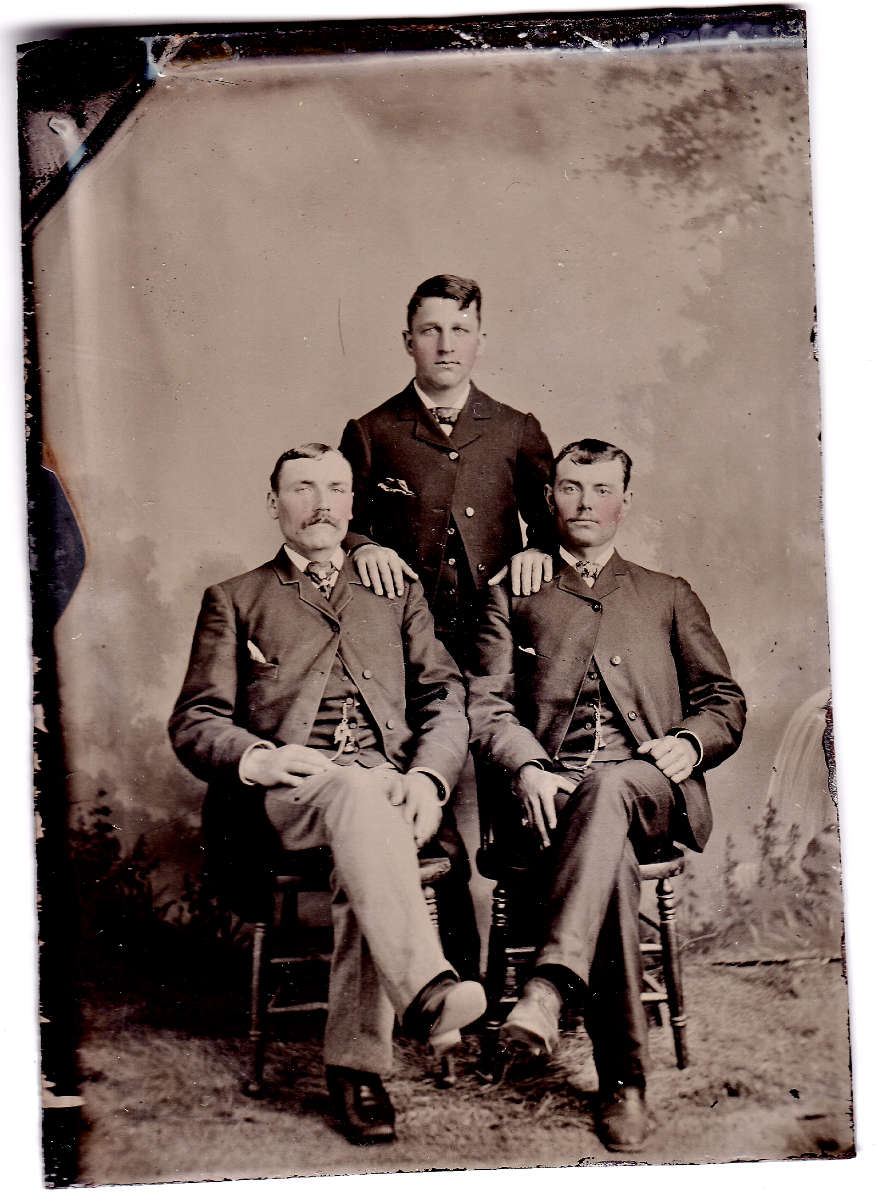
a wet plate positive (tintype) – bought in 1978

Toronto. The advent of the wet plate process provided a means to continue on with the cased images like the daguerreotype, create a negative for paper prints, or expose a black Japanned piece of ‘iron’ to be cased or mailed or simply framed and kept.

The tintype was like the Ambrotype, but instead of a glass plate, a sensitized piece of flat iron sheet was exposed (underexposed for a better positive), processed and bleached to make a positive. The black Japanned surface substituted for the Ambrotype’s black backing. When cased, the tintype was  easily mistaken for an Ambrotype.

The fine example at left shows the dark sombre look of a correctly exposed and processed tintype. While tintypes eventually replaced Ambrotypes, and dry plates eventually replaced wet, they remained popular well into the 20th century serving as a novel means for creating reasonably fast positives at family friendly beaches and fairs.

You may have read Graham Greene’s thriller “The Third Man“, a post WW2 spy novella, or seen the dark, noir film of the same name based on Greene’s story (originally written as a guide for the movie) . This post title is a riff on the book and movie. An accompanying musical score is the haunting “Theme from the Third Man“. Shades of Harry Lime!

Posted in history | Tagged , , , | Comments Off on the tin men

the time before giant (cheap) TVs

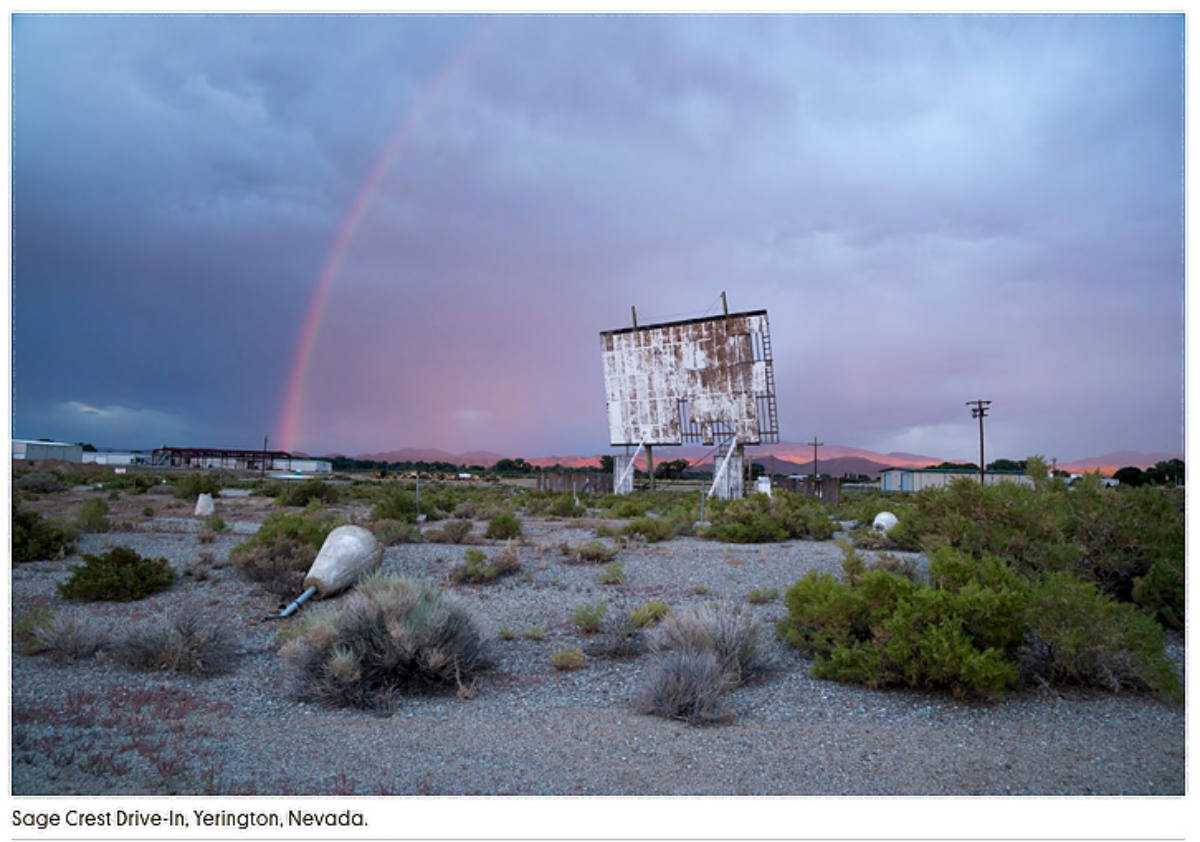
Sage Crest Drive-In theatre in Nevada – courtesy of Ms Lindsey Rickert

Toronto. The devastation of industrial facilities in much of the world brought a new class of adventurer/photographer to the forefront. In parts of the world, It was cheaper to abandon facilities ‘in-place’ rather than remove them after decommission, to repurpose the land and/or facilities.

Do you remember as a kid hopping in the family car as the night fell and driving to the local drive-in theatre? Once there, dad hooked up the tinny little speaker to the window and headed to the refreshments stand and back. At the car, the family settled in and watched the movie in comfort as the car perched on the convenient rise.

Back in 2017, wrote an article in Atlas Obscura. on one photographer’s country-wide search for the “Last of the Drive-In Theaters – A fade to black for America’s outdoor silver screens”.

In another post we see the work of  Lindsey Rickert once again as she captures those once massive and mighty drive-in theatres in the USA. And like our friends ‘down south’, we too have seen these ‘billboards of progress’ fade into history as new technology and changing  personal interests washed over them.

In the PHSC, we had many Toronto meeting speakers who told of their adventures and photographs,  people like photographer Chris Luckhardt who spoke of his adventures at our January 2020 meeting. In one location, Chris and his gal Friday climbed into an  abandoned Soviet era space rocket,   photographed the interior and managed to escape to tell the story!

For this drive-in story, we thank my good friend George Dunbar for suggesting the theme and sharing a link and photograph with us.

Posted in history | Tagged , , , , | Comments Off on the time before giant (cheap) TVs

ambrosia

Ambrotype portrait of a bearded man in unpressed clothes. Date and taker are  unknown (soft image is due to my poor scanning practice).

Toronto. The “next big thing” in photography, after its announcement,  was the wet plate process developed by Frederick Scott Archer of the UK in 1851. Interestingly, the new process did not ‘catch on’ with all Daguerreotypists immediately. A few years later around 1854, an American James Ambrose Cutting, patented the Ambrotype process.

An Ambrotype was similar to a Daguerreotype in that it was a one off image. BUT being exposed on glass, it was much cheaper to make,  yet being cased it fit right in with a Daguerreotype.

To make an Ambrotype, an underexposed glass wet plate was reversed by a bleach bath that turned the black areas of the plate white. A black backing made the negative’s light areas appear black  completing the reversal to a positive image. After about a decade, the Ambrotype was replaced by the even cheaper tintype which was usually uncased and could be mailed without risk of breakage. Just in time for the soldiers in the US Civil War!

Posted in history | Tagged , , , | Comments Off on ambrosia

off with their heads …

Old Leitz pocket tripod and small ball and socket head

Toronto. … said the queen in the famous “Alice” stories. Those of the smartphone generation have little use for tripods or tripod heads as the media (sensor) is so sensitive that the majority of shots are taken hand held. Only doing close ups with care and videos are such devices necessary – always used with a cradle  since  smartphones do not have any kind of socket to accept a tripod head directly.

During most of the plate/film era, a tripod was essential to hold the camera stable and steady, pointed at the subject. The early stands were used in studios to hold the heavy cameras at the correct height and distance. Outdoors a tripod was essential. The head gave a means of rotation and tilt whereas the tripod’s legs could be adjusted for stability and balance.

A later alternative was a ball and socket head so the camera could be tilted, turned and tipped as needed. As film neared the end of its life, media sensitivity was still too low for hand held photos in poor light or carefully framed shots in any light. Now that digital  sensors are so sensitive such stands and heads have generally been relegated to history.

Nevertheless, if you have a need for such accessories, you may well find a suitable tripod or head at one of our auctions or fairs (coming up fast this May).


Posted in camera | Tagged , , , , , , | Comments Off on off with their heads …

some thoughts on collecting …

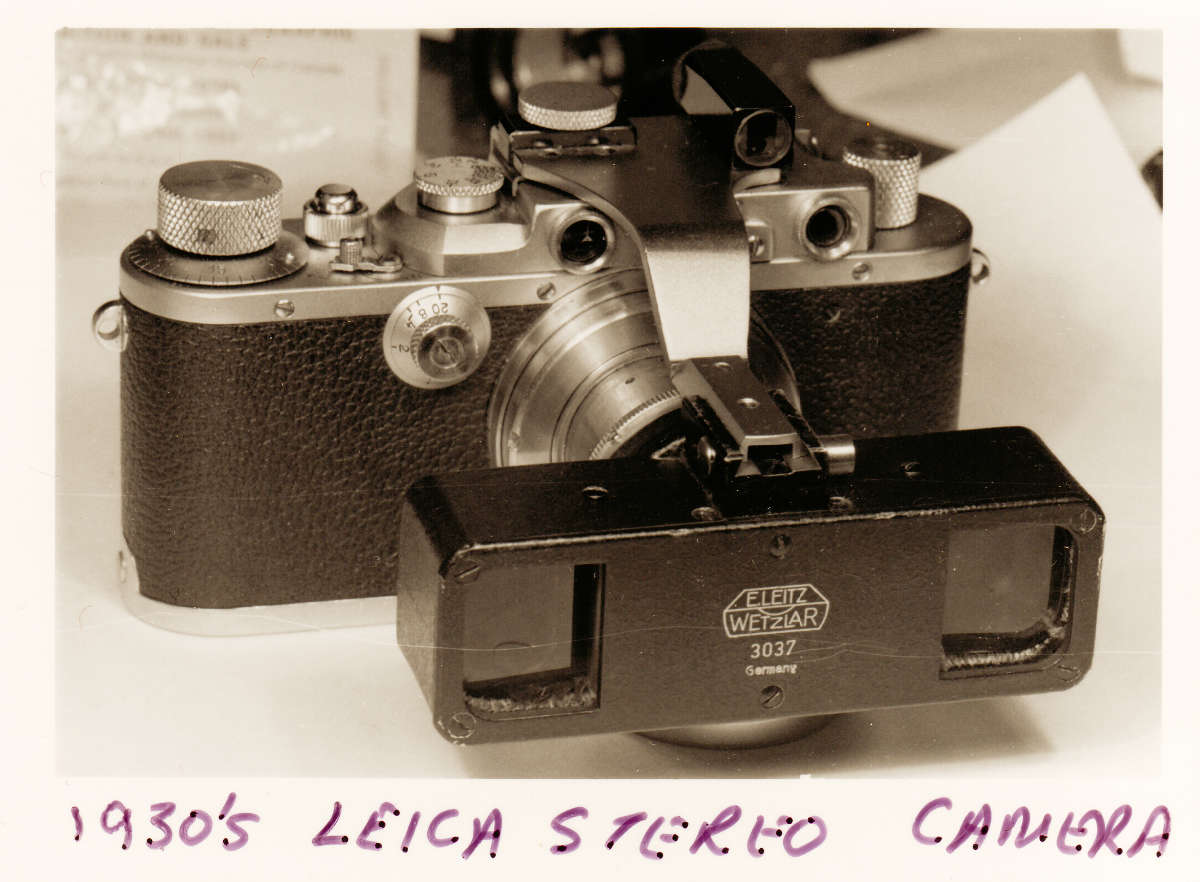
a Stereoly beam splitter mounted on an old Leica camera

Toronto. I noticed over the years different kinds of people collect photographica (cameras, accessories, photographs, memorabilia, etc.). Some collectors researched their possessions and often sold items either to fund new purchases or after a better quality version was acquired. Others were not actually collectors but simply in it for the money. A fast turnover and a much higher price could improve the bottom line.

Both kinds visited our meetings, fairs and auctions over the years. At the March, 1982 Toronto meeting, I was approached by a fellow I will call Alex. Alex had in his pocket a strange looking post war accessory by Leitz for the Leica. This odd thing was an early STEMAR dual lens system that screwed into a regular Leica for stereo shots beyond 10 metres.

I must have looked surprised at the accessory and the reasonable price because Alex abruptly put it back in his pocket and withdrew his offer (an add-on viewer and prism for closeup stereo could be added to the STEMAR if they could be found).

The following month, I got a call from Alex suggesting we meet in a North York restaurant.  I met Alex and he carefully pulled a very old STEREOLY  (c1939) from his pocket. Inside a matching tiny brown leather case was the tiny beam splitter complete with a ‘four notch’ arm and viewer to slide into the camera’s accessory shoe and hold the prism against the camera lens. After a lengthy discussion, I agreed to buy the device.

As we readied to leave, Alex pulled another gadget from his pocket. It was like a fat plastic pocket watch case. Opening it, he showed me a 1937 Hektor 28mm lens. He also had the folding 28mm viewer with its own leather case. The lens and its case were in beautiful shape. Lens, viewer, cases too went to a new home.

So there you have it. Some folk collect and research their finds. Some sell off items as better ones are found or interests change, while others are just “in it for the money”. All can be rich sources of additions to any collection.  Drop by our events this coming spring and you too may find that special item to complement your collection (or user gear).

Posted in history | Tagged , , , | Comments Off on some thoughts on collecting …

coming … another red letter day!

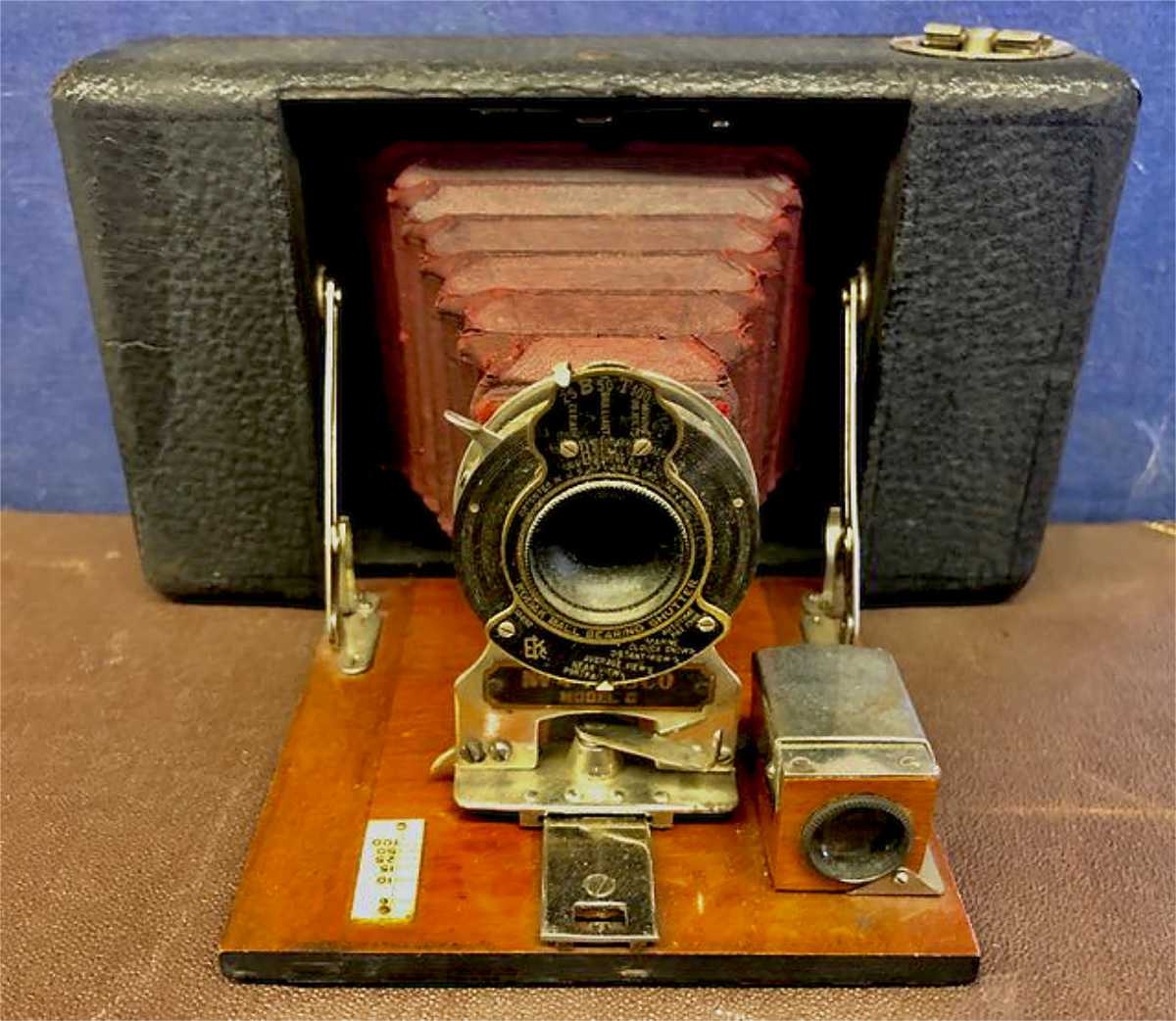
lot 975 in our May 5, 2024 auction

Toronto. Our spring auction is May 5, 2024. As we get closer to the date more material will be posted. We have photos now of nearly 100 lots and more lots are coming in. As in past auctions photos of  most or all lots will be in a slide show posted here.

To whet your appetite, at left is a sample lot. There are cameras (film and digital), projectors (digital), photos, accessories and more in the lots being prepared now for the coming auction – a red letter day, indeed for collectors and users alike. Come out to renew old acquaintances and perhaps get a cherished piece of photographic material.

See the right hand sidebar for date and location. At the moment, our dropdown menu under AUCTION shows “consignment auction general instructions” for last year’s auction. The rules will be updated closer to May 5th.

Posted in auction | Tagged , , , , , , , , | Comments Off on coming … another red letter day!

thoughts on creating luddites

old folder in Spring 2020 auction

Toronto.  There are both good and bad for collectors and picture takers with the digital revolution in photography. Digital cameras are faster, smaller, and often just added on to smartphones. Sensors are far faster. Image viewing is near instantaneous as is the sharing. Auto everything and full colour make it hard to mess up a photo in decent (or even dim) light.

As picture takers, we throw away these gadgets every few years and buy newer, faster models. But what about the collectors in us? From inception to well into the last century cameras were mechanical and prints viewable (usually) without added gear. Carefully handled, cameras and lenses remained fully workable and repair, if necessary, could be done by any competent camera technician.

For a brief time when the world moved to hybrid mechanical/digital film cameras, repairs could still be made by any independent repair shop. Once camera makers took over, their refusal to sent the needed sub-units to independent repair shops spelled an end to any such work on the newer hybrid mechanical/digital film cameras.

Today as takers we value the convenience and speed of digital gear over longevity but as collectors, what will be left of this era to collect? Just beautiful doorstops (if stacked together). …

PS – If you are devoted to the older mechanical gear and plate or film media, be sure to visit one of our events this spring. You just may find an intriguing piece for your collection or actual use (and we do cater to both the film and the digital brigade).

Posted in activities | Tagged , , , , | Comments Off on thoughts on creating luddites

accolades to George

Blackstock (ON) Fair bandsman – photo by George Dunbar

Toronto. My good  friend, George Dunbar, in his early 90s, often submits ideas and photos, and links to me as he finds them while searching for photo history material.

George was both an industrial photographer and videographer for IBM Canada before he retired. As well as a member of the PHSC, he has spoken at one of our monthly meetings when they were in-person events.  And recently, I learned that he is also an author.

George writes, “George Dunbar donated his 55-year photo documentation of the annual Blackstock Fair to The Lake Scugog Historical Society.

“Blackstock, a small town in southern Ontario, is where George’s late-wife Mona was born and raised.

“George thoroughly enjoyed his photography of activities (and particularly, people) at the Fair each August for many, many years and published a book of images in 1994.”

George suggests you browse the town’s facebook page for items of interest.

Posted in activities-other | Tagged , , | Comments Off on accolades to George

two chairs – no waiting

Cindy Motz showed this photograph in her presentation. An early example of electric motor driven dental drills in the days before patient privacy

Toronto. We had a wonderful Show and Tell session on Wednesday the 21st. After the issues with Eventbrite we decided to go ZOOM only with a notice  posted to all on our MailChimp list.

Six people presented items from their collection while we watched and asked questions. Prior to the Show and Tell, president Clint held the annual business meeting (actually for 2023 as we did not hold a meeting in December).

Jeri Danyleyko kicked things off by showing a cherished Kodak Folder assembled in Canada from a design and parts made in Rochester. A similar camera was subject to part of an article in the previous journal issue (49-3). Jeri noted her model used 620 film – a standard based on the universal 120 film, but using a thick wooden core for the spindle instead of the narrow metal core.

Cindy Motzenbecker was next showing a series of recent photo acquisitions. These were a mix of interior (mainly bars, pool rooms, drug stores, liquor stores, and businesses like dentists) and exterior shots taken around the year 1900 plus or minus a decade or two. The photograph at left is courtesy of Cindy and shows an early use of electricity to run the drills. Like large dental facilities today, there are more than a single chair but unlike today, in one room with little privacy. The title is a bit facetious since very likely there was a wait time with or without an appointment.

David Bridge displayed a book called “Camera Conversations” written in the late 1930s by “Jay” (Thomas George Jaycocks) giving the neophyte Canadian photographer hints on how to do the art. The only camera mentioned is a Leica used by the author to take the included illustrations. David found information on the book and its author slim. He bought the book from a seller who charged a rate based on the size of the book, not its content, age, condition or value (it was in the $10 category).

Mark Singer spoke about how he decided on the 9.5mm amateur movie equipment, showing various cameras and films including those offered by Pathè. He said that manually cranked Pathè cameras took two turns per second to create the standard number of frames per second (Frenchmen hummed/sang the “Marseillaise” to do the requisite turns smoothly). Mark said in passing that the actual frame size in 9.5mm films was closer to 16mm than 8mm since the only sprocket holes were up the middle (8mm was actually 16mm flipped over in the camera and slit and joined during processing to make the single edge aligned sprocket holes).

Clint Hryhorijiw displayed a clever “flash” gadget that predated the flash bulb. A “gun handle” like device, it took a charge of Magnesium powder. Pulling the trigger opened the top brass door, then scratched the flint across steel creating sparks and igniting the powder in a brilliant (and dangerous) flash of smoke and bright light. One wag suggested it was the source of the name “flash gun”…

Lorne Shields wrapped up the session with a display of special bicycles and bicycle themed picture frames. The bicycles were unusual in that they were intended to be ridden by many at once. Eschewing the bicycle and bicycle built for two, a three person bicycle was shown, followed by a four, five … ten person bicycle and more. In each case Lorne explains who made the contrivance and why. He mentioned speaking in the Buffalo library last year via ZOOM to an audience of 500 people!

Even after the formal meeting there were interesting discussions – including the argument that strips of paper negatives were precursors to modern day films. All in all, the event, pulled together at the last minute was very successful and enjoyed by the attendees.


Posted in program | Tagged , , , , , , , , | Comments Off on two chairs – no waiting