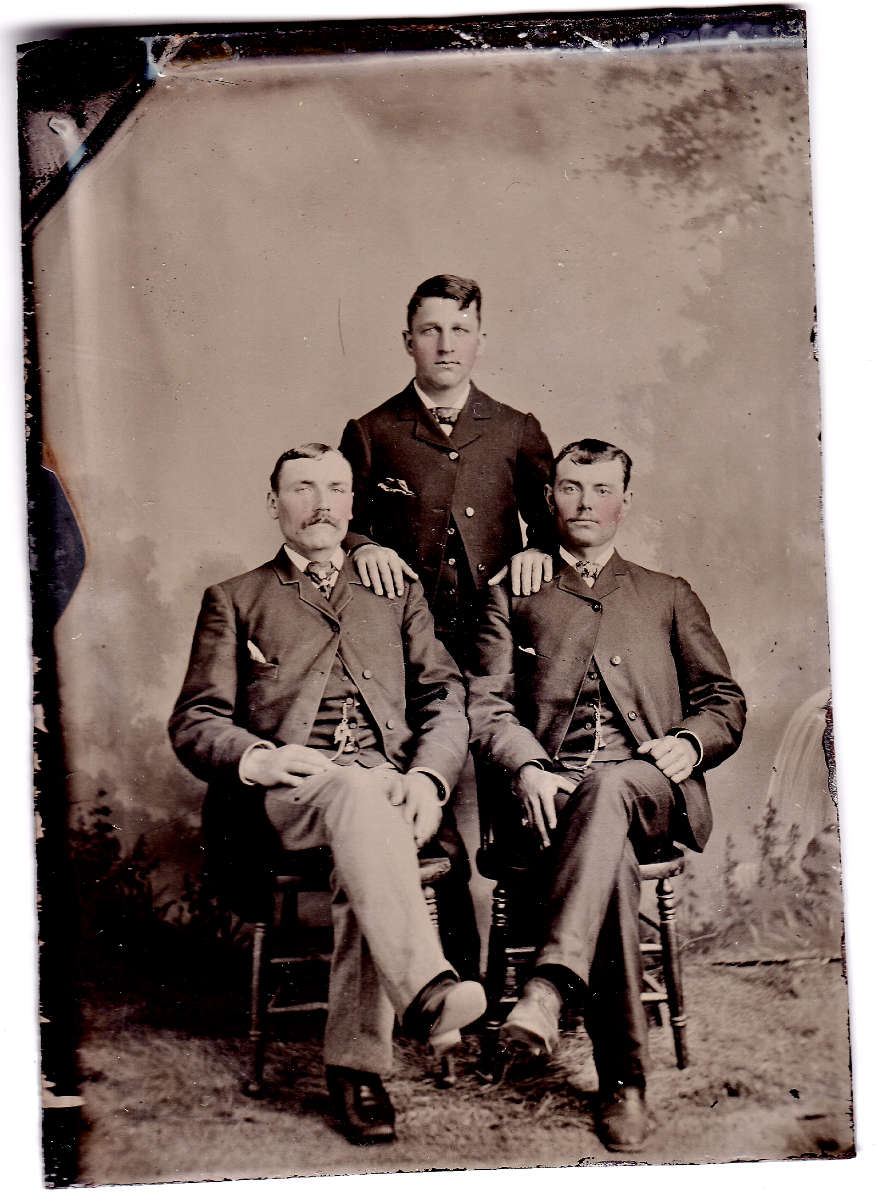
a wet plate positive (tintype) – bought in 1978
Toronto. The advent of the wet plate process provided a means to continue on with the cased images like the daguerreotype, create a negative for paper prints, or expose a black Japanned piece of ‘iron’ to be cased or mailed or simply framed and kept.
The tintype was like the Ambrotype, but instead of a glass plate, a sensitized piece of flat iron sheet was exposed (underexposed for a better positive), processed and bleached to make a positive. The black Japanned surface substituted for the Ambrotype’s black backing. When cased, the tintype was easily mistaken for an Ambrotype.
The fine example at left shows the dark sombre look of a correctly exposed and processed tintype. While tintypes eventually replaced Ambrotypes, and dry plates eventually replaced wet, they remained popular well into the 20th century serving as a novel means for creating reasonably fast positives at family friendly beaches and fairs.
You may have read Graham Greene’s thriller “The Third Man“, a post WW2 spy novella, or seen the dark, noir film of the same name based on Greene’s story (originally written as a guide for the movie) . This post title is a riff on the book and movie. An accompanying musical score is the haunting “Theme from the Third Man“. Shades of Harry Lime!