thinking cool thoughts …

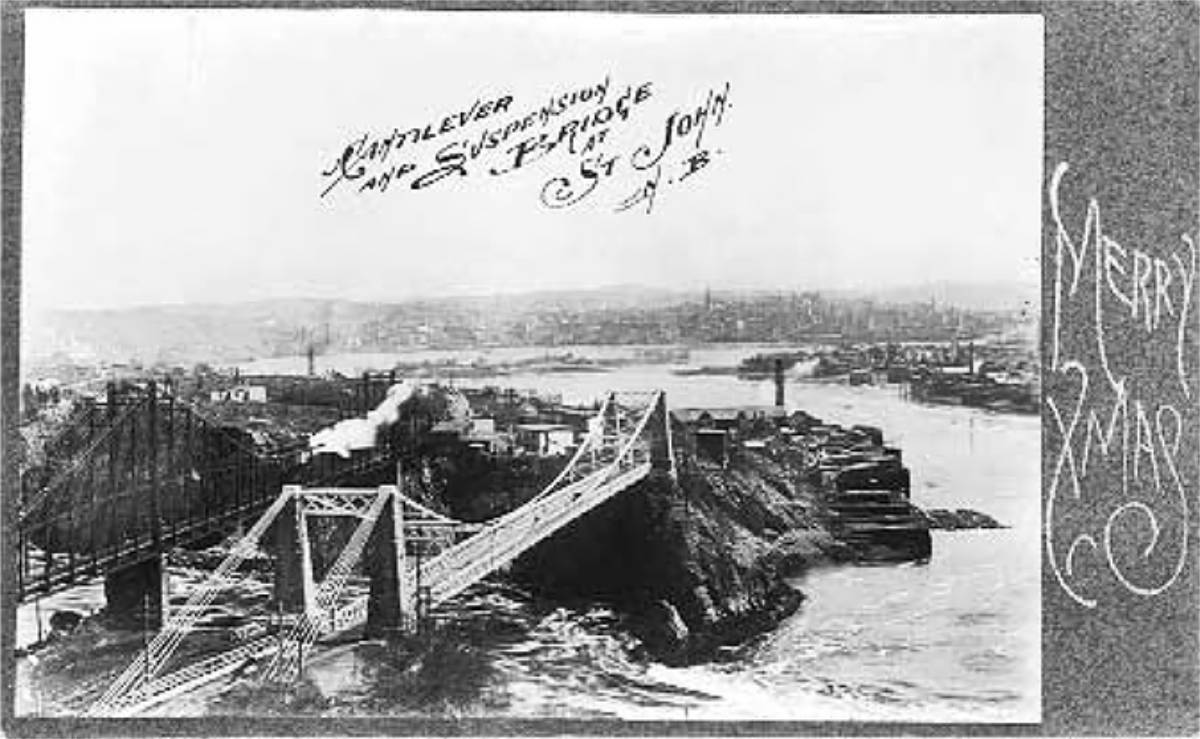
Xmas card – cantilever bridge, St. John, NB – R G Wilson collection

Toronto. Sweltering weather last week and more forecast for next week. We seem to be getting a preview of the effect of climate change! Phew!

After the recent rash of camera posts, it’s time to give the other side – image collectors – a nod. Issue 24-3 issued late in 1998 featured a selection of store Christmas greetings in the form of photo  postcards made from cabinet card images.

The idea of postcard size photo Christmas cards was still popular in the later 1950s when I used just such a card with a photograph of a billboard-size antenna used to bounce ‘microwaves’ off the troposphere.

The late Robert Lansdale featured a sampling of these old ‘greeting’ cards in the column, “Images of the Month”. Bob writes. “Photographers made use of the cabinet print during the late 1800s to drum up Christmas sales, being replaced by post cards after 1900. We offer East and West greetings showing a variety of styles.

“Barraud Brothers of Barrie, Ontario (1881-1887) were influenced by Japanese art in the preparation of their card with a customer’s portrait.

“C.W. Mathers ran this ad in the Edmonton Bulletin from December 1 to 29 in 1899 encouraging customers to call early for a choice of local scenery. In 1898 he offered cards at “30¢ and 40¢. Souvenir of Edmonton district for 65¢ each; $5.75 a dozen; $3 half doz. Edmonton Diamond Jubilee Souvenir 50¢.”

“The all-season scenic photograph promoting St. John, N.B. became seasonal with a Merry Xmas greeting printed to the card stock.

“The Wm. Notman studios in Halifax, N.S. catered to the naval detachment with an art and photo composite bearing a view of HMS Blake.

“A 1911 Christmas card from “C” Division – Battleford, Saskatchewan of the RNWM Police is a composite of crossed revolvers and photos of base activities, gymnasts, officers and facilities. Signed by Nicholson, most likely John Nicholson of Boissevain 1890-1894 and Moosomin until 1919.

“A new portrait offered timely greetings on the card of J.G. Parks of Montreal, Quebec”.

Members can easily see the cards too by viewing the issue 24-3 pdf file on the free members-only DVD/thumb drive. See above or at right. It’s easy to join the PHSC. And the cost is cheap but well worth it. Questions? Email Lilianne at member@phsc.ca.

Posted in history | Tagged , , , | Comments Off on thinking cool thoughts …

a century already?

Leica Q3 digital camera

Toronto. Wow! Leica has been around for a century now. It seems like only yesterday that the little camera saved a German optical house and revolutionized photography – all after WW1 ended.

The camera, formally introduced to the world in 1925 at the Leipzig Fair, had roots going back over a decade earlier. The creator of the little camera was Oskar Barnack, who joined the optical house of Ernst Leitz, Wetzlar in 1911. The biggest challenge Leitz faced was convincing potential users that the tiny negative (double frame on 35mm film) of only an inch by an inch and a half could make large photographs.

The Leica motto was roughly “little negatives, big pictures” since the Leica was first released in the days when people chose the size of camera to match the desired size of photograph. Dealers had displays of 11×14 photographs by known photographers with a tiny ‘negative’ tucked down in a corner to emphasize what the Leica could accomplish.

In the late part of the last century, like many family owned businesses, Leitz broke apart and segments were sold to others. Today, microscopes by Leitz still sell, but as Leica Microscopes (my friend had eye surgery under a Leica, while I had similar surgery under a Zeiss). The camera segment, and a few other consumer products, moved to control by ex-Leitz officials. When digital technology hit, Leica moved on to digital as a high-end camera, continuing both camera and lens design.

The company left behind the less expensive film cameras manufactured for them by Minolta and Panasonic – the Leica “Plastikas” as I called them. Today, for those wishing to dip in the Leica pool, a few inexpensive (for Leica) cameras are offered. Or you can buy a digital Leica like the Leica Q3 shown here for about $9,500.00 Canadian (other Leicas cost more or less than a Q3). The Q3 camera specs are impressive: 60mp+ CMOS sensor, full frame, 50-100,000 ISO, and a built-in Summilux 28mm f/1.7 aspheric lens.

Happy birthday little friend.  By the way, camera collectors welcome the Leica and a few other well made high end cameras at strong prices. Visit our 2025 events to see what you can add to your collection. Next up is our well known annual summer trunk sale on July 13th – rain or shine.

Posted in history | Tagged , , | Comments Off on a century already?

an eye-popping price tag!

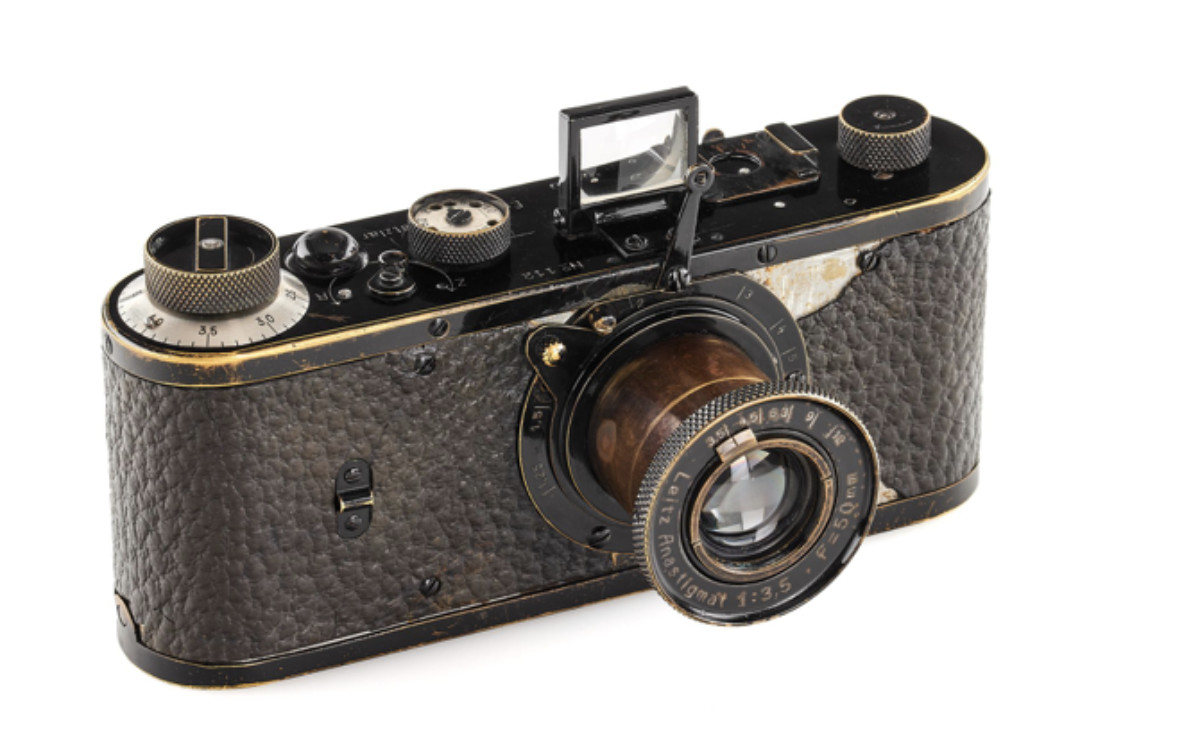
Null series Leica #112 once owned by Oskar Barnack

Toronto. A null series  Leica serial 112, once assigned to the inventor of the tiny marvel, Oskar Barnack, was sold at auction in Europe for an estimated 11 and a half MILLION dollars Canadian! The camera was sold by Leica Photographica Auction No 46 (lot 8).

The same camera is shown by Denis Laney in his 1992 “Leica Collectors Guide” published by Hove. Most sources quote serial numbers 100-131 as assigned to the ‘null’ series.  After number 121, the shutter design was changed according to Laney.

There is no firm confirmation of the number of null series cameras that still exist. The cameras were used to test production processes, and loaned to professional photographers for assessment and suggested changes.

Note: A big thank you to PHSC News editor and 3D guru, Patrick Gunn, for spotting this rare auction item and advising me by email.

Posted in history | Tagged , , | Comments Off on an eye-popping price tag!

a book for Canada Day

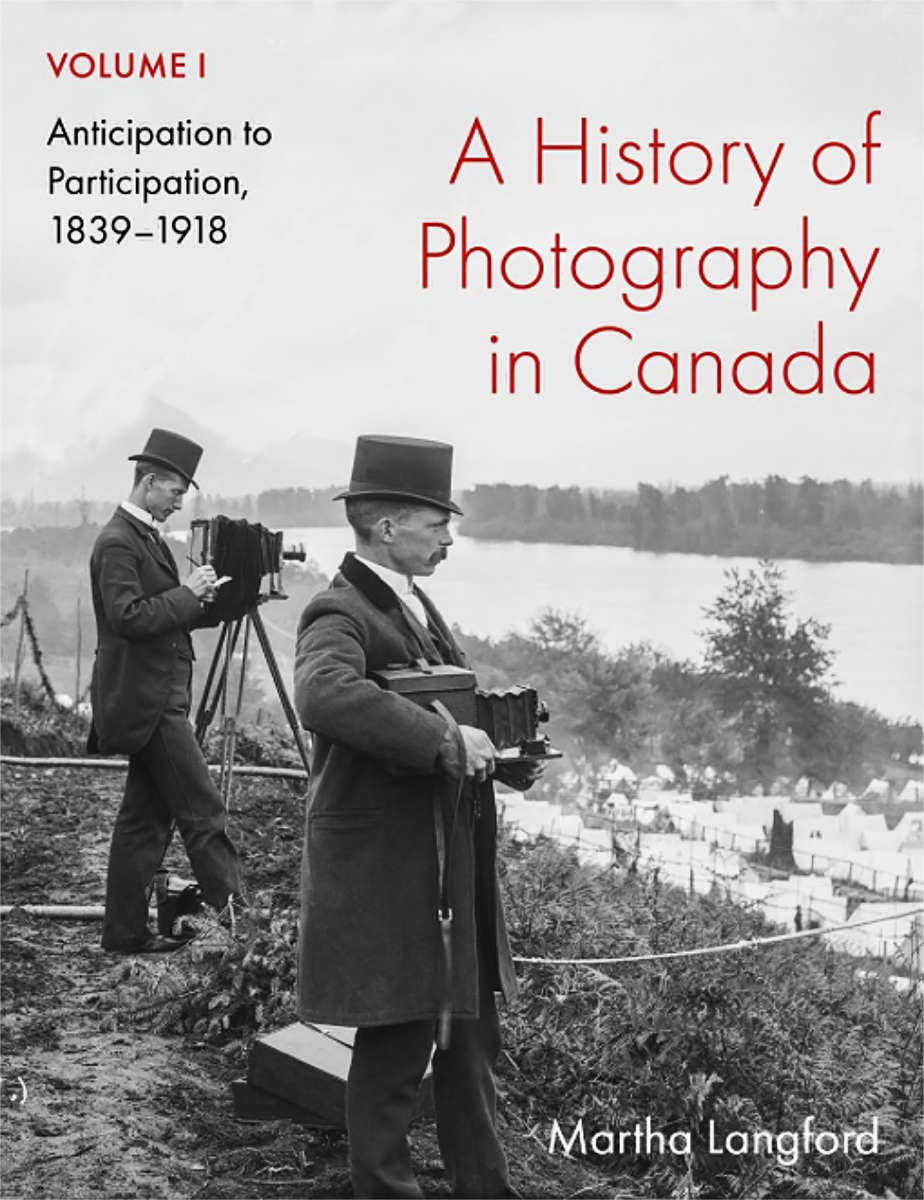
A History of Photography in Canada, Volume 1
Anticipation to Participation, 1839-1918 by Martha Langford (Concordia)

Toronto. McNally Robinson in Winnipeg have announced a new history of photography book set for release mid-August. Titled, “A History of Photography in Canada, Volume 1 – Anticipation to Participation, 1839-1918“, the author is Ms Martha Langford of Concordia in Montreal. Concordia University has been a PHSC member off and on since 1982.

The book is priced at $85 and printed by McGill-Queen’s University Press.

At the mcnallyrobinson.com website, the book synopsis reads, “From early reports of the invention to its wide application during World War I, the idea of photography created anticipation and participation in the modern world. The first volume of A History of Photography in Canada captures this phenomenon by looking at hundreds of photographs generated in and about Canada-in-the-making and by listening to the chords they struck in the collective imagination.

“Emphasizing technological readiness and cultural eagerness for the medium, Martha Langford shows how photography served ideals of progress and improvement as Canada’s settler society looked to master the world by seizing its visible traces. The imposition of these programs on Indigenous Peoples and indentured labourers is confronted throughout this volume, which offers both narratives and counternarratives of subjectification.

“Reproducing images of people, places, events, and objects from the unceded territories of the First Nations, Inuit, and Métis, from British North America, and from the Dominion of Canada and the Dominion of Newfoundland, Langford asks where and when photographs were taken, why, and by whom. How did the making and preservation of a photograph alter the circumstances in which it was produced, and how did this affect individual and collective consciousness?

“Alongside accomplished portraits, landscapes, still lifes, and their vernacular counterparts, the book draws glimmers of photographic experience from treatises and doggerel, official reports and personal diaries, newspapers, magazines, letters, and travelogues. Anticipation to Participation chronicles eight decades of reinvention and repurposing, from a wondrous discovery to the wide adoption of a basic tool for knowledge gathering, artmaking, and journaling.

“Langford’s sweeping narrative rewrites the history of photography from the bottom up, vividly expanding the definition of photographic experience.”

My thanks to Les Jones for alerting me of this publication. Happy Canada Day, everyone!

Posted in book | Tagged , , | Comments Off on a book for Canada Day

June 2025 PHSC Newsletter issue 25-6

PHSC News 25-6 cover

Toronto. The sixth in a delightful, eye-appealing series of monthly PHSC News newsletters by our own  Patrick Gunn. Issue 6 is a delight to read as well as see – another impressive issue!

Beautiful quality. Beautiful layout. PHSC is  an all volunteer operation and as such we  rely on our volunteers, especially those with envious talent (emphasis on talent)!

Click here for a copy of 25-6 or visit NEWSLETTER above for this and all other issues. Do you prefer a personal copy (notice sent directly to your in-box)? Just email news@phsc.ca and be added to our MailChimp list.

While this and all issues are free, many news items and announcements are found in each issue’s pages. Drop editor Patrick Gunn (or me) a line if you have/want specific photo gear included in the newsletter notices – we have lots of space in this age of electronic files!

Posted in newsletter | Tagged , , , , , , | Comments Off on June 2025 PHSC Newsletter issue 25-6

A Photo Album from 1930

first British Empire Games album album is dated 1930 from Hamilton

Toronto. Photo collectors frequently add photo albums to their collection. These are often Victorian in nature filled with CDVs, Cabinet cards and the like. But some albums are special, even post Victorian, and  intended to commemorate big events.

Check out the albums in your collection. If you have one titled, “British Empire Games ” from Hamilton, Canada dated 1930, then you have a piece of our history!

In issue 24-3, the late Dr Robert Wilson writes and illustrates an article about the album and notes that the first ever Commonwealth (British Empire) games were held here in nearby Hamilton.

Dr Wilson begins, “During the Olympic Games in Amsterdam in 1928, a Canadian from Hamilton, Ontario, M.M. Robinson, first began to lobby for support for a British Empire Games. At the time, Robinson was manager of the track and field section of the Canadian Olympic Team.

“After the Olympics were completed, Robinson travelled to England, where final discussions were held that resulted in the establishment of the first British Empire Games. As the Games organizations were put in place, Robinson continued to be actively involved as the Chairman of the British Empire Games Association of Hamilton and a member of the British Empire Games Committee of The Amateur Athletic Union of Canada.

“Other prominent Canadians were also active in the organization, such as E. W. Beatty, President of the Canadian Pacific Railway, who became the Chairman of the General Committee of the Games.

“The Games were held from 16 to 23 August 1930 and attracted 400 athletes from eleven countries: England, Ireland, Scotland, Wales, Australia, New Zealand, South Africa, Bermuda, British Guiana, Newfoundland and Canada. They competed in sixty events covering Track and Field Athletics, Swimming, Rowing, Lawn Bowling, Wrestling and Boxing. It is interesting that the only events for Women were swimming events.

“In the end, England came out on top winning 61 medals, with Canada second (54 medals). These Games were a great success and set the basis for the ongoing Commonwealth Games which have been held every four years except in 1942 and 1946 when they were interrupted by the Second World War.” …

You can read the rest of Bob’s album story in the issue 24-3 pdf file on the free members-only DVD/thumb drive. See ‘Membership’ above or at right to join! Any questions, just email Lilianne at member@phsc.ca.

Posted in history | Tagged , , , , , | Comments Off on A Photo Album from 1930

pictures at a fair

a Kodak Stereo camera

Toronto. At our spring fair this year (2025) Newsletter editor Patrick Gunn generously devoted his time to photograph the fair.

Moreover, He offered the images to all PHSC media outlets – Journal, Social Media platforms, and Website – as well as part of his own newsletter, PHSC News.

Patrick is also our resident 3D expert, so if you have any 3D questions, email him at news@phsc.ca.

I made Patrick’s images into a slide show. You can view the show here, You will see a matrix of small images. Click on the upper left (or any) small image and use your computer’s back/forward keys to step through the images.  Enjoy!

Oh yes, and our next 2025 event is in a few weeks on July 13th – our famous annual mid-summer trunk sale!

Posted in fair | Tagged , | Comments Off on pictures at a fair

sometimes a bit sketchy

“The Exiles” a sketch by John W. Ehninger in mid to late 1800s

Toronto. Being a small journal, we get/ask members to contribute. One fine contribution was that of the late Thomas Ritchie from Ottawa. His article on a photographic process is titled, “AUTOGRAPH ETCHINGS – John Ehninger’s New Application of Photographic Art”.

Like many artists, Ehninger used photography to capture scenes he chose to paint – an idea that predates 1839. In fact, the idea of capturing scenes for later painting his dioramas was what prompted Louis Daguerre to join forces with Nicéphore Niépce in the late 1820s. The other famous individual tied to photography was Henry Fox Talbot, also an artist (an amateur who used watercolour).

Many artists were also illustrators. What set Ehninger apart was his unique ideas on using photography to further line drawings (illustrations). In fact he went so far as to write and see published a book on his unique process called ‘Autograph Etchings’.

Thomas Ritchie used a number of more recent articles on Ehninger and his process, beginning his own article, “American artist John W. Ehninger, born in New York in 1827, graduated from college at age 20 and went to Europe where for six years he studied painting in Germany, France and Italy.

“Well-trained as an artist and illustrator he returned to New York where his exhibitions at the National Academy of Design earned him recognition and membership in the Academy.

“If Ehninger knew nothing about photography before his visit to Europe, he probably learned about it from artists there, particularly in France where many painters used photographs to lay out their work and as records of topography, costumes and room furnishings for future paintings.

“Some artists even painted from photographs, a practice that helps artists of the present day. Eugene Delacroix, Jean François Millet, Jean Corot and other French artists combined their art with photography to produce what became known as cliché-verre.

“Using a sheet of glass coated with paint or other suitable material as his ‘canvas’, the artist scratched his drawing on the surface with a stylus, removing a fine line of the coating with each pass of the stylus. The glass plate then served as a photographic negative, the print made from it showing dark lines where the coating had been removed, thus recording the artist’s design on the paper.

“By using the negative again, he could reproduce his drawing any number of times; thus he had an alternative to the more complicated and time-consuming engraving and etching methods of reproducing a drawing.” …

Members read all of Mr Ritchie’s article in the issue 24-3 pdf file on the free members-only DVD/thumb drive. See above or at left to join. Send your questions on to Lilianne at member@phsc.ca.

Of course you must visit our 2025 events to find goodies to add to your personal collection. Our famous annual trunk sale (rain or shine) is this coming July 13th.

Posted in history | Tagged , , , | Comments Off on sometimes a bit sketchy

PUTSing it to plastic …

very early Leitz Leica ad from a CD compilation by Erwin Puts

Toronto. Early on photography became a main-stay of advertisements, brochures, and manuals.  As camera and image collecting interest grew, so did interest in photographic history, including that of camera manufacturers.

Around the same time, the CD replaced the old vinyl records with a digital format and a longer play time. Modern homes had CD players in spite of discerning ears hearing their harsher rendering of music compared to the analogue vinyl sound.

People discovered the CD could be used to record text and images as well as music. Adobe’s PDF file format even allowed exact copies of a document’s layout including text and images. In the late 1990s Erwin Puts compiled a selection of Leitz documents, all carefully scanned and recorded on a CD titled, “LEICA History 1925 – 1965″. 

Once used as backup media, the CD/DVD format is passing into history in the face of streaming services, thumb drives, and other solid state devices. In fact, many modern computers no longer have a built in CD/DVD reader/writer.

In issue 24-3 I reviewed the CD using a personal copy. The review begins, “This CD is the first of a several planned to provide inexpensive access to the many historical documents produced by various European camera manufactures.

“Author. The material was selected and assembled by Erwin Puts, a well-known Leica enthusiast and photographer. You can learn more about Erwin and his opinions on the various Leica reference books at http://www.imx.nl/photosite/leica/leica-home.html.

“Source. Erwin researched the Leitz Wetzlar archives held by Leica Camera in Solms [once in the nearby Wetzlar Leitz plant] and selected documents covering the Leica and related accessories. The selection is a mix of catalogues, brochures, instruction books and other materials published over the years 1901 to 1972. Most of the papers are marketing materials.” …

Members could read the rest of my ‘prose’ by viewing the pdf file for issue 24-3 on the free members-only DVD. Joining the PHSC is a snap (and cheap) – see Membership above or at right. Direct any questions to Lilianne at member@phsc.ca.

Posted in history | Tagged , , , | Comments Off on PUTSing it to plastic …

distant suns

it’s full of stars – 2001:A Space Odyssey

Toronto. For most of photographic history, photos were taken from about one metre to out as far as the eye could see.

Double bellows extensions and other special accessories allowed photos of small objects to be easily taken with the camera lens able to focus from about 1 metre to 1:1 or life size. The early Nikon Coolpix digital cameras were just right for use with a microscope.

From early on, photography was also used to capture photos through microscopes and telescopes. As a kid, I remember looking at the night sky and seeing the milky way and the northern constellations. As urbanization grew, so did light pollution and we lost the ability to see many stars in the night sky.

Telescopes, like the Hubble, were shot up in space beyond the atmosphere and light pollution, recording the stars while circling earth.

Earth-bound telescopes were built high on remote mountain tops where the atmosphere was thin and the light pollution was small. The most recent huge earth-bound telescope opened this year in Chile – famous for its observatories a top mountains and far from light pollution.

Called the Vera C Rubin Observatory, the galaxy images it will capture  are to be sent to many universities – including the University of Toronto here. And the streamed images are all courtesy of “the largest digital camera ever made”. Now-a-days, when we think of photography, we must think big – very very big!

Meantime back here on earth, drop in on our 2025 events and pick up something just right for your earth-bound collection. Our next event is the annual summer trunk sale next month (July 13th) come rain or shine!

NB. This post title is from an application called Distant Suns. I bought a copy decades ago to run on an Amiga. It is still available today – for modern smart phones at least.

Posted in events | Tagged , , , , , , , | Comments Off on distant suns