memories …

PhotoEd’s coming Memory Issue

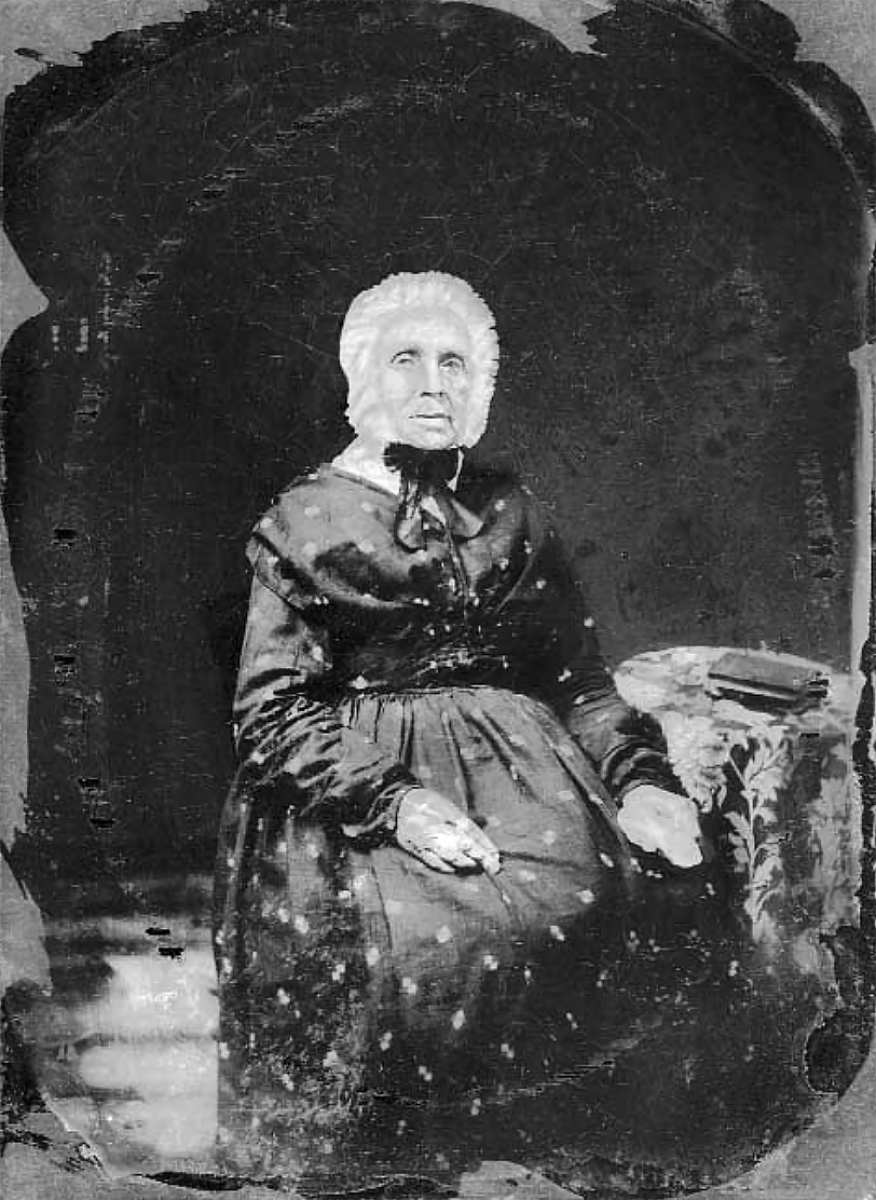
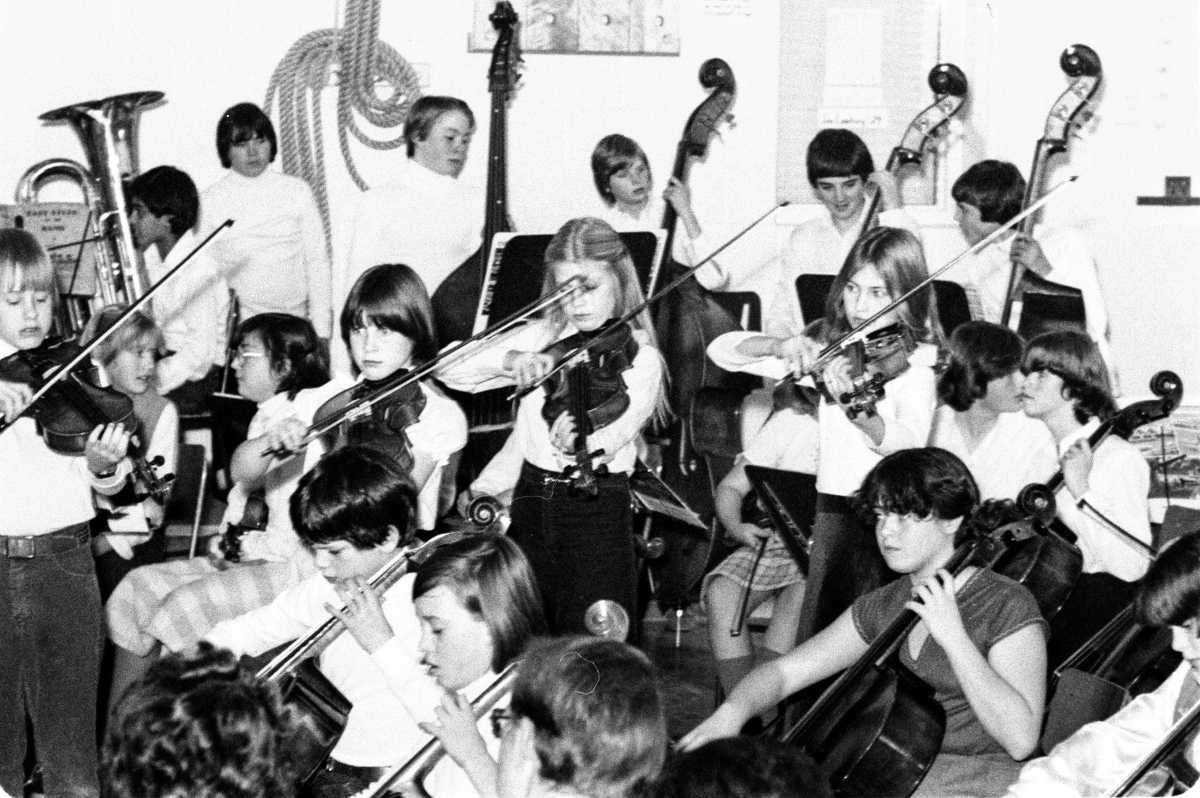
Toronto. Many families collected old photos in an album, or shoe box, etc. A lady I once knew routinely captured her growing family and took the time to put the photos in an album. The photos trigged memories to family members and showed how mothers and fathers looked in their younger years. Sometimes there were surprises, like an early pet previously unknown to later generations.

The next issue of PhotoEd magazine recognizes the value of photographs – the issue will feature “Memories” and is called the Memory edition.. Check out the link to see what’s coming – and at top left is a link to back issues of this newsletter too.

Of course you can go to PhotoEd magazine and see what print offers, plus read the digital issues. Inspiring photography for image collectors and more. By the way, visit  our 2025 events and add to your collection. Next date is October 19th for our famous fall fair. Details will follow in a post closer to the event – and can be seen now (for the impatient) in issue 25-7 of our newsletter.

Posted in history | Tagged , , , | Comments Off on memories …

a weird lens

an unusual lens signed as from a Montreal dealer

Toronto. In issue 25-1 (June 1999), Bill Belier has a very strange lens in his column “A Treasure from My Collection“. Bill explains, “This month’s “treasure” comes from Gerard Spiegel of Scarsdale, New York. A member of P.H.S.C. for over twenty years, he is well known throughout the photographic fraternity as a collector and writer.”

Bill contacted our then editor, Bob Lansdale, to share Gerald’s letter and inquiry. Gerald writes, “In the enclosed Polaroid you will see a brass-tube lens with an end cap with a pivoting shutter plate and slot for five Waterhouse stops. The stops are numbered with the opening diameters in millimeters from 10 through 48. The pivoting plate[ is marked] “6 1/2 IN”; directly below is an egg-shaped logo engraved “Hearn & Harrison, Montreal”.

“The entire front end screws neatly  to the end of the tube, but there is no flange or other provision to mount the tube to a camera body. The lack of a mount is not a problem as Simon Wing regularly used a “press fit”, where a tube would be forced into a fabric-lined hole in a lens board.

“It’s the Hearn & Harrison name that I cannot locate. This has the earmarks of a tintype lens, and if it didn’t have the unique front end, I would have assumed it was off a four-tube brass lensboard with a 6 1/2” focal length.” …

Members read more of Gerald’s letter and its outcome in the pdf file for issue 25-1 on the free members-only DVD/thumb drive. See above and at right under “Membership” to join. Questions can be emailed to Lilianne at member@phsc.ca.

Posted in history | Tagged , , | Comments Off on a weird lens

moving shadows at home

Vitak – earliest movie projector for home use

Toronto. As mentioned in an earlier post, in issue 25-1 we have a collection of reprints from exchange organizations. This one originally appeared in sixteen frames – the journal of the Movie Machine Society (MMS). In “The Vitak Story”, Alan Kattelle, tells the story of ‘America’s First Home Movie Projector’.

Alan begins his tale, “The next time you are planning a trip into New England, you owe it to yourself to include a stop in the pleasant town of Bucksport, Maine, located north of Portland at the head of Penobscot Bay.

“Bucksport is the home of Northeast Historic Film, an non-profit organization founded in 1986 by David Weiss and Karen Sheldon, dedicated to the collection and preservation of film and videotape of interest to the people of northern New England.

“The organization is housed in what used to be the 70 year-old Alamo Theatre, which has been transformed under the leadership of David and Karan into a modern movie theatre and a state-of-the-art film archive, with holdings of over four million feet of film and video tape. Much of the archive is available to qualified researchers.

“Natalie and I visited “Northeast” last summer looking to renew our friendship with David and Karan and seeing all the progress since our first visit, several years ago. After the pleasantries, David remarked that someone had called to say they had a Vitak projector, and David wondered if I was familiar with that machine?” …

Of course members read the issue 25-1 pdf file on the free member-only DVD/memory stick and learned about the 1902 Vitak home movie machine and the beginning of motion pictures for the home. See Membership above or at right to join, Email your membership questions to Lilianne at member@phsc.ca.

Posted in history | Tagged , , | Comments Off on moving shadows at home

freaky fotos

Spirit photograph by Édouard Isidore Buguet

Toronto. In the 1800s, people became fascinated with the dead and tried to see if ghosts existed and if so could they be photographed. … Well, with that kind of opening, savvy photographers leapt in to action and created photographs with ‘ghosts’ . …

As a result, today, collectors of old photos occasionally have a few ‘ghost’ photos in their collection. These photos were often taken in the UK and America. The temptation to double expose a plate began almost as soon as photography. Perhaps the early examples were simply accidents but they soon led to the smarter photographers creating ghosts or spirits on their plates on purpose (and for profit).

Drop by at our 2025 events to add to your collection. Lots of interesting items abound, even if you don’t spot any ‘ghosts’ 🙂 The next event will be our famous fall fair on October 19th at the Trident Hall on Evans at Islington. Free parking at the hall and nearby, good food, good companionship, and a great chance to expand your collection.  Details in PHSC News 25-7 now out. A poster and details will appear here near the end of next month.

NB. The post title is based on the title of Jamie Lee Curtis’s opus Freaky Friday and its sequel, Freakier Friday which Ms Curtis touted on Stephen Colbert’s Late Show a few nights ago.

Posted in history | Tagged , , , | Comments Off on freaky fotos

everything is relative …

Allandale Ontario Station c1906 or earlier. A slight crop of the original postcard by The Valentine and Sons’ Publishing Co. #100942

Toronto. …When this charming postcard of the GTR station in Allandale was sold, Grand Trunk trains delivered passengers to/from Toronto; This end of Kempenfeldt bay was clean, sail boats floated along on a summer’s breeze and people ate a hearty meal at the station restaurant.

Today, GTR and its successor, CNR, no longer deliver passengers; The ending ‘d’ was dropped from Kempenfelt bay; the end of the bay is/was polluted; the pleasure sail boats have departed; a dirty 30s government dock was build and allowed to deteriorate; and the restaurant is no more.

In the 1840s daguerreotypes were considered marvellous. Portraits could be taken in minutes and the final product delivered to the sitter in under an hour. And it was cheap compared to a miniature (painting).  No one cared that the colour was lost unless hand painted. No one cared that it was a one-off image. It was remarkable that a sitting took only a few minutes. So short that special clamps and furniture were sold to briefly hold the subject steady.

Today we capture an image in full colour in sub-seconds; view it and if acceptable send it anywhere in the world seconds later. Who ever hear of minutes to capture a portrait and then mail it (the original!) to another taking days, weeks or months! Indeed things are relative – and we are so spoiled!

Posted in history | Tagged , , , | Comments Off on everything is relative …

let there be light …

ad for flash – The Professional Photographer 1896

Toronto. As mentioned in recent posts, our late editor Bob Lansdale was able to convince exchange members to submit articles for reprint as we celebrated our 25th anniversary of the journal in 1999.

John Naslanic, editor of  the MiPHS’ Photogram, offered this article (and illustrations) on artificial illumination used to allow photographs to be taken under poor light conditions in the days of ultra slow media and modest aperture lenses.

John began the article, “‘No I might need it.’ That is what MiPHS member Davis B. Hilmer said when I tried to buy one of his powder flashguns. This was in 1972 and Davis was 75 years old then. He was selling off some of his equipment at 65 Canfield St. in Detroit, where he had operated as a commercial photographer for fifty years.

“His client list included a number of Detroit companies, including J.L. Hudson. Davis knew that flash powder produced a tremendous amount of light for only a few pennies, and could light up a banquet hall, or even a large outdoor arena. Flashbulbs cost a heck of a lot more and weren’t nearly as effective.

“For the first 25 years or so, photography depended almost entirely on the sun, or the daylight coming in a north skylight. No photos could be taken at night or on dark wintry days. With new processes, the metal magnesium was produced cheaply, and magnesium ribbon could be used to light up interiors, but it burned too slowly for portrait work.

“The magnesium flash-lamp was devised. Pure magnesium powder was held in a reservoir and blown through an alcohol flame, which resulted in a bright flash for about 1/10th of a second, which could be used to take portraits. One drawback was the billow of white smoke of magnesium oxide that formed and clouded the studio.

“Another unmentioned drawback was that when magnesium oxide reacted with water, it becomes magnesium hydroxide – the chemical name for milk of magnesia, a rather aggressive laxative. (A drink of orange juice, vodka and milk of magnesia is called a Philips screwdriver.)” …

Members read this and the other articles in the 25-1 pdf file on the free members-only DVD/memory stick. The disk/stick contains pdf versions of the first 40 volumes of our journal. See MEMBERSHIP above or at right to join.  Email any questions to Lilianne at member@phsc.ca. Collectors may find old flash photos, or powders, or flash apparatus at our 2025 events. Up next is our fall fair on October 19th, 2025 at Trident Hall on Evans near Islington. See PHSC News 25-7. A poster with details will be pinned to this site a few weeks before the fair.

Posted in history | Tagged , , , , | Comments Off on let there be light …

ride ’em cowboy!

WEHA Chrome 6-II c1938 photo courtesy of John Keesing   

Toronto. You likely never heard of the Weha camera – its name sounds more like a cowboy shouting a top a horse! However in the WW2 time frame, the little Japanese camera was sold in the far east.

As I mentioned earlier, our late editor, Bob Lansdale, celebrated our 25th by asking exchange members to offer suitable articles. We got a dilly from Ian Carron, co-editor of Back Focus, the journal of the Australian Photographic Collectors Society (Inc).

Ian once owned a camera shop “down under” and tells the tale of a rare used WEHA camera he sent off for repair after purchase. Ian recounts, “One of the most interesting cameras to appear in my shop recently was the one illustrated [left]. The Weha Chrome-Six, a quite rare camera from the WW II era. It was brought in by a lass from Queensland, visiting her parents, and had been brought back from Japan by her father who was in the occupation forces at the end of hostilities.

“The condition was rather poor, mainly due to laying around unused for so long. I sent the camera to Yoshi of Nagami Camera Service at Mooroolbark and his estimate was around $120, mainly in labour.

“Contacting the owner I found that they needed a quick sale as their son had become victim of ‘Crown Casino Fever’, had lost his house, his marriage and then ended his own life. The money was needed to help pay for his funeral. What does one do in that situation?

“Contacting other society members, we worked out a fair value, I paid them and then requested Yoshi go ahead and recondition the camera. This was one of the easier jobs and, after some weeks, he advised that the courier had arrived before he’d packed the camera but waited while he did so.

“Being in a hurry, as couriers usually are, he did not wait for Yoshi to address the parcel, explaining that he knew us…and that is where the camera went missing!

“There was much anxiety to think that this gem-of-history might slip from my hands and never be seen again. The courier misunderstood Yoshi and sent it to CHA, one of our wholesale suppliers, while we are C&H.

“Eventually it worked out. The item was tracked down and arrived into my (by now) sweaty and anxious hands. ? Ian Carron”

The entire article is shown here. The rest ( cut line, preamble, etc.) can be seen on the issue 25-1 pdf (sorry, it’s members only). Come out to the PHSC fall events. While you may not see a WEHA, you will have a good time and be able to add to your collection. See us at the fall fair on October 19th. (Details are in the 25-7 PHSC News and will be posted her closer to the fair time.

Posted in history | Tagged , , , , | Comments Off on ride ’em cowboy!

July 2025 PHSC News issue 25-7

Monthly newsletter of the PHSC

Toronto. Well Patrick did it again! This issue is a real gob smacker! Click on the icon of the cover at left to snag a copy.  This is the seventh in an eye-appealing series of monthly newsletters by  Patrick Gunn of the PHSC. Issue 7 is a delight to read as well as see!

This newsletter has both great quality and stunning  layout. Please note that we are an all volunteer operation and as such we rely on our volunteers, especially those with envious talent (emphasis on talent)!

Click here for a copy of 25-7 or visit NEWSLETTER above for this and all other issues. Do you prefer a personal copy (notice sent directly to your in-box)? Just email news@phsc.ca and be added to our MailChimp list.

This and all issues are free, featuring many news items and announcements. Drop editor Gunn (or me) a line if you have/want specific photo gear included in the newsletter notices – we have lots of space in this age of electronic files! A fine alternative or complement to the many on-line platforms around.

Posted in newsletter | Tagged , , , | Comments Off on July 2025 PHSC News issue 25-7

astronomy’s debt to photography

model of Hubble telescope by author

Toronto. Many of us ‘scan the skies’ as well as searching  tera firma for old cameras and photos. Image collectors may even have some ‘sky’ photos in their collection, and if so, will find the article noted here of special interest.

As volume 25 of the journal coincided with our quarter century anniversary, editor Bob Lansdale took it upon himself to solicit memorable articles from our exchange members.

For issue 25-1, the American Photographic Historical Society  (APHS) submitted an article it had reprinted courtesy of George Helmke (the article first appeared in Sperry Observations in 1997). At the time Mr Helmke was both an APHS member, author of this article, editor of Sperry Observations, and curator of the Fleetwood (NJ) Museum. Reproduction by the APHS was secured by the late George Gilbert, editor of Photographica (APHS journal), author, and lecturer (Mr Gilbert also spoke at a PHSC meeting).

Mr Helmke begins his article (title of this post) with this prècis. “Marcia Bartusiak, in her popular book Through a Universe Darkly, makes the statement, “Photography turned out to be a technological advance as revolutionary to astronomy as the development of the telescope itself.” …A very strong statement, but is it justified?

“If we examine the role of photography in astronomy and consider its benefit to serious observers we may judge Bartusiak’s statement to be not far off target. The principal role of photography in astronomy is easily explained. It provides the astronomer with a means of recording the effects of photons (quanta), the units by which light is measured, accumulating them over an extended period of time on a light sensitive photographic emulsion or on a light sensitive electronic device.” …

Members delighted in reading Mr Helmke’s full article in 25-1 pdf on the free members-only DVD/thumb drive. You can too! Just join up! The fee is very inexpensive and easy to apply – see ‘MEMBERSHIP’ above or ‘Membership’ at right.

Questions can be sent to Lilianne at member@phsc.ca.

Posted in history | Tagged , , , , | Comments Off on astronomy’s debt to photography

not all cameras are badged for the west …

Unusual Contarex camera from Zeiss – photo courtesy of Lars Sundberg  of Finland

Toronto. With issue 25-1, late editor Bob Lansdale celebrated the society’s 25th anniversary with a number of stories that originally appeared in other journals.  One such article by the late Larry Gubas was titled ‘”Anonymous” Zeiss Ikon Cameras’. This article is from the Zeiss Historica journal edited by Mr Gubas for the Zeiss Historical Society.

Larry begins, “Check our main illustration for this article [Contarex at left] and compare the details to an official photograph of the same camera. It looks rather normal for a Contarex first model, doesn’t it? Well, look again. There are some legitimate differences from a regular Contarex which must be inspected by someone as interested as a Zeiss collector.

“The picture and the information comes from one of our distant Zeiss Historica Society members, Lars Sundberg of Kiperhaantie, Finland. On this camera, the Zeiss Ikon logo usually appears in two places. On the front of the bezel, as  you look at the camera under the rewind knob on the right, the engraved lens cell trademark is typically under the rewind knob.

“It also should appear on the rear center on the leather directly under the eyepiece it appears with the words “Made in Germany.” Well on this camera, it does not appear at all.” …

Learn why this is a legitimate Contarex in spite of the strange badging by reading all of Mr Gubas’s article in the issue 25-1 pdf file on the free members-only DVD/thumb drive. See above (MEMBERSHIP) or at right  (Membership) to join. Email any membership questions to Lilianne at member@phsc.ca.  And be sure to visit our 2025 events. Next in line is our famous fall fair on October 19th at Trident Hall. While we can’t say you will find that special Contarex offered, you will see items to clearly compliment your collection. A post will go up with details closer to the event.

Posted in history | Tagged , , , , , | Comments Off on not all cameras are badged for the west …