high resolution

Petersham School in Miss Laura’s Day, c. 1850

Toronto. One thing a daguerreotype had going for it from the ‘get go’ was resolution. The terribly slow process was (depending on lens quality, plate, focussing, movement, etc.) always capable of very high resolution. Even today,  the existing mid 1850s dags are remarkably high in resolution.

George Dunbar came across some at the National Gallery of Art (NGA in Washington DC) site such as this school photo c1850 (go to the site and experiment to see the resolution available). In addition to a photo and link, George commented on the remarkable degree of resolution in a well composed daguerreotype.

Be sure to visit the NGA site for more examples.

Posted in history | Tagged , , , | Comments Off on high resolution

made to measure

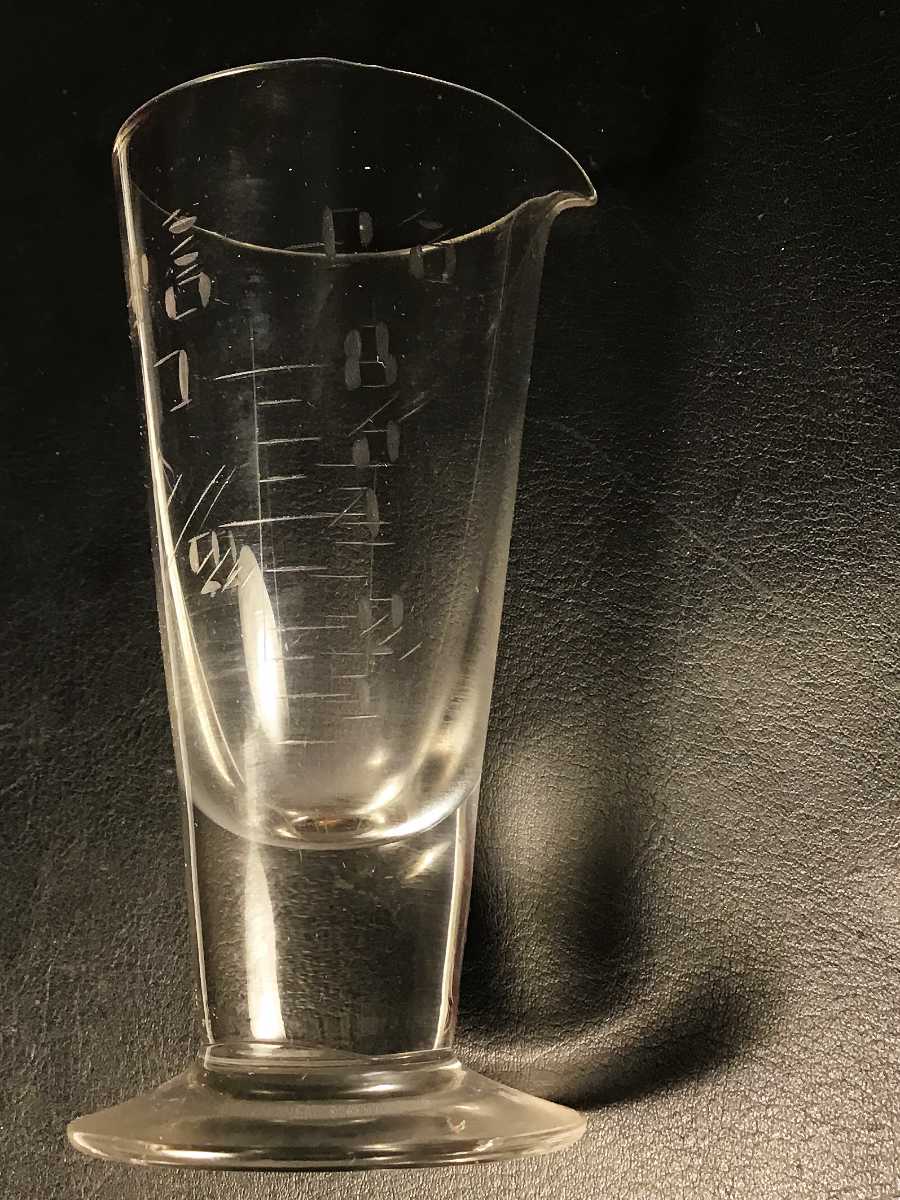
a one ounce graduate for stirring chemicals or adding a bit of water to a larger vessel

Toronto. In the days of film, darkroom work was all wet and gooey either in full darkness or with dim reddish or brownish illumination. Strange powders were measured out and added to water and mixed to create magical solutions. Some mixes were endothermic, others exothermic.

On my various routes, I would visit small drug stores to see if they had any scales or mixing and measuring vessels I could purchase (graduates ). At left is one sample of a small graduate I bought to add a bit of water or other fluid to a 16oz or 20oz graduate used for stirring (in the days when we used Imperial measure).

Nowadays, I ‘develop’ with my computer and a photo editor to correct light balance, contrast, exposure, sharpness, framing, etc. By the way, you may find film developing gear or other odds and sods for you use or collection at our trunk sale this July16th.

Posted in history | Tagged , , , , , | Comments Off on made to measure

something’ to chew on …

developing a taste for Minox cameras

Toronto. In the late 1950s, I bought a Minox IIIs, tank, enlarger, etc. After the camera  was lost in the mail, I bought a new Minox IIIB. The IIIs and older cameras were about the size of a package of gum. Petite and well engineered, the cameras were designed and first manufactured in Riga. Post war, production went to Wetzlar where cameras like mine were made.

The idea of a ‘detective’ or ‘spy’ camera goes back many years. The first use of the tiny negatives seems to by by John Dancer and his ‘Stanhopes‘. As media became more sophisticated and faster, the detective camera era arrived. Typical designs were like those of   Dr  Krugener or C P Stirn’s Vest camera. Such cameras were basically hand held and looked like a valise etc and not a camera (with tripod, visible bellows, etc.).

During WW2 and later ‘spy’ cameras or ultra miniature designs proliferated led by the amazing little Minox. At left you see the tiny developing tank used to process the little films and (enlarged view) the special cases to hold negatives.

By the way, our trunk sale is coming up again on Sunday, July 16th and you just might find a tiny Minox or other gem for your collection. Drop bye – its free and so is the parking …

Posted in history | Tagged , , , , | Comments Off on something’ to chew on …

fishing’ for fotos

c1915 photo of a fisherman in France – courtesy of PhotoCentral

Toronto. Okay, not all of you collect photos and only a few of you who do can pay a business like PhotoCentral for them. At left is just small example of the photographs they offer.

In this case, it is a c1915 Bromoil transfer print of a fisherman at Lac de Lantua in France. Originally priced at $400 US, it is being offered now at the modest sum of $280 US.

I was alerted about PhotoCentral by a brief note from George Dunbar in which he noted some of Mike Robinson‘s work is advertised on the site. If you aren’t familiar with the name, Dr Robinson at one time was president of this society and later held the same post at the Daguerreian Society. Mike is one of a handful of photographers world-wide who are a modern day daguerreotypists.

Mike also does portrait sittings for which a few PHSC members sat for him when he was president of the PHSC.

Posted in history | Tagged , , | Comments Off on fishing’ for fotos

back to the future

Photographs of Yonge Street looking north from Erskine Avenue  taken over a century apart.

Toronto. As we have said many times, archives and libraries are a great source of photographs depicting local history. A few photo enthusiasts take an old street scene and re-photograph it today from about the same location and with a similar field of view.

George Dunbar, who sent us the photos at left is himself an enthusiast of “Then and Now” photos.

Picture the person standing here at Yonge and Erskine a few blocks north of Eglinton in 1907. He imagines what the city is like in about 100 years – bigger, buildings and businesses abound, homes built  just back of Yonge.

The grocery store he sees across the street has been transformed into a bank today. The street car has disappeared. Yonge is both paved and wider for the many automobiles and buses that now use the busy roadway. Vehicles like the automobile were few and far between in 1907.

Note: The post title is from the trio of Michael J Fox “Back to the Future” time travel movies beginning with the original released in the summer of 1985.

Posted in history | Tagged , , , , | Comments Off on back to the future

… and the ugly

Oxen pulling a cart, Castleton – undated, Cramahe Township Public Library, Colborne ON

Toronto. George Dunbar sent me a brief note the other day along with the image shown at left. George noted, “Occasionally, the browsing of a photo-archive will produce an eye-stopper based solely on the very poor condition of the preserved image”.

This undated photo is described only as “Oxen pulling a cart, Castleton,” and certainly captured my attention & imagination.

The image indeed is affected by what looks like a couple of amateur repairs on the back. The glue on the patches migrated to the front of the print giving the two disfiguring rectangles, augmented by finger prints during processing and repair.

But as George mentioned, the image is an eye-stopper. Regardless of the damage, the photograph still conveys a bit of history to us!

Note. The title of this post is a few words from 1966’s ‘spaghetti western’ movie called “The Good, the Bad, and the Ugly“. The movie is the third of a trio that launched Clint Eastwood, to movie stardom.

Posted in history | Tagged , , , , | Comments Off on … and the ugly

duking it out on location

Scene and location match by Thomas Duke courtesy of BBC News (Essex)

Toronto. My good friend George Dunbar, spotted this novel idea in BBC News’s online edition date lined Essex. The article by Katy Lewis is titled, “Stepping Through Film: Man trots globe blending scenes into film locations“.

It tells the story of a young photographer, Thomas Duke, and his method of matching movie frames and actual locations in a single shot.

This is another clever idea to separate one photographer from the herd! The article is an enjoyable read about a inspirational way to do ‘location’ photos.

Posted in photos | Tagged , , , , | Comments Off on duking it out on location

did ja ever hear of Fort Mac?

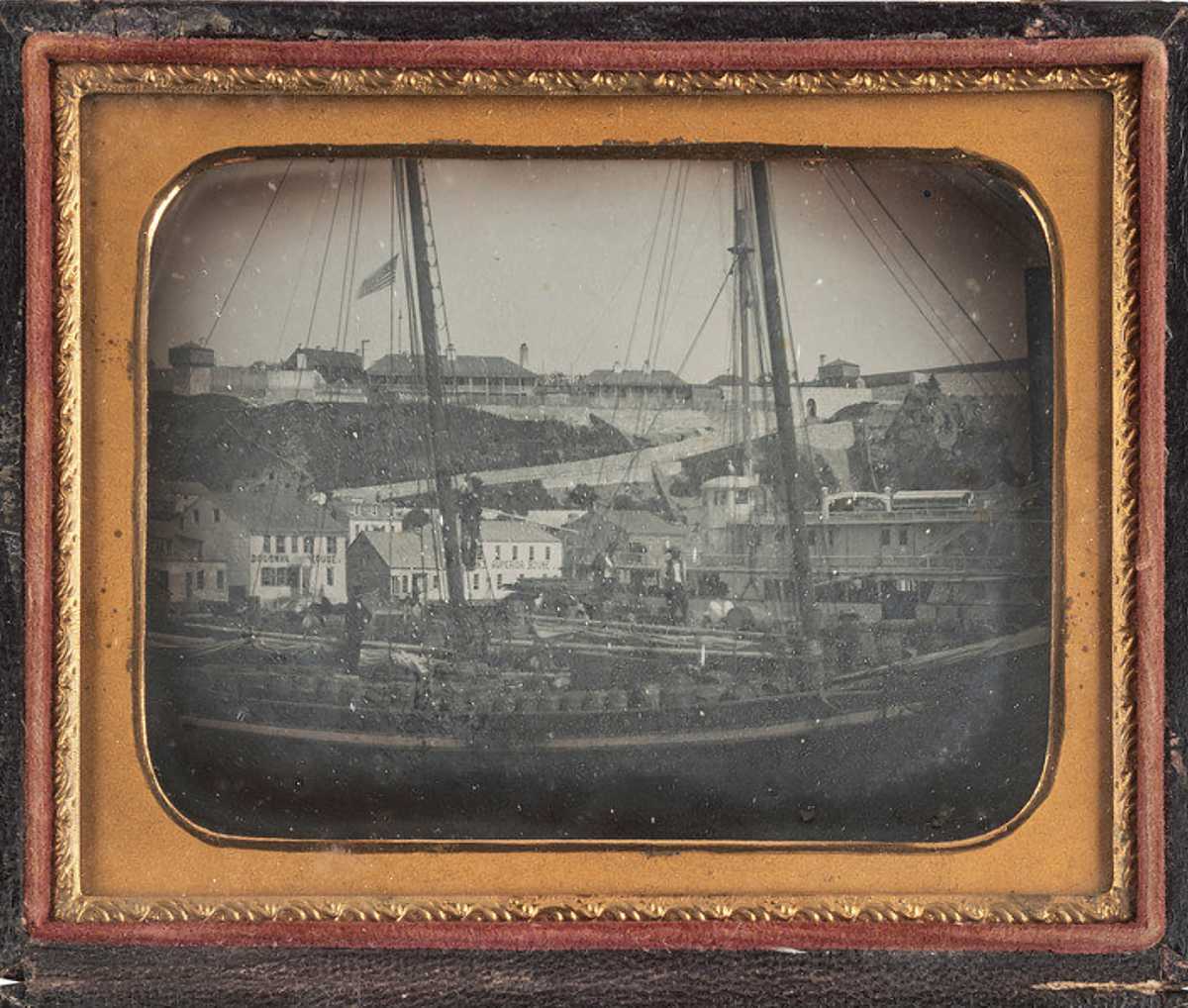
c1855 daguerreotype of Fort Mackinac, Michigan

Toronto. Cindy Motzenbecker  of MiPHS fame, sent me an image the other day of an early Daguerreotype of the Fort on Mackinac Island (where the Great Lakes Michigan and Huron come together). Cindy spoke with us via ZOOM back in April on ‘Vintage Occupational Photography’ illustrated with her personal collection of photos.

The Fort has a storied history of French, British and American ownership predating the formation of Canada as a country. After the American civil war, the area became the second ever American National Park, later to be turned over to the state of Michigan. The Fort, still preserved, is the finest Revolutionary era fort in America. The fort is located on Mackinac Island in Lake Huron near the American shoreline.

The quarter plate daguerreotype (c1855 or later) was sold at the Hindman auction for an astounding sum of about $30,000 USD!

Posted in photos | Tagged , , | Comments Off on did ja ever hear of Fort Mac?

the why and wherefore

M3 courtesy of Ken Rockwell – please visit his web site

Toronto. Hands down, Leitz had a winner on its hands when they launched the Leica M series with the flagship M3 model in 1954.  The M series covered the issues professionals had with the screw mount Leicas.

Design of the new series began decades earlier before WW2.   Prototypes like the Leica IV are in the Leitz museum. You can see more online at Ken Rockwell’s site or read books like  Dennis Laney’s 1992 opus, “Leica Collectors Guide” published in England by Hove.

Note, the title of this post is borrowed from Gilbert & Sullivan’s operetta, HMS Pinafore. The song, Never mind the Why and Wherefore is sung here by  the English National Opera.

Posted in history | Tagged , , , | Comments Off on the why and wherefore

enlightening

Stan White, author. Stan’s latest book

Toronto. Our past president, programme secretary, etc., Les Jones. sent me a note recently that another past president (Toronto branch), Stan White. Stan recently published another book, this one a book of ‘tall’ short stories.

Those (like me) who know Stan recall his wit, and whimsy at our meetings, especially in the odd poem he wrote for the society and his occasional 3D images shown at our monthly meeting in full colour and 3D. Note: Stan’s recent books will get the eBook treatment as well as hard copy.

A blurb on this book of short stories gives a brief overview of Stan’s life after explaining his general inspiration for the stories.

Stan says, “These stories have been written over the last 40 years. As each idea came to me, I built a short story around it.

“When I was a boy, I was intrigued by stories of various kinds: adventure tales, humorous stories, love stories, science fiction and tales of the absurd. Especially memorable were: Jules Verne’s Journey to the Centre of the Earth; the horror of The Pit and the Pendulum by Edgar Allan Poe, and that of The Monkey’s Paw by W.W. Jacobs; and the humour of Jerome K. Jerome’s Three Men in a Boat.

“The short story, with its brevity, seems to me to be an ideal package for our urgent world. I wrote these stories in memory of the boy who read the great authors. They are tales of adventure, humour, love, science fiction, and the absurd.

A biography gives some background,  “Stan White began life in Birmingham, England. He was an industrial photographer before coming to Canada in 1957 where he married and settled in Toronto working as a commercial and advertising photographer [at one point with our past editor, the late Everett Roseborough]. In 1970, he joined Sheridan College as a teaching master and ran the studio for them for 20 years, teaching lighting and product illustration.

“After he retired in the early 1990s, he continued with a life-long interest in stereo photography, photographing avidly in and around Brantford. These photographs are now in the local archives. In cooperation with the Photographic Historical Society of Canada, he set up a library of information on stereo photography [later] housed in the Art Gallery of Ontario.

“Throughout his life, he has written non-fiction on various aspects of photography. In his 50s he began to write poetry and short stories. He has been published in local anthologies and has published several books of poetry, some in collaboration with other poets. As well he wrote a slim book on tabletop stereo imaging in 1970, Beyond the Third Dimension, published in the Netherlands and illustrated with View Master reels.

“These days, for relaxation, and in the hopes of slowing down the inevitable aging, he plays the musical saw and the theremin, but keeps the windows closed.”

Posted in book | Tagged , , , | Comments Off on enlightening