McKeown Knows

lot 051 – hard copy of McKeown’s Camera Guide. A famous ‘go to’ source for camera information

Toronto. Back a few decades, we went to the McKeown’s Camera Guide for advice on all cameras collectible. The massive tomb provided a wealth of information and photos about camera models, value, years manufactured/sold, who made them, etc.  I have the 11th edition of some 900 pages. A 12th edition with similar content, additional pages and updated prices was release a few years later.

Since then, the McKeown folk have worked to produce a new copy. A massive (that word again) FOUR volume edition of 4,000 to 5,000 pages was being considered (or a pdf version online) at the time.

We have not heard from McKeown’s since early 2016. Meantime, my copy (paperback) of the 11th edition is getting a bit bedraggled and has a broken spine from frequent use,

Now, in the ESTATE auction the 17th of this month, lot 051 is a HARD copy of McKeown’s 11th edition. Don’t miss out on this edition. And see the many other amazing items in this auction – just waiting to be added to your collection – books, cameras, photographs, Stanhopes, and many more items as shown in our lot ordered slide show!

Posted in auction | Tagged , , , , , , , | Comments Off on McKeown Knows

watch out for these two cameras

lot 077 – the Expo Watch camera from 1905 (NYC)

Toronto. With the ESTATE Auction fast approaching on the 17th of this month, I have two other lots for you to consider. Lot 077, the Expo camera and lot 078, the Ticka camera. By the early 1900s, film media was fast enough and flexible enough to make hand held ‘detective’ cameras like these practical.

Both cameras imitate a gentleman’s pocket watch. The Expo was made in New York City by the Expo Camera Company for about 3 decades from around 1905 while the Ticka was made by Houghton in London, England for about a decade beginning, like the Expo, in 1905.

Check out the various links for these two cameras and learn more about the unique designs from each side of the Atlantic back in the day when film prevailed. And of course visit our fall auction in person to see these and other items for your collection.


Posted in auction | Tagged , , , | Comments Off on watch out for these two cameras

beyond macro

35mm focal length Tessar with RMS thread

Toronto. In the days of minicams (mainly 35mm),  subjects could be focussed from infinity down to about a metre. Any subject closer needed accessories like front element lenses, extension tubes, bellows, or special closeup stands.

If a lens was asymmetrical, a ring would allow the lens to be reversed then attached to possibly improve the resulting image’s flatness of field and resolution.

Macro was defined as a 1:1 film image to subject size. Macro was usually lumped in with closeups in the ‘closer than a metre’ shots. Going to larger than subject sizes on the tiny 35mm film negative required more special tools. For example, a camera could be mounted on a microscope in place of the eye-piece and the subject taken with the microscope’s objective lens.

However objective lenses had no aperture adjustment as they were used wide open. Some makers decided to remedy this by offering a special lens with an aperture to be used in lieu of the usual objective. This would allow the depth of field to be increased. Above is a tiny 35mm focal length Tessar with an RMS thread (the Tessar is shown here beside a Canadian Looney for size comparison).

Different microscope makers created a ‘line’ of lenses allowing various degrees of subject magnification. A typical shot is shown in a March 2020 post titled, “up close and personal“. The post gives added details to the 1930s Tessar which I bought back in March, 1995 from Pim Schryer (a few sources suggest such a low serial number means a far older lens, but it wasn’t until 1930 when a redesigned Tessar allowed f/3.5 lenses. Perhaps the smaller frame size needed here allowed f/3.5 with an earlier lens design.).

Savvy camera makers such as Zeiss and Leitz made adaptors to mount the tiny RMS threaded lens on traditional bellows, etc.

Posted in history | Tagged , , , | Comments Off on beyond macro

memory makers

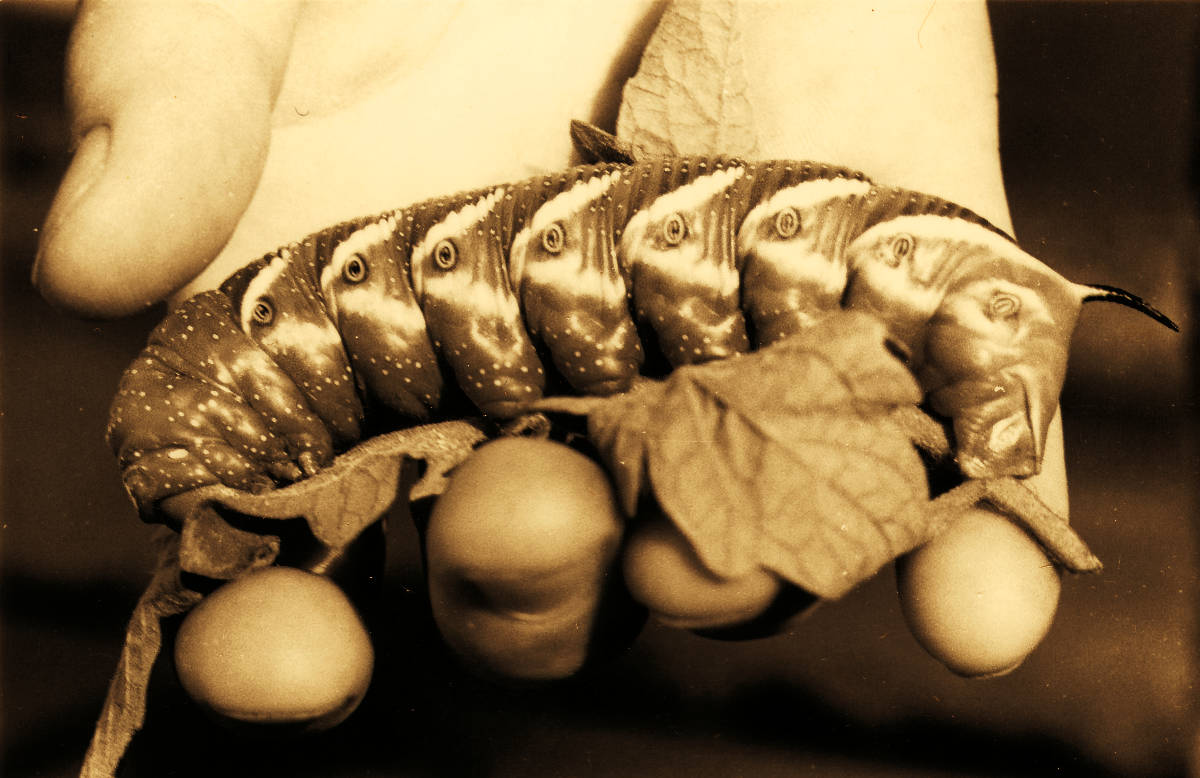
A wonderful memory of tomatoes  in a summer 1977 garden

Toronto. To a photographer, photography is a business. The end result is payment for the prints or photographs or album (more likely images, videos, or files these days). But to his subject or their family he is a ‘memory maker’.

This photograph of a small child holding a tomato worm has been long forgotten by the photographer but to the little girl and her family it brings back memories of tomato plants in the family garden and tasty dishes made with the huge berries from the tomato plants.

So when you browse photos and albums at a flea market, collector’s event, or second hand store remember they are from the family not the photographer and may well have been memories to someone now long gone.

Posted in history | Tagged , , | Comments Off on memory makers

jungle fever

late 1950s diesel generator by Allis-Chalmers

Toronto. Jungles are unkind to photographers. Hot, humid, dangerous places full of fungus and mold. No place for cameras! In the late 1800s or so, manufactures made special ‘tropical’ cameras. Instead of a leather covering on wood (organic leather was tasty fodder for fungus and mold in damp conditions), polished walnut or mahogany or teak wood was used. This wood was far less attractive to fungus and mold.

While in Labrador, I had the pleasure of meeting an Allis-Chalmers technician who installed and connected our three generators. He was an amateur photographer and had been in the South American jungles doing installations. With him was his camera – an older Exakta with a Zeiss lens. What was remarkable were the terrible scratches frosting much of his camera lens’s front element.

He assured me his camera still worked properly if no bright light hit the front element. He explained that the jungle was so damp he frequently had to wipe off the lens with whatever material was handy, hence the scratches. His conversation was memorable as I had recently purchased a newer Exakta with a Steinheil 58mm lens rather than a Zeiss Tessar or the newer Zeiss Biotar.

In the past century photographers – professional or amateur – seemed to be everywhere on this old planet. Jungles with their humid air full of spores were an obvious attraction in spite of the effect the hot, damp environment had on camera equipment. Modern digital cameras and smart phones (especially iPhones) are well sealed and avoid using organic materials to embellish the cases making digital gear reasonably impervious to climate extremes.


Posted in history | Tagged , , , | Comments Off on jungle fever

cool shots in the far north

Late 1950s photo of man and empty reel for 3 1/8 inch diameter Styroflex co-ax cable.

Toronto. Photography in the far north was rugged for most of the year. Exposed to the elements, camera shutters froze; lenses misted over; and the cold could only briefly be tolerated by the photographer.

This was eased for the few brief months that were without snow and chill. Camera makers offered special models with low temperture bearings and greases to assist shutter operation in very cold weather.

Photographers regularly kept their camera snug under their warm coat, next to their body, briefly exposing body and camera when a shot was taken. The photo above was snapped  well below the arctic circle in what would be described as the balmier part of the far north.  It records construction of a communications receiver/transmitter facility using klystrons and billboard sized antennae.

While some rugged souls regularly took outdoor photos in the cold, it was not especially favourable country for professional photographers. Some companies a few decades earlier touted the use of their products on expeditions to the far north as a means to attest their camera’s ruggedness and reliability.

Posted in history | Tagged , , , | Comments Off on cool shots in the far north

little boxes

lot 321 – a box full of goodies for the Olympus line of cameras.

Toronto. Later this month on the 17th (Sunday) we will hold our fall auction. It is an ESTATE auction with no last minute lots accepted at the door. The auction link above shows you a poster with directions and times was well as a slide show in lot order.

Come on out and enjoy the camaraderie while adding to your collection or user gear. Some of the lots such as lot 321 shown at left/above (Olympus camera accessories) will be in boxes containing a variety of items. Clint has spent time grouping items in various boxes so be sure to look at them all!

Remember, these ‘little boxes’ may include bargains for those with a need for ‘that special item’ and a sharp eye! Use the slide show, and the allotted time just before the auction starts, to check the lots and plan your bids.

Posted in auction | Tagged , , , , , , , , | Comments Off on little boxes

lighting up the night

lot 335 – a lighting kit

Toronto. In the days of film photography, the speed of the media was too slow to take good night or studio shots. As a suitable solution, photographers took refuge in flash or electric illumination – like the kit shown here.

Professionals along with experienced amateurs would position the lights to create the desired modelling of the subject to bring out details, allow depth of field and create an interest.

At our ESTATE auction this month, there will be an amazing variety of lots including lot 335 shown here which is a light kit for budding experts in film or digital .

Be sure to visit the ESTATE auction on the 17th of this month to see the many lots ready to augment your  collection or user gear. Something for all! PS. The slide show in lot order will give you a small taste of the items offered.

Posted in auction | Tagged , , , , , , , , , , | Comments Off on lighting up the night

World Press Photo 2023

2023 Photo Contest, World Press Photo of the Year – Mariupol Maternity Hospital Airstrike, photographer Evgeniy Maloletka

Toronto. Thanks to our friends at WestLicht Museum for Photography in Vienna, we learned that they will be exhibiting the WPP 2023 photographs from this September 15 to November 12, 2023.

The winning photograph this year was taken in the Ukraine by Evgeniy Maloletka during a devastating Russian attack on a maternity hospital in Mariupol. The unprovoked attack and the war on the Ukraine by Russia (started over a year ago) has galvanized support for the Ukraine. It is truly difficult to find any sympathy for Mr Putin (or the mercenary soldiers he hired) these days.

We were favoured on October 18, 2006, when Ms Leslie Sparks of CONTACT gave us an inspiring talk and display on the World Press program and its annual exhibition of top photographs by photo journalists world wide.

As part of the show’s world tour, it will appear in Toronto at the Allen Lambert Galleria, from  02 October 2023 to  27 October 2023. If you can’t visit the display here, in Austria, or at a locale closer to you on its world tour, please visit Westlicht’s Exhibition on line (the facility re-opens September 15, 2023).

Posted in activities-other | Tagged , , , , | Comments Off on World Press Photo 2023

baby steps

scan of an early 1970s colour print of a little girl playing

Toronto. Photographers often choose to specialize. One such specialty is child photography – especially photos of new borns for the parents. Many photographers and studios cater to the baby set, offering special deals to mothers and fathers, of the newly born, anxious for a memorable photo for themselves, family, and friends.

Initially such photos were monochrome but post WW2, photography benefitted from a rapid pace of inventions and discoveries (many major, but others just marketing fodder). These improvements eventually led to colour photos of children becoming the standard.

By the early 1970s when this photo was taken, colour negative and colour print material as well as colour chemistry had improved so much that colour was becoming the dominant way to take and keep photos in preference to the old ‘black & white’ processes dating back to the very beginning of the art.

While resolution and colour balance was very acceptable by the 1970s; stability and colour fading – especially yellows – meant colour technology could still be improved. In fact, Kodak walked into a fire storm when it decided to merge professional and amateur Ektacolor paper into a single line. Suddenly studios were being sued for rapidly fading  wedding photos leading to Kodak being sued as well. A Wilhelm Institute book covers the fiasco with Ektacolor paper in depth. The Wilhelm Imaging Research institute is a great place to read and see up to date colour analyses and reviews.

A few years back on June 22, 2020, I published a post called, ‘its the dye, silly“. Included in this post (besides using its for it’s) is a link to the Wilhelm Institute and to their famous 1993 book “The Permanence and Care of Color Photographs” noted above. When Henry Wilhelm realized any update would price the hard copy book beyond any reasonable retail price, he graciously posted the book for free (a 2013 pdf edition is available free today).

Child photography is still a specialty (check out Google) but fortunately all the colour film resolution and stability issues died when digital technology took over. Unfortunately this has lead to new challenges (eg. future readability of digital files).

PS. Be sure to visit our ESTATE auction next month to see the wide range of photographs and equipment over the years. You can bid on the various lots to get added goodies for your collection or user gear! For this auction we have a slide show of the lots in lot order so you can see the many wonderful items ready to go under the hammer.

Posted in auction | Tagged , , , , , , , , , , , | Comments Off on baby steps