the eye looker

an interesting little optical device c1901

Toronto. Camera collectors often included various odd looking optical items in their collection. In the late 1980s, I was browsing antique stores, junk sales, etc. for interesting items.

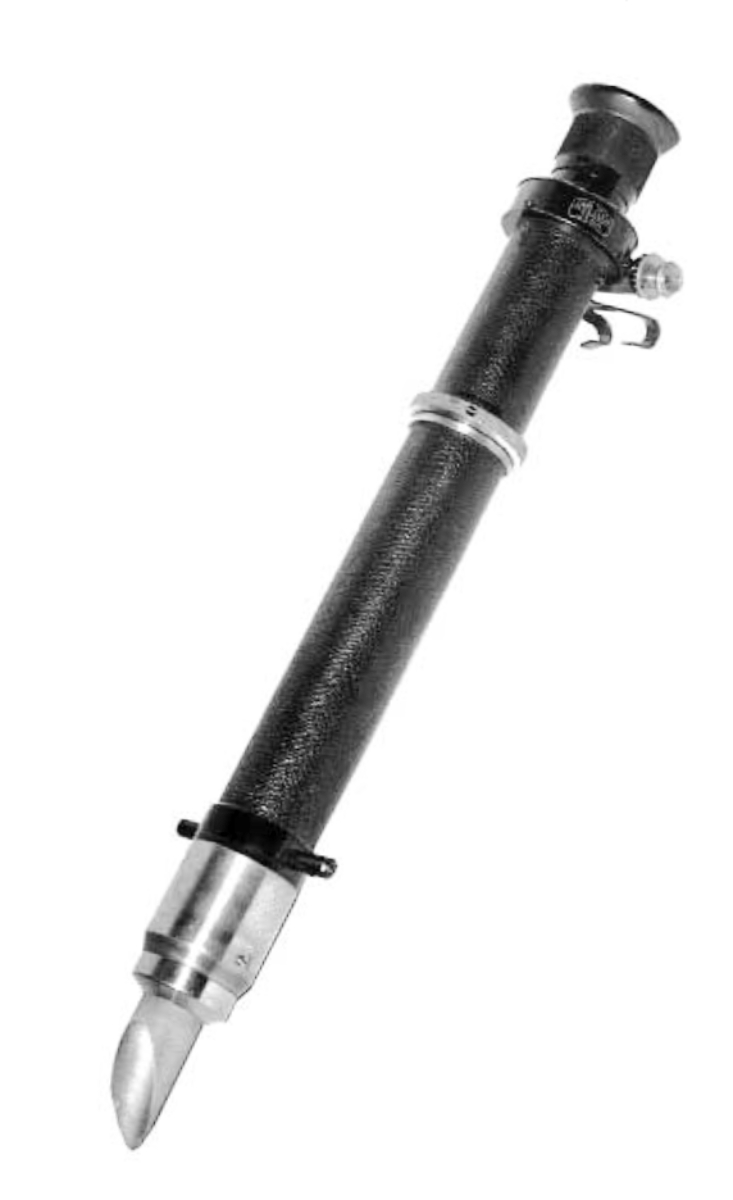
In one case, a little girl stood guard over a road side table of odds and ends including a small brass tube with openings on each side and an eye piece. “What’s that?” I enquired. “An eye looker” she replied. Intrigued, I bought the unsigned little brass tube. It was a low power ‘magnifier’ with side openings for a perhaps small bug? a bit of flower? a Stanhope pasted to the smooth block of glass?  another tiny positive image? A ‘condenser’ at the bottom illuminated the block of glass.

The image for this post is the journal photo, of a nickel plated version of the magnifier, upsized with Topaz Photo AI and enhanced with that software and  Focus Magic, then re-sized with Affinity Photo.

About a decade later, Everett included an article in issue 22-2. Ev titled his illustrated article, “A Mystery within an Enigma“. It described an almost identical item labelled “Pan-American Exposition 1901, Buffalo, N. Y. Price $1.00″ [one or two days pay in 1901]

Ev wrote, “This souvenir, inscribed Panamerican Exposition 1901, Buffalo, N. Y. Price $1.00, is a form of Stanhope. (Charles Stanhope, Chevening, Englandca. 1829). It was found in a box of miscellaneous items belonging to the late [photographer] Brodie Whitelaw.

“The cylinder is nickel plated and the exploded view reveals its construction. It is 46 mm long and 21 mm diameter. The magnifying eyepiece is cemented to a block of glass with a 7 mm square polished surface at its focus. Somethinmust have been mounted on this (a collodion image?) for viewing.

“At the opposite end is a larger lens mounted in tubular insert which is pierced with four peculiarly shaped apertures; these do nocoincide with the single similar aperturin the outer tube. The larger lens iobviously to illuminate the object on thpolished surface.

“Robert Carter has a similarun-inscribed, brass device equallenigmaticWho produced it? What was thpurpose of the apertures? What was the object to be seen$ 1.00 was a fair sum in 1901.”


Posted in history | Tagged , , , | Comments Off on the eye looker

remembering Christine Mackie …

K Christine Mackie – from issue 22-2 of the journal

Toronto. Christine Mackie burst upon the PHSC scene a few brief years before her death. One of our more flamboyant members, she collected antique motorcycles and bicycles, stored back home in Hamilton. She leaped into camera collecting with unrivalled enthusiasm, attending our events to rapidly amass a collection.

Christine took advantage of the offer for any member to join the executive meetings. At the time we used executive member houses in rotation (including mine). She introduced and managed a silent auction held at our monthly Toronto meeting.

The photograph at left was enlarged by Topaz Photo AI, enhanced by both Topaz and Focus Magic, and scaled by Affinity Photo.

On her passing, editor Roseborough wrote a brief in ‘memoriam’ in issue 22-2 of our journal, “Obituary – K Christine Mackie (April 25, 1996) – Toronto members will remember her trunks full of cameras and gear at monthly meetings, her motorcycle photos and an extensive knowledge of vintage cars.

“Her trailer enabled visits all over the country to remote flea-markets in searcof cameras, her motorcycle took her trallies as far as Florida.

“During the last few years she purchased a medical laboratory building in Hamilton, Ontario with a darkroom and house across from it on Barton St.

“Christine opened a re-cycling shop for used bicycles where she also kept her large collection of antique motor bikesincluding one with wooden rims. A heart condition of some duration resulted in her sudden death last April.

“Hoodlums broke the shop window and looted the premises, leaving only a few ten-speed bikes. Cameras are appearing at flea markets but there is no proof of theft.

“A member for eight years, Christine was generous, if a rough diamond, having organized several silent auctions for [the] PHSC. A lonely person, she lived for her interests.”

Posted in history | Tagged , , | Comments Off on remembering Christine Mackie …

mr Curtis, you make good photos …

Kyaiyi-stamik (Bull Bear) of the Blackfoot Nation, Alberta. c1926 by E. S. Curtis – courtesy National Archives of Canada

Toronto. … with apologies to Mr Christie. Edward Curtis was a famous American photographer and author; an authority on Native American People (i.e. Aboriginals or First Nation People here).

A few of his photographs are framed and hang in Barberian’s Steak House on Elm. At least they did in the 1960s when my wife and I ate there. The photos were also noted in our journal when a letter from an exhibitor at one of our early fairs happened to eat there before heading home.

The photo at right is from the cover shot on issue 22-2 back in the summer/fall of 1906. Image collectors often specialize in one particular aspect of old images, or segregate their collection, by groups, one of which may be First Nations.

Our 2025 events are listed to the right under PHSC EVENTS as the date and place are confirmed. Come down and enjoy the atmosphere at each event – while there may not be an original Curtis photograph offered, there will be many items to choose from for your personal collection!

Posted in history | Tagged , , | Comments Off on mr Curtis, you make good photos …

an ambrotype self portrait

Stan White – self portrait c1996

Toronto. Over the years, photographic processes continuously evolved. For example, some effort was made to deliver less expensive cased images (Daguerreotype look-a-likes). One solution was to take a negative using the then new wet-plate technology and treat it to reverse the tonal range, bleaching the black areas white and using a black background in the case to simulate the blacks in the clear areas of the ‘negative’.

More recently [mid 1990s] courses and workshops demonstrated the old technique to a new contingent of photographers. Stan White had a column in the journal called simply “Stan White’s Corner”. For issue 22-1 Stan wrote of his experiences with a workshop across the lake at GEH.

The self portrait at left comes with this paragraph: Note the rubber glove; the photograph was taken during a processing session. Thblue-only sensitive emulsions were tricky on even the most perfect complexion. The writer finds this picture most useful when applying for a senior-citizen discount, not too many people will argue your age when your photograph is an ambrotype.

Stan begins this column, “I am now back from my second one-day workshop sponsored by Eastman House, the first being the Daguerreotype Workshop the subsequent results from which were featured in a previous issue.

“This latest offering was on wet-plate collodion ambrotypes, tintypes and other wet-plate applications. The work of the principal instructors Mark Osterman, and his wife France Scully Osterman [June 1998 speakers at the PHSC], was superb and showed a wide range of ambrotypes and tintypes, treated in variety of different ways, as well as wet-plate negatives printed on modern papers.

“One 8 x 10 inch contact print of a full-length portrait printed on modern Ilford double-matt paper had a tonal range the like of which I have never seen bettered. There is a tolerance to the combination of plates of purblind sensitivity coupled to simple Petzvaglasses for neither takes advantage of the others shortcomings and the result is pleasingly familiar to the eye like the simple taste of honest bread and cheese.

“Modernity has paid a heavy price in quality, for the convenience of all-encompassing photographic utility. …”

The column is available on the members-only DVD as the issue 22-1 pdf file. Instructions on joining/renewing are shown above (MEMBERSHIP) and to the Right depending on the choice of payment type (Cheque, Credit Card, PayPal Account, etc.). Any questions, email Lilianne at member@phsc.ca.

Posted in history | Tagged , , , | Comments Off on an ambrotype self portrait

AI and photo history

Girl at work on (telephone ?) cabling (date unknown)

Toronto. Some of us are bombarded by announcements about the marvellous results attained by artificial intelligence (AI).

Here at the PHSC we use some apps touted as AI, especially Topaz Photo AI (with each update this program has shown improvement). The image at left was sharpened using Focus Magic rather than the Topaz program and resized with Affinity Photo. Many digital images are slightly soft and benefit from a touch of sharpening.

Images, especially those from old journal issues are often enlarged, de-noised and sharpened before use. This often has a trade-off between the authenticity of the original image and clarity on the web.

We tend to avoid the nastier uses of AI (creating fake works of art for example). Any app that modifies an image etc seems to tout its AI aspect. The latest releases of various OS software, including macOS,  have some AI elements embedded in them to offer ‘suggested wording’, etc.

But what about the effect it will have on photographic history? This aspect is the subject of a coming symposium announced by TMU’s (ex-Ryerson U) Image Centre:

“From March 31 to April 2Encoding the Image: How does AI affect the Future of Photo History? will bring together historians, curators, and computer scientists to examine AI’s role in photography research and collection management. Organized by Dr. Thierry Gervais, the forum fosters dialogue among scholars and professionals. Registration is required—learn more about the sessions, speakers, and how to attend on our website.”

Although we look at historical photographic equipment, photographs, and history, not the future, this coming symposium will be of considerable interest!

Posted in activities-other | Tagged , , | Comments Off on AI and photo history

a better mouse trap

Some of Talbot’s ‘mousetraps’ by Catherine Weed-Ward (detail from her 1905 negative)

Toronto. Past president, author, and sports photographer Les Jones sent me a note the other day on an interesting article about Henry’s lost cameras.

In January of 1839, Two unique means to capture images created by sunlight were announced. One, by Daguerre of France  showed how a silver-coated copper plate could  be used to create a permanent image called a daguerreotype.

The astonishing news caused an urgent reaction in one Englishman who already had a similar ‘permanent’ process for his personal use. Henry Fox Talbot immediately had his process announced from England. His process created a ‘negative’ image that could be used to ‘print’ any number of positive prints.

The one-off daguerreotype was initially the chosen process and rapidly spread around the civilized world. After all, it was free (except in the UK). Ultimately with numerous improvements, Talbot’s process took over and the negative/positive technique became the world-wide standard for glass plates and film.

Recently a search was initiated in the UK to track down Talbot’s cameras or ‘mousetraps’ as some called them. Larry Schaaf introduces an article titled, “The Hunt for Talbot’s Cameras” by  guest writer Roger Watson. The article describes Talbot’s cameras complete with photographs of a few of these hand made instruments as well as offering an opinion about why so few exist today.

At the right under ‘PHSC EVENTS’ are the confirmed events so far for this year. You may not find a Talbot ‘mousetrap’ but there will be lots of goodies to add to you user gear or collection!

Posted in history | Tagged , , , , | Comments Off on a better mouse trap

from mother Russia (with love??)

c1935 Russian Sport SLR minicam using 35mm film in a special cassette.

Toronto. Issue 22-1 features a selection of cameras from our 1996 spring fair as photographed by Bob Lansdale and assisted by Tiit Kodar. Among the offered goodies was this rare Russian camera, the USSR Sport from 1935.

The photo for this post is the smallish image in issue 22-1 ably enlarged by Topaz Photo AI, and enhanced by Focus Magic, and Affinity Photo.

The Sport was possibly the first minicam SLR design (a debate ensued with the Kine Exakta maker – it was marketed in 1936) The Sport takes 50 shots (24 mm x 36 mm) using a special cassette (cassettes were not yet standardized).

It has an optical finder for direct eye-level shots. You can see a large awkward box on top of the camera – it serves as a hood for the SLR viewing magnifier. The beast uses an Industar 10 lens with a top aperture of f/3.5 and a fixed 50mm focal length.

The camera uses a focal plane shutter rated at B, plus a range of 1/25 – 1/500 speeds.

The dealer who owned the camera had an asking price of $450 back about 30 years ago.   By the way, see the location and dates for our confirmed events this year to the right under ‘PHSC EVENTS’. We can’t promise a USSR Sport camera will show up, but you will find lots of intriguing goodies to expand your collection!  

Posted in history | Tagged , , , , | Comments Off on from mother Russia (with love??)

aptly chosen words …

Preston Springs Hotel by Stan White, c1996

Toronto. Various photographers have chosen to pick popular city locations which were photographed many decades ago, and show what they look like today given roughly the same field of view, etc.

In our journal issue 22-1, the late Stan White chose to compare stereo views “then and now”. The example here is the “Preston Springs Hotel”, just a bit west of the city. In his article titled, “Then and Now”, Stan begins, “Many people think that history finished the day they were born. It comes as surprise to an old man to find that the young consider him history. Many of us see our short sojourn through life as though from a railway station looking back down the tracks of time.

“We should be thinking of ourselves as passengers on a train speeding into the future at the same speed it is leaving the past behind – a train whose passengers are feverishly making history.

“It behooves all historical societies not to become s0 involved in the past that they have no time for the present, for the present is the history of the future. We live in a young society. In Ontario, even if we include the aboriginal tapestry, there is little tangible pictorialhistorical evidence that goes back more than 250 years. Perhaps a little more or little less in other parts of Canada.”

Members can read Stan’s thought provoking article in the issue 22-1 pdf file on the members-only free DVD which contains the first 40 volumes of “Photographic Canadiana” including an index of all articles (the index is in various formats). Those not a member at present can follow the instructions above (paying by cheque, etc.) or at right (paying by credit card or PayPal account). Questions? Email Lilianne at member@phsc.ca.  PS: Help us out, please indicate whether your membership is NEW or a RENEWAL. Enjoy!

Posted in history | Tagged , , , | Comments Off on aptly chosen words …

mr Garrett continues …

Helena Burroughs by Halsey and Sadd (?), 1840 – McCord Museum collection, Montreal, QC

Toronto. The late Graham Garrett was our guest speaker at the 20th anniversary supper. One one hand he could be downright prickly to deal with but on the other hand, he was the epitome of  a photographic researcher: determined, thorough, fussy, and very, very detailed as shown by his CD of Canadian Daguerreotype photographers (1839 – 1841).

Part one of his article titled, “Photography in Canada 1839-1841 – A historical and biographical outline” appears in issue 21-5. Part two in issue 22-1 begins, ” As to the first attempt at commerciaportraiture with the daguerreotype process in Canada, it seems to have begun in the province of Quebec by newlyestablished partnership of Halsey and Sadd who arrived in Montreal during the middle of September 1840 from New York.

“Little is known of their activity while in Montreal, however they may not have been entirely successful because of bad weather and by the end of the month they had departed for Quebec City

“Despite overcast conditions that followed them to the provincial capital, thfirst week the skies were clear and they appear to have made the most of thopportunity. The editor of the Quebec Mercury stated on October 10th that they had been ‘extremely fortunate in being favored with the clear weather and bright sun since their arrival here. They have been enabled, every day, to take a number of miniatures by this process, by which the likenesses are wonderfullaccurate.’ … “

Members can read BOTH articles in the respective pdf issue files on the free members-only DVD. To join, see MEMBERSHIP above (cheque, etc.) or at right (credit card, PayPal account). Questions? Email Lilianne member@phsc.ca. To help us, please indicate if this is a new or renewal membership. Thank you!

Posted in history | Tagged , , , , | Comments Off on mr Garrett continues …

in the beginning …

Matthew Isenburg – a modern daguerreotype by Mike Robinson – courtesy of NGC

Toronto. The National Gallery of Canada [NGC]  houses one of the most auspicious photographic collections. This month, writer Nathan Mandigo wrote a detailed article on the collection, its original collector, and their background in the magazine of the NGC titled, “THE ISENBURG COLLECTION: THE BEGINNINGS OF PHOTOGRAPHY“.

The late Matt Isenburg spoke to us back in April, 2000 on “Evolution of the Camera”   and again in September, 2005 on modern day collecting (Ramblings and Recollections).

Matt amassed an eclectic collection photographica. Both he and Mike Robinson of this city were elected as president of the Daguerreian Society. He was well known to Mike and our late editor, Bob Lansdale. Mike catalogued the collection when it was sold and housed in Toronto before moving on to the NGC.

The above article is well worth the read, especially if you are a bit foggy on history of photography.

Posted in history | Tagged , , , , | Comments Off on in the beginning …