just give me a ring …

some Leitz rings to join their lenses to various camera models and accessories

Toronto. With the sudden burst of growth in the minicam industry, major players like Leitz and Zeiss produced a large variety of lenses, camera models and attachments to make their little marvels suitable to tackle almost any photography job imaginable.

To allow a variety of lenses and lens  heads to be fitted to various camera models and accessories. manufacturers made and marketed a wide variety of adaptors – rings to you and me. Shown above left is a typical sampling of rings; these made by Leitz to cobble together various models, lenses, and accessories. Other manufacturers, like Zeiss, offered similar rings for their products.

Posted in camera | Tagged , , , , , | Comments Off on just give me a ring …

the trouble with normal …

Zeiss Planar 80mm for Hasselblad

Toronto. … is it always gets worse, or so sang Bruce Cockburn in the early 1980s in the song he wrote of the same name. Shown at left is the famous Zeiss Planar 80mm f/2.8 lens used as a normal lens on a Hasselblad This lens did not “get worse”as the song suggests. This beauty was a lot in a recent auction.

Not sure about Hasselblads, since I usually saw them as studio cameras, but in the case of the Leica and other 35mm cameras,  a medium wide-angle lens like a 35mm or 28mm was far more suited to hand held street scenes.

Posted in camera | Tagged , , , , , | Comments Off on the trouble with normal …

Henri Cartier-Bresson

Cartier-Bresson’s Decisive Moment photo

Toronto. When I think of Cartier-Bresson, two things come to mind: His Leica and his photograph “Decisive Moment” showing a man leaping over puddles as he runs to work.

You can hear Henri discuss this and other well known photographs he snapped  by listening to him in this video posted on Facebook.

Thanks once again to my good friend George Dunbar who discovered this video on the very famous French photographer Monsieur Henri Cartier-Bresson.

Posted in people | Tagged , , , , | Comments Off on Henri Cartier-Bresson

we all scream for a free screen …

LIFE ad for Argus products

Toronto. … to paraphrase a kid’s chant from over a half century ago. In the 1960s every manufacturer of photo gear wanted a slice of the amateur photography pie – the bigger the better. By 1960, every factory aped its competitor’s best ideas so another idea had to replace all the “me too”  features to differentiate a brand from the pack.

For Argus, this turned out to be a “free” gift. The company offered a free 40 x 40 inch screen with every movie or slide projector sold (most Argus dealers offer the free screen, cautioned the ad). And you could even return projector and screen within 10 days for your money back if not satisfied by the purchase and gift.

By this early 1961 LIFE ad (p 3, January 20, 1961 issue), Argus was owned by Sylvania Electric Products (their General Telephone & Electronics division). A big thanks to George Dunbar for spotting this bit of photographic history (you may wonder about the American bias here, but like today, Canadian magazines, advertisers, photographic product makers, etc. back then were few and far – very far – between).

Posted in camera | Tagged , , , , , , | Comments Off on we all scream for a free screen …

wow! that is really small!

Grain of Sand camera on the Digital Camera World site

Toronto. Last fall, Digital Camera World featured this tiny grain of sand camera. I had heard of small cameras you could swallow for a colonoscopy to spot polyps of about 5mm or larger, but this little guy is even smaller, traversing a blood vessel with ease.

Technology is making great strides to help doctors diagnose problems with minimum discomfort to the patient.

My thanks to my friend and PHSC member Celio Barreto for bring this amazingly tiny camera to my attention.


Posted in camera | Tagged , , , | Comments Off on wow! that is really small!

… and how do you like your steak?

Sonnar 150mm for Hasseblad

Toronto. Medium? Well, for the Hasselblad it is a 150mm lens that is a medium. Medium telephoto that is. Great for portraits on a Hasselblad, that is. Like a 90mm Elmar on a Leica.

At an auction a while back (fall 2018) we had a beautiful old satin chrome  f/4 150mm Sonnar complete with a Synchro-Compur leaf shutter. And since portraits are traditionally taken in studio with controlled lighting using a tripod, the relatively slow f/4 is no problem at all. In fact, at f/4, hand held shots were also easy to take.

Many famous portraits were made with the Hasselblad and film over the last half of the 20th century. Zeiss made great lenses when they made Sonnar lenses.

Posted in camera | Tagged , , , , , , | Comments Off on … and how do you like your steak?

stretching it

Universal Focussing Bellows (Bellows I) by Leitz

Toronto. In 1951, Leitz offered a Universal Focussing Bellows (Bellows I). This bellows worked with the 13.5cm lens head and Visoflex mirror box to make photographs from infinity down to 1:1. A 5cm lens head and the focoslide focussed from about 3 feet down to about 2.5x magnification.

The bellows offers scales for both lenses to permit rapid settings. Many other manufacturers also made bellows. The design goes back to the early days  of photography when a bellows was used to correctly set the distance between the lens and sensitive media to correctly focus the desired subject.

Leitz later replaced this bellows by the Bellows II which brought a special 65mm lens (or longer) into focus at infinity. Shorter focal length lens heads can be used as well for copy work.  The scales were for a 9cm lens head. Both versions of the bellows eliminate the need for extension tubes and their discrete steps in focussing.

Posted in camera | Tagged , , , , | Comments Off on stretching it

mirror, mirror

c1950 Visoflex I mirror box by Leitz

Toronto. Leitz is a perfectionist company. The original screw mount and bayonet mount rangefinder cameras used a rangefinder (RF) focussing mechanism. This RF was most accurate for 13.5cm lenses and shorter.

In 1935, Leitz introduced the Telyt 20cm lens and a mirror box called PLOOT for focussing. Using the PLOOT and the Telyt made the tiny Leica into an SLR. Post war the PLOOT was replaced by a Visoflex – later called Visoflex I. This mirror box was followed by the more compact designs of the Visoflex II, IIa, and III. All Visoflexes were made to fit the new bayonet mount M-series Leicas. Visoflex I and II could be bought to take either the screw mount or bayonet mount cameras.

Other manufacturers also made mirror boxes, some for their own cameras and some for the Leica.

Posted in Uncategorized | Tagged , , , , | Comments Off on mirror, mirror

let’s see what develops

AGFA Colour Print Film in the 1980s

Toronto, Ahaaa! Those were the days! You guarded your paltry few shots as if your life depended on them. Why take a dozen and choose the best one when with care and framing you could take and use a single shot – the best one!

In the 1980s, I had experimented with different films like this ISO 100 AGFA colour print film. This box warns me to “process by June, 1988”. The 27 exposures (24 plus 3 extra) for my Leica could be processed anywhere in C41 chemistry – pretty much the industry standard at the time for colour print films (colour negatives).

Today, we find the abysmally slow ISO 100, the jealously guarded miserly number of shots, and the tedious processing and printing all laughable. We can easily knock off 100s of shots on our smart phone camera just in the time it took to find a processing shop back then. Memories! But thank god now we can use digital and shoot as we please (mind you, auto focus can be a real pain, a fuzzy pain).

Posted in film | Tagged , , , | Comments Off on let’s see what develops

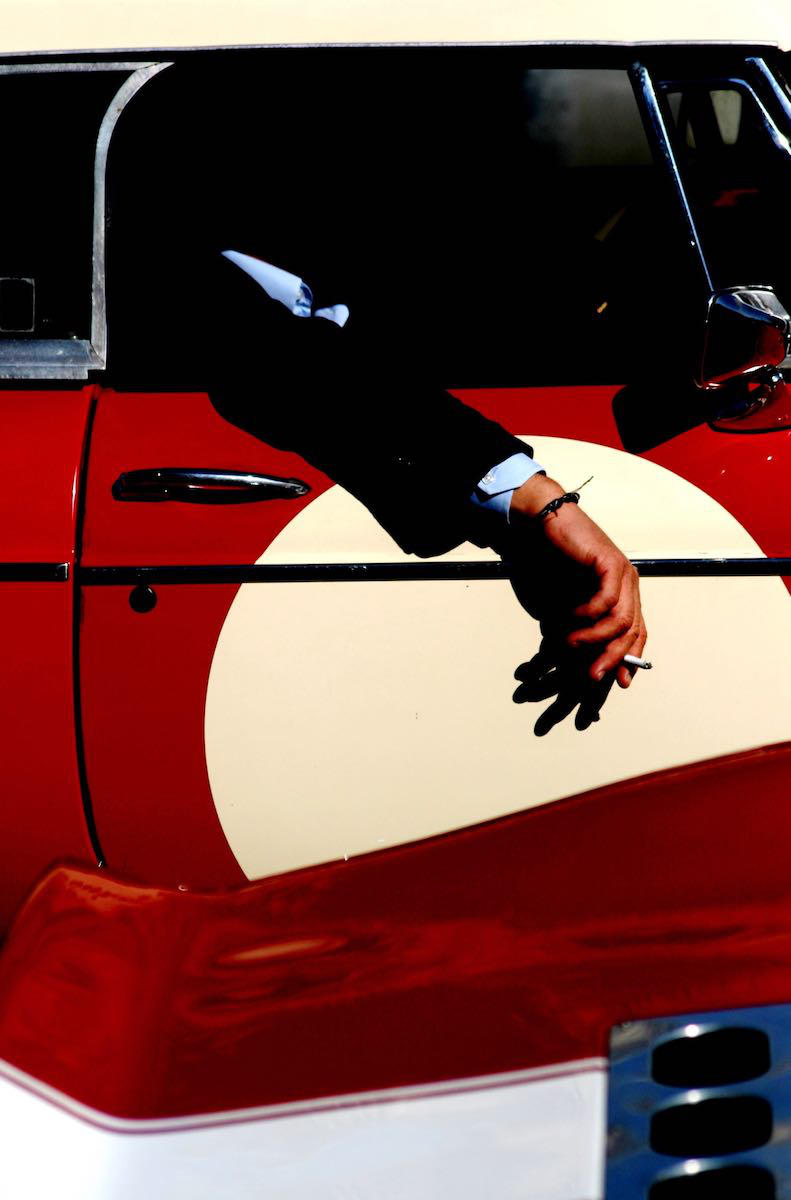
Eric Houdoyer, photographer

Eclipse by Eric Houdoyer print edition of 10 sold by Galerie GADCOLLECTION in Paris, France

Toronto. The Galerie GADCOLLECTION in Paris, France is exhibiting Masters of Photography 2019through to January 31, 2020. Featured in the exhibition is this  limited edition (10) colour photograph “eclipse” by French photographer, Eric Houdoyer.

If you are in France this month, perhaps enjoying the food, the wine, or just the ambience, then consider visiting the Galerie and adding to your print collection!

Members of the PHSC are located in many countries. I have mentioned this Galerie a number of times as they seem to have an excellent selection of modern photographs. Visit and support your favourite art by purchasing a photograph or two from their wide selection of works by American and European photographers.


Posted in photos | Tagged , , , | Comments Off on Eric Houdoyer, photographer