Leica Screw Mount design
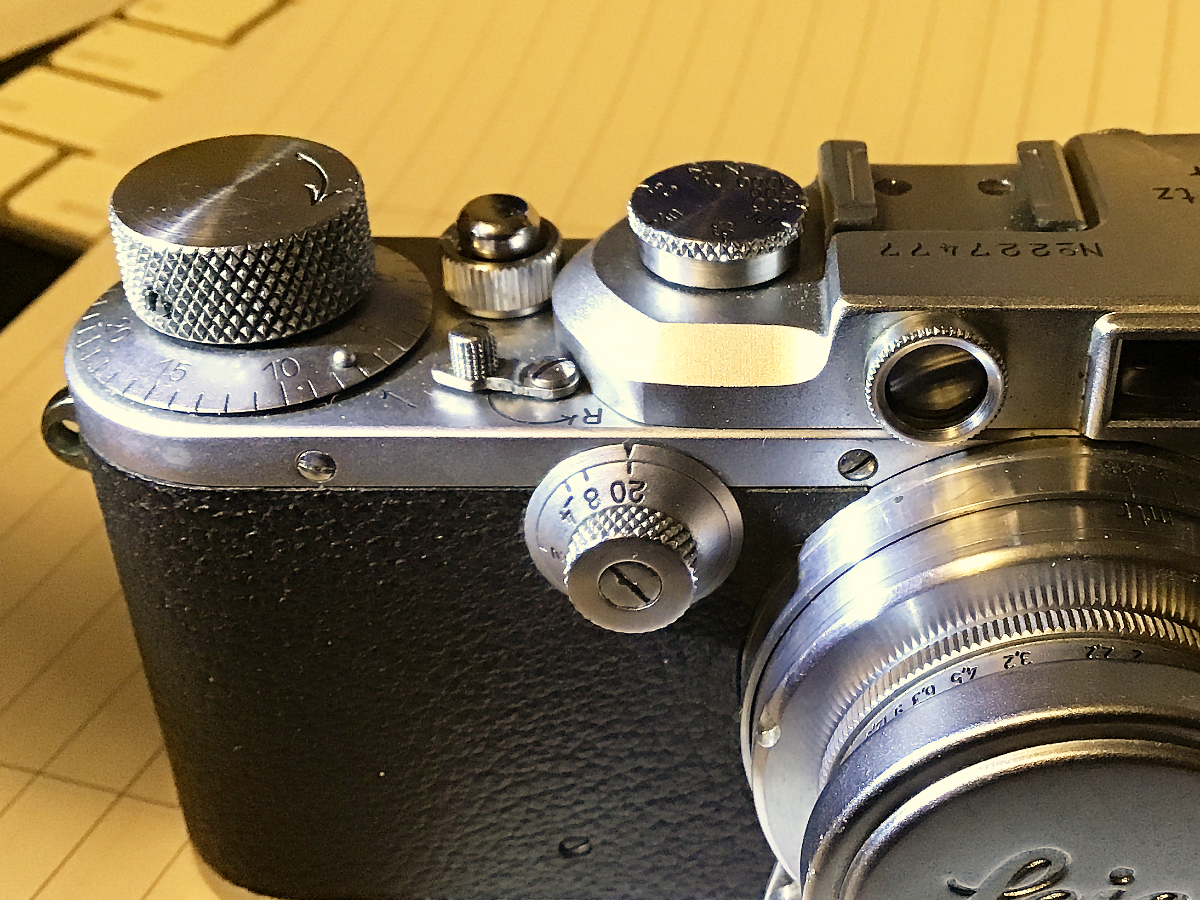
Toronto. The last time I used this title. it was for a Leica accessory . This time it is camera design at and after the mid 1930s and the minicam revolution. Good camera design encompasses many considerations. Ergonomically designed, utilitarian, light, fast, reliable, simple to make, repair and adjust come to mind. The screw mount Leica is a case of good design as is its later brother, the famous M-series Leicas. When Oskar Barnack set out to design the Leica, he made a simple, utilitarian camera that was easily held with all the main controls right at the photographer’s finger tips. Improvements were modest and prompted by user feedback.
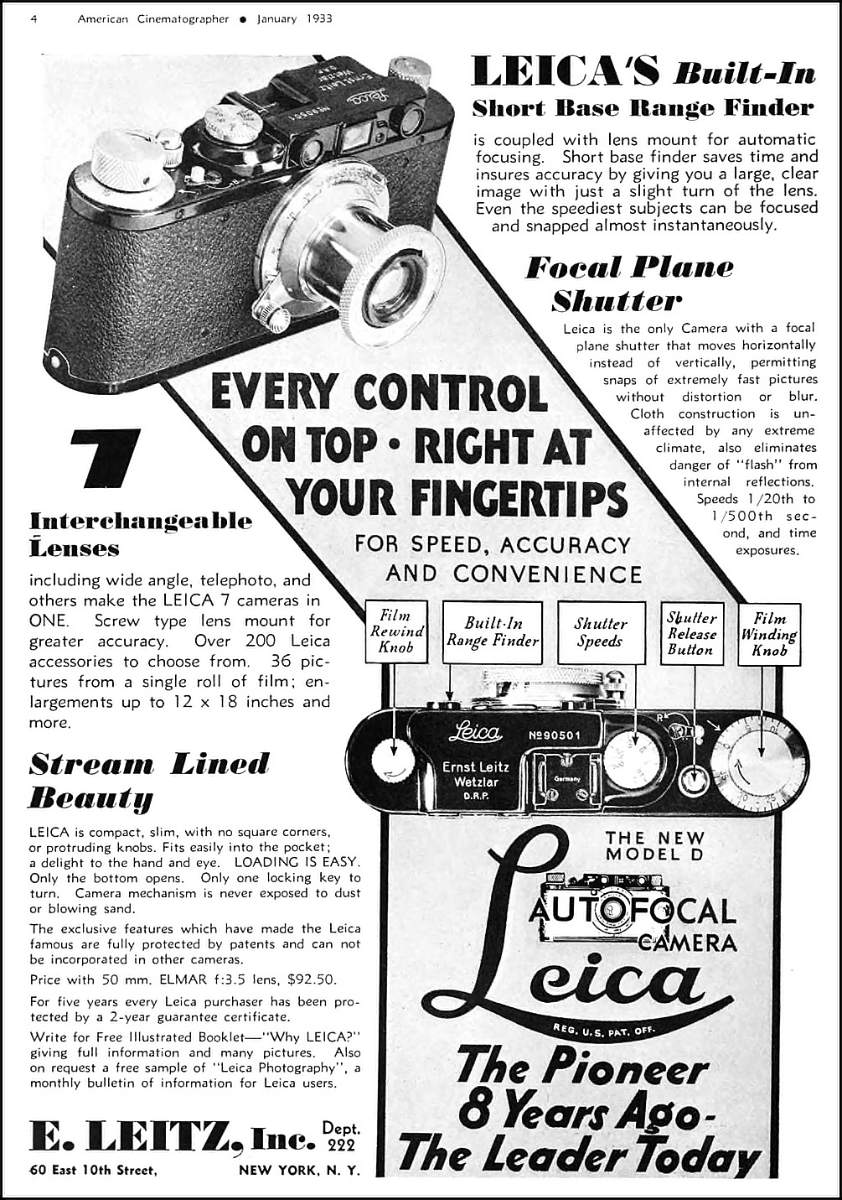
The Contax, and later its companion the Contarex, suggest both good and bad design decisions. The longer rangefinder base and vertical focal plan shutter seemed better (Leitz New York disagreed per January 1933 ad), but was the longer base really needed? The shutter running vertically gave a faster shutter speed and later on, a faster flash synchronization. The use of metal slats for the shutter seemed stronger than the cloth shutters of the day (no risk of pin holes), but using silk ribbons within the slats led to future issues (slats were supposed to last for at least 400,000 shots) when it was time to replace the ribbons – the slats broke when the ends were bent out for access. The first models of the contax had a knob on the front of the camera making expensive bevel gears necessary and placing the knob in an awkward position.
In later years, the Contarex SLR was designed and sold. It seemed far more robust than the M-series, but not so. The camera was very large and heavy for the tiny 35mm film it used. It had so many parts technicians needed special training to even disassemble the camera for routine adjustments and cleaning. Worse, if the user deviated from the shooting procedure there was a real likelihood the shutter mechanism would be seriously damaged.
Legions of other cameras were designed seemingly with no regard at all for the user. The designs were unique but often awkward in use and repair. Market share and earnings seemed to be placed ahead of ergonomic design and ease of repair and adjustment. Cameras like the Mercury with its semi circle ‘hump’ and the Argus C3 come to mind (the C3 was actually very popular).
Note: The title is from a 1966 ‘spaghetti western‘ that featured a young Clint Eastwood.