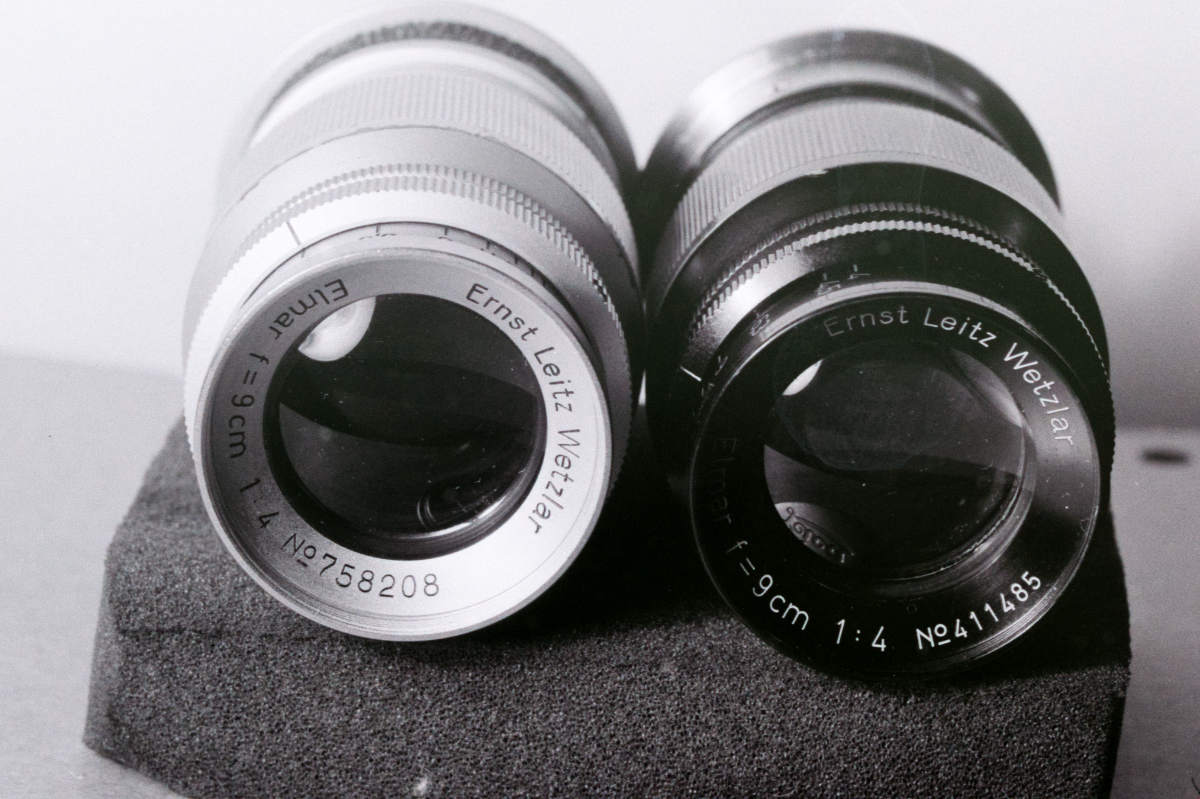
Elmar lenses post and pre WW2.
Toronto. No, not the introspective kind you dream about on a cold winter’s day. I mean the kind that reduce image contrast and limit the number of lens elements used. At left I show two lenses for a film camera. The one at right was made before WW2 and uncoated; the one at left after WW2 and coated.
Generally, pre war lenses were uncoated resulting in a limit to the number of elements in the lens and a reduced contrast range in the resulting negative. After the war, we began to see coated lenses where a transparent coating was deposited on each lens element before assembly into a photographic lens. These coatings cancelled out internal reflections. For a time, makers touted their specific coating, but soon all lenses were coated so the branding of coating technique just disappeared.
It is hard to see into an uncoated lens while coated lenses seem crisp and clear. Of course the smart phone bunch never saw uncoated lenses. Modern larger lenses reflect what looks like a colour band from an oil slick (if held in a certain way). The use of added elements led to sharper resolution designs and zoom lenses (taken for granted now, but a big deal when they first came to market).