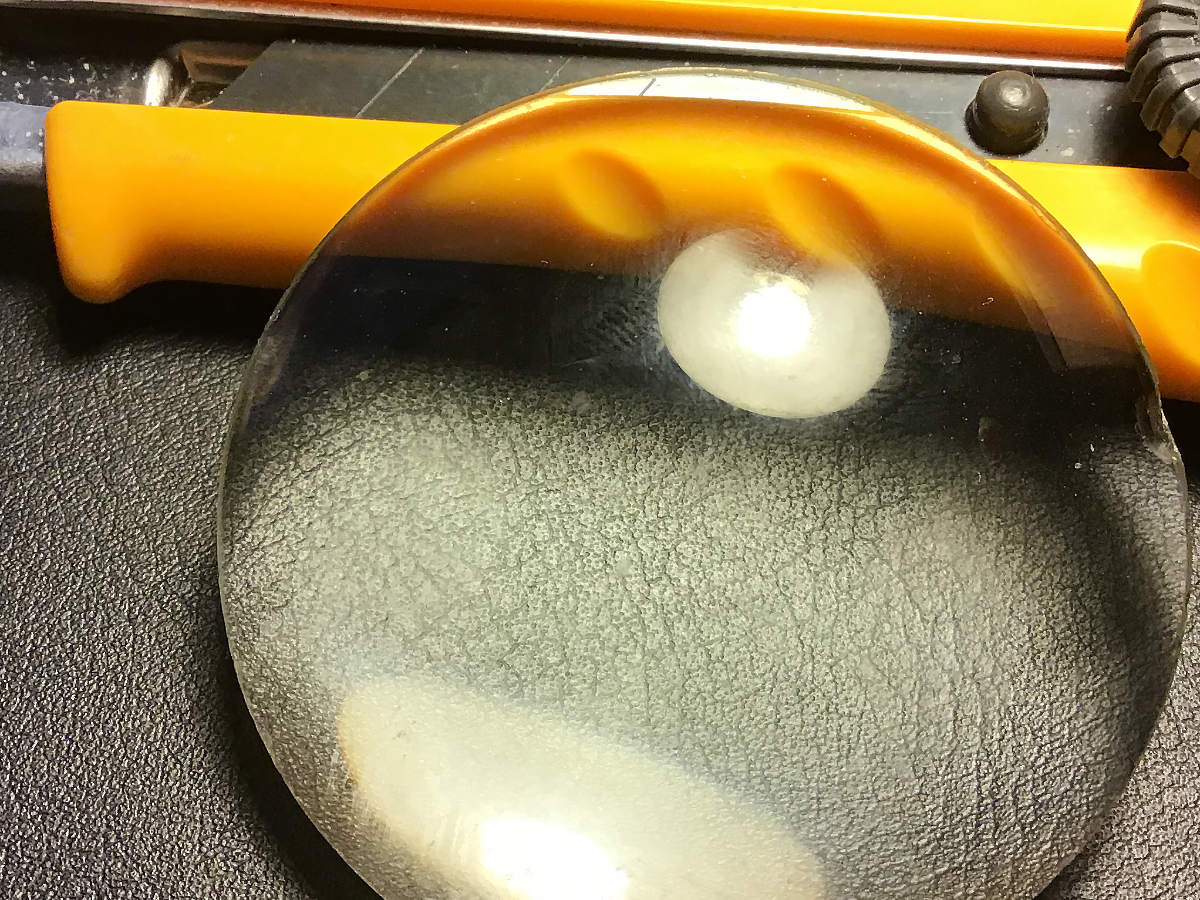
lens element with one flat surface, one convex surface
Toronto. … as Sherlock Holmes was supposed to have said (but never did say in Conan Doyle’s stories). However; Holmes often said ‘elementary’ to his side kick, in his usually superior and snobbish way. And of course our photographic lenses all use elements – from a single element meniscus lens to multi-element zooms.
Basically an element is made of selected glass and each surface is ground as a part of a sphere. Some times one surface is left flat. By using different curves and glasses, a number of elements could be stacked to correct lens aberrations and help flatten the image field at the film. If two colour bands were focussed at the same film plane, the lens design was achromatic. If all three bands focussed at the same film plane, the lens was called apochromatic and likely far more expensive.
The larger the lens aperture, the harder it was to correct all aberrations. The greater the number of elements in an uncoated lens, the lower the contrast on the film and the greater the amount of internal reflections. Around mid last century some elements were made with aspheric surfaces making for an even greater cost but higher correction, higher resolution and larger aperture. The Leitz Noctilux was one such lens.
Today, many lenses employ both coatings and aspheric lens element surfaces to allow for a larger aperture with fewer elements , yet with higher correction of aberrations, higher resolution, and higher contrast (and price). Elementary, my dear Watson!