asleep in the deep

searching for ‘Nessie’ with the family camera

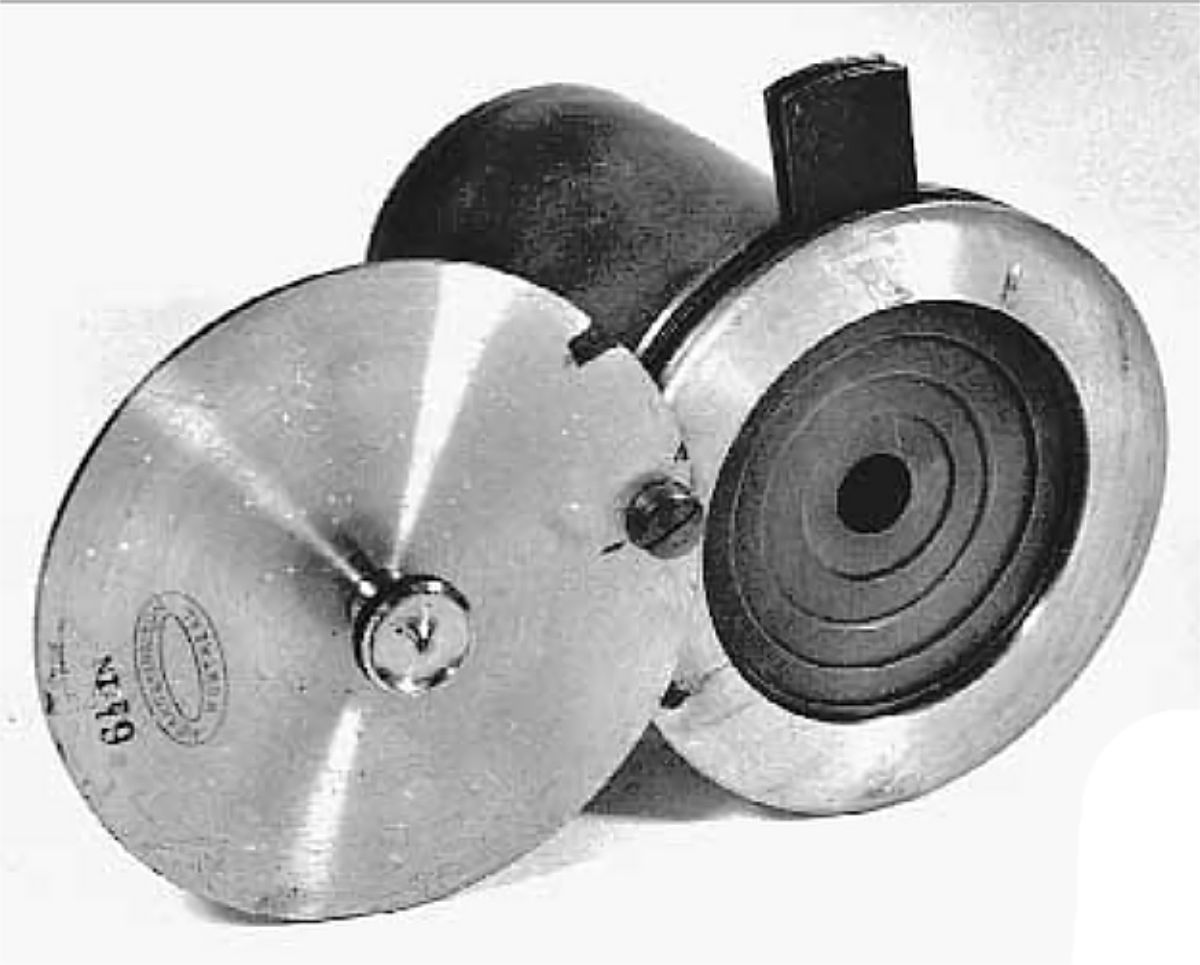
Toronto. One of the endearing series of stories is   about the Loch Ness Monster. Often spoken about, rarely if ever sighted … . Over a half century ago a society planted some cameras deep in the Loch and set out to bait ‘Nessie’ and capture its photo.

Recently, one of the long ago submerged cameras was abruptly surfaced when it was disconnected from its mooring by a robot submarine. Checkout the BBC News link for more details. The BBC article is titled, “Camera set up to catch Loch Ness Monster discovered”.

My thanks to Cynthia Motzenbecker of MiPHS who found this item and to our PHSC president Clint Hryhorijiw for sending it on to me.

Instamatic film camera, anyone? Not in your collection? Visit all of our 2025 events as listed at right under ‘PHSC EVENTS’. You may not spot the right Instamatic for you, but there will be many other tasty goodies on display for your consideration. Admission is cheap, and parking is free. What more could you ask!

Posted in activities-other | Tagged , , , , , | Comments Off on asleep in the deep

nailing down the minicam revolution

mid 1950s Retina IIIc made in the Stuttgart NAgel Werks

Toronto. Some years ago, I had one of the early Retina camera models in my collection. I still have a slightly older Nagel Recomar. When the minicam revolution took off, Kodak bought the Nagel factory (end of 1931) in Stuttgart to manufacture first the Recomar line, and then the Retinas.

The 35mm Retinas became popular 35mm cameras at modest cost. When you visit our 2025 events you may well come across a Retina for your collection. And if not, odds are that another item will catch your eye and be added to your collection!

The IIIc at left was sold in the mid 1950s (’54-’57). Other models were made earlier and later. The image, taken in August 2009, was enhanced with Topaz AI Photo, Focus Magic and Affinity Photo.

See the right side of this site under PHSC EVENTS for our 2025 itinerary. As the date approaches I will pin a notice to the top of this page. Any event listed at right without a date is waiting confirmation.

Posted in camera | Tagged , , , , | Comments Off on nailing down the minicam revolution

19th and 20th century images to be auctioned

LONG CHIN-SAN (1892-1995) Inside the net, 1965 Vintage silver print, signed on the image 28.7 x 39 cm – LOT 309 – Drouot.com

Toronto. On March 29, 2025 the PHSC received an email from Christophe Goeury of France announcing:

Collections & Propositions

Photographs XIX (19th) and XXie (20th) century

Friday, April 11th 2025, from 2:00 pm

Salle VV – 3, rue Rossini – 75009 Paris – France

Online catalog: Millon (fr) , Drouot (en) & Interenchères (en). The auction is live and online for those unable to travel to Paris this spring. Note that there is a
Complete pdf catalog here!  In person viewing is available too on April 8 – 11 at specific hours. Have a look and see if any offering would complement your collection!

Posted in activities-other | Tagged , , | Comments Off on 19th and 20th century images to be auctioned

Newsletter 25-3 issued

March 2025 – Issue 25-3

Toronto.They just keep getting better!  Editor Patrick Gunn has put together another impressive issue (this time  for March, 2025).

In spite of a heavy personal workload, Patrick manages to get these fine newsletters out. Well done, sir!

You can click here for a copy of 25-3 or visit NEWSLETTER above for this and all other issues. Would you like a personal copy with notice sent directly to your in-box? Just email news@phsc.ca to be added  to our MailChimp list.

This issue contains many news items and announcements in its 16 pages. Have a peek at the striking layout/articles and remember, drop Patrick or me a line if you have/want specific photo gear included in the newsletter notices.

Posted in Uncategorized | Comments Off on Newsletter 25-3 issued

picture of a beetle

orange beetle van summer 2013

Toronto. This article is an example of exchange content that editor Lansdale felt would interest our members. As such, this example is reprinted  in our journal with permission from the Club Rollei magazine back in early 1997 (issue 22-5).

The article investigates the possible link between Rollei and Volkswagen, The article is written, “by Ian Parker with contributions by Gary Rougier and the Volkswagen Archives”. Parker begins his article, “In December your editor [Ian Parker] was able tvisit the Rollei factory with Tony Hilton, a Club Rollemember from Sydney in Australia. While in the Board Room at Rollei, Tony noticed the large signs for Audi/VW out of the window. Audi/VW rent part of thRollei factory which they use for research. In June of this year [’96] they will move on and Rollei, with their expansion, and being short of space, will be glad to be able to move into this space.

“However. Tony mentioned that he had seen on T. V. a report thaRollei had made carburettors for VW. I thought this was impossible, and decided to find out more.

“Fortunately I own aAudi/VW franchise distributorship in Guernsey so I was able tfind out who was the best person to find out if Rollei did in fact help VW to get into production after the war.

“In September 1931 Dr. Ferdinand Porsche announcehis design for a Volkswagen – A peoples Car‘. . In 1933 NSU built three prototypes which were given extensive road tests. It was not until 1934 that thname Volkswagen became generally known when thGerman Reich government drew up a contract for thPorsche Design Office and the then German Automobile Industry Association to design the people’s car and the machinery to build such a car.

“In Februar1938 the foundation stone was laid for the new factorat Braunschweig,  named VORWERK (before work) and had today’s symbol for the VW motif. This factory was completed by the middle of 1939 and was used for training of apprentices in skilled work for the main factory in Wolfsburg.

“Wolfsburg is only about 20 miles from Braunschweig. Construction work was completed oschedule and the installation of American machinery commenced in April 1939. The first Volkswagen, thtype 64 with a top speed of 149Km per hour (about 82 miles), was announced in September 1939.

“Building work was stopped at the start of the war and the factory built a military type of Jeep throughout the war with many parts coming from thBraunschweig plant, as the apprentice scheme was stopped in early 1940.

“During the war both factories were bombed and in 1944 two thirds of the Wolfsburg factory was destroyed in two daylight raids with 73 killed and 160 injured. Machinery was then transferred to Braunschweig and other sites and Wolfsburg continued as an assembly plant. …”

Members can read all of the reprinted article in the issue 22-5 pdf file on the free members only DVD. Not a member? Joining is sooo easy! Follow the Membership items above or to the right. Any questions, just email Lilianne at member@phsc.ca. Please note whether the membership is new or a renewal to help us (thanks).

Posted in history | Tagged , , , , | Comments Off on picture of a beetle

Jimmy Inglis of Montreal

Photo by James Inglis courtesy of Library, National Gallery of Canada

Toronto. One of the Canadian photographers in the mid 1800s was Inglis. The photo at left carries the cut-line, “This photograph by James Inglis of Montreal, appeared as a tipped-in frontispiece in the PhiladelphiPhotographer of November 1866. Editor E.L. Wilson suggested the title Right still, Nowas the usual admonitionand noted that the young photographer was Inglisson. Courtesy: Library, National Gallery of Canada.

It complements a copyrighted article on Inglis by Irwin Reichstein which begins, “When James Inglis* died on September 18, 1904 as a result of a massive flash powder explosion, he waeulogized a having been “one of the best known photographers in America”.‘  This was probably not far from the truth.

“For a period of close to forty years he had been a successful photographer with virtuoso technique, an active experimenter with new photographiprocesses, an important manufacturer of photographiproducts and a frequent correspondent and advertiser – as well as being an equally frequent subject of attackin the leading photographic journals of the day, principally The Philadelphia Photographer, The St. LouiPractical Photographer, Anthony’s PhotographiBulletin and The Photo Beacon of Chicago.

“His careethus illuminates virtually all aspects of the free wheeling, intensely entrepreneurial, nineteenth century North American commercial photographic scene. ..”

Members read the rest of this well researched and written copyrighted article in the pdf file for issue 22-5 on the members only (free) DVD. Joining is easy (and cheap!). See MEMBERSHIP above or at right. Email your questions on membership to Lilianne at member@phsc.ca.

Posted in history | Tagged , , | Comments Off on Jimmy Inglis of Montreal

watch da birdie!

tweet-tweet

Toronto. In the days when emulsions were slow, decent photos needed a few seconds of absolute stillness by the subject. To help, studios added a mechanical ‘bird’ to their camera and for portraits (especially of children) the photographer would exclaim “watch the birdie” before making an attempt at capturing a good, sharp, ‘likeness’.

At each PHSC fair, our late editor, Bob Lansdale, collected interesting items from the exhibitors and brought them back to his ‘mini-studio’ to be photographed for a journal article. At our fall fair ‘way back in 1996, he included a typical mechanical bird as shown here.

A working tweety-bird for $130 from Bruce Attfield (maker unknown)” is the cut-line written by Mr Lansdale.

Join us at our 2025 events (see PHSC EVENTS at the right). You may not find a ‘birdie’ but you will find lots of other unusual items, some of which will complement your collection!

Posted in history | Tagged , , , , | Comments Off on watch da birdie!

mighty mouse in stereo

world’s smallest stereo viewer at the fall 1996 fair –  photo by Bob Lansdale

Toronto. At our fall 1996 fair, the late Bob Lansdale took a number of interesting items back to his ‘mini studio’ and photographed them for issue 22-4 of the journal. In the case of the tiny viewer at left, Bob wrote, “A Mignon stereo viewer 1900c. made in Germany, and advertised as the smallest stereo viewer in the world.  It uses glass views. $300. Tim McIntyre of Stratford.”

Our 2025 fair takes place this May so you can see what three decades have meant in available photo goodies. See PHSC EVENTS at the right for scheduled event dates, times and locations. We always have free parking at the event location or nearby. Come to our events to renew old friendships. You may even find new pieces for your collection!

Posted in history | Tagged , , , | Comments Off on mighty mouse in stereo

The Henry Morgan Collection

Lady Houston-Boswall (Phoebe Mary, third daughter of Sir Hugh Allan of Montreal) is posed by the Alice Hughes studio in London, England.

Toronto. Have you ever heard of “The Henry Morgan Collection of Photographic Portraits”? No? In issue 22-4 member Thomas Ritchie wrote an article on the collection. He begins by saying, “A large collection of photographs of eminenCanadians, held in storage for more than 80 years, following the collectors death, has been sold at auction in Ottawa, along with letters, documents, maps, paintings and other items from the Victorian era of Canadian life.

“The collector was Henry James Morgan who waborn in Quebec in 1842, the son of a soldier of the Napoleonic wars. His father died when Morgan was five years old. At the age of eleven he secured a job with the civil service of Canada which he held until his retirement in 1895, except for a brief period in 186when he was a college student.

Morgan became a resident of Ottawa when it was selected as the nation‘s capital. After retirement he moved to Brockville where hdied in 1 913. Morgan‘s considerable talents were displayed earlin life at age 18 with the publication of his book on thCanada/U.S. tour by the Prince of Wales (1860).

“Two years later, he published two more books, “The Canadian Parliamentary Companionand the first oseveral biographical books that he prepared about eminent Canadians and other prominent persons having connections to Canada.

“At age 31, Morgan took to an additional profession when he was called to the bar of Ontario and Quebec; eventually he prepared “The Canadian LegaDirectory( 1878). His studies in literature, history, politics and law brought him membership in learned societies and he received honourary degrees from several colleges and universities. He was elected a Fellow othe Royal Society of Canada. …”

Members read the rest of Ritchie’s article in the pdf file for issue 22-4 on the free members-only DVD. See above or at right to join. Questions or suggestions can be emailed to Lilianne at member@phsc.ca. Visit our 2025 events (see EVENTS PHSC at right) discover even more items for your collection.

Posted in history | Tagged , , | Comments Off on The Henry Morgan Collection

rock of ages

c1892 Premier field camera and accessories

Toronto. One of the first old cameras I acquired was a lensless field camera made by the Rochester Optical Co. I was given a lenses (in a shutter) later in Montreal which I added to the camera using a home-made lens board. I later learned that one of the companies absorbed by Eastman-Kodak was the Rochester Optical Company.

In issue 22-4, Dr Robert Wilson stepped away briefly from stereo and books to write a short article on the donation of a c1892 Rochester Optical field camera (Premier) and accessories once used by Canadian photographer Frederick Pole of Mitchell and later Toronto, Ontario.

Bob ‘s article titled, “Rochester Optical Camera Donated to the Society” is as follows, “A recent addition to the archives of thPhotographic Historical Society of Canada is a 4×5 Premier Folding Camera manufactured around 1892 by the Rochester Optical Co.

“This is a wooden camera covered with black leather. measuring 173 mm high, 167 mm wide and 188 mm deep. The front paneopens revealing a very attractive mahoganbed and lens board, trimmed with brass fittings and holding the original Rocheste Optical Co 4×5 Premier brass lens. Thlens board is connected to the camera with maroon bellows. Within the lens is Waterhouse rotating ‘F Disc which provides four different apertures.

“This camera is an early model which has a shutter builtin to the lens board. A hinged lid at  the back gives access to the ground glass and storage space for three double dark slides. The Rochester Optical Co identification label is discreetly hiddeinside this compartment. On the very back of the camera is a small door that can be opened to access thground glass for focusing.

“This camera was owned and used by FredericH.G. Pole who was born in Mitchell, Ontario in 1875 and later moved to Toronto. He married and had five children. This camera was donated to the PHSC by hisecond eldest child, Mr. Howard Pole, currently oToronto.

“Also included in the donation were other itemoriginally used by Frederick Pole: a wooden tripod,5×7 inch Rochester Optical Co printing frame with a 1 – 12 counter on the back, a wooden negative drying rack, a candle operated dark room lamp with several sparcandles and a package of MetolQuinol developer.

“The final part of the donation consists of thirteen, 4×5 incglass negatives taken with this camera. Most of these negatives show the photographer’s wife Adeleine. and their five  children. Freda, Howard, Dorothy, Constance and Audrey, taken about 1910191 5.

“The PHSC thanks Mr. Howard Pole for the donation of these items, and PHSC member Bill Belier whdid some restoration work on the camera.”

Members read Bob’s article and saw his illustrations in the issue 22-4 pdf file on the members only (free) DVD. See above or at right to join. Email any questions or suggestions to Lilianne at member@phsc.ca.

Posted in history | Tagged , , , | Comments Off on rock of ages