steady there, lad

a novel adjustable stand allows a good likeness to be taken on the slow media of the day

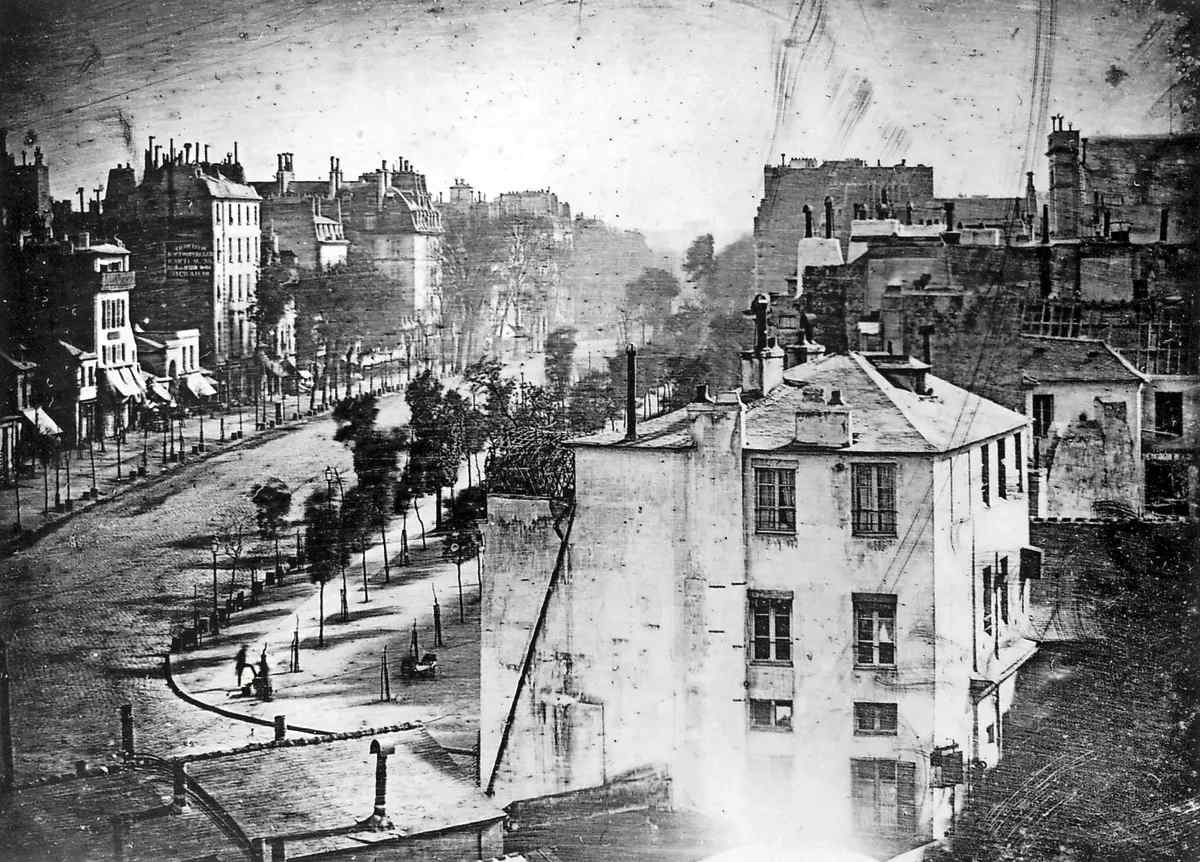
Toronto. For a large part of photographic history, the media was so abysmally slow a tripod was necessary plus a means to steady subjects. To  this end, Charlie Kruger offered a light, handy support adjustable for a realistic pose.

One was located by Dr Robert Wilson who wrote an article for issue 23-1 back in 1997. The article is in his “Pages from the Past Series” column and begins, “Portrait photographers in the mid nineteenth century needed a headrest in their studio to ensure that the sitter would be able to remain still for the duration of the exposure. Most of these headrests were fairly heavy devises, with a large cast iron base often seen on the floor behind portraits of men; women’s long skirts usually covered any sign of the headrest.

“However, the 15 January 1869 issue of Humphrey’s Journal (Volume XX, No 17, pages 261-263) had a report of this light weight stand patented by Mr Charles E. Kruger:

“It is a fact, perhaps too little known among the public, that as much as photography has of late been benefited by the aid of science, it requires, nevertheless, a great deal more care and practice than one would think off (sic). This we state particularly in regard to the right placing and the securing of the proper position of the person, of whom a photograph is to be taken.

“Not only is the part of the operation generally attended by a great loss of time, but it is also the source of failures which would undoubtedly not occur, if use was made of a proper apparatus, which in being placed behind the person, would allow a suitable hold and support of the different parts of the body, no matter what position they assume.” …

Members are able to read the rest of Bob’s article, and more by opening the issue 23-1 pdf file on the free members only DVD (or as of  this month, thumb drive). To join see MEMBERSHIP above or at right. Questions, Email Lilianne at member@phsc.ca.

Join us at our 2025 events (listed under PHSC EVENTS at right) and see what you can find for your collection. First up is the May 4th Auction followed by the PHSC Spring fair, trunk sale, and fall events.

Posted in history | Tagged , , , , , | Comments Off on steady there, lad

… brand new light …

modern image by Henry VanderSpek in current Toronto exhibition “Urban Scrawl”

Toronto. Collecting items and reading history about our favourite past time is a pleasure to us aficionados. A big part of our art uses natural light to make a permanent image from nature. In fact an early book on photography was called “The Pencil of Nature” reflecting the use of light to create what the eye could see.

And our favourite editor, Rita Godlevskis, not only creates both the hard copy and digital versions of PhotoEd magazine, but also this elaborate newsletter (?) about forthcoming issues and more.

Even if your passion is photo history or collecting photographic tools and images, not practicing the art (film or digital), her newsletter will intrigue you – especially in what the art can do today!

Posted in activities-other | Tagged , , | Comments Off on … brand new light …

shades of 1997

Scenes from 1997 auction by Bob Lansdale

Toronto. In 1997, editor Bob Lansdale took the ‘bull by the horns’ and did his own photography of our events for the journal.

This quartet of photos was featured in issue 23-1 to record the auction held that spring. In the journal, the cut line below the photo names the key people shown and the various items up for bidding or already won.

The related article by editor Lansdale states. “The PHSC Annual Auction proved again to be a success with members as they bid for the wide variety of items offered. Some of the items were donations to the Society from which the monies, gained, will be applied toward bursaries and scholarships.

“A short list of successful bids gives the following: Cambo camera 4×5 – $400; Imagon portrait lens in shutter, 300mm – $410; enlarger 6×7 – $300; Nikon FE – $325; Rolleiflex – $375; Leitz projector – $250; Seneca camera 5×7 – $200; Drymount press 11×14 – $175; Burke & James monorail camera 4×5 – $175; Hansa bellows for 35mm – $175; A box of film holders – $160; Voigtlander Bessamatic/case – $155; K20 Aerial camera – $120.”

Like in 1997, we once again feature our auction (spring auction this time, not annual as in 1997 and open to all comers not only members) – a success for everyone over nearly half a century!

Posted in auction | Tagged , , , , , , | Comments Off on shades of 1997

pressing out from the masses

an embosser for prints

Toronto. Once studios took off, savvy owners tried ways to differentiate their services from the pack. One way to accomplish this was to use the “McKee’s Cameo, Embossing and Imprint Press” on photographic prints delivered to customers.

Issue 23-1 of our journal shows the little gem. It was offered in 1900 for $12.00US. The press made “instant embossing or imprinting without injury to the finest burnish or enamel” as the advertisement insisted.

The use of the press to emboss, would raise the face of the photograph and make the subject stand out.

The advertisement suggested that you could, “Hold to your old prices, and get from 50 cents to $2.00 more per dozen for the imprint pictures.” The ad encouraged studios to contact “H.A. Hyatt Photographic Supplies, St Louis, Mo.”. No Canadian supply house or distributor was mentioned.

Our spring events are coming up fast (auction May 4th; fair May 25th). You may fine something to tweak your interest and complement your collection. A poster for each event will be pinned to this site (the auction poster is already up) as received.

Posted in activities | Tagged , , , , , | Comments Off on pressing out from the masses

I can hear it coming …

Toronto. … our spring auction (May 4th), of course. See the poster below for times and place. Email Clint at auction@phsc.ca with your questions (poster is jpeg and as such sans links).

poster for the May 4, 2025 PHSC Spring Auction

Posted in auction | Tagged , , , , | Comments Off on I can hear it coming …

searching for a house

Photographic Canadiana issue 23-1 cover shot

Toronto. The cover shot on issue 23-1 features a horse and coach caught by a daguerreotype camera. An article inside titled, “A SEARCH FOR THE ALBION HOUSE” by the late Graham Garrett explains the reason for the cover shot.

Graham’s article begins, “Several years ago I was sent a 35mm slide of a daguerreotype, ca. 1853-54, by Matthew Isenburg of Connecticut, leading me to do some research on the locale of the image. I believe it was taken in Upper Canada and I’m asking [1997] readers for any input they might have on the subject and/or origin.

The double-plate format depicts a stagecoach (see cover) drawn by two gray horses standing on a dirt street with part of a wooden sidewalk noticeable in the background. In addition to a uniformed driver, the stage has the words ‘Albion House’ neatly painted above its door, (probably in gold paint), and the numerals ‘272’.

“One of the buildings in the background is constructed of white clapboard with a sign bearing the words ‘Variety Store’ and a young person exiting the doorway. Another sign discovered on the side of the store is unreadable.

“It should be noted that the word ‘Albion’ (an ancient name for Britain) was used for a variety of goods and services in British North America for almost a century, particularly hotels, houses and inns. The most well-known of these establishments was located in Cobourg, U.C. and was documented in Pioneer Inns and Taverns, (Tor., 1954-56), by Edwin C. Guillet, (see ill.).

“It should be pointed out that although newspapers carried ads for ‘Albion Hotels’, the word ‘House’ seemed interchangeable in editorials. I have compiled a large amount of data relating to places of accommodation in U.C. using the word Albion and I have listed those few that were in operation close to the above circa date.” …

Mr Garrett’s report of his research continues. Members are able to see all of Graham’s illustrated article in the pdf file for volume 23 (including 23-1 with the article) You can join by following MEMBERSHIP above or Membership at right. Email any questions to Lilianne at member@phsc.ca.

Posted in history | Tagged , , , , , , | Comments Off on searching for a house

another great use for AI

sample photo from My Heritage website

Toronto. I received an email from past president Les Jones this weekend noting that a genealogy web site is using AI to estimate the date of a photo based on its contents.

Since the service (called PhotoDater) is  used within a browser, it likely works with any OS. The site My Heritage has a two week ‘free’ membership which must be used to access PhotoDater.

Once a photo is uploaded following the site’s protocol, an estimated date is usually suggested plus the statistical variance (eg. 1946 +- 5 years). Check out the site and see if it appeals to you (especially image collectors with uncertain dates for photos). The Photo Dater technology according to My Heritage was ‘educated’ with a huge number of accurately dated historical images.

Skeptical? Check out the various ‘PhotoDater’ Youtube videos to see how My Heritage puts AI to work as a realistic ‘dater’ of old photos. From my own perspective, AI is really helpful doing the repetitive routine analysis and adjustments we make day to day.

I use Topaz Photo AI on this site at times. Each iteration of the application seems to improve the results. It is often impressive and often a disaster. Still lots of room for improvement. It seems to do a strikingly good job on some things (ie the odd portrait) but has a ways to go (ie, realizing the shape of screw heads on cameras for example). I like its upsizing for the most part, and its de-noise function but often fall back to using ‘Focus Magic’ for out of focus images.

Posted in activities-other | Tagged , , , , | Comments Off on another great use for AI

jimmy’s back in town

Single slant light with blind control as advocated by Inglis 

Toronto. In issue 22-5, Part 1 of Dr Reichstein’s article on James Inglis appeared. Issue 23-1 continues the story with Part 2.

Part 2 begins, “The decade of the eighties [1880s] was to be one of extraordinary activity for Inglis. It marked his move to Rochester, N.Y., the rise and fall of his career in manufacturing and was the decade in which he achieved wide public prominence.

“The basis for the frenetic activity of this period was his interest in the manufacture of dry plates. Throughout the period of the 1870’s there was a great deal of experimentation, mainly in England, to replace the cumbersome wet plate process for producing negatives, which involved coating a glass plate with collodion, sensitizing then exposing and developing it while wet, with a more convenient and portable dry plate process.

“It was a turning point in photographic history. Todd’s obituary of 1904, speaking of Inglis’ last period in Montreal, describes Inglis becoming interested in dry plates in the early eighties: “…he entered upon the experimental stage with his usual whole-souled energy, and, like many more of that time with disastrous financial results”.

“It is clear that by the time Inglis arrived in Rochester, probably early in 1883, he was relatively accomplished in the technology.” …

Members could read all of Irwin Reichstein’s illustrated and foot-noted article in the relevant pdf file on the free members-only DVD (a thumb drive as of April 2025). See MEMBERSHIP above or Membership at right to join. Send Lilianne an email with any questions or suggestions at member@phsc.ca.

Posted in history | Tagged , , , , , , | Comments Off on jimmy’s back in town

bagels and more

Toronto. We received notice the other day that the spring camera show in Montreal is this April 27th.  Montreal, spring, bagels, cameras, and more – spend the weekend in beautiful Montreal!  For more information, table, etc. drop Sol an email at solhadef@gmail.com.


Posted in activities-other | Tagged , , , , | Comments Off on bagels and more

cameras, cameras, everywhere …

SENECA No.9 5×7 plate camera with reversing back, double extension, drop bed and front standard rise and shift.

Toronto. … and not a print in sight. Shades of smartphones. Last century, when film was in its prime, people argued which camera maker or model was the best and who made the best lenses. As Don Douglas put it for a sober second thought,”the best camera; the best lens, are the ones in your hand as you see something to photograph.”

For me today, that is the tiny 8 mpx camera module on my iPod Touch. Today’s smartphone owners do not care who made their phone’s camera module but rather that there is one ready to go on demand!

In issue 22-5 (spring, 1997) Stan White wrote a captivating article titled, “An Amateur Camera of the Early 20th Century” that shows a typical camera many amateurs chose to use. The article begins, “Once the dry plate arrived in the 1880s the last hurdle to practical photography for the amateur was cleared. It only remained for the standard of living to improve for photography to be affordable to the middlclasses and eventually to the working classes.

“As result there was a mass of photographic equipment marketed from 1890 to 1920, specifically for thamateur.

“Cameras differed wildly in sophistication and price but were different from professional equipment in number of ways: many were not sufficiently ruggeto stand up to the  rigours of day-to-day use; designs often fell short ominimum professional requirements, and since they wermade for a price, lenses and shutters weroften of modest standard.

Roll film was still expensive and plates (5cents a dozen 4x5) wercheap, flat and could be large; advantages, in an era of questionable lens definition and grainy emulsions, so it is logical that the dropbefolding plate camera became a favourite. In North America, Folmer & Schwing were making a camera othis design that was not greatly dissimilar to the Speed Graphics a half a century later and many other companies were marketing amateur versions includingRochester Camera & Supply, Rochester Optical, Manhattan Optical Co., Robt. H. Ingersoll & Bro., Montgomery Ward & Co., Scoville & Adams Co., Ray Cameras Co., E. H. & T. Anthony, G. GennertGundlach Optical Co., and of course, the EastmaKodak Co.” … 

Members can read the rest of this and other articles in the issue 22-5 pdf file on the free members-only DVD (thumb drive as of April, 2025). To join, see the information under ‘MEMBERSHIP’ (top) or ‘Membership – Join or Renew!’ (right). Questions? Email Lilianne at member@phsc.ca.

Posted in history | Tagged , | Comments Off on cameras, cameras, everywhere …