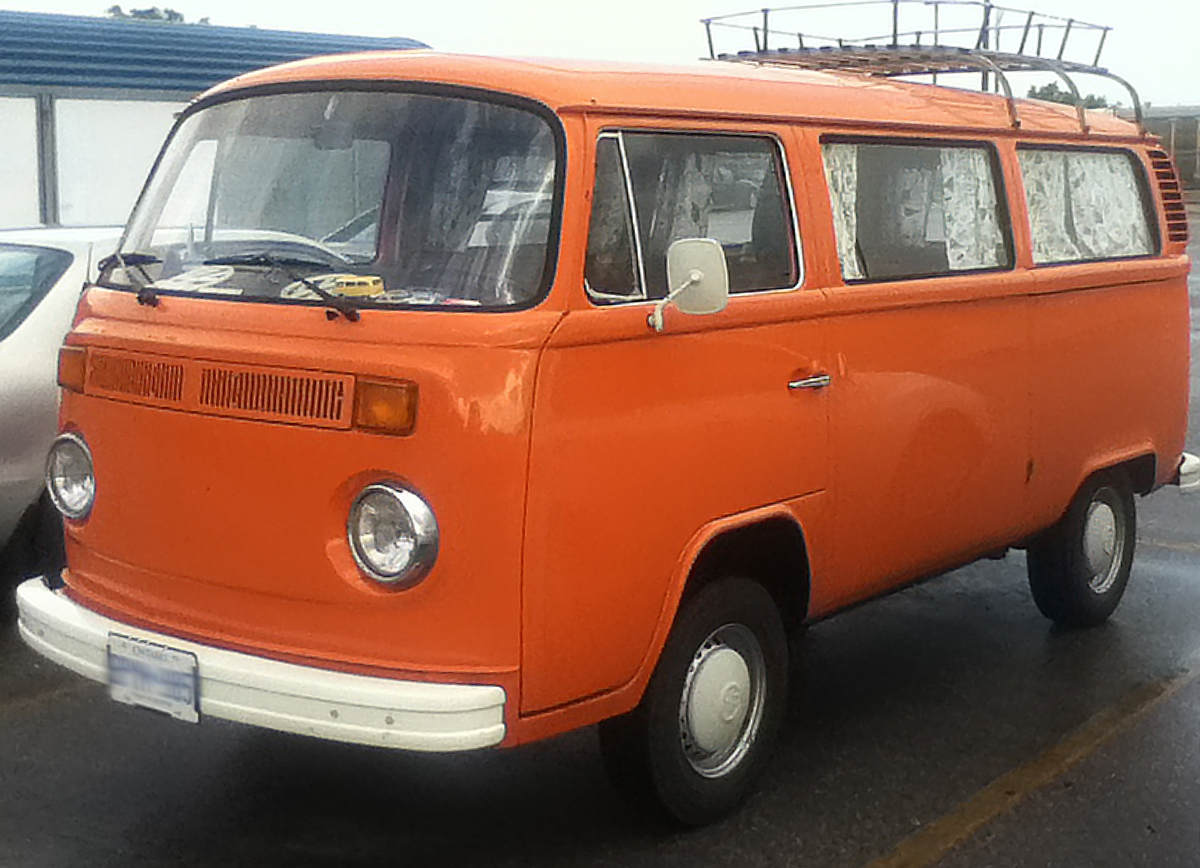
orange beetle van summer 2013
Toronto. This article is an example of exchange content that editor Lansdale felt would interest our members. As such, this example is reprinted in our journal with permission from the Club Rollei magazine back in early 1997 (issue 22-5).
The article investigates the possible link between Rollei and Volkswagen, The article is written, “by Ian Parker with contributions by Gary Rougier and the Volkswagen Archives”. Parker begins his article, “In December your editor [Ian Parker] was able to visit the Rollei factory with Tony Hilton, a Club Rollei member from Sydney in Australia. While in the Board Room at Rollei, Tony noticed the large signs for Audi/VW out of the window. Audi/VW rent part of the Rollei factory which they use for research. In June of this year [’96] they will move on and Rollei, with their expansion, and being short of space, will be glad to be able to move into this space.
“However. Tony mentioned that he had seen on T. V. a report that Rollei had made carburettors for VW. I thought this was impossible, and decided to find out more.
“Fortunately I own an Audi/VW franchise distributorship in Guernsey so I was able to find out who was the best person to find out if Rollei did in fact help VW to get into production after the war.
“In September 1931 Dr. Ferdinand Porsche announced his design for a Volkswagen – ‘A peoples Car‘. . In 1933 NSU built three prototypes which were given extensive road tests. It was not until 1934 that the name Volkswagen became generally known when the German Reich government drew up a contract for the Porsche Design Office and the then German Automobile Industry Association to design the people’s car and the machinery to build such a car.
“In February 1938 the foundation stone was laid for the new factory at Braunschweig, named VORWERK (before work) and had today’s symbol for the VW motif. This factory was completed by the middle of 1939 and was used for training of apprentices in skilled work for the main factory in Wolfsburg.
“Wolfsburg is only about 20 miles from Braunschweig. Construction work was completed on schedule and the installation of American machinery commenced in April 1939. The first Volkswagen, the type 64 with a top speed of 149Km per hour (about 82 miles), was announced in September 1939.
“Building work was stopped at the start of the war and the factory built a military type of Jeep throughout the war with many parts coming from the Braunschweig plant, as the apprentice scheme was stopped in early 1940.
“During the war both factories were bombed and in 1944 two thirds of the Wolfsburg factory was destroyed in two daylight raids with 73 killed and 160 injured. Machinery was then transferred to Braunschweig and other sites and Wolfsburg continued as an assembly plant. …”
Members can read all of the reprinted article in the issue 22-5 pdf file on the free members only DVD. Not a member? Joining is sooo easy! Follow the Membership items above or to the right. Any questions, just email Lilianne at member@phsc.ca. Please note whether the membership is new or a renewal to help us (thanks).