Next Alternative Process Social (APS) talk.

Ramiro by Russel Monk

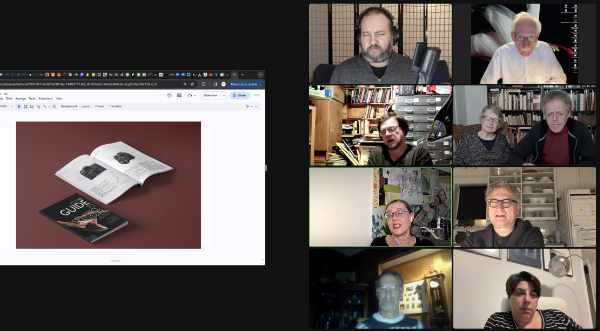
Toronto. Horst Herget, a local wet collodion photographer holds monthly APS talks. This month he is hosting photographer Russel Monk at Monk’s exhibition locale, the Cardinal Gallery here in Toronto.

Horst spoke with us a while back (September 2019) on wet collodion photography. Horst writes. “Hello APS,

“I hope you have all had a wonderful and creative summer. We have a great schedule lined up for the fall. This month we have renowned photographer Russell Monk talking about his exhibition “Impavido”at The Cardinal Gallery. The opening reception is on September 15th from 6 to 9pm further details provided at the galleries website.

“WHEN: Monday – September 18th, 7-9pm.

LOCATION: There has been a change of venue for this month’s APS talk with Russell Monk. New location: The Cardinal Gallery, 1231 Davenport Road.

TO ATTEND: Please RSVP. All are welcome. Event fee $20.

FUTURE MEETUPS: APS is held on the third Monday of the month.

UPDATES: Please note that all future Instagram updates about APS will be posted @Horst.Wetplate.Portrait.Studio and @Daylight_Studio_Toronto.”


Posted in activities-other | Tagged , , , , | Comments Off on Next Alternative Process Social (APS) talk.

we hear from Michigan

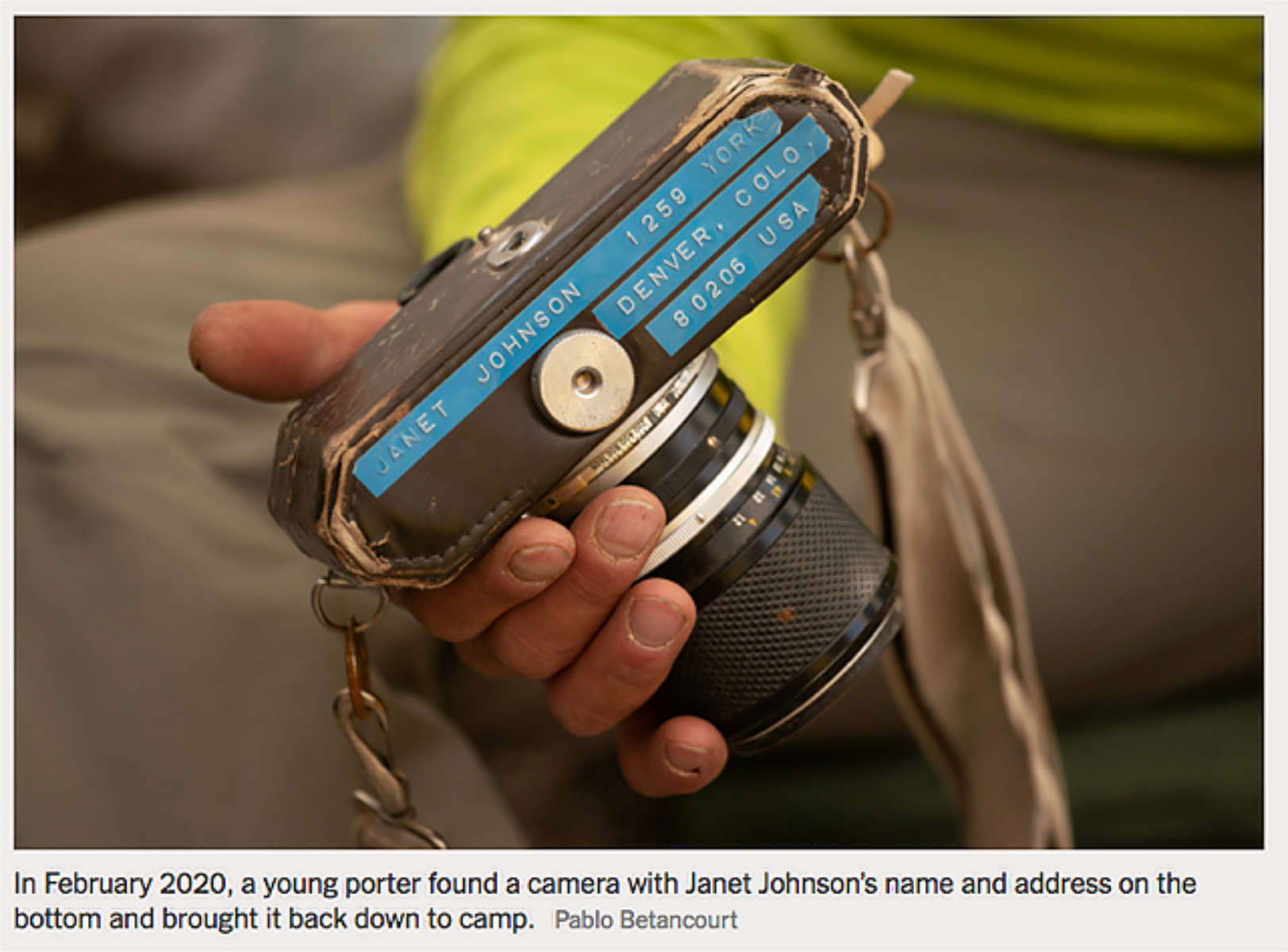
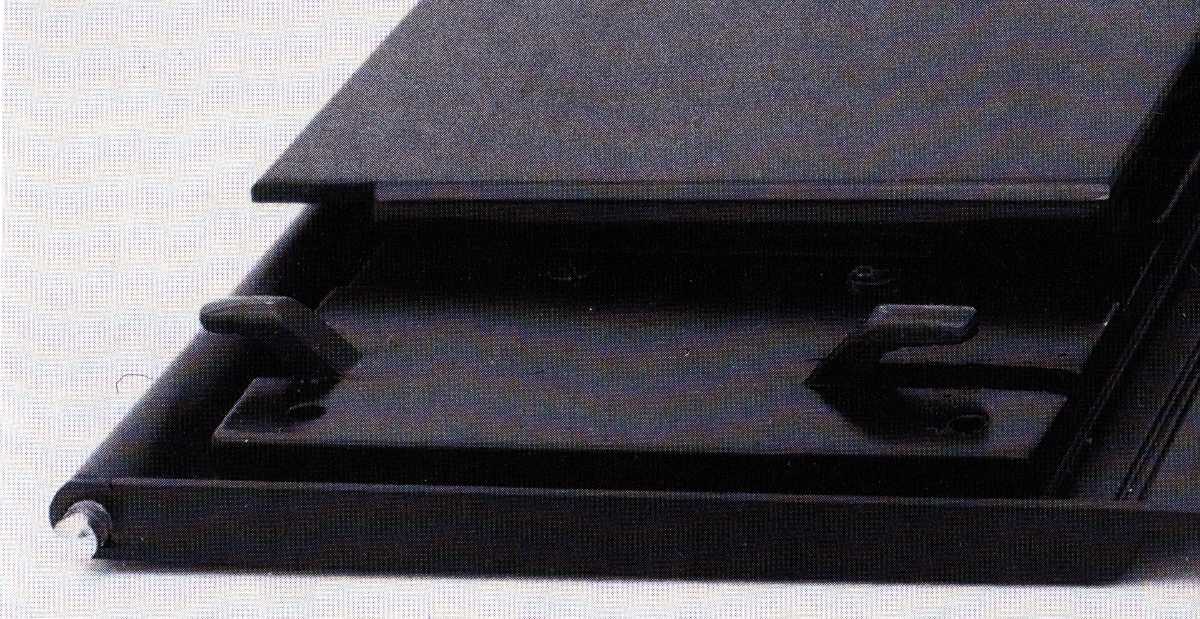
a Vito III control knob illustrating the Photogram article

Toronto. MiPHS is one of our exchange members. We are happy to have received their latest journal – The Photogram – dated Fall 2023 (Vol 51-3).

One of the stories in this edition covers many 1950s Voigtlander film cameras including the Vito III.

As a PHSC member, you can contact me at info@phsc.ca regarding this edition – or simply join MiPHS.

You may remember Voigtlander as a firm that pre-dated photography and produced one of the earliest photographic lenses (Petzval’s lens for Daguerreian cameras). Their line of 35mm cameras in the 1950s were high quality products ready to perform for the owner of any model.

Posted in activities-other | Tagged , , , , | Comments Off on we hear from Michigan

Executive meeting number 39

Toronto. Our executive meeting on Wednesday evening, September 6, 2023, was the 39th held via ZOOM. As usual, the September meeting heralds the beginning of a new term. Please note our membership year now ends December 31st.

Welcome to photographer and post-graduate candidate at TMU (once known as Ryerson University), Katrin Faridani, as our newsletter editor. Her goal is to produce her first issue in October 2023. I will announce each newsletter with a post and add them to the web site under NEWSLETTER.

Any necessary blasts (like the one for next week’s auction) are written and sent to all our  MailChimp addresses by journal co-editor, David Bridge.

Please note: If you prefer a personal copy of the newsletter but haven’t joined up yet, drop me an email at news@phsc.ca and I will add you to our list on MailChimp.

And we are still searching for a new membership secretary. Although plans are underway at present, drop me a line for our president if you feel you can help (in this or another executive position). Just use this email address info@phsc.ca.

Our next Toronto meeting will be our Estate auction on September 17th. We are busy seeking a speaker for October in the meantime.

here is a Mirroscope (lot 351) from next week’s auction

After our very successful annual summer Trunk Sale in July, we are looking forward to the Fall Estate Auction on the 17th, as noted above, and to our annual fall fair next month (October 15th).

Our 2nd journal this year went out as a pdf file last month (August). Co-editor David Bridge gave the executive members an overview of the status and the present work in progress on the next issue of our journal. If you are a member but DID NOT see a notification for the August journal, please email me at info@phsc.ca.

As we wander into fall, COVID-19 and its restrictions are just a bad memory. Hopefully we will get back to in-person meetings again (ZOOM presentations seem necessary too).

As I noted last month, like many other societies, the online pdf only version of our journal will remain.

Posted in activities | Tagged | Comments Off on Executive meeting number 39

more than paper next Sunday

lot 436 – one of a number of photographic paper and film lots ready for auction on the 17th.

Toronto. Our big (really big) ESTATE Auction is coming next week on Sunday, September 17th.

The last photos have been uploaded and the slideshow expanded to display these new arrivals – paper, film, tripods, enlarger, point-and-shoots, T shirts and more.

It was like Christmas eve Friday night when Clint arrived here with another tiny SD card full of lot pictures. I adjusted the photos in three sets, reducing the size of each to ease the load on Exhibeo 2 – our slide show software.

An open source file uploader called FileZilla added the new slide show to our web site, all fresh and ready to tease you as you jot down various lots to checkout before the hammering begins. Don’t be late!

Posted in auction | Tagged , , , , , , , , , , | Comments Off on more than paper next Sunday

McKeown Knows

lot 051 – hard copy of McKeown’s Camera Guide. A famous ‘go to’ source for camera information

Toronto. Back a few decades, we went to the McKeown’s Camera Guide for advice on all cameras collectible. The massive tomb provided a wealth of information and photos about camera models, value, years manufactured/sold, who made them, etc.  I have the 11th edition of some 900 pages. A 12th edition with similar content, additional pages and updated prices was release a few years later.

Since then, the McKeown folk have worked to produce a new copy. A massive (that word again) FOUR volume edition of 4,000 to 5,000 pages was being considered (or a pdf version online) at the time.

We have not heard from McKeown’s since early 2016. Meantime, my copy (paperback) of the 11th edition is getting a bit bedraggled and has a broken spine from frequent use,

Now, in the ESTATE auction the 17th of this month, lot 051 is a HARD copy of McKeown’s 11th edition. Don’t miss out on this edition. And see the many other amazing items in this auction – just waiting to be added to your collection – books, cameras, photographs, Stanhopes, and many more items as shown in our lot ordered slide show!

Posted in auction | Tagged , , , , , , , | Comments Off on McKeown Knows

watch out for these two cameras

lot 077 – the Expo Watch camera from 1905 (NYC)

Toronto. With the ESTATE Auction fast approaching on the 17th of this month, I have two other lots for you to consider. Lot 077, the Expo camera and lot 078, the Ticka camera. By the early 1900s, film media was fast enough and flexible enough to make hand held ‘detective’ cameras like these practical.

Both cameras imitate a gentleman’s pocket watch. The Expo was made in New York City by the Expo Camera Company for about 3 decades from around 1905 while the Ticka was made by Houghton in London, England for about a decade beginning, like the Expo, in 1905.

Check out the various links for these two cameras and learn more about the unique designs from each side of the Atlantic back in the day when film prevailed. And of course visit our fall auction in person to see these and other items for your collection.


Posted in auction | Tagged , , , | Comments Off on watch out for these two cameras

beyond macro

35mm focal length Tessar with RMS thread

Toronto. In the days of minicams (mainly 35mm),  subjects could be focussed from infinity down to about a metre. Any subject closer needed accessories like front element lenses, extension tubes, bellows, or special closeup stands.

If a lens was asymmetrical, a ring would allow the lens to be reversed then attached to possibly improve the resulting image’s flatness of field and resolution.

Macro was defined as a 1:1 film image to subject size. Macro was usually lumped in with closeups in the ‘closer than a metre’ shots. Going to larger than subject sizes on the tiny 35mm film negative required more special tools. For example, a camera could be mounted on a microscope in place of the eye-piece and the subject taken with the microscope’s objective lens.

However objective lenses had no aperture adjustment as they were used wide open. Some makers decided to remedy this by offering a special lens with an aperture to be used in lieu of the usual objective. This would allow the depth of field to be increased. Above is a tiny 35mm focal length Tessar with an RMS thread (the Tessar is shown here beside a Canadian Looney for size comparison).

Different microscope makers created a ‘line’ of lenses allowing various degrees of subject magnification. A typical shot is shown in a March 2020 post titled, “up close and personal“. The post gives added details to the 1930s Tessar which I bought back in March, 1995 from Pim Schryer (a few sources suggest such a low serial number means a far older lens, but it wasn’t until 1930 when a redesigned Tessar allowed f/3.5 lenses. Perhaps the smaller frame size needed here allowed f/3.5 with an earlier lens design.).

Savvy camera makers such as Zeiss and Leitz made adaptors to mount the tiny RMS threaded lens on traditional bellows, etc.

Posted in history | Tagged , , , | Comments Off on beyond macro

memory makers

A wonderful memory of tomatoes  in a summer 1977 garden

Toronto. To a photographer, photography is a business. The end result is payment for the prints or photographs or album (more likely images, videos, or files these days). But to his subject or their family he is a ‘memory maker’.

This photograph of a small child holding a tomato worm has been long forgotten by the photographer but to the little girl and her family it brings back memories of tomato plants in the family garden and tasty dishes made with the huge berries from the tomato plants.

So when you browse photos and albums at a flea market, collector’s event, or second hand store remember they are from the family not the photographer and may well have been memories to someone now long gone.

Posted in history | Tagged , , | Comments Off on memory makers

jungle fever

late 1950s diesel generator by Allis-Chalmers

Toronto. Jungles are unkind to photographers. Hot, humid, dangerous places full of fungus and mold. No place for cameras! In the late 1800s or so, manufactures made special ‘tropical’ cameras. Instead of a leather covering on wood (organic leather was tasty fodder for fungus and mold in damp conditions), polished walnut or mahogany or teak wood was used. This wood was far less attractive to fungus and mold.

While in Labrador, I had the pleasure of meeting an Allis-Chalmers technician who installed and connected our three generators. He was an amateur photographer and had been in the South American jungles doing installations. With him was his camera – an older Exakta with a Zeiss lens. What was remarkable were the terrible scratches frosting much of his camera lens’s front element.

He assured me his camera still worked properly if no bright light hit the front element. He explained that the jungle was so damp he frequently had to wipe off the lens with whatever material was handy, hence the scratches. His conversation was memorable as I had recently purchased a newer Exakta with a Steinheil 58mm lens rather than a Zeiss Tessar or the newer Zeiss Biotar.

In the past century photographers – professional or amateur – seemed to be everywhere on this old planet. Jungles with their humid air full of spores were an obvious attraction in spite of the effect the hot, damp environment had on camera equipment. Modern digital cameras and smart phones (especially iPhones) are well sealed and avoid using organic materials to embellish the cases making digital gear reasonably impervious to climate extremes.


Posted in history | Tagged , , , | Comments Off on jungle fever

cool shots in the far north

Late 1950s photo of man and empty reel for 3 1/8 inch diameter Styroflex co-ax cable.

Toronto. Photography in the far north was rugged for most of the year. Exposed to the elements, camera shutters froze; lenses misted over; and the cold could only briefly be tolerated by the photographer.

This was eased for the few brief months that were without snow and chill. Camera makers offered special models with low temperture bearings and greases to assist shutter operation in very cold weather.

Photographers regularly kept their camera snug under their warm coat, next to their body, briefly exposing body and camera when a shot was taken. The photo above was snapped  well below the arctic circle in what would be described as the balmier part of the far north.  It records construction of a communications receiver/transmitter facility using klystrons and billboard sized antennae.

While some rugged souls regularly took outdoor photos in the cold, it was not especially favourable country for professional photographers. Some companies a few decades earlier touted the use of their products on expeditions to the far north as a means to attest their camera’s ruggedness and reliability.

Posted in history | Tagged , , , | Comments Off on cool shots in the far north