tomorrow, March 1st is CAMERAMA

Polaroid slide film processed with a borrowed Polaroid processor

Toronto. Each year our good friend Gary Perry puts on a series of CAMERAMA shows. The first for 2026 is tomorrow, March 1, 2026. IMPORTANT! Please use this link, not the one at the bottom of this post.
email: cameramashow@gmail.com

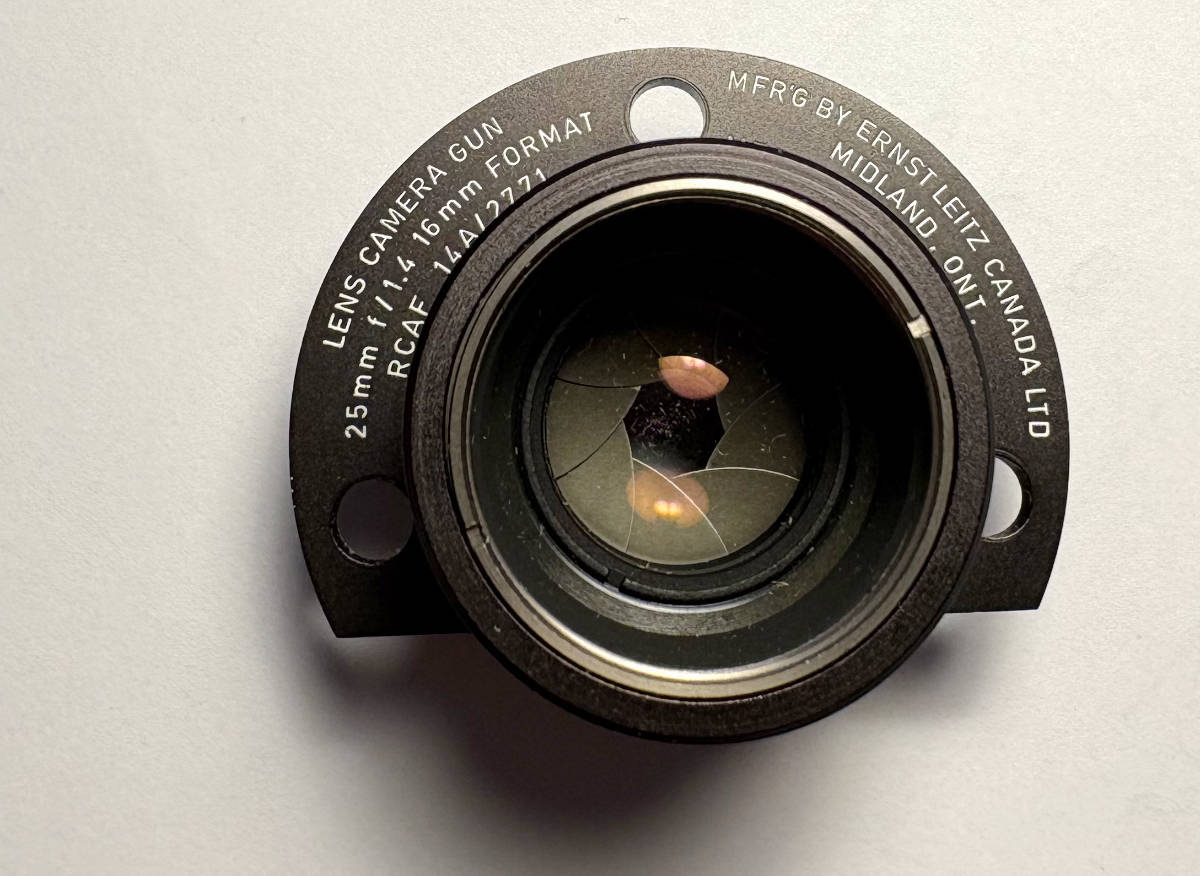
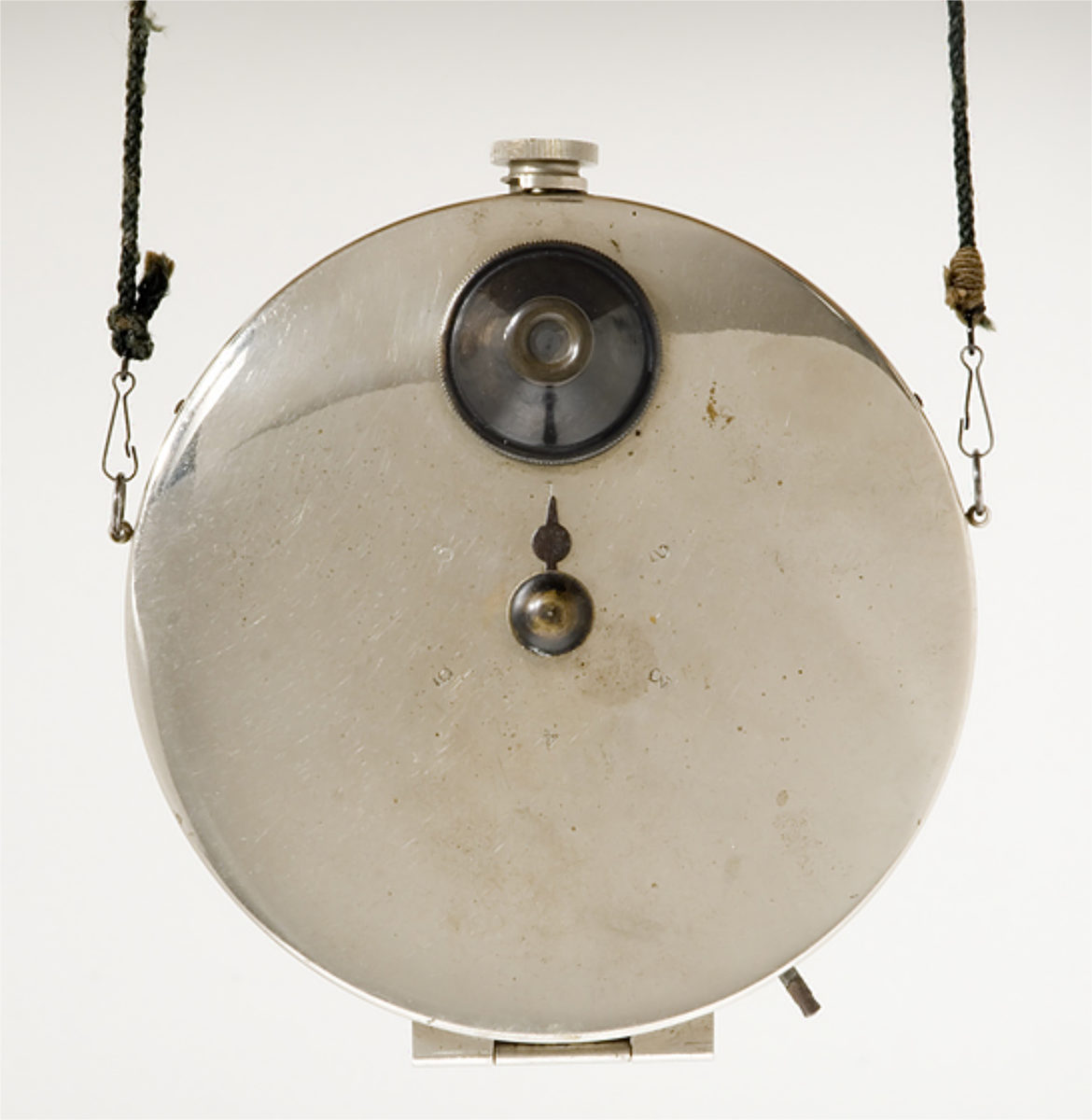
NB: At one time I experimented with Polaroid 35mm film and a Leitz Stereoly (example at left). Gary kindly loaned me the necessary Polaroid processor for my experiment. Shown are my two reluctant subjects – Rusty (shelty) and Pete (fox terrier).


Posted in activities-other | Tagged , , , , | Comments Off on tomorrow, March 1st is CAMERAMA

well, how about flora then?

a Christmas cactus blossom

Toronto. Experienced collectors of images can be quite choosey. Particular processes, older photos, famous people, etc., the list goes on. A sub-category of photos may include flora of various stripes such as blossoms, cacti, plants, trees, etc.

While this colour digital photo is a bit too recent (2014), it gives an idea of what attracts a collector’s eye. Colour shots from a century ago are definitely collectible as are monotone prints from a variety of processes.

We welcome all collectors – camera and photograph – at our fairs. The Spring Fair is this coming May 24, 2026, the week following Victoria day here in Canada. As the date approaches a poster will be pinned to this site with full details.

Posted in history | Tagged , , , | Comments Off on well, how about flora then?

see any more fauna?

checking for fauna… c2006 digital image

Toronto. A sub-set of old photos collectors like to collect are fauna. Either wild or domestic. Sometimes a particular species. Or a special era.

This example, while far too recent to be collectible, could be considered either fauna or pets.

Image collectors can find portraits and other studio shots easily. Outdoor and work photos are less common as are good animal photos.

Come out to our spring fair event on May 24th. You may spot a great fauna image for your collection, or some other irresistible items. As we near the fair date, a poster will be pinned to the top of this site giving details to all.

Posted in history | Tagged , , | Comments Off on see any more fauna?

February 4, 2026 Executive Meeting #66 by ZOOM

PHSC President Clint Hryhorijiw

Toronto. … Here we are once again in February.

This, our 66th executive meeting by ZOOM, was held on Wednesday evening, February 4th. All except our Social Media editor were able to attend.

Our treasurer, John Morden, sent out his report  prior to the meeting.  While there was a brief discussion, no changes were necessary.

Financial Controller, Jeri Danyleyko noted once again all is quiet on the GIC front other than an additional GIC purchase is planned.

Membership Secretary, Lilianne Schneider noted we have five new members this month. Lilianne is also one of the helpers in preparation for each auction.

Note: For those choosing to buy or renew a membership, please remember our journal is now  in ‘pdf format’ only, so an email address is essential. A MailChimp notification is sent to all member emails when each journal pdf is produced and uploaded.

If you are a member but HAVE NOT seen any notification for Photographic Canadiana since you registered or renewed, please email us at member@phsc.ca.

The ever patient PHSC OC3 contact, John Allman, noted an insurance round table will be held on February 7th. Our treasurer has been invited. John sees that each PHSC event is included in the OC3 newsletter.

Our programs director, Celio Barreto, will be taking some time off from his program duties this year. Celio has been working very hard on programs as well as co-ordinating most of these ZOOM meetings and experimenting with innovative ways for the society to use ZOOM and other technical tools.

Newsletter editor Patrick Gunn sent in a report. He plans to combine issues 26-1 and 26-2 as this seems to be a quiet time for newsletter content.

The spring fair is confirmed for May 24, 2026 (Victoria Day long weekend is the week earlier). Clint will continue investigating the viability of an expanded image show (Image and Books) at the auction venue.

The first auction of the year was moved to February 15th due to the heavy snowfall that hit Toronto on January 25th seriously impacting movement around the city. Consideration is being given to holding a second auction around May 3, 2026.

Journal editors, David and Louise, are considering a revised journal schedule and content. They will report their recommendations next month at the executive meeting.

Social media editor, Ms Markovic was unable to attend this meeting. She provided a written report for instagram once more showing positive growth month/month). She will encourage article input from TMU students for instagram and eventually our newsletter and journal.

Ms Markovic attended the TMU photo books awards on behalf of the PHSC and took photographs which she shared.

As usual, I distributed a monthly web report by email. Daily posts have been made since I  began using WordPress as a basis for the PHSC website. The technical support and up time shown by our host (A2 Hosting) in Michigan has been excellent.

Posted in activities | Tagged | Comments Off on February 4, 2026 Executive Meeting #66 by ZOOM

a closer view

a Leitz NOOKY-HESUM with the original red box c1935. Engraved with “SUMMAR” and “HEKTOR” 5cm lenses, but without the ratio scale added later.

Toronto. When supplementary lenses, extension tubes, and ‘spider legs’ proved successful in the early 1930s, Leitz came up with more ways to allow the tiny Leica to operate closer to the subject. One idea was to use a variable depth (focusable) extension tube with corrections to the viewfinder and rangefinder.

In the mid 1930s, the NOOKY was announced for the ELMAR and the NOOKY-HESUM (shown at left) for the 5cm SUMMAR or 5cm Hektor (the SUMMITAR was a later addition). When the M-series arrived a bayonet mount version called a SOOKY was added.

These little accessories allowed hand held shots using the camera’s viewfinder and rangefinder for framing and focussing. The colour photo at top left was taken with my iPhone 16 digital camera under an LED desk light bulb.

You may find Leitz versions of these neat gadgets at our May 24th fair, or other neat finds, to expand your collection of old camera accessories. As we approach the fair date (early April), a poster and directions will be pinned to the top of this site.

Posted in history | Tagged , , | Comments Off on a closer view

the itsy bitsy spider …

a four legged BEHOO close-up device used with the shown extension tubes.

Toronto. … climbed up the water spout. In the mid 1920s, Leitz made the tiny Leica to help retain its well trained mechanics in the face of post war hyper-inflation. The camera was an overwhelming success. In fact it was the first minicam to be a commercial success.

Leitz worked to add accessories to the little utilitarian camera, expanding its versatility. In the case of close-ups, in the 1930s, various ‘Auxiliary Setting Devices’ came to market featuring extension tubes to correctly extend the lens, a special ring to fit on the front of the lens and four extendable legs that set the distance and framed the area in the camera’s field.

The gadgets, affectionately known as spider legs could copy documents, book pages, and any other flattish items in close-up. With care, one leg could be removed to avoid any shadow.

Shown at top left is the BEHOO accessory (1935-1959) which was an improvement on similar earlier devices. Its special ring was intended for use with the 5cm ELMAR and SUMMAR lenses.

Post digital, such devices became unnecessary as the view is on screen, in full colour, and the sensors fast enough for hand-held exposures. My smart phone (which copied the above photo) boasts 48 mp and 12 mp cameras with instant viewing of any shot. Blurry or out of focus images can be retaken immediately.

Visit our spring fair this May 24th. You may spot one of these wonderful old accessories (or a cousin), made by Leitz or another maker and just waiting for your collection.

Note: The post title is from an old nursery rhyme we once sang to our children.

Posted in history | Tagged , , , | Comments Off on the itsy bitsy spider …

the better to see …

Leitz close-up magnifiers. from left:
chrome 5x LVFOO, 30x LWHOO, 5x chrome LGCOO and black 5x LVFOO, all with vision correction

Toronto. … you with, said the wolf to Little Red Riding Hood. In the last century, Leitz made close-up devices for the Leica. Both various focussing slide gadgets and mirror boxes used common five power magnifiers code named LGCOO (on top of box at left) and LVFOO (on either side of box at left), plus stronger magnifiers like the squat 30x LWHOO.

The subject could be viewed through an Elmar or other lens with the magnifier before the camera was moved into position (or a mirror flipped up) to capture the close-up scene on film.

These magnifiers continued into the early M-series line of Leicas until the focussing slide was phased out and a newer mirror box (Visoflex II) came to market using a different shaped magnifier.

The LVFOO lingered on briefly as a negative and slide inspector, but the asking price was too steep compared to 8x acrylic magnifiers.

The need for special accessories for close-ups changed with faster film, close-up capable lenses, and finally the digital revolution, when almost any camera could reliably snap close-up images on its own.

At our fairs, like the one this May, both Leitz and other makes of various film camera based close up gadgets are often offered.

NB. The above post title is familiar to all who read fairy tales by the Brothers Grimm as a child.

Posted in history | Tagged , | Comments Off on the better to see …

oh! to be in Paris …

Rue Cardinale in 1910 – by Eugène Atget – 2001 exhibit at the AGO

Toronto. The city of light is featured in issue 26-5 in an article by Günter Ott on the AGO exhibit of works by the Parisian photographer Eugène Atget.

While the show described took place about a quarter century ago, it may well be featured once again. Regardless, collectors of old photos should look carefully at Atget’s work before choosing photos by others to add to their collection.

Mr Ott’s story begins with this précis. “For nearly 30 years, Eugène Atget (1857 – 1927) worked diligently at his life’s work, a precise photographic record of le vieux Paris as it entered the modern era.

“That amazing body of work is the subject of a terrific show currently at the Art Gallery of Ontario in Toronto. Paris Itineraries: The Photographs of Eugene Atget, (sponsored by Château des Charmes Wines) runs from February 28 – May 27, 2001.

“It comprises 180 albumen silver prints taken largely from the collection of the Musée Carnavalet, Paris, and produced by the Association Paris-Musées.”

You can read all the following article by Mr Ott in the issue 26-5 pdf file on the free members-only DVD/thumb drive. See ‘Membership’ above or at right for ways to join this exciting group of like minded photo collectors, camera collectors, and photo historians. You can address any questions to member@phsc.ca.

Posted in history | Tagged , , | Comments Off on oh! to be in Paris …

AI-I-I-i-i-i-i-i

American West landscape by Dr Robert Adams – courtesy of NPR.ORG

Toronto.  President Clint Hryhorijiw recently sent an intriguing email to various members and helpers at the PHSC and MiPHS. It was a brief article about Dr Robert Adams and how his lessons are an antidote to the current fascination with artificial intelligence (AI).

Ironically, the article appears on the perplexity.ai website. This site  requests that you sign in (free) to view its articles.

Dr Adams wrote a profusion of articles and books as well as doing landscape photography in the American west.

Posted in activities-other | Tagged , , | Comments Off on AI-I-I-i-i-i-i-i

The Kinetoscope Castle

before hi-fi …

Toronto. Editor Bob Lansdale in this article writes about visiting the town of Fowlerville, a few miles northwest of Detroit with some MiPHS members.

The house he visited has a huge collection of kinetoscopes – and antique audio equipment as shown at left.

The premises are occupied by Ken Stokes, John  Johnson and Teddy the cockapoo. Shown at left is the living room [c 2000/2001] filled with audio equipment of the Victorian and Edwardian ages.

Bob begins his article, “Being close to the international border makes it convenient to participate in the activities of one of our American counterparts. Such was the case when I accompanied members of the Michigan Photographic Historical Society [MiPHS] on a Saturday sojourn to the home of John Johnson and Ken Stokes in Fowlerville, some 60 miles north-west of Detroit.

“The setting has a small town atmosphere with a sedate bungalow style home of white clap-board that belies what awaits inside. The tour was so impressive I had to return a second time to record the exhibits on film…

“After a short introduction everyone was invited inside to see ‘the collection’. It seemed slow for the gathering to file inside as if the first to enter were hard pressed to choose their way or move on to some other choice exhibit. But once I, too, was past the threshold I realized we were entering a museum … crossing a time warp to the early 1900’s.

“In all directions, in every nook, covering every wall and shelf were hundreds of examples of old gramophones with their big horns, and movie projectors with their golden brass sprockets and gears. This collection had, in fact, taken over the house, taken over a double garage, taken over the loft, and, as I found out, taken over several other storage facilities.

“Narrow paths wind through the rooms making it hard to move past anyone taking time for a close inspection of some prize item. One visitor described it as ‘being lost inside a Christmas tree.’

“The displays are the result of merging two collections. Ken Stokes focuses on musical machines and has accumulated 40 thousand records, primarily 78’s with a zest for jazz of the 1920’s and 30’s. Juke Boxes, player pianos and nickelodeons fill the air at the drop of a coin, –the pride is to restore the items to working condition.

“Any memorabilia that goes with the theme is of interest; doilies, lamps, Mazda lamp bulbs and trinkets consume all space atop the time-piece furniture.

“John Johnson points to his grandparents for perking his interest in old things. They possessed intriguing battery-operated radios that worked with vacuum tubes; his great grandfather’s brother owned a Regina music box-phonograph combination.

“John eventually found a Regina Corona which operates with 27 inch punched discs. John’s main interest is in movie projection equipment which harkens back to 1935 when he showed movies to neighbourhood kids with a handcranked projector in a garage.

After the Second World War John bought up a bunch of old movie equipment from a dealer who was going out of business. In April 1952 he entered a new phase of his life when he refurbished an old theatre in Caspian, Upper Michigan, fixed up a couple projectors and started a movie house, running 1st and 2nd run films.

“Success encouraged him to install bigger equipment – even venturing to show the first 3-D movie. At the same time John continued with his daytime job as an electrician.” …

Bob continues his story. Members read the tale and viewed the many photos in the issue 26-5 pdf file on the free members-only DVD/thumb drive. If you aren’t yet a member, see the ways to join (it’s inexpensive) under ‘Membership’ above and at right. Direct membership questions to member@phsc.ca.

Posted in history | Tagged , , , | Comments Off on The Kinetoscope Castle