Exec ZOOM meeting #56

PHSC President
Clint Hryhorijiw

Toronto. What on earth would we do without technology?

Our 56th meeting began with a brief reorganization: I move to 1st VP; Jeri Danyleyko steps into the 2nd VP slot and takes over as Financial Controller from John, spitting investment decisions from bills, payments, etc. Celio Barreto takes on an additional task of administering the PHSC awards.

Once again Treasurer John Morden sent out his report before the meeting.

Editor Patrick Gunn’s  second newsletter, 25-2 went out the end of last month with very positive reaction. The clean layout and content reflect his advertising background, photographic enthusiasm, and forward planning discipline.

John Allman, now our  O3C representation, had a few solid suggestions for the PHSC including promotion of its events, speaker list, etc.

Membership Secretary Lilianne Schneider was unavoidably absent, but issued a monthly report including questions on some renewals.

Note: Regarding membership (new and renew) our journal is in ‘pdf format only’, so an email address is essential. A MailChimp notification is sent to all member emails when each journal pdf is produced and uploaded.

Remember, if  you have UNSUBSCRIBED to our MailChimp list, you will not receive notification nor Photographic Canadiana nor other info. MailChimp does not permit me to reinstate a specific email address once unsubscribed by the owner. Renewal of such addresses are only possible via a form, not provided on our site.

Also, if you change email addresses, please tell us – MailChimp will tag the old address as CLEANED (they cannot add your new address automatically). If you are a member but HAVE NOT seen any notification for Photographic Canadiana since you registered or renewed, please email Lilianne at member@phsc.ca.

Celio Barreto has initiated an investigation in ways to streamline access to our presentations. New presentations and presenters are currently under review. Suggestions are always welcome. Email Celio directly at program@phsc.ca.

Social media editor, Ms Markovic was unavailable, but emailed a brief update.

Posted in activities | Tagged | Comments Off on Exec ZOOM meeting #56

the Russians are …

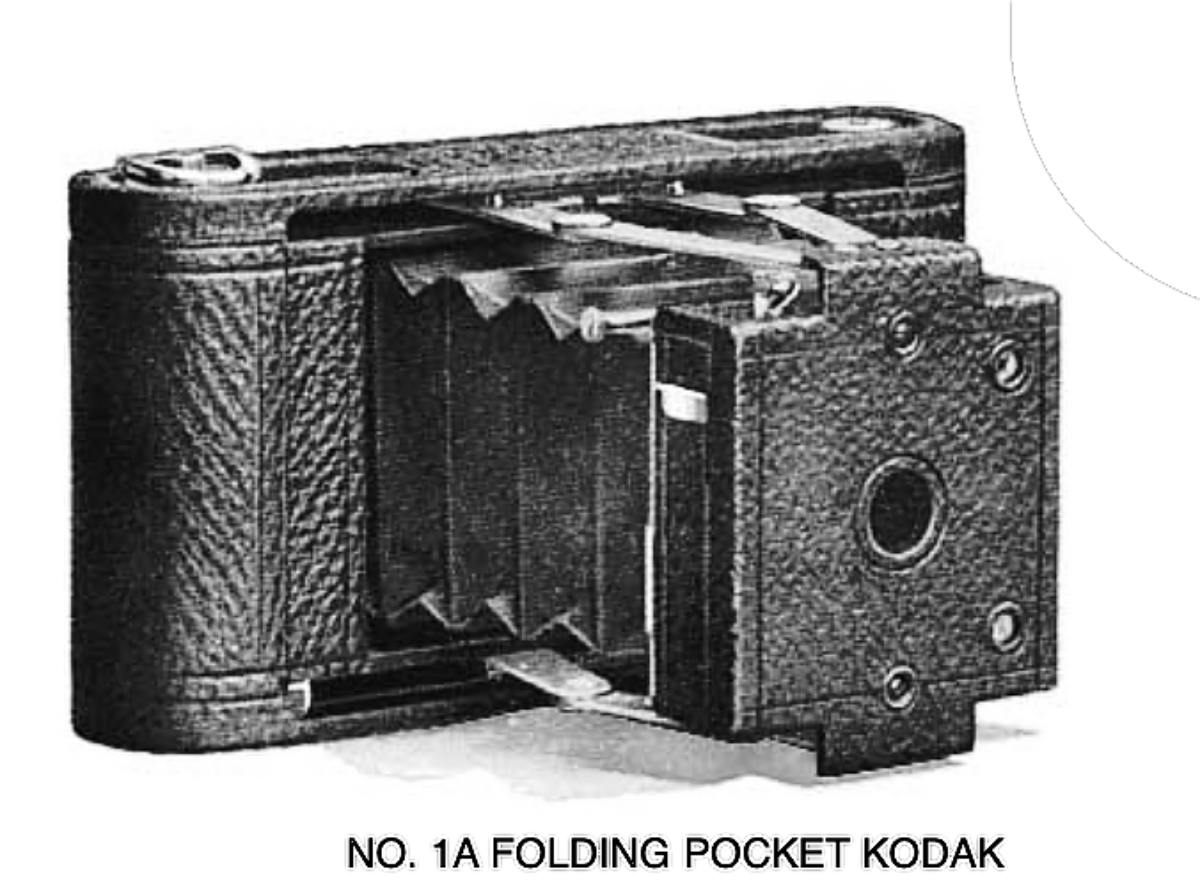
a pair of Krasnogorsk FT2 cameras joined together for a panoramic stereo shot

Toronto. … coming, the Russians are coming  – as Canadian Producer/Director Norman Jewison titled his 1966 humorous movie.

A fitting title for this post about Stan White’s exploits to make  panoramic 3D photos using a co-joined pair of  Krasnogorsk FT2 cameras. Click on the camera icon to see a stereo example.

Stan begins his article as follows. “It was the need for a means ophotographing street scenes in 3-D that was the motivation. If the objective is to include for posterity as much of the streeand building as possible a conventional stereo camera is not the answer.

“Somyears ago I purchased a Krasnogorsk FT2 panoramic camera circa 1950‘s and I was pleased with the result(see Photographic Canadiana vol. 19, no. 2).

“I had used this camera to make stereo pictures using a slide-bar. But the camera is far from quick to handle and by thtime the shutter has been cocked and thfilm wound on (three revolutions on thwinding knob) and the slide-bar moved tthe new camera position, a delay of 8 seconds was minimal. In an angle of vieclose to 120 degrees it was impossibleeven if there was no people or traffic, to make the left and right view without introducing anomalies between thimages.

“Then, at the Society auction this year [1996], another FT2 camera became available. It did not sell and I was able to take the camera on approval to see if its imagery was a close enough match to the image produced by my own camera to make a compatible stereo pair.

“These cameras are built like trucks and it is possible with care to strip them down, lubricate, adjust and put them bactogether again in about half an hour and you dont need to be a camera repair mato do this. I soon had the second camera working fine and adjusted so that itshutter speeds matched my own camera. …”

Read the rest of Stan’s illustrated article on the issue 22-2 pdf file contained on the free members-only DVD. Join up and see all we offer! See above or at right. Questions?  Email Lilianne at member@phsc.ca. P.S. Help us – please indicate if this is a new or renew membership.   Come out to our events as shown at the right under “PHSC EVENTS”.  There is always something of interest!

Posted in history | Tagged , , , , | Comments Off on the Russians are …

Looking at Small Things – 1680 style

an early single lens microscope c1680 – reproduced by Zeiss staff as an exercise

Toronto. When I was a kid, an issue of Popular Mechanics magazine showed how the tiny lens of a pen-light 1.5v bulb could be used as a powerful (about 200x) microscope – just like one made by Leeuwenhoek in Delft, Netherlands.

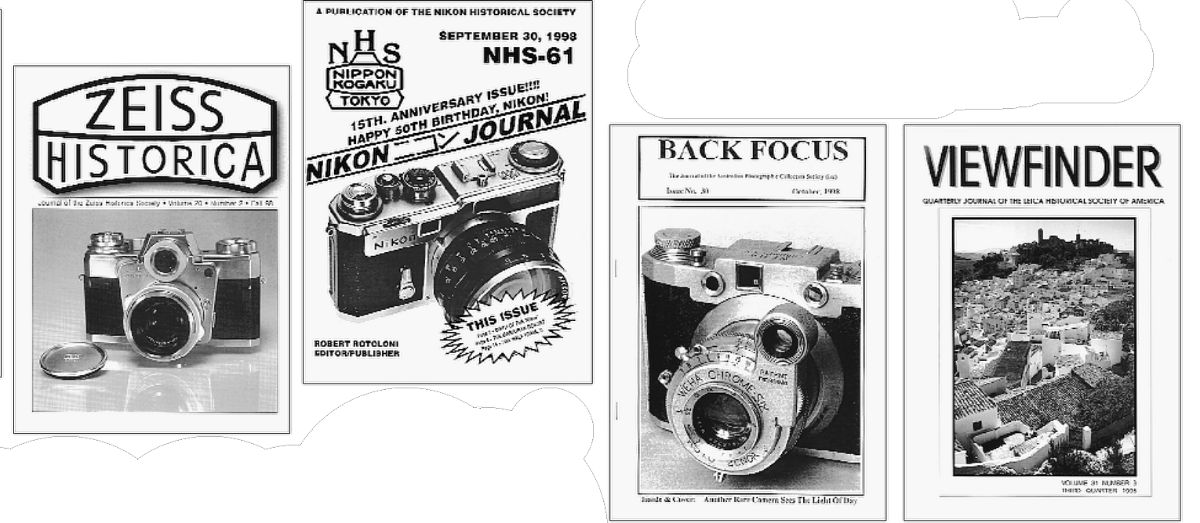
In issue 22-2, editor Everett Roseborough, discussed a tiny Zeiss object  (barely a handful) he saw at a 1996  Zeiss Historica meeting. It was a reproduction of the tiny Leeuwenhoek single lens microscope once used to see tiny things including bacteria (the hand-crafted lenses had different focal lengths and were estimated to be anywhere from 50x to 500x magnification).

I mentioned in an earlier post that many camera collectors also collect other strange optical instruments – this was such a device. Ev opens his artcle by saying, “This reproduction of a Leeuwenhoek Microscope is a product of Zeiss Reflex – a company within a company that needno introduction.

“Michael Kersten of Carl Zeiss Inc., N.Y., showed it to me at the Zeiss Historica meeting at Toronto, and havinone in my collection became imperative.

“Zeiss Reflex is a company where new employees in marketing, technology and other phases of company policy and activity receive training. They decide on projects and carry them to completion. believe these replicas are part of the apprenticeship program.

“In the pamphlet which accompanies the replica, Zeiss maintains that Leeuwenhoek was a baker by trade, thicould be a translation error as was von” Leeuwenhoek.

“The instrument is beautifullpolished but I feel that the good Antoni ‘s handiwork would not have been, but rather blackened.

“He was the first man to see bacteriawhich he obtained from his teethanimalculae [tiny beings in pond water], circulating blood and spermatozoa. Spontaneous generatiotheory was disproven even before Pasteur.”

Members read the rest of Ev’s article in the pdf file for issue 22-2 on the free members-only DVD. Joining the PHSC is easy – see above or at right. Any questions, please email Lilianne at member@phsc.ca.

Posted in history | Tagged , , | Comments Off on Looking at Small Things – 1680 style

remember using D-76

Developer by the gallon

Toronto. As a youth, I bought an old chemical balance and a whack of Kodak chemicals to make my own developers, stop bath, and fixer bath. Later on I bought ready-made Kodak chemicals like D-76 for developing negatives and DEKTOL to print.

“When colour came calling, I tried various packages and processes. It soon became obvious that unlike B&W, the best you could do with colour was expose and develop it correctly – no fussing around to fix exposure boo-boos, create more contrast or less, focus in on highlights, or shadows, etc. Colour was left to the one hour photo shops.

About  quarter century ago when digital hit us, I had a last trip with my trusty M4 then put it on the shelf and switched to the digital world.

The other day, one of our members, Jeri Danyleyko sent me an email saying, “For all those who are doing home processing, Kodak chemistry is back. https://downtowncamera.com/shop?query=kodak%20chemistry
Please pass on to anyone I may have missed.”

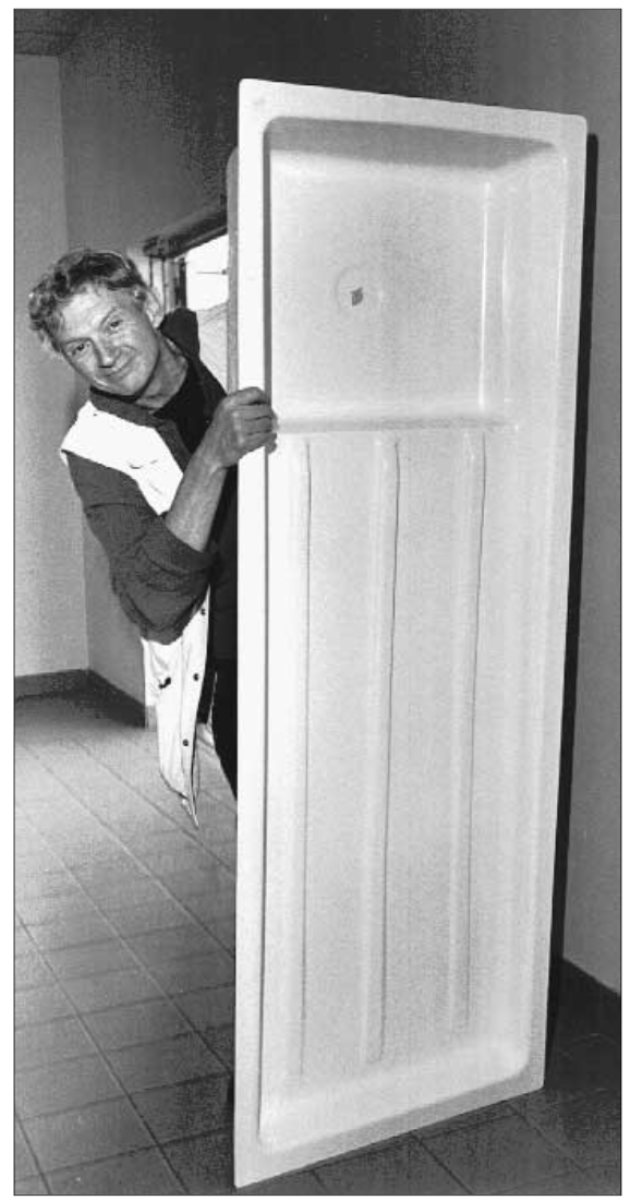
The image on the DTC site is tiny and a bit fuzzy even after a ‘Topaz” tuneup, so the enlarged image here is a couple of hamsters in a DEKTOL tin.

So, for all you film niche enthusiasts that’s the scoop! PS DTC also has lots of Lomography gear – well worth a visit.

Posted in history | Tagged , | Comments Off on remember using D-76

the eye looker

an interesting little optical device c1901

Toronto. Camera collectors often included various odd looking optical items in their collection. In the late 1980s, I was browsing antique stores, junk sales, etc. for interesting items.

In one case, a little girl stood guard over a road side table of odds and ends including a small brass tube with openings on each side and an eye piece. “What’s that?” I enquired. “An eye looker” she replied. Intrigued, I bought the unsigned little brass tube. It was a low power ‘magnifier’ with side openings for a perhaps small bug? a bit of flower? a Stanhope pasted to the smooth block of glass?  another tiny positive image? A ‘condenser’ at the bottom illuminated the block of glass.

The image for this post is the journal photo, of a nickel plated version of the magnifier, upsized with Topaz Photo AI and enhanced with that software and  Focus Magic, then re-sized with Affinity Photo.

About a decade later, Everett included an article in issue 22-2. Ev titled his illustrated article, “A Mystery within an Enigma“. It described an almost identical item labelled “Pan-American Exposition 1901, Buffalo, N. Y. Price $1.00″ [one or two days pay in 1901]

Ev wrote, “This souvenir, inscribed Panamerican Exposition 1901, Buffalo, N. Y. Price $1.00, is a form of Stanhope. (Charles Stanhope, Chevening, Englandca. 1829). It was found in a box of miscellaneous items belonging to the late [photographer] Brodie Whitelaw.

“The cylinder is nickel plated and the exploded view reveals its construction. It is 46 mm long and 21 mm diameter. The magnifying eyepiece is cemented to a block of glass with a 7 mm square polished surface at its focus. Somethinmust have been mounted on this (a collodion image?) for viewing.

“At the opposite end is a larger lens mounted in tubular insert which is pierced with four peculiarly shaped apertures; these do nocoincide with the single similar aperturin the outer tube. The larger lens iobviously to illuminate the object on thpolished surface.

“Robert Carter has a similarun-inscribed, brass device equallenigmaticWho produced it? What was thpurpose of the apertures? What was the object to be seen$ 1.00 was a fair sum in 1901.”


Posted in history | Tagged , , , | Comments Off on the eye looker

remembering Christine Mackie …

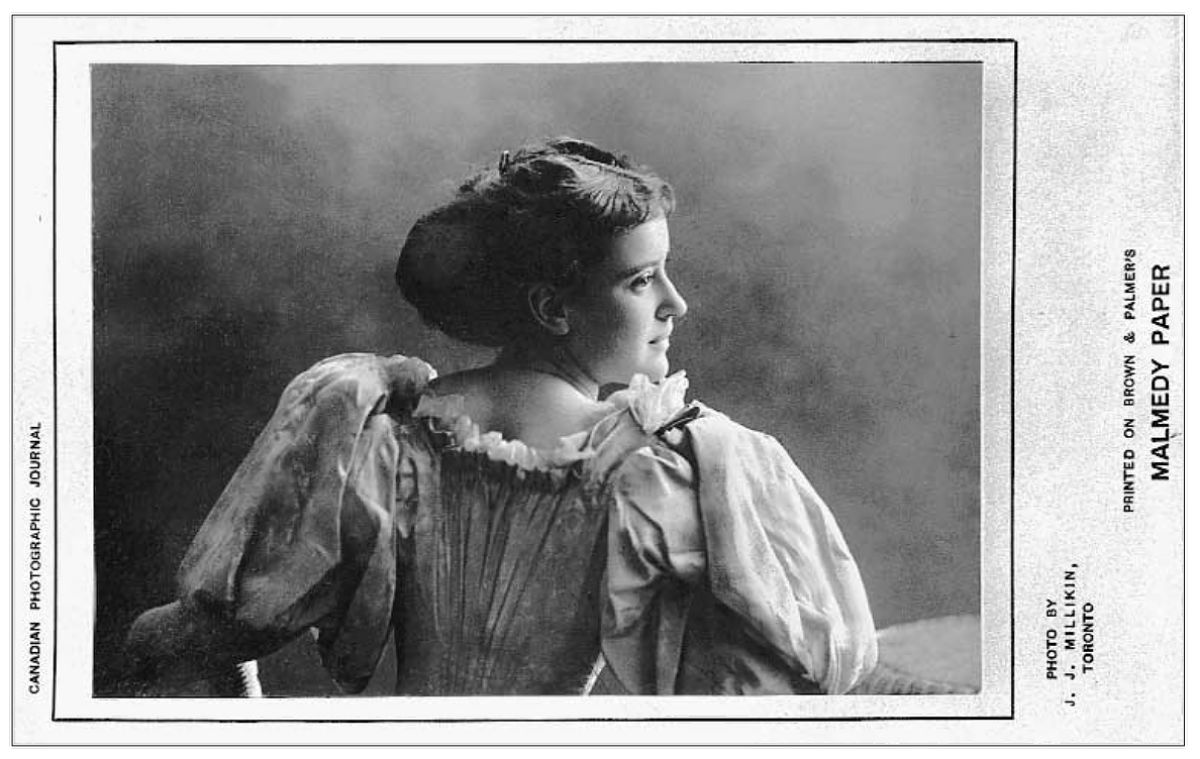
K Christine Mackie – from issue 22-2 of the journal

Toronto. Christine Mackie burst upon the PHSC scene a few brief years before her death. One of our more flamboyant members, she collected antique motorcycles and bicycles, stored back home in Hamilton. She leaped into camera collecting with unrivalled enthusiasm, attending our events to rapidly amass a collection.

Christine took advantage of the offer for any member to join the executive meetings. At the time we used executive member houses in rotation (including mine). She introduced and managed a silent auction held at our monthly Toronto meeting.

The photograph at left was enlarged by Topaz Photo AI, enhanced by both Topaz and Focus Magic, and scaled by Affinity Photo.

On her passing, editor Roseborough wrote a brief in ‘memoriam’ in issue 22-2 of our journal, “Obituary – K Christine Mackie (April 25, 1996) – Toronto members will remember her trunks full of cameras and gear at monthly meetings, her motorcycle photos and an extensive knowledge of vintage cars.

“Her trailer enabled visits all over the country to remote flea-markets in searcof cameras, her motorcycle took her trallies as far as Florida.

“During the last few years she purchased a medical laboratory building in Hamilton, Ontario with a darkroom and house across from it on Barton St.

“Christine opened a re-cycling shop for used bicycles where she also kept her large collection of antique motor bikesincluding one with wooden rims. A heart condition of some duration resulted in her sudden death last April.

“Hoodlums broke the shop window and looted the premises, leaving only a few ten-speed bikes. Cameras are appearing at flea markets but there is no proof of theft.

“A member for eight years, Christine was generous, if a rough diamond, having organized several silent auctions for [the] PHSC. A lonely person, she lived for her interests.”

Posted in history | Tagged , , | Comments Off on remembering Christine Mackie …

mr Curtis, you make good photos …

Kyaiyi-stamik (Bull Bear) of the Blackfoot Nation, Alberta. c1926 by E. S. Curtis – courtesy National Archives of Canada

Toronto. … with apologies to Mr Christie. Edward Curtis was a famous American photographer and author; an authority on Native American People (i.e. Aboriginals or First Nation People here).

A few of his photographs are framed and hang in Barberian’s Steak House on Elm. At least they did in the 1960s when my wife and I ate there. The photos were also noted in our journal when a letter from an exhibitor at one of our early fairs happened to eat there before heading home.

The photo at right is from the cover shot on issue 22-2 back in the summer/fall of 1906. Image collectors often specialize in one particular aspect of old images, or segregate their collection, by groups, one of which may be First Nations.

Our 2025 events are listed to the right under PHSC EVENTS as the date and place are confirmed. Come down and enjoy the atmosphere at each event – while there may not be an original Curtis photograph offered, there will be many items to choose from for your personal collection!

Posted in history | Tagged , , | Comments Off on mr Curtis, you make good photos …

an ambrotype self portrait

Stan White – self portrait c1996

Toronto. Over the years, photographic processes continuously evolved. For example, some effort was made to deliver less expensive cased images (Daguerreotype look-a-likes). One solution was to take a negative using the then new wet-plate technology and treat it to reverse the tonal range, bleaching the black areas white and using a black background in the case to simulate the blacks in the clear areas of the ‘negative’.

More recently [mid 1990s] courses and workshops demonstrated the old technique to a new contingent of photographers. Stan White had a column in the journal called simply “Stan White’s Corner”. For issue 22-1 Stan wrote of his experiences with a workshop across the lake at GEH.

The self portrait at left comes with this paragraph: Note the rubber glove; the photograph was taken during a processing session. Thblue-only sensitive emulsions were tricky on even the most perfect complexion. The writer finds this picture most useful when applying for a senior-citizen discount, not too many people will argue your age when your photograph is an ambrotype.

Stan begins this column, “I am now back from my second one-day workshop sponsored by Eastman House, the first being the Daguerreotype Workshop the subsequent results from which were featured in a previous issue.

“This latest offering was on wet-plate collodion ambrotypes, tintypes and other wet-plate applications. The work of the principal instructors Mark Osterman, and his wife France Scully Osterman [June 1998 speakers at the PHSC], was superb and showed a wide range of ambrotypes and tintypes, treated in variety of different ways, as well as wet-plate negatives printed on modern papers.

“One 8 x 10 inch contact print of a full-length portrait printed on modern Ilford double-matt paper had a tonal range the like of which I have never seen bettered. There is a tolerance to the combination of plates of purblind sensitivity coupled to simple Petzvaglasses for neither takes advantage of the others shortcomings and the result is pleasingly familiar to the eye like the simple taste of honest bread and cheese.

“Modernity has paid a heavy price in quality, for the convenience of all-encompassing photographic utility. …”

The column is available on the members-only DVD as the issue 22-1 pdf file. Instructions on joining/renewing are shown above (MEMBERSHIP) and to the Right depending on the choice of payment type (Cheque, Credit Card, PayPal Account, etc.). Any questions, email Lilianne at member@phsc.ca.

Posted in history | Tagged , , , | Comments Off on an ambrotype self portrait

AI and photo history

Girl at work on (telephone ?) cabling (date unknown)

Toronto. Some of us are bombarded by announcements about the marvellous results attained by artificial intelligence (AI).

Here at the PHSC we use some apps touted as AI, especially Topaz Photo AI (with each update this program has shown improvement). The image at left was sharpened using Focus Magic rather than the Topaz program and resized with Affinity Photo. Many digital images are slightly soft and benefit from a touch of sharpening.

Images, especially those from old journal issues are often enlarged, de-noised and sharpened before use. This often has a trade-off between the authenticity of the original image and clarity on the web.

We tend to avoid the nastier uses of AI (creating fake works of art for example). Any app that modifies an image etc seems to tout its AI aspect. The latest releases of various OS software, including macOS,  have some AI elements embedded in them to offer ‘suggested wording’, etc.

But what about the effect it will have on photographic history? This aspect is the subject of a coming symposium announced by TMU’s (ex-Ryerson U) Image Centre:

“From March 31 to April 2Encoding the Image: How does AI affect the Future of Photo History? will bring together historians, curators, and computer scientists to examine AI’s role in photography research and collection management. Organized by Dr. Thierry Gervais, the forum fosters dialogue among scholars and professionals. Registration is required—learn more about the sessions, speakers, and how to attend on our website.”

Although we look at historical photographic equipment, photographs, and history, not the future, this coming symposium will be of considerable interest!

Posted in activities-other | Tagged , , | Comments Off on AI and photo history

a better mouse trap

Some of Talbot’s ‘mousetraps’ by Catherine Weed-Ward (detail from her 1905 negative)

Toronto. Past president, author, and sports photographer Les Jones sent me a note the other day on an interesting article about Henry’s lost cameras.

In January of 1839, Two unique means to capture images created by sunlight were announced. One, by Daguerre of France  showed how a silver-coated copper plate could  be used to create a permanent image called a daguerreotype.

The astonishing news caused an urgent reaction in one Englishman who already had a similar ‘permanent’ process for his personal use. Henry Fox Talbot immediately had his process announced from England. His process created a ‘negative’ image that could be used to ‘print’ any number of positive prints.

The one-off daguerreotype was initially the chosen process and rapidly spread around the civilized world. After all, it was free (except in the UK). Ultimately with numerous improvements, Talbot’s process took over and the negative/positive technique became the world-wide standard for glass plates and film.

Recently a search was initiated in the UK to track down Talbot’s cameras or ‘mousetraps’ as some called them. Larry Schaaf introduces an article titled, “The Hunt for Talbot’s Cameras” by  guest writer Roger Watson. The article describes Talbot’s cameras complete with photographs of a few of these hand made instruments as well as offering an opinion about why so few exist today.

At the right under ‘PHSC EVENTS’ are the confirmed events so far for this year. You may not find a Talbot ‘mousetrap’ but there will be lots of goodies to add to you user gear or collection!

Posted in history | Tagged , , , , | Comments Off on a better mouse trap