brush and comb

Part of a B&L 20 inch telephoto lens

Toronto. Christmas, 1980 was rapidly approaching with its usual challenges as to suitable gifts. I said to my wife that I had a great suggestion: a 20 inch lens for my Leica. Sure enough that Christmas I was the proud owner of a Bausch and Lomb 20 inch telephoto lens complete with a Kilfitt mirror box! The lens ensemble was courtesy of Jack Addison. The lens had a dodgy aperture and suffered a poor paint job courtesy of an obvious amateur repair person. Sadly, speaking to B&L representatives here, they had no idea the company ever made anything besides eye-glass and contact lenses!

The company was formed in the 1850s in Rochester, NY. The founders, Jacob Bausch and Henry Lomb were Germans who emigrated to America and began manufacture of microscopes. Two decades later they briefly picked up another (rather testy) German immigrant by the name of Gundlach.  Do a google search for more details than shown here by Wikipedia. Continue reading

Posted in history | Tagged , , , | Comments Off on brush and comb

April 17, 1996

A typical PHSC web page in the summer of 2000 after a major facelift.

Toronto. The late 1980s were a busy time. Film was still king. Personal computers and bulletin boards were all the rage with techies. A telephone call to another country was very expensive.

Few had heard of the internet or emails, or the Web. In the early 1990s efforts were underway to create a standard mark-up language for the internet. Called HTML (hypertext mark-up language) it standardized a script to write electronic pages on the internet and to allow hot links to other sites and pages.

We had tried hypertext before, of course. Back in the early 1960s, hypertext text books were a fad. Depending on how you answered a question, you were directed to different pages which either congratulated you or explained the error in your logic. And of course followed with another short question and choice of answer! Continue reading

Posted in history | Tagged , , , | Comments Off on April 17, 1996

on sight

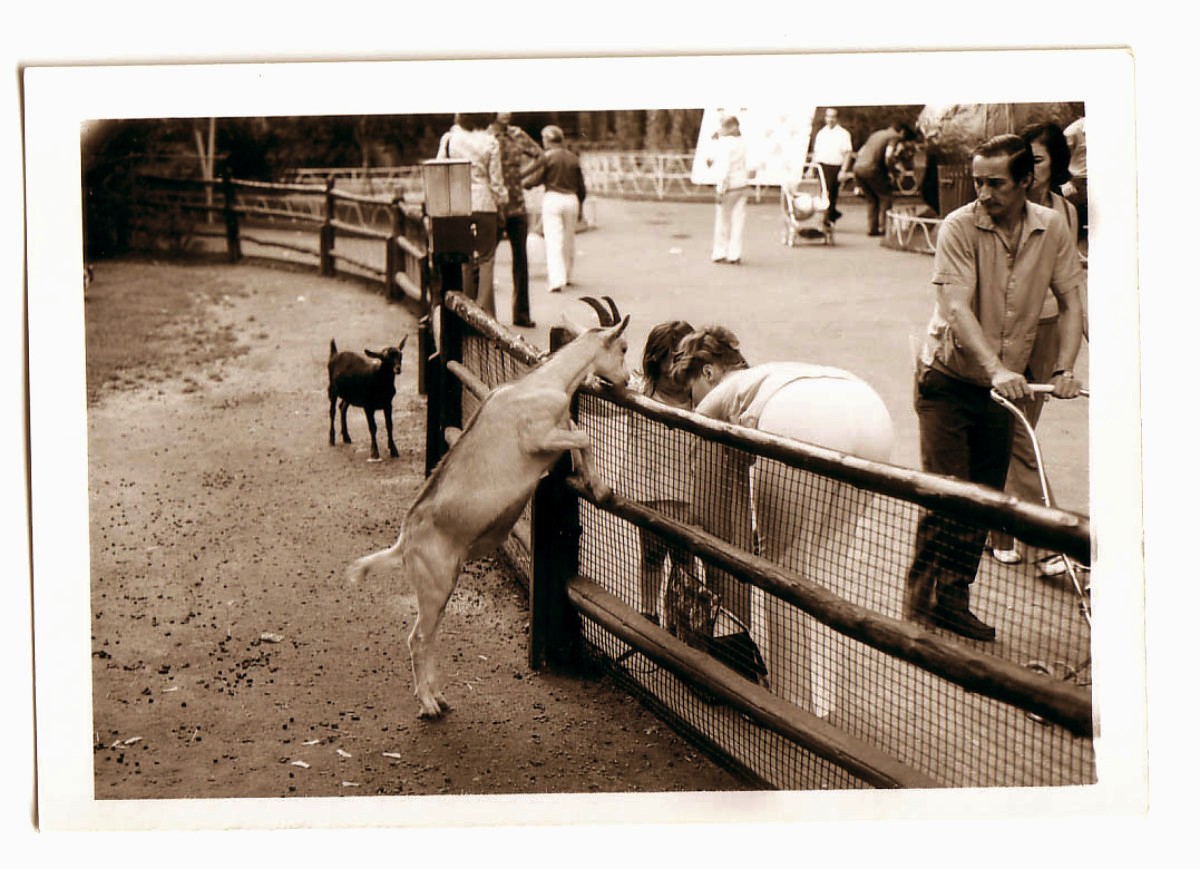
who is watching who?

Toronto. I shot this photo some 46 years ago in Montreal’s Lafontaine Park. It showed my family searching for some food while the goat and the other family watched what was happening. The photograph is a still but has lots of activity going on. Like Henri Cartier-Bresson’s decisive moment, it was taken with a Leica.

This morning I read my favourite newspaper, the Globe, and there I saw an article called “On Sight” by author and photographer, Rawi Hage. In the article he discusses what “drew him to photography”.  Have a read on the link here (or in your morning newspaper).

Posted in photos | Tagged , , , , , , | Comments Off on on sight

the brick

Argus C3
LIFE May 5, 1952

Toronto. No, not the famous Canadian furniture discounter, but an American camera made in the very late 1930s to mid 1960s by an Illinois company that touted itself as the “world’s largest manufacturer of 35mm cameras“.  The company began as a branch of the “International Research Corp. in Ann Arbor, Michigan, later moving to Illinois and in 1944 renaming itself as Argus, Inc. after its most famous and popular cameras.

The inexpensive C3 was commonly called the brick due to its weight and shape. My friend Terry proudly owned one in the late 1950s. The biggest fault was a tendency for the rangefinder to drift. To fix it, the camera had to be disassembled and the rangefinder adjusted. Once adjusted the camera had to be reassembled to test the setting.  Not a great idea.

The barrage of 35mm cameras came at a time when Germany was at war seriously curtailing camera sales. Post war, the Japanese models soon over whelmed the Germany models while the American models silently disappeared, reappearing occasionally as a brand name pasted on an Asian made and designed camera bearing no relation at all to the original.

My thanks goes to George Dunbar who thoughtfully emailed me when he found the original ad on page 114, in the May 5, 1952 issue of LIFE magazine, a time when American cameras were in their heyday –  Britain and Germany were still struggling post-war, and Japanese models had yet to reach its shores.

Posted in camera | Tagged , , , | Comments Off on the brick

and now for something completely different

Schiffer Publishing’s
History of Philco Radios

Toronto. No, not the Flying Circus routines of Monty Python fame. A couple of decades ago I dealt with a small private publisher in Pennsylvania called Schiffer Publishing Ltd. I was interested in the quilting books they published. The books would sell well in my store. Later, I sent for a catalog and to my delight, I saw that while their main business was military history books, they also published a few  books for collectors and included a small collection of books for collectors of phonographs and radios. I bought a few about brands or devices of interest to me. One was Philco.

When I was a kid, my mother had a call from a neighbour who had an old radio for me. I took my wagon across the street and up the long sloping  driveway to the kitchen door. A strange radio with a heavy speaker on top was sitting in a wooden box waiting for me. That night, I was pleased to discover that it worked and was very sensitive (all radios of that period were AM which meant amplitude modulation). It turned out to be a Philco 90-A radio (made in 1931 as I learned long after it was taken apart). Old Jack Gribble, a radio repairman in town gave me a schematic diagram for it. Years later I bought a Philco SB-100 transistor which worked up in the 10 meter short-wave band and made a tiny tuner, but that’s another story.

The other day, I had an email from Schiffer Publishing that brought the old radio to mind again.  Their current catalog also has a handful of photography books they publish – which may be why I was emailed at the phsc address!

Posted in book | Tagged , , , | Comments Off on and now for something completely different

Wet-Plate Photography

Tintype – Stephen Brûlé

Toronto. PHSC Meeting, Wed, Sept 19 2018 at 7:00 pm
In the BURGUNDY ROOM of the Memorial Hall

Wet-Plate Photography – Stephen Brûlé
The technology of wet-plate photography was invented by Frederick Scott Archer in 1851. It replaced the first commercially  successful processes, the Daguerreotype and the salt paper negatives. Wet-Pate was used by Mathew Brady to record the American Civil War – a war that prompted the formation of the Dominion of Canada in 1867.

Stephen Brûlé, a graduate of Ryerson, is a Toronto photographer who works with the century and a half old wet-plate process. Join Stephen on September 19th and discover this remarkable process that once was the mainstay of photographers world-wide. The process was both an improvement over the earlier processes and a complication. Much better resolution than paper negatives, yet able to easily be replicated. Alternatives to prints were Ambrotypes and Tintypes that were made in camera and chemically reversed to make a positive.

The process was slow enough to require a tripod, even outdoors and complex enough to demand the camera negative remain wet until processed and developed. Sound familiar? Yes, it is embodied in our logo – the wet-plate man.

The public is always welcome. Go to our Programs page for directions.

Posted in processes, program | Tagged , , , | Comments Off on Wet-Plate Photography

Taking of Niagara – review

Dr Anthony Bannon
by Robert Lansdale

TorontoOn May 16, 2018 we held our second meeting in the newly remodelled Burgundy room A at the North York Memorial Hall. We were pleased to have Dr Anthony Bannon retired from the GEM as our guest speaker. Tony spoke of the photographing of Niagara Falls in the early decades of photography. Since its discovery, the Falls has attracted artists and photographers. Over the years we have had other talks on Niagara such as its industry and history by Dr Norman Ball, and dating images by Ken Nelson (dtdfu, or Dead Trees Don’t Fall Up).  

As expected of his education and experience, Tony gave a terrific scholarly talk on the famous falls well illustrated by images he had selected. He managed to include Canadian references when possible which was greatly appreciated by the audience. He began speaking with an historical overview of the falls and arguably the first drawing ever made of the famous falls, by the Belgian explorer, (Franciscan Father) Louis Hennepin. Hennepin is said to have estimated the falls to be about 600 feet in height, possibly an error since an accurate measure today is 183 feet high. Also he grossly exaggerates Goat Island in his drawings.  Continue reading

Posted in program | Tagged , , , , , , | Comments Off on Taking of Niagara – review

Salt and Silver 1840 – 1860 Exhibition

Salt Prints c 1840-1860
Yale Center for British Art

Toronto. We often see and hear about the daguerreotype process as it was common and free throughout the world except in England where a licence had to be purchased. This exhibition celebrates the British salt prints of the Fox Talbot process. The narrator of the video, Chitra Ramalingam of the Yale Center for British Art shows a selection of the prints on display (June 28th to September 9th) but doesn’t identify the photographer other than to state some were taken by the earliest woman photographer on record. The video was posted to the BBC web site a couple pf days ago on August 5th.

Take a peek at these salt paper prints. The prints have proven to be very durable since first printed – a tribute to William Henry Fox Talbot’s process which was perfected a couple of years  before the daguerreotype but only announced to the world a few weeks after the daguerreotype on January 31st, 1839. Continue reading

Posted in photos | Tagged , , , , , , , , , | Comments Off on Salt and Silver 1840 – 1860 Exhibition

Deep Sea Photography – review

Meaghan Ogilvie
by Robert Lansdale

TorontoOur second speaker of the April meeting was Meaghan Ogilvie, an underwater photographer.  Like Ms Joyce, Meaghan wanted to promote family, in  her case to make better known and raise research funds for a rare, currently incurable condition, Multiple System Atrophy (MSA) diagnosed in her father. Meaghan was open, candid, and charming in her talk. Although she was unaccustomed to public speaking, she made up for it with her enthusiasm. I found out later that she is very effective promoting her work and herself in this digital world. 

Meaghan attended Sheridan College’s program for Commercial Photography, but switched paths when she found her strength was in Fine Art Photography. At the time she began her body of work, few did underwater photography. She brought with her tonight her $5,000 Canon camera, housed in its watertight container. Even in water, it’s very heavy and wearying for her to use in day-long shoots. Continue reading

Posted in program | Tagged , , , , , , , , | Comments Off on Deep Sea Photography – review

the summer of ’69

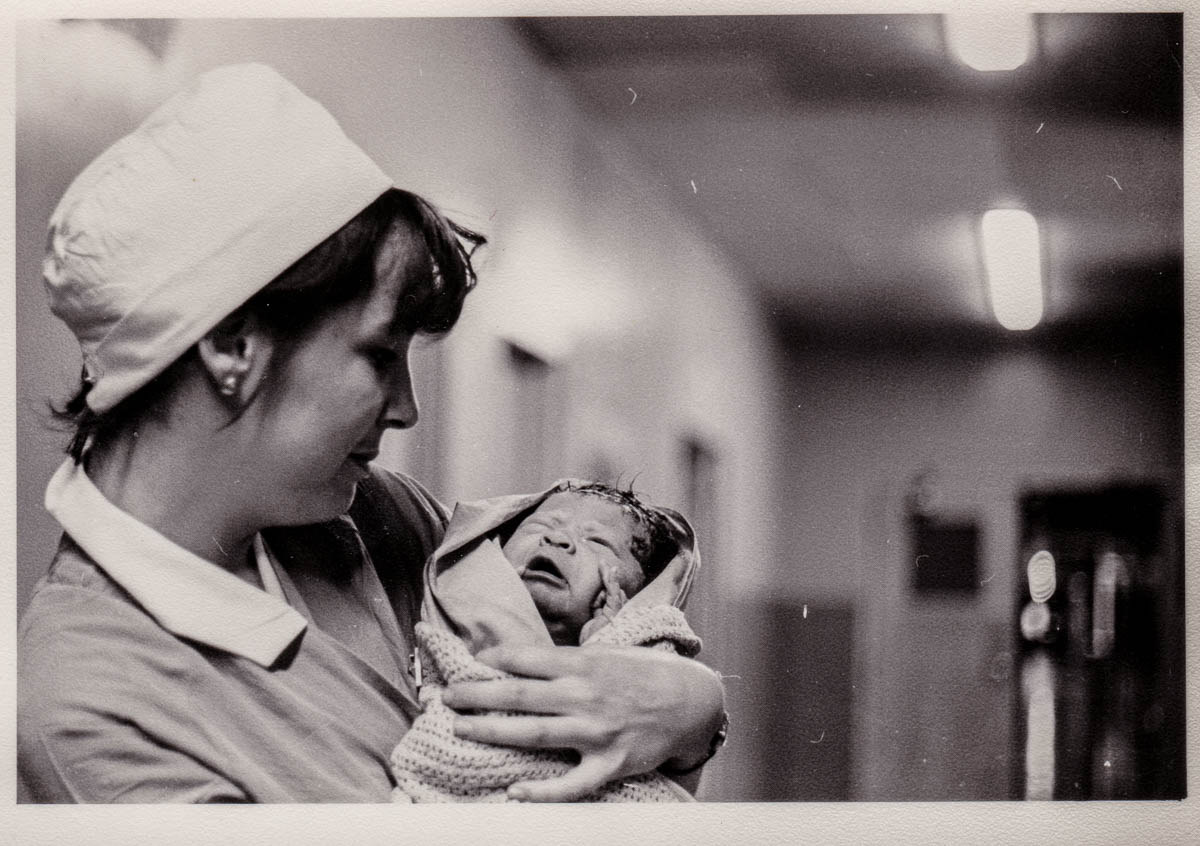
First Born – Summer 1969

Toronto. “the summer of 69” is a line in the Bryan Adams song of the same name released as a single in 1985 (and on the album Reckless a year earlier). In later years, Adams took up the profession of photography as well.

1969 was quite a year all in all. My first child was born. I won first prize with this portrait of her and a nurse in a gloomy night-time hallway at The Montreal General using my Exakta bought about a decade earlier.

Neil Armstrong became the first man to walk on the moon.  And in 1969, the first photographs ever taken on another celestial object were recorded. It was a momentous year!

Posted in photos | Tagged , , , , , | Comments Off on the summer of ’69