
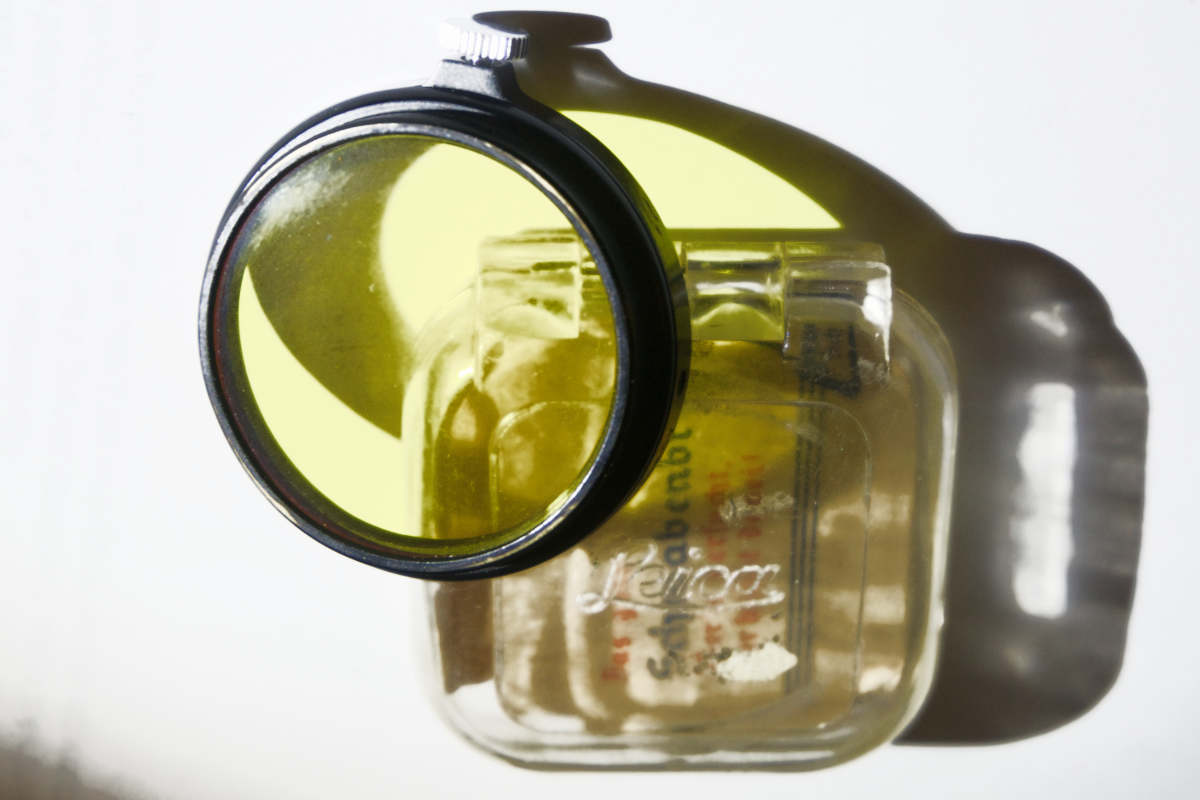
a somewhat out of focus photo
Toronto. Consistent with editor Lansdale’s inspiration to celebrate our 25th anniversary, the folks at the Cascade Panorama Historical Society sent in a juicy article by Milan Zahorcak titled, “What the …?”. Milan describes the problem raised when an old lens was tested and the novel solution.
Milan’s story begins, “‘Actinism (Greek: a ray). A ray of light whether proceeding from a heavenly or terrestrial body is found, in general, to possess three properties; viz., the luminous, the calorific and the actinic. The actinic is that property of the ray which produces important changes in certain substances submitted to its action, and on the use of which the whole art of photography is founded. When a ray of light is decomposed by refraction through a prism into its constituent colours, it is found that actinism exists chiefly among the violet, and scarcely at all among the yellow and red rays. Hence the importance of combining the violet or actinic focus of a photographic lens with the yellow or luminous focus: for the actinic rays produce the photographic picture, while, the luminous rays render the image visible upon the focussing screen.’
“Follow all that? It’s straight from A Dictionary of Photography, by Sutton & Dawson, 1867, and it’s been a 140 years since we’ve had to worry what it’s all about. For the moment listen to this tale as CPHS members Cy Eid and Milan Zahorcak try to make a photograph using an early American wet-plate camera fitted with a late 1850s portrait lens.
“The intrepid duo set up their gear in a kitchen with the scene lit by bright but diffused daylight. The subject is a tabletop setting of ancient photographic equipment at a carefully measured distance of 10 feet from the film plane.
“The image is carefully composed and focused with utmost care using an 8x magnifier. The plate holder is inserted, the slide removed for a timed exposure of four seconds, the slide returned and holder removed.
“Within minutes, the film – in this case ordinary “polycontrast” darkroom paper for test purposes, was developed and – what the heck! – found to be grossly out of focus. You can imagine the puzzled looks and head scratching that followed. The camera was checked, the ground glass re-examined but the focus was perfect – not just close but perfect.” …
Members read the rest of the article, including the solution to the focussing issue in the issue 26-1 pdf file on the free members only DVD/thumb drive. Join using the notes above and at right. Email membership queries to member@phsc.ca.


