to die for…

Toronto Views – illustrated with photographs by William James

Toronto. … is a popular expression describing a very special item. In the issue 26-3 column “Book Shelf”, Dr Wilson describes a book of photographs by photographer William James. The book’s illustrations were made using rare hand coloured slides from photographs taken around Toronto in the first half of the last Century.

The slides are often hand coloured and reside in the City of Toronto archives. The illustrations of Toronto past in ‘Toronto Views’ use these slides. Once many of the slides were quite common, but today (2026) are hard to find ‘in the wild’.

Bob begins his review, “This book presents an appealing look at Toronto during the first half of the twentieth century, through photographs taken by longtime Toronto photographer William James.

“James learned photography in England before emigrating to Canada. In Toronto, he commenced taking photographs on a part time basis in 1908, while working for Metropolitan Life; by 1910 he was making his living using the camera.

“His main customers were the large number of Toronto daily newspapers. During his 30 year career in Toronto James built up an archive of over 10,000 photographs.” …

Bob continues his review in issue 26-3. Members read it in the pdf file for that issue on the free members-only DVD/stick. Joining is a snap – follow ‘membership’ above and at right. Any questions may be emailed to member@phsc.ca.

Posted in history | Tagged , , , , | Comments Off on to die for…

Museum Auction Pt 2 – Jan 25, 2026

Toronto. Our first 2026 event is our January 25, 2026 Museum Auction, Part 2 featuring more lots from the Sherman Hines Museum plus other estate items. Sorry, no consignment lots. Questions? Drop auctioneer Clint a note at auction@phsc.ca.

JANUARY 25, 2026 at the #101 LEGION HALL, in LONG BRANCH (SW TORONTO)

Posted in Uncategorized | Comments Off on Museum Auction Pt 2 – Jan 25, 2026

old (and large) studio cameras and supports

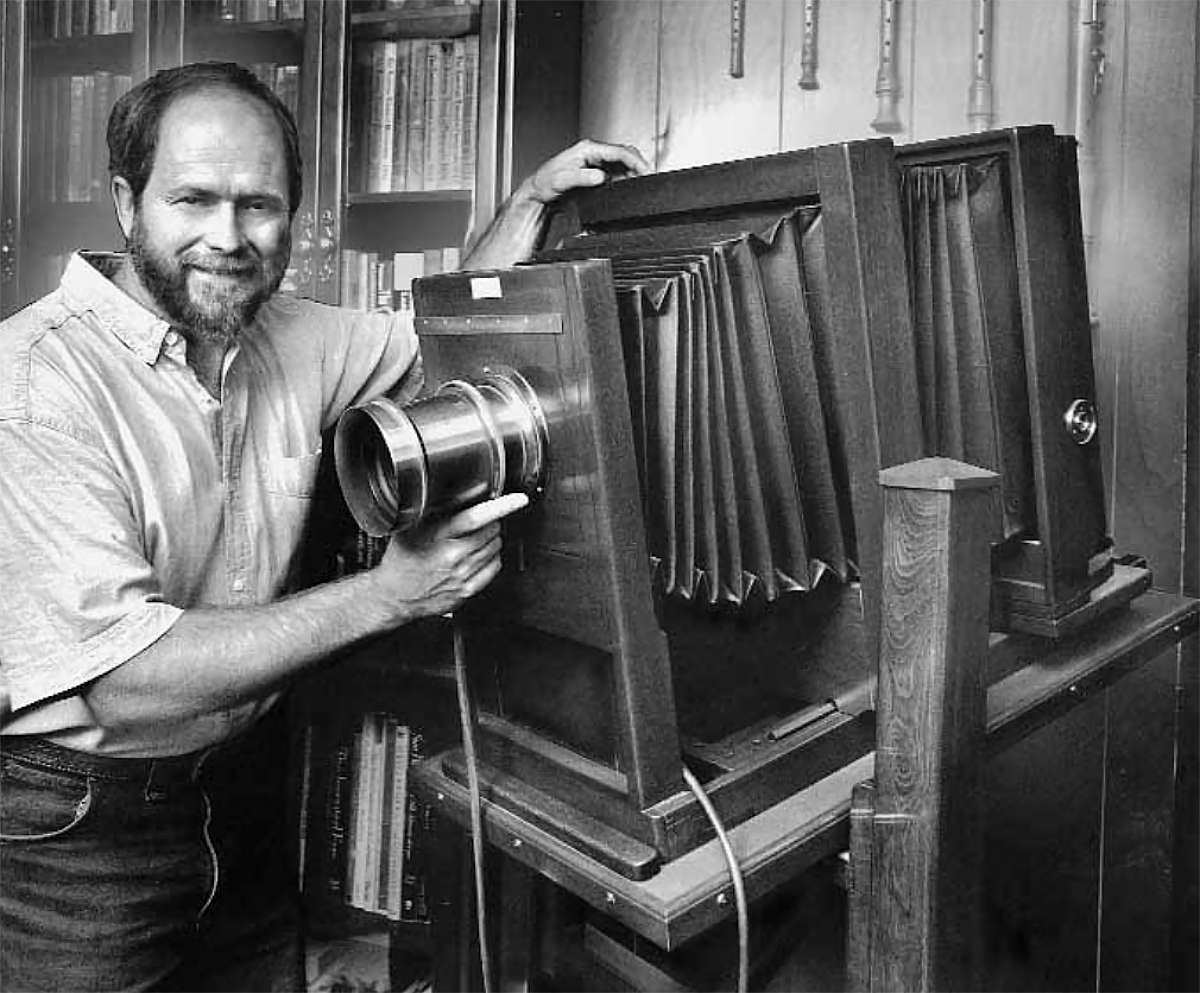
Neil Fox at the PHSC Fall 2000 fair with some of his collection

Toronto. In an earlier post I mentioned Neil Fox and his interest in old wooden cameras. An example of his work is shown in the December 31, 2025 post (A Colourful Lecturer). Neil (see left) attended our fall 2000 fair along with a collection of his restored studio cameras.

Part of the cut-line for the image at left states, “An attractive display of newly refurbished wooden studio cameras by Neil Fox caught the attention of many visitors. On view were Century Studio – 8×10, Anthony Studio – 14×14, and Century Studio Master – 8×10. …”

This was our first of many fairs held at the new Soccer Centre thanks to the help of soccer enthusiast and past president Les Jones.

Fair Chairman Larry Boccioletti  wrote a brief article thanking all the volunteers. Larry noted the biggest event (for him) was accidentally spilling 40 cups of coffee on his van rug and having it cleaned …

Members read Larry’s article and saw the fair photos by editor Lansdale in the issue 26-3 pdf file on the free members-only DVD/stick. Join this group of enthusiastic camera and image collectors by following the info at top and at right under “Membership”. If you happen to have any questions, feel free to email us at member@phsc.ca.

PS: Our PHSC Events for 2026 are being arranged now. Check the righthand sidebar under PHSC EVENTS frequently. First held will be the auction on January 25, 2026. Details will be posted here as soon as they become available.

Posted in history | Tagged , , | Comments Off on old (and large) studio cameras and supports

the fair of fairs

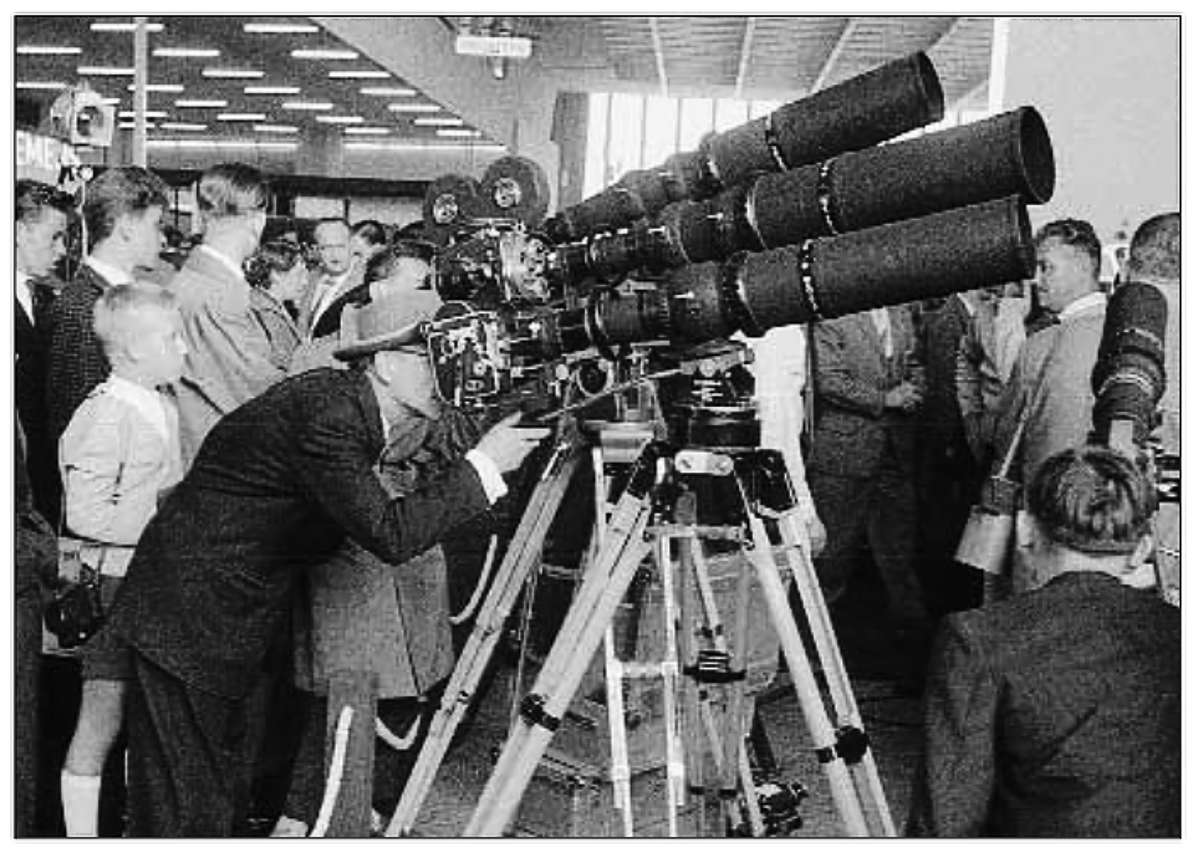
Cine telephoto lenses shown at Photokina c1958

Toronto. Mid last century ANY photographic related product worth owning was first announced at Photokina in Germany. In issue 26-3 (Nov 2003) member Gunter Ott wrote an extensive article on Photokina after his visited the fair’s 50th anniversary, held in Cologne, Germany many months earlier.

Gunter begins his story,  “Flying in to Cologne, Germany on Lufthansa is always a treat. The service nicely lulls you before the rigours of Photokina set in. Photokina is the World’s Fair for Imaging, a biennial feast of product introductions set in the lovely old mediaeval city of Cologne.

“I was there as a journalist to cover the 50th anniversary of the trade fair [2000] and as I checked into the hotel in the shadow of mighty Cologne Cathedral, I prepared my strategy: –focus on consumer products, the emergence of digital technologies, the inkjet printing area and keep an eye open for anything that dealt with the historical significance of the fair.

“My main conclusions after seven days of toil were:
digital photography has fully entered the mainstream of photography;
we will see an increasingly convergence of various technologies;
film-based photography is still alive and kicking;
amazing things are happening in output systems.

“Every manufacturer and distributor had multiple digital solutions to meet the needs of photographers from rank amateur to seasoned pro… the selection was dazzling.

“Canon had the low priced high megapixel professional D30 and the consumer PowerShot G1, Nikon showed their D1 pro camera and the Coolpix 880, Olympus showed the E10 and C-2100, Pentax had its EI-2000 while Sony featureded its DSC-P1, Ricoh showed a business oriented solution, the RDC-i700 that incorporated internet functions.

“Leica was promoting its sleek Digilux Zoom while Fuji showed its S1 pro model and FinePix 4900 Zoom consumer unit, …to list only a few.

“Traditional film based photography was not neglected with Contax promoting its exquisite N1 autofocus SLR, Minolta introducing the Maxxum 7, while Bronica and Mamiya both revealed their great 645 cameras.” …

Members read all of Mr Ott’s article and saw its many illustrations in the issue 26-3 pdf file on the free members-only DVD/stick.  Joining is easy – see ‘membership’ above and at right. Email any questions to member@phsc.ca.

Posted in history | Tagged , , | Comments Off on the fair of fairs

Frank’s cameras

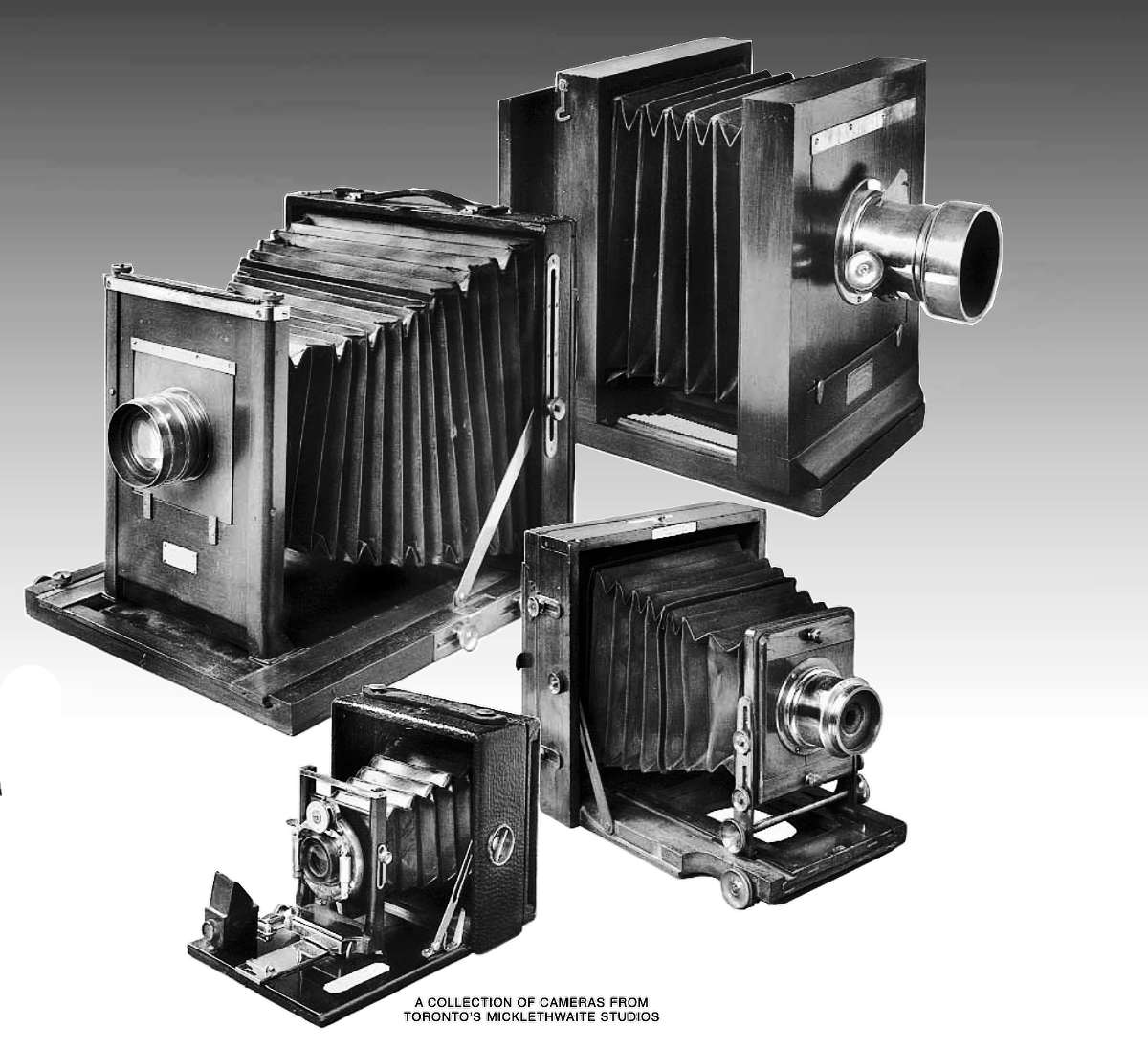
Issue 26-3 cover shot showing some of the Micklethwaite cameras

Toronto. It’s a new year and a post on an article in a new issue – issue 26 – issued under the very capable hands of editor Robert Lansdale. Both Bob and wife Marge are now deceased. Both were retired professional photographers.

Bob added a short blurb on page 2 describing these cameras and referring to the main article, Bill Belier’s column, “A Treasure From My Collection”. The cameras, initially in the late Harold McNutt collection, moved to Bill’s collection after Harold reached an advanced age.

Bill starts his column on these cameras thusly, “For almost a century, the name Micklethwaite was prominent amongst Toronto photographers. The work of this three-generation studio survives to this day in our National Archives in Ottawa, the City of Toronto Archives, private collections and other repositories too numerous to mention.

“Frank W. Micklethwaite, born  the son of a photographer in England, emigrated to Canada from Ireland in 1875 and worked briefly for the Mail newspaper in Toronto before opening his first studio at 22 Queen St. West in 1878.

“He had three sons, John, Percy and Fred, all of whom joined the family business specializing in portrait, commercial and industrial photography. The studio relocated several times… always within the downtown business district of this fast growing city.

“After Frank’s death in 1925, Fred continued to operate the studio until 1942. The last Micklethwaite to be involved was Fred’s son, Jack, who revived the business in a west-end location after returning from overseas in 1945 following the end of WW II. He engaged only in commercial and industrial photography, retiring in 1974. He died in 1983… the end of the Micklethwaite photographic era.” …

The story tells why the cameras are of historical importance and how they fell into Bill’s hands, Members read all of Bill’s story and saw the additional illustrations. Not yet a member? It’s really easy to join – see ‘Membership’ above and at right. Joining is inexpensive and you become part of the dedicated group of camera and photo collectors. Questions about membership may be emailed to member@phsc.ca.
Posted in history | Tagged , , | Comments Off on Frank’s cameras

happy new year folks (2026)

Toronto. We look forward to the New Year. In spite of the turmoil down south, America’s President  Trump did some good for us – he blessed us with a great, worldly, action oriented prime minister and provoked us to action including sourcing allies and customers in Asia and Europe; finally planning to meet our NATO commitments; and uniting our provinces with standards that are country-wide. All the best from the PHSC to our friends in Canada, the USA, and the world!

Happy New Year 2026


Posted in activities | Tagged | Comments Off on happy new year folks (2026)

a colourful lecturer …

Professor Neil Fox (Humber) and a pre-1900 Scovill and Adams Studio Camera he restored

Toronto. Bill Belier’s column “A Treasure From My Collection” in issue 26-2 addresses Neil Fox of Humber College and his hobby of restoring the massive studio cameras of the past. Also experienced in many aspects colour film photography, Neil spoke at our February 1994 meeting on old colour processes.

Bill’s article begins, “Neil Fox’s passion for the art of photography and all things photographic began as a high school student in Toronto’s North York district. Already involved as a hobbyist, it appears he had pre-determined that he would pursue a career in photography.

“He began canvassing studios in his area seeking part-time and summer employment… any type of employment as long as it was photographic and he was given an opportunity to gain experience. His sincere approach must have been convincing and he instilled such confidence in his employer that he was given wedding assignments to shoot… he was sixteen years old.

“Upon graduating from high school he enrolled in the general photographic course at the Ryerson Institute of Technology (now Ryerson Polytechnical University [year 2000 – and more recently TMU when Edgar Ryerson fell from grace]) and continued working part time assignments, gaining valuable experience in graphic arts and darkroom techniques.

“Upon leaving Ryerson he was offered a position with one of the large Toronto commercial studios, Photo Engravers Ltd., but chose to open his own business in 1971 in Scarborough’s Guildwood – a decision he never regretted.” …

Members saw more photos and read the rest of Neil’s story in the issue 26-2 pdf file on the free members-only DVD/thumb drive. Check out “Membership” above and to the right for information on joining. More questions? Email member@phsc.ca.

Posted in history | Tagged , , , , | Comments Off on a colourful lecturer …

bigger is better …

the first Promenade photograph published in The Philadelphia Photographer, March 1875 by F.L. Stuber of Bethlehem, PA

Toronto. Once the CdV size of photos ran its course, entrepreneurs used larger size carded photos to spark sales, culminating in the very large ‘promenade’ photos.

An article by Bob Wilson highlights the history of carded photos starting with the CdV. Bob begins his story as follows. “The above title introduced an article on the second page of the January 1875 issue of The Philadelphia Photographer. The demand for portraiture had been varying through the years. In the early 1860s when the cartes de visite (2 1/2 x 4”) were first introduced, the demand was quite strong.

“The wet collodion process combined with the new size reduced the cost of portrait photography, bringing it within the budget of most people. But by the mid 1860s, sales began to wane, as most people had satisfied their initial needs and the post Civil War recession had depressed the economy.

“Photographers needed a new novelty to entice customers back to their studios. To do this, in late 1866, the cabinet card (4 1/4 x 6 1/2”) was introduced to North America and this stimulated sales again.

“But cabinet cards eventually became common and with the country in the midst of the enduring “Great Depression” of the [18]70s, photographers once again were looking for something fresh.

“In late 1874, Mr I. W. Taber, working in the studio of Mr G. D. Morse in San Francisco, developed what they called the Promenade Photograph. Edward L. Wilson, editor of The Philadelphia Photographer, displayed examples of Promenade photographs at the December 2, 1874 meeting of the Photographic Society of Philadelphia, where they ‘were examined and much admired by the members’.

“Wilson appreciated the artistic possibilities of the new format (4 x 7”), and in the January 1875 issue of The Philadelphia Photographer, ran the following article: A NEW SIZE – THE PROMENADE PHOTOGRAPH [.] This is a new style, noticed in our editorial columns, designed by Mr I. W. Taber, with Mr G. D. Morse, San Francisco.” …

Members read all of this article and saw more illustrations in the issue 26-2 pdf file on the free member-only DVD/thumb drive. See above/at right to join. Address any membership queries to member@phsc.ca.

Come on out to our 2026 events  – many old photos likely available. Our first 2026 event will be the Jan 25, 2026 auction.

Posted in history | Tagged , | Comments Off on bigger is better …

on the move again …

the boys at Lisle-Kelco in 2000 after acquiring Leica and Minox

Toronto. After Leitz sold its Midland plant to the American military contractor  Hughes Aircraft (Los Angeles), Leica sales and repair in Canada bounced from one distributor to another, landing briefly at Lisle-Kelco who closed in 2003. The brief article accompanying the photo shown here stated, “In a major shake up for Leica Camera AG some eight distributorships throughout the world have changed hands.

“Feeling they should have a much better position in the market, the moves are aimed to rejuvenate interest in Leica precision quality products which defined the 35mm field during the 20th century.

“The Japanese dominate the SLR marketplace and might turn aggressively to the rangefinder segment to cause more pressure on Leica’s weakened financial condition [far more robust in 2025].

“Major changes and mergers may yet be in the future for European survival. Lisle-Kelco is already recognized for its “cadillac” line of photo products like Hasselblad, Gitzo, Broncolor, Durst and Leaf, etc.

“President Andy Petersons, delighted to add another diamond to the L-K crown, announced, ‘We are proud that the Leica product line will be part of our offerings to the photo industry. In addition, Minox, a subsidiary company of Leica, with a range of miniature cameras and 35mm compact cameras, plus a range of binoculars and other unique instruments, will also be part of our product offering.'”

An early product was the replica UR-Leica shown in a gorgeous brochure from Lisle-Kelco.  Eventually Leica departed from Canada. Teaneck, NJ is now their North American Headquarters.

Note: the post title is a riff on Willie Nelson’s iconic song “On The Road Again“.
 

Posted in history | Tagged , , , , | Comments Off on on the move again …

ghost of fairs past …

Blair Detective Camera offered by Walter Shean

Toronto. … with apologies to Dickens and his short story, “A Christmas Carol”. Our spring 2000 fair offered fodder for a photo essay in issue 26-2 of our journal. The camera at right is just one of the items offered that year.

Editor Lansdale describes it thusly: “Walter Shean displayed (at left) the 4×5 Blair Detective Camera with the front panel lowered to reveal the lens, reflex finders, and the open door at back for loading film holders. For asking price of $975 you also get a ground glass, two holders and the original instruction sheet.”

Members read and saw the photos from the article “Finds and Features at the Spring Sale …” in the issue 26-2 pdf file on the free members-only DVD/memory stick. See above/at right to join. Email questions to member@phsc.ca.

We are setting up our 2026 PHSC Events – first up is the auction on January 25, 2026. Details will be posted here a few weeks beforehand.

Posted in history | Tagged , , , | Comments Off on ghost of fairs past …