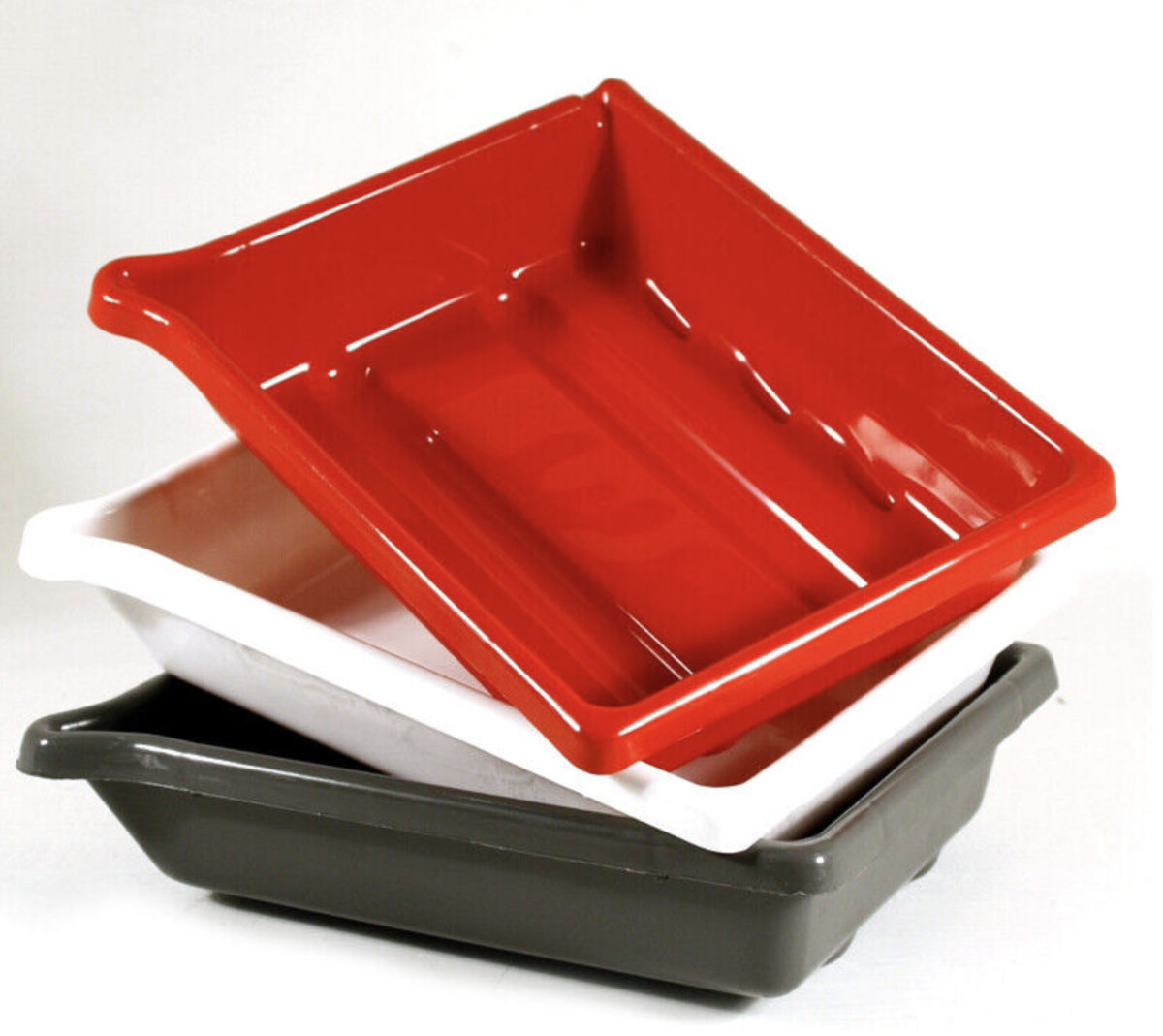
Paterson coloured plastic trays
Toronto. In the glory days of film photography anyone in the know would have or have the use of a darkroom to develop black and white prints. Common to almost all darkrooms was a trio of trays. The first held developer chemical; the second stop bath (or diluted vinegar); and the third the fixer solution.
Washing was done in a large sink under normal lighting and lots of running water to removed the fixer and the unused silver halides the fixer released from the paper. Kodak even sold a fancy siphon for use with a large tray in the sink.
As a high school scholar, the school darkroom was available (at the time, I had others develop my negatives since it was a far fussier process done with special tanks and usually in total darkness following traditional time and temperature guidelines).
Once I had my own darkroom, complete with a safelight, enlarger, paper, easel, and trays of chemicals, I could make my own prints. The trays were usually a bit larger than the paper. Too small and the paper would not fit; too big and more chemistry was needed plus a greater risk of oxidization happening. Darkrooms often had trays of various sizes to accommodate differing paper sizes. 8×10 trays seemed most common.
The trays could be plastic like those shown here courtesy of this Ebay link, hard rubber, or home-made from plywood using liners cut from very thin plastic tarp material. Regardless of size, using the same tray for the same chemistry minimized washing time and cross contamination.