a lighter shade of pale

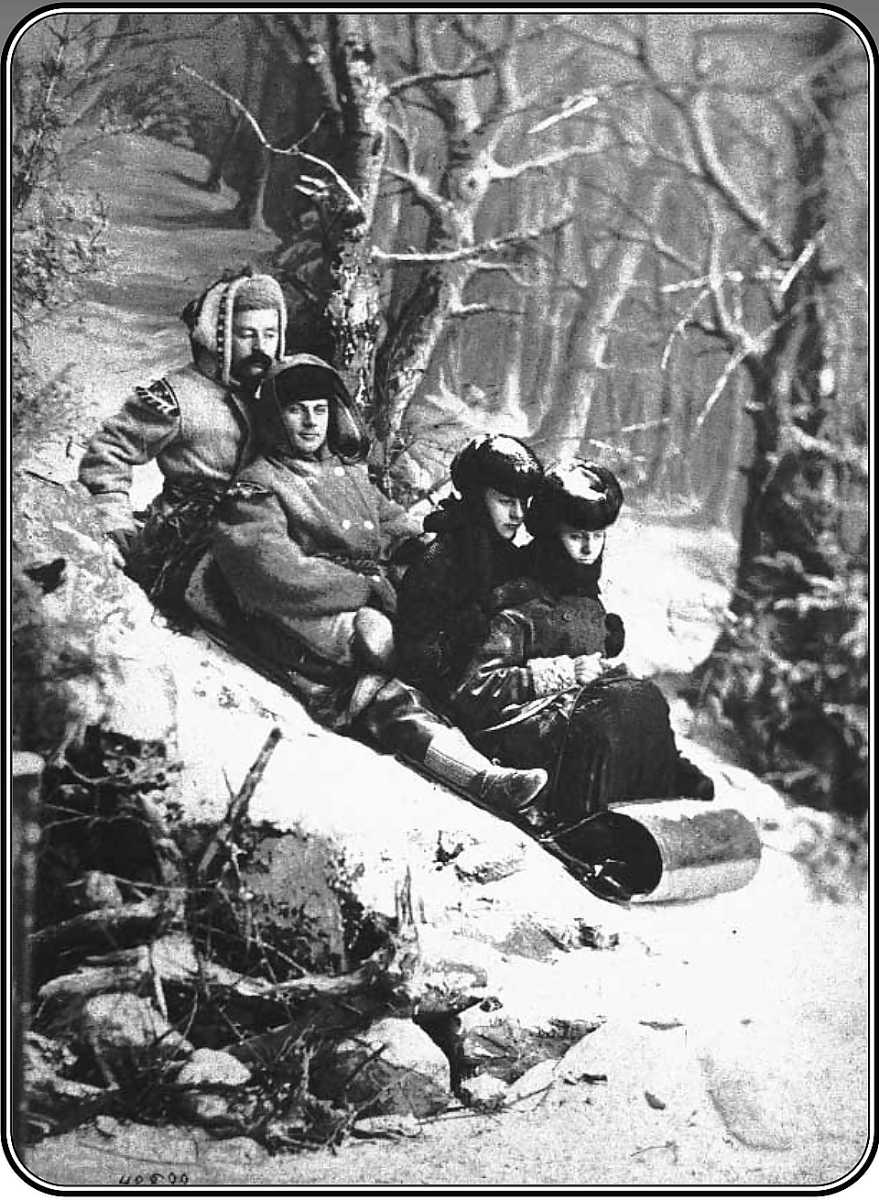
showing the effect of ‘blown highlights’ exposure? processing? fading?

Toronto. In the days of film and plates, especially those of ultra slow media, photographers struggled to get correctly exposed and developed negatives and prints. Judicious use of  lighting helped with the slow and contrasty media.

Both highlights and shadows in the print had to show some detail to be deemed properly exposed and developed. Sadly there were many cases with blown highlights or inky black shadows.

The studio cabinet card here shows the effect of blown highlights – no detail what-so-ever in the ‘whitest’ areas of the print. Under-exposed  or under-developed negatives or prints led to this situation as did fading over time.

Collectors today strive to get crisp, well exposed, well developed prints for their collection. Sometimes a less technically perfect print is accepted, especially if the content is unique: outdoors, a work scene, attractive subjects, or a famous person.

Be sure to visit our events for collectible photos, cameras, etc. Check the right side of this web site for our 2025 events as they are confirmed. A post will be pinned to page one a few weeks before the event.

The post title is a riff on Procol Harum’s  monumental song, “A Whiter Shade of Pale“.

Posted in events | Tagged , , , , | Comments Off on a lighter shade of pale

Hey! … four eyes!

a four lens camera creates a quartet of ‘identical’ portraits on one plate – photo by Bob Lansdale

Toronto. Little school kids can be unintentionally cruel. Any kid who falters or has an obvious medical issue gets an immediate ‘nick name’. For example, children who have corrective glasses are almost automatically called ‘four eyes’!

In the first decades of photography one way to over come copy issues was to use cameras with multi lenses – four or more. The cover shot for issue 21-5 shows an example of a four lens camera. I used that  image from a pdf of 21-5, adjusted in Topaz  Photo AI, Focus Magic, and Affinity Photo.

Inside the issue the photo is described as follows, “Four lens wet-plate camera owned by Les Jones is typical of the system used to produce duplicate images on one photographic plateImages are usually unrecognized as stereos.”

An article in the issue (21-5) called ” The Unnoticed Stereo” was written by Bob  Lansdale,  assisted by Bob Wilson. It begins, “This story started to unfold when Irwin Reichstein of Ottawa submitted a Xerox of two cartes-de-visite by George F. Maitland. Both photos looked identical but one carried the stamp of Maitland ‘s St. Catherines Gallery (1868-1874) while the other indicated his location as Buffalo, New York. It appears Maitland followed the style of other Canadian artists by establishing a studio in the more active market of America’s largest inland port.

“The photos show the grave of William Maitland with a lady (inscribed as “Minnie) sitting close by. The picture had either allegorical interpretation or a close family connection.

“I was quite surprised when Bob Wilson, free-viewing the rough Xerox  declared the pictures to be a stereo pair. I‘m always amazed how some individuals can dislocate their eyeballs in order tmerge two separate photos into one stereo image. Mr. Maitland must have photographed the scene with a stereo camera then split the negatives to each of his galleries to provide cards for the collector market.”

Read the fully illustrated article from 21-5 (and the rest of this and other issues) on the free members-only DVD. Joining the PHSC is easy – see the menu item MEMBERSHIP above (cheques, etc) or at right (credit cards and PayPal). Please indicate whether the membership is NEW or RENEWAL. Any questions can be answered by Lilianne. Her email is member@phsc.ca.

Posted in history | Tagged , , , | Comments Off on Hey! … four eyes!

did ja ever hear of Vittorio Sella?

Himalayas (early 1900s)
by Vittorio Sella

Toronto. Our president, Clint Hryhorijiw, sent me an email a week or so back saying, “Got this cool thing from Cindy [Motzenbecker]”, along with a link to a BBC article and photos.

Turns out Vittorio Sella was a European photographer famous for photographing the Himalayas over a century ago. The article titled, “Frozen in time: Rare early images of the Himalayas from Italian pioneer” by Sudha G Tilak in Delhi, India, discusses and illustrates the  story of Sella and his accomplishment, now on exhibit in Delhi.

Tilak begins his article, “Vittorio Sella was a pioneering Italian photographer whose work at the turn of the 20th Century shaped both mountain photography and mountaineering history. His rare images of the Himalayas remain some of the most iconic ever captured.

“A new ongoing show in the Indian capital, Delhi, called Vittorio Sella: Photographer in the Himalaya brings to life the breathtaking grandeur of the Himalayas through his lens. …”

Click on the article title above to read all the story and see a selection of photographs by Sella.

Posted in history | Tagged , , | Comments Off on did ja ever hear of Vittorio Sella?

1995 was not nice to us in the big smoke

Cavouk at his studio on Bloor Street in the Colonnade c1974 – courtesy of Toronto Star

Toronto. In 1995 we lost three from the photographic community: a collector, a store owner, and a professional photographer. The ‘in memoriam’ for Harold McNutt (Bill  Belier) and Erik Olesen (Ev Roseborough) are already posted. The third loss that year was Photographer Artin Cavoukian (Ev Roseborough).

While the writer of Artin’s notice remains anonymous, it is most likely our modest editor of the day who tried to avoid having too many articles attributed to himself. As to ‘Cavouk’ as he was known, Ev writes, “Operating from an extremely small studio in the Colonnades in mid-Toronto, Artin Cavoukian, otherwise known as Cavouk. practised his art following aexodus from Egypt with his wife and family in 1958.

“The tiny studio, resplendent with finfurniture and drapery, whicalso becamhis properties, displayed magnificent colour prints of the Queen, PearsonGandhi, de Gaulle and other dignitariesand citizens, all of which bore evidence of his artistic and technical expertise.

“HiLinhof, brought from Egypt, stoosignificantly in a corner, draped in itfocussing clothA pioneer in colour portraiture, hopened the first colour lab in the MiddlEast in 1953 but left everything behind in the flight to Canada.

His wife and assistant, Lucie. died athe age of 72 on October 26, 1995, twelve hours  before her husband, who was 80.

Posted in history, Uncategorized | Tagged , , | Comments Off on 1995 was not nice to us in the big smoke

Queen St King

Erik Olesen 1942 – 1995

Toronto. I remember Erik since my user camera at the time was a Leica M4. As a Leic a rep for Walter Carveth, I often saw him in camera shops buying used cameras in good condition. Erik (briefly a member of the PHSC) attended our fairs both as a buyer and a table holder.

The photo at left is from the Journal, upscaled in Topaz Photo AI and adjusted with both Topaz AI and Focus Magic.

In 1979, Erik opened his own shop, Queen Street Camera Exchange, saying it was time Toronto had a true camera exchange store once again. I first visited the recently opened shop in May of that year.

A few years after the tremendously successful opening, the shop expanded to encompass a facility just east of the store. Later, it began to struggle, and  later still disappeared.  Erik opened another store called Hayden Camera.

Erik himself was in poor shape after the Queen Street facility closed and died a short time later. Ev wrote a brief memoriam for issue 21-4 as follows, “Always to be seen at our Fairs with interesting items, Erik Olesen was well known across Canada to both amateur and professional photographers. Born in Bowmanville, ON, he became associatewith Walter Carveth when the Leica was introduced [to Carveth], later becoming Sales Managefor Leitz.

Seeing a wider market, he opened thwell known Queen Street Camera Exchange, a professional and amateur supply house, and later, Hayden Camera. There was always a large historicadisplay in addition to a vast Leica case and the latest items on the market, about which he displayed encyclopedic knowledge.

Erik died at the age of 53, leaving hiwife, Kelly, and their children, ColleenPhilip and Erin.

Posted in history | Tagged , , , | Comments Off on Queen St King

P is for permanent

artisan Robert Aguilar courtesy of the Guardian UK

Toronto. Past president of the PHSC, sports photographer, and author, Les Jones,  dropped me an email the other day. As an ex-pat from England, Les enjoys reading British papers.

A recent article in the Guardian by titled “‘Prints don’t lie’: a platinum printer’s craft – in pictures” captured his eye. The article’s preview says, “Photographer Christopher Thomond joins artisan printer Robert Aguilar to find out how he creates platinum palladium prints as he makes one of Alford Gardner, the Windrush pioneer who died in 2024, aged 98″.

Collectors of vintage prints as well as folks (a great many) still using film will enjoy the story of how one can make platinum photographic paper since the store bought variety hasn’t been around for decades now.

Posted in history | Tagged , , , , | Comments Off on P is for permanent

member number 5

Harol McNutt 1907 – 1995

Toronto. In the late 1960s/early 1970s, camera collecting and photo history became the rage. Societies were being formed, fairs held, books written, etc. Our society and its Toronto branch were founded in the fall of 1974. Amongst other things members were needed. Harold was one of the founding members and the first treasurer. His image at left was upscaled and cleaned up with Topaz AI and Focus Magic from a small image in the journal.

I lived in Montreal at the time. When I joined the PHSC in 1975, it had less than 100 members. My introduction to Harold came when I was asked to audit the Society books. The bills were very few and well organized. The whole task took about an hour. Harold once offered me a Leica and four lenses plus some filters, etc. in a camera case for $100. I declined at the time, only to catch the collecting bug a few years later and buy similar items for many times more.

On his death, the late Bill Belier wrote the following ‘in memoriam’ to Harold in issue 21-4: “Harold McNutt, one of the founding members of the P.H.S.C. (membership No. 5) died peacefully in Toronto on Novembe12th [1995]. in his 89th year. It would be almost impossible to attempt to chronicle Harold‘s contributions and accomplishments as member of our Society.

“We are fortunateindeed. that Bob Lansdale intervieweHarold only six years ago [1990] and produced an excellent article entitled ‘Portrait of a Collector’ [issue 15-2] in which Harold reminisces about his early days in Nova Scotia, his career with Imperial Oil, and his fascination with photography in generaand with cameras in particular. 

“He was born in Truro N.S. and prioto joining Imperial Oil, about 1927, hataught in one room school houses in remote Nova Scotia fishing ports. Hicareer with Imperial Oil, not surprisingly, would lead him into management. Harolwas very proud of having served the war effort by supervising the highly secreloading of Allied tankers at Dartmouth that were scheduled to sail with thAtlantic convoys to Britain during WW2.

By 1948 he was transferred to ImperialToronto operation and was instrumental in encouraging the Company, as early as the mid 1950s, to enter the ‘computer age’ when electronic record keeping was still in its infancy. After 42 years service with Imperial, Harold retired in 1970. Harold will be remembered as one of our most avid collectors of photographica and for his painstaking restoration projects.

“Harold had other pursuits. Hwas an avid gardener and took pride in hiflower gardens and shrubs. He was aaward winning amateur still-life painter, he travelled extensively after retirement and produced slide travelogue programs for the enjoyment of shut-ins. He read extensively and enjoyed handymaprojects around his home. Harold simpldid not  have the time to grow old.

“Although he continued to reside in Toronto after retirement he never lostouch with Nova Scotia. The McNuttwere frequent visitors to the Maritimprovinces and were justly proud of their heritage.

“Those of us who knew Harold well are richer for the experience. It was my privilege to be numbered amongst hifriends. He will be missed, but lonrememberedHarold is survived by his wife. Hildahis daughter Barbara, and his two grandchildren, Allison and David Booz.”

Posted in history | Tagged , , | Comments Off on member number 5

lets go to the parade …

a 1935 parade – cover photo
issue 21-4 (Jan 1996)

Toronto. Ev Roseborough used this photograph as his cover shot on issue 21-4. Unfortunately he makes no other mention of the photograph in this issue ( eg. photographer (himself?), location, situation, etc.).

Such a puzzle is common to Photograph Collectors if the photograph’s subject is not recognized as famous, there is no studio or photographer identification,  or no one has chosen to write details on the photo’s back.

The details of this particular photo are lost in the mists of time (unless a reader recognizes the scene or impact of the date). Speaking of a date, be sure to visit our events this year – you may find something interesting!

Once confirmed, the dates and venues are posted to the right under PHSC EVENTS and a dedicated post will go up as the date grows closer. Meantime, enjoy the snow 🙂


Posted in activities | Tagged , , | Comments Off on lets go to the parade …

a naughty portrait …

Portrait of Mary Ellen Crysler, albumen print (tinted)- original print is 45 x 36cm. William Notman & Son Studio, 1895

Toronto. We have the Black Creek Pioneer Village here while similar attractions exist elsewhere in our province like the village near Morrisburg.

So what has this to do with photography? Well, some works of photographer and studio owner, William Notman, (famous around Montreal and beyond) are housed in the Upper Canada Village (UCV). The UCV with its archives has some photographic items, like the one at left of Ms Crysler.

In issue 21-4, Ev published an article by Jack Schecter titled, “Upper Canada Village Reference Library and Archives Photograph Collection”. Jack begins his article, “The Upper Canada Village Reference library and Archives near Morrisburg, Ont. is a little-known resource centre which contains modern and antiquarian books. manuscripts and photographs from the 19th and 20th century.

“It is part of Upper Canada Village, a living historsite containing about 40 buildings representing a typical small ruracommunity of eastern Ontario in th1860’s. The library is used by our staff of costumed interpreters to research primarand secondary sources to answequestions from the public and ensure absolute authenticity on our site.

“The inquiries received by the library are varied- what goods were sold in thgeneral store, what type of clothing did women wear in the 1860’s, details on the Battle of Crysler’s Farm and many others.

“The library is also used by historicaresearchers. museum workers, authors, students. genealogists and otherinterested in the social and economihistory of eastern Ontario.

“One of thdistinctive sights in the library is ainterpreter in historic costume with researcher in modern clothing examinindocuments or using the library computer.

To read the rest of this article and more, go to the member-free DVD. The issue 21-4 pdf has this and the other articles from January 1996. To join, see the menu item ‘MEMBERSHIP’ above (cheque) and at right (credit card and PayPal). Email Lilianne (member@phsc.ca) if you have questions. Please indicate if your membership is NEW or a RENEWAL. Thanks.

Posted in activities | Tagged , , , | Comments Off on a naughty portrait …

dog days

Dog days of summer in Southern Ontario c1985

Toronto. One logical category for photo collectors is pets. Another is children.

The photo at left is likely too modern for most collectors but it illustrates the categories nicely.

We all know about the dog days of summer when it is too warm to be very active. The little girl at left with her dog is sitting in the shade, carefully tying her laces.

Those wishing to add to their collections, or other curious folk, should visit our events this year. As dates and venues are firmed up, the event is listed here to the right under “PHSC EVENTS”. As the date of each event approaches, a post will be pinned to page one of this site.

Come out and enjoy the fun – usually we have free parking and good food for all. Admission is modest (or even free for some events).

Posted in activities | Tagged , , | Comments Off on dog days