PUTSing it to plastic …

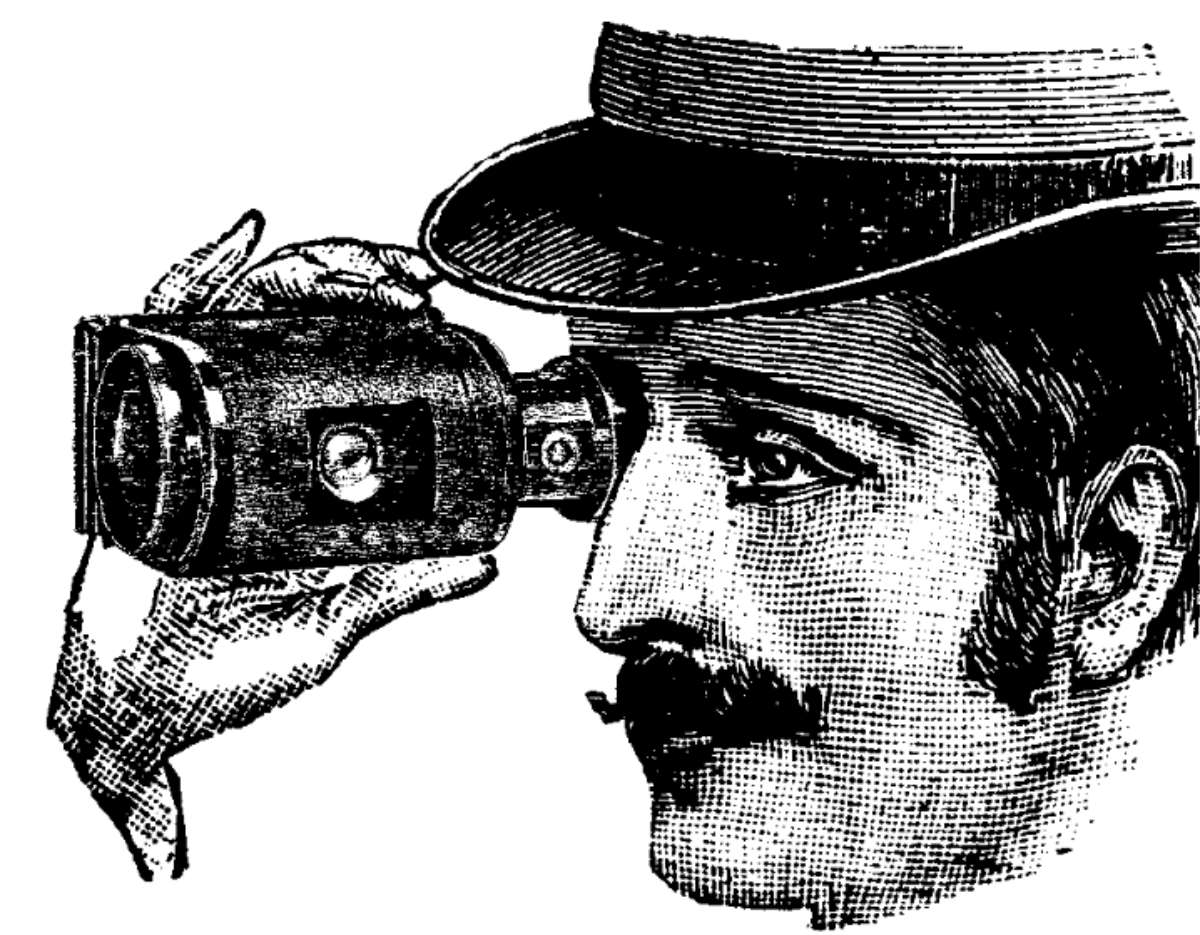
very early Leitz Leica ad from a CD compilation by Erwin Puts

Toronto. Early on photography became a main-stay of advertisements, brochures, and manuals.  As camera and image collecting interest grew, so did interest in photographic history, including that of camera manufacturers.

Around the same time, the CD replaced the old vinyl records with a digital format and a longer play time. Modern homes had CD players in spite of discerning ears hearing their harsher rendering of music compared to the analogue vinyl sound.

People discovered the CD could be used to record text and images as well as music. Adobe’s PDF file format even allowed exact copies of a document’s layout including text and images. In the late 1990s Erwin Puts compiled a selection of Leitz documents, all carefully scanned and recorded on a CD titled, “LEICA History 1925 – 1965″. 

Once used as backup media, the CD/DVD format is passing into history in the face of streaming services, thumb drives, and other solid state devices. In fact, many modern computers no longer have a built in CD/DVD reader/writer.

In issue 24-3 I reviewed the CD using a personal copy. The review begins, “This CD is the first of a several planned to provide inexpensive access to the many historical documents produced by various European camera manufactures.

“Author. The material was selected and assembled by Erwin Puts, a well-known Leica enthusiast and photographer. You can learn more about Erwin and his opinions on the various Leica reference books at http://www.imx.nl/photosite/leica/leica-home.html.

“Source. Erwin researched the Leitz Wetzlar archives held by Leica Camera in Solms [once in the nearby Wetzlar Leitz plant] and selected documents covering the Leica and related accessories. The selection is a mix of catalogues, brochures, instruction books and other materials published over the years 1901 to 1972. Most of the papers are marketing materials.” …

Members could read the rest of my ‘prose’ by viewing the pdf file for issue 24-3 on the free members-only DVD. Joining the PHSC is a snap (and cheap) – see Membership above or at right. Direct any questions to Lilianne at member@phsc.ca.

Posted in history | Tagged , , , | Comments Off on PUTSing it to plastic …

distant suns

it’s full of stars – 2001:A Space Odyssey

Toronto. For most of photographic history, photos were taken from about one metre to out as far as the eye could see.

Double bellows extensions and other special accessories allowed photos of small objects to be easily taken with the camera lens able to focus from about 1 metre to 1:1 or life size. The early Nikon Coolpix digital cameras were just right for use with a microscope.

From early on, photography was also used to capture photos through microscopes and telescopes. As a kid, I remember looking at the night sky and seeing the milky way and the northern constellations. As urbanization grew, so did light pollution and we lost the ability to see many stars in the night sky.

Telescopes, like the Hubble, were shot up in space beyond the atmosphere and light pollution, recording the stars while circling earth.

Earth-bound telescopes were built high on remote mountain tops where the atmosphere was thin and the light pollution was small. The most recent huge earth-bound telescope opened this year in Chile – famous for its observatories a top mountains and far from light pollution.

Called the Vera C Rubin Observatory, the galaxy images it will capture  are to be sent to many universities – including the University of Toronto here. And the streamed images are all courtesy of “the largest digital camera ever made”. Now-a-days, when we think of photography, we must think big – very very big!

Meantime back here on earth, drop in on our 2025 events and pick up something just right for your earth-bound collection. Our next event is the annual summer trunk sale next month (July 13th) come rain or shine!

NB. This post title is from an application called Distant Suns. I bought a copy decades ago to run on an Amiga. It is still available today – for modern smart phones at least.

Posted in events | Tagged , , , , , , , | Comments Off on distant suns

about camera collecting

a typical ‘retro’ digital camera design – the ‘half-frame’ X Half Fujifilm digital camera

Toronto. Camera collectors look at the current values and think, “I wish I bought that model years ago”. When I started to collect back in the early 1970s, many old cameras turned up at relatively cheap asking prices.

A bag of 1930s Leica lenses, camera body, and a few accessories went for about $100. The old cameras were of little practical value since newer and far better models were available for serious work. Today a 1930s Leica body or a single lens would cost much more – especially the rarer variations.

As to old Leicas, shutters with ball bearings or using red curtain material suppled by Kodak, often turned up in the early days of our society. The now rare cased photos and albumen prints glued to card stock were  often offered at our events for very modest amounts.

Around the turn of this century, a shift began towards digital technology. When the revolution got in full swing, no one wanted the older film cameras –  or even older digital cameras.

Many film cameras had been turned over so often that they were priced out of reach or even the  interest of beginning collectors. Once digital took hold and became the norm, many film cameras and lenses plunged in value. Only the higher end gear seemed to hold up. Today some die-hard niche players are active in using the old film gear to get the ambiance of analogue technology.

Illustrated here is an example of the trend to “retro” look cameras with digital functionality at reasonable prices. Perhaps we should consider buying now so history doesn’t repeat itself …

Of course if you desire older used gear (or accessories, or photos), you should visit our 2025 events like the famous mid-summer 2025 trunk sale on July 13th, 2025. Just saying.

Posted in events | Tagged , , , | Comments Off on about camera collecting

… meanwhile, back east …

snow scene c1878

Toronto. For over a century, Montreal was our largest city per capital. And the most well known photographic studio in Montreal was operated by Notman with branches in Ontario and down the American east coast.

The studio photograph at left is the cover shot of issue 24-3 and is described as, “Appropriate for the season our cover depicts a winter scene as constructed in the studios of Notman & Sandham of Montreal circa 1878-80.

‘The same background can be seen in William Notman – The Stamp of a Studio, page 119 showing Rifle Brigade men in a winter set-up.

“The photograph could have been stripped into composite photos for sports clubs or used as part of the wide decorative border to such finished groups. Photo from the collection of Robert G. Wilson”

Posted in history | Tagged , , , | Comments Off on … meanwhile, back east …

mythography

Plain Truth …

Toronto. When I was a kid, I spent a few weeks in the bush with my dad’s brother. My uncle mentioned his horse was skittish around loud noises so he returned to Ontario. “Like gunshots?”, I naively asked. My uncle just stared at me saying there were few guns out west to frighten his horse… Mis-led by Hollywood again!

Reproduced in issue 24-2, is an article by Kirstin Evenden, Art Curator, Glenbow Museum. The article discusses an exhibit of the time called “Plain Truth” which featured selected works by Western Canadian photographers and film makers to off-set the “myths” created by Hollywood to spice up Hollywood movies for better entertainment value.

Kirsten begins, “When these questions are uttered today [fall, 1998], certain ideals and images come to mind. Perhaps the idea of living on the Prairies evokes an image of a sea of golden prairie wheat.

“Or maybe the concept of western Canada brings to mind the strength and vastness of the Rocky Mountains. The visual images and accompanying “myths” are not new, for many of these ideas are rooted in the early history of the Canadian West.

Plain Truth delves into the creation of these “myths” by surveying the work of photographers and filmmakers who represented the Canadian West in its early years. It analyzes how our perception (and misconception) of western Canada have been linked to the circulation of myths promoted through Hollywood movies, photography, and imagery related to prairie settlement and emigration since the mid-19th century.

“Several studio photographers in western Canada made films in and about “The West”, some working with Disney Studios and other Hollywood filmmakers to create an image of the West that still persists today.” …

Image collectors may or may not have a clearer view of our western provinces. Our 2025 events give ample opportunity to add to photographic collections – images, hardware, or history. Next up is our famous mid summer trunk sale on July 13th (rain or shine).

Oh, and to read the rest of the above “Western Report from Calgary”, just view the pdf file for issue 24-2 on the free members-only DVD (or thumb drive). See above or at right to join (it’s cheap but worth it). Email Lilianne at member@phsc.ca if you have a question.

Posted in history | Tagged , , , , , , | Comments Off on mythography

THE FRENCH-CANADIAN TRAPPER

Ambrotype of a “French-Canadian Trapper”. Believed to be a copy of the centre part of a larger plate.

Toronto. It appears to me that many image collectors enjoy their finds briefly, then offer them at a bit higher price to the next collector. Some, like the owner of this image, and our own editor of the day, Bob Lansdale,  enjoy researching an image and discovering the rich history behind the photograph.

Bob speaks about this particular image in his article, “The French-Canadian Trapper” which begins, “When an early image comes on the market that is deemed to be a French-Canadian trapper, it certainly will pique the interest of Canadian collectors. Such was the case when this 1/9th plate ambrotype was offered by John and Jelena McWilliams of One Nation Historical Antiques Auction in California. PHSC member, Howard Tanenbaum of Toronto outbid others to bring the image to Canada adding to his considerable collection.

“The image is believed by McWilliam to be a copy of a much larger daguerreotype (possibly a 1/6th plate) according to his experienced judgement.

“The central portion of the photograph is sharp while beyond that the image becomes softer, as was the pattern of early portrait lenses.” …

Members can read all of Bob’s investigative article in the issue 24-2 pdf file on the free members-only DVD/thumb drive. Joining is easy – see Membership above or to the right. Email Lilianne at member@phsc.ca if you have any questions.

And be sure to attend our 2025 events. You may not see this particular Ambrotype offered but you will see many items to augment your collection. Next up is our annual Trunk Sale on July 13th – rain or shine.

Posted in history | Tagged , , , , | Comments Off on THE FRENCH-CANADIAN TRAPPER

on the shoulders of others

Ontario, Western Canada, Photographers list

Toronto. The thing that separates us from all other species on this old ball of dirt is … learning. Humans learn from their ancestors and this learning allows us to extend knowledge, generation after generation.

We photographic collectors are very aware of this capability as we see how the art has improved over the years.

In issue 24-2 we have a book review by Stan White of two books researched, and written  by Glen C. Phillips. The books list Ontario and Western Canada photographers early last century and the century before (Western Canada). The books are published by a small publishing house (Iron Gate Publishing) in London, Ontario (later in Sarnia).

The Internet Archive has the book, but reserves viewing for members. The books are often in local libraries as they are also useful for genealogical research. They are a jumping off point for image collectors and photo history fans wishing to extend their knowledge and understanding of the art or their collection.

Posted in history | Tagged , | Comments Off on on the shoulders of others

remembering a feisty member

Robert David McMann 1938 – 1998

Toronto. In 1990, Bob McMann joined the PHSC and became its authority on Nikon history and products. Three years later Bob joined the PHSC Executive as Programme Director and then two years later as 2nd VP. Long before computers became common-place, he put his own computer enthusiasm to good use doing preliminary investigation of the nascent internet and web technology.

Unfortunately, Bob became ill and a year or so later he succumbed to his condition, and died in June, 1998.

He is remembered with an article in issue 24-2 of the journal. “With sadness we note the passing of member Robert McMann on June 9th, 1998 after a lengthy illness in Toronto’s Riverdale Hospital. Bob was a well-respected technician in the laboratories at the Faculty of Medicine, University of Toronto, where he had worked for 27 years.

“Bob joined the PHSC in 1990, bringing with him his extensive knowledge of the Nikon Company and its famous Nikon cameras. At the June 1992 Toronto meeting, Bob joined forces with Larry Frank from Nikon to present a Nikon evening. Bob covered the Nikon SLR evolution, and the history of the famous Nikon F, the camera that opened the door to North America for professional quality Japanese cameras.

“His second interest was personal computers. This interest prompted Bob to give constant voice to ways the society could use computers to further its objectives.

“On May 1, 1993, Bob joined the executive of the PHSC as Program Director. After two years of organizing a rich and diverse monthly speaker program, Bob moved on to the 2nd VP position in the society. In that capacity, he performed the preliminary investigations, which supported and encouraged the society to join the wired age and implement its own web page.

“Bob did not stand for re-election last spring [1997] in light of his poor health. His enthusiasm and active participation in the society and at the Faculty of Medicine laboratory will be missed by all.”

Posted in activities | Tagged | Comments Off on remembering a feisty member

postcards from photographs

Victorian times on Mackinac Island, Michigan

Toronto. The photograph at left is taken from a postcard made from a photograph by W H Gardiner. It is used as the cover shot for issue  24-2. The image introduces a lengthy illustrated article by a lady who once summered on the Michigan island.

Editor Lansdale adds this comment about the photo, “Some 3000 glass negatives by Canadian born William Henry Gardiner are now preserved by the Mackinac State Historic Parks at Mackinac Island, Michigan. See page 8 for the story of this 1890s photograph, now reproduced as a postcard emulating the photographer’s hand-tinted prints.”

At one time it was easy to cross back and forth between the States and Canada. The States, having a far bigger population was a magnet for Canadians who were prospering but wanted to have a greater market for their art/products.

Ms Lisa Dziabis Calache titles her article (© 1998), “William Henry Gardiner (1861–1935); An Early Canadian/American Photographer”.

She begins the article with this brief précis, “William Henry Gardiner was an early Canadian/American photographer whose career spanned half a century. On occasion, his studio portraits and hand coloured photographs are still found in both Canada and the United States. To date nothing has been written about his life and career, but his work certainly demonstrates a talent worthy of investigation and recognition. Gardiner’s portraits capture unspoken qualities of the individuals and times while his hand coloured photographs are remarkably beautiful, being similar in style to the work of Wallace Nutting who specialized in New England genre scenes which have become collector’s favourites.”

Members read this article and more in the pdf file for issue 24-2 on the free members-only DVD/thumb drive. See above or at right to join/renew. Email any questions to Lilianne at member@phsc.ca.

Posted in history | Tagged , , , | Comments Off on postcards from photographs

Dr Stephen Shohet 1934 – 2024

Dr Shohet in another of his pastimes (besides antique cameras)

Toronto. We at the PHSC have always welcomed all folks, world-wide. While most members are here in Canada, there is a contingent of American and other international members.

Stephen was one of the latter, hailing from San Francisco. I received a note from Mike Otto the other day about the loss of our San Francisco member. Mike is handling Dr Shohet’s estate (photography portion).

In part Dr Shohet’s obituary states, “…  In 1971 he moved the family to San Francisco where he served as Chief of Hematology at UCSF [University of California at San Francisco], continuing his studies of red cell structure and biochemistry, and teaching and mentoring a generation of medical students and hematology fellows until his retirement in 2003. …”

Both the photo and obituary are courtesy of the local Newspaper, the San Francisco Chronicle.

Posted in activities-other | Tagged , , | Comments Off on Dr Stephen Shohet 1934 – 2024