B&L BALTAR f/2.3 50mm

Toronto. The Leica was marketed in 1925, catching Zeiss off guard. It responded in 1932 with the Zeiss-Ikon Contax. It had to better the Leica in every way possible: faster lenses, vertical shutter (faster curtains), metal shutter, longer rangefinder base, wider range of lenses (Leica had interchangeable lenses and a rangefinder by then), and so on. Unfortunately it was more expensive to make and the metal shutter while seemingly better, was its achilles heel over time. The brass in the shutter strips crystallized while the enclosed silk ribbon wore out causing the shutter to drag, Details of Zeiss are shown in the Zeiss and Photography book by Larry Gubas, and in the publications of Zeiss Historica Society.

In the 1920s, the head of Zeiss optics, Willy Merté, designed the world famous f/2, 50mm  Biotar. I saw one in the late 1950s on an Exakta. For that camera, it was an f/2, 58mm design that unlike the kine and rangefinder versions may have needed the longer focal length or even a slightly modified retrofocus design to accommodate the SLR’s mirror. The non mirror cameras focussed infinity closer (distance from the diaphragm  to film-plane) and had no need to clear the mirror so the original double Gauss design worked without difficulty.

On September 7th, 1928, the original design (100mm focal length in two versions, a 7 element and a 6 element) was submitted to the USPO and patent 1786916 was approved and issued on December 30, 1930. Under the Zeiss licensing process, the Bausch and Lomb BALTAR was manufactured in Rochester using that patent. The lenses came in various focal lengths for 35mm cine cameras used by Hollywood for major motion pictures. My version of the BALTAR has coated lens elements indicating it was made post -war (coatings were not readily available until after 1945). LED reflections suggest that it is the seven element version.

Posted in lens | Tagged , , , , | Comments Off on B&L BALTAR f/2.3 50mm

rapid rectilinear lens redux

BECK SYMMETRICAL LENS

Toronto. Turns out the choice of glass plus the lens design makes a rapid rectilinear! Both the two wide angles lenses mentioned the other day predate the release of the Rapid Rectilinear (or Aplanat in Germany). R & J Beck (earlier Smith, Beck and Beck  and later just plain Beck) was a well known British optical house which designed, manufactured and sold microscopes as well as camera lenses. Check Wikipedia entry here. Check camera-wiki site here.

The lens I have is a brass BECK SYMMETRICAL lens, made around 1900, and a popular rapid rectilinear design often found on British cameras of the period (usually Ensign or Thornton-Pickard models). The date of manufacture is a bit vague at best. My lens is about a 10 inch focal length with an aperture from f/8 to f/45.


Posted in lens | Tagged , , , , , , | Comments Off on rapid rectilinear lens redux

need more cameras in your collection?

Ohio Camera Swap

Toronto.  Like they say, “you can never have too many …”. If you ignore the “orange tornado” in DC, the folks in Ohio have two adjacent shows for your consideration.

The OCCS (Ohio Camera Collectors Society) show, and Igor’s “Cleveland Camera Collectors Show” are being held on Saturday September 8th and Sunday September 9th in Ohio.

Click here for all the details. For some reason both images are lost in the browser view. One is the OCCS logo (upper left here) and if you click on the logo you will see Igor’s photo – just saying. The shows are in two separate cities. Drop in on the Cincinnati show Saturday and then the Cleveland show on the way home Sunday.

Posted in fair | Tagged , , | Comments Off on need more cameras in your collection?

rapid rectilinear lens design

Rapid Rectilinear lens design

Toronto.After the announcement of photography early in 1839, there was a flurry of competing lens designs across Europe, each design trying to better the resolution and error correction qualities of the other.

In 1866, two Germans, one an immigrant to England (Dallmeyer) and the other in Germany (Steinheil) independently came up with the idea of using two couplets centred about a diaphragm. Dallmeyer called his idea a Rapid Rectilinear lens while Steinheil called his slightly earlier design (literally days earlier) an Aplanat. Dallmeyer patented in Britain an earlier lens as a Wide-Angle Rectilinear design. It was patented a few years later in America (USPO).  It quickly became apparent to Dallmeyer that a slight change would improve his lens and so the Rapid Rectilinear design was born. Continue reading

Posted in history, lens | Tagged , , , , , , | Comments Off on rapid rectilinear lens design

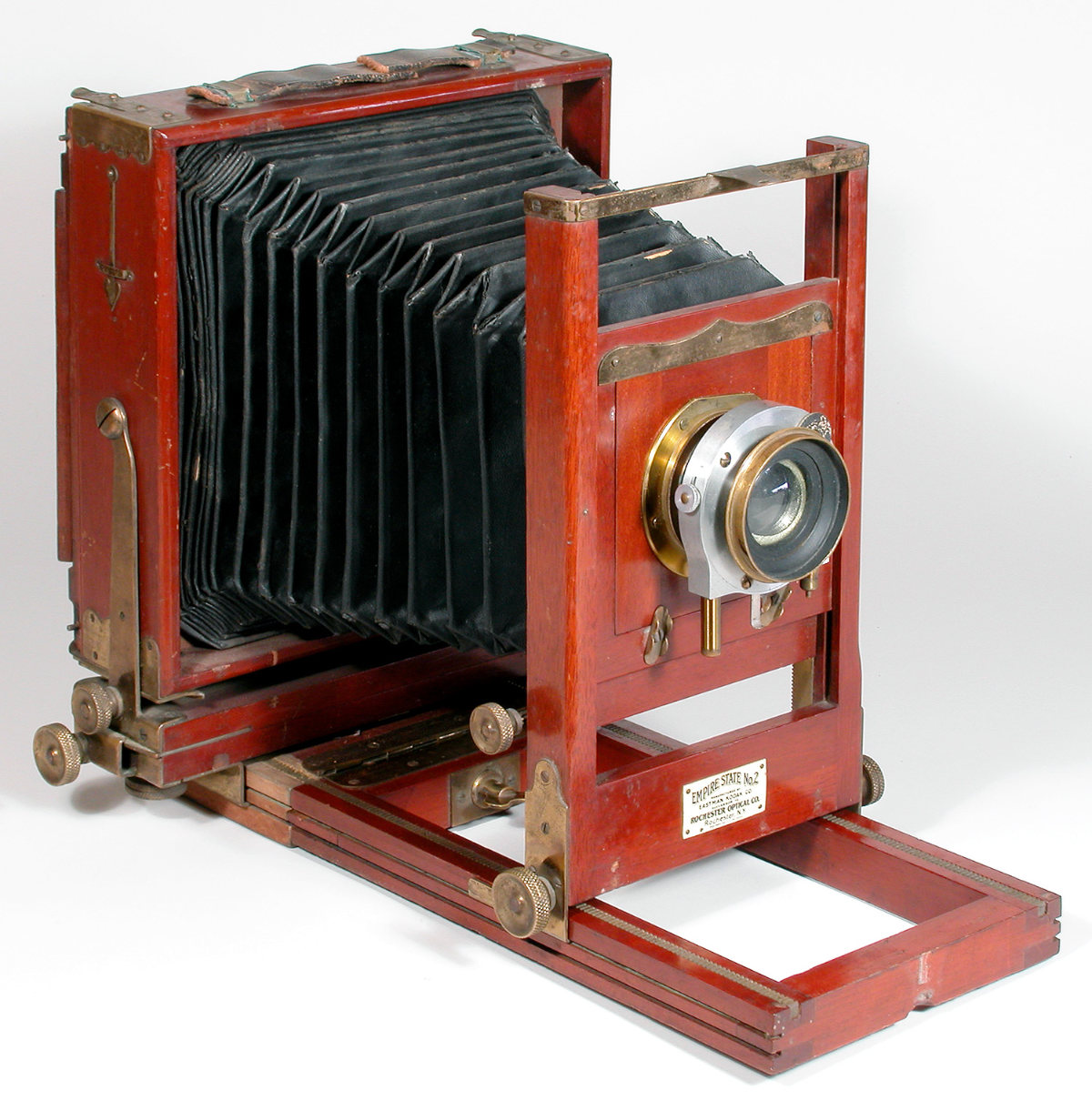
Empire State View Camera c1910

Empire State Camera
courtesy of piercevaubel web site

Toronto. Around 1960, I would drive down to Toronto on a Saturday and browse down Yonge Street above and below Wellesley. One one such trip, I discovered and bought an old view camera called an Empire State. It was in an old suitcase but came without a lens or shutter.

Years later in Dorval, a manager in accounting supplies saw me with some old camera brochures and offered to give me two old lenses he had. The next day he dropped by with the pair – including an old lens fitted in a UNICUM shutter and just the right age and focal length for my full plate Empire State camera.

I made a lens board and viola! I had a workable camera. At our June 1977 picnic at Pioneer Village in Toronto I used the combination to take this picture – it is from Photographic Canadiana 3-3, page 15. The journal printing was rather crude in those days with poor resolution and half tones. I used a bleach on the submitted photo, which was much better quality, to whiten the post tops. I had fitted one of the the camera film holders with an adapter to take 4×5 cut film to take photographs. Continue reading

Posted in camera | Tagged , , , | Comments Off on Empire State View Camera c1910

sprocket rocket

Sprocket Rocket

Toronto. A century ago the panorama print was popular. Cameras like the Cirkut models could turn about the lens nodal point while affixed to a tripod by using gears and a spring wound motor.

This format is common place today. Most digital cameras and smart phones can create an auto-stitched panorama – you slowly rotate the device manually from side to side or top to bottom.

Earlier versions of programs like Photoshop could stitch together film camera sequential shots with some over lapping details. A very few cameras were made with the stretched aspect ratio common to all modest panoramas.

The Sprocket Rocket is the latest model offered by the Lomography organization. It is based on a simple box camera design using 35mm film. A number of frames (2 to 3) are used to create the stretched aspect ratio seen below. The vignetting and sprocket holes just add interest to the print.

Posted in camera | Tagged , , , , , | Comments Off on sprocket rocket

brush and comb

Part of a B&L 20 inch telephoto lens

Toronto. Christmas, 1980 was rapidly approaching with its usual challenges as to suitable gifts. I said to my wife that I had a great suggestion: a 20 inch lens for my Leica. Sure enough that Christmas I was the proud owner of a Bausch and Lomb 20 inch telephoto lens complete with a Kilfitt mirror box! The lens ensemble was courtesy of Jack Addison. The lens had a dodgy aperture and suffered a poor paint job courtesy of an obvious amateur repair person. Sadly, speaking to B&L representatives here, they had no idea the company ever made anything besides eye-glass and contact lenses!

The company was formed in the 1850s in Rochester, NY. The founders, Jacob Bausch and Henry Lomb were Germans who emigrated to America and began manufacture of microscopes. Two decades later they briefly picked up another (rather testy) German immigrant by the name of Gundlach.  Do a google search for more details than shown here by Wikipedia. Continue reading

Posted in history | Tagged , , , | Comments Off on brush and comb

April 17, 1996

A typical PHSC web page in the summer of 2000 after a major facelift.

Toronto. The late 1980s were a busy time. Film was still king. Personal computers and bulletin boards were all the rage with techies. A telephone call to another country was very expensive.

Few had heard of the internet or emails, or the Web. In the early 1990s efforts were underway to create a standard mark-up language for the internet. Called HTML (hypertext mark-up language) it standardized a script to write electronic pages on the internet and to allow hot links to other sites and pages.

We had tried hypertext before, of course. Back in the early 1960s, hypertext text books were a fad. Depending on how you answered a question, you were directed to different pages which either congratulated you or explained the error in your logic. And of course followed with another short question and choice of answer! Continue reading

Posted in history | Tagged , , , | Comments Off on April 17, 1996

on sight

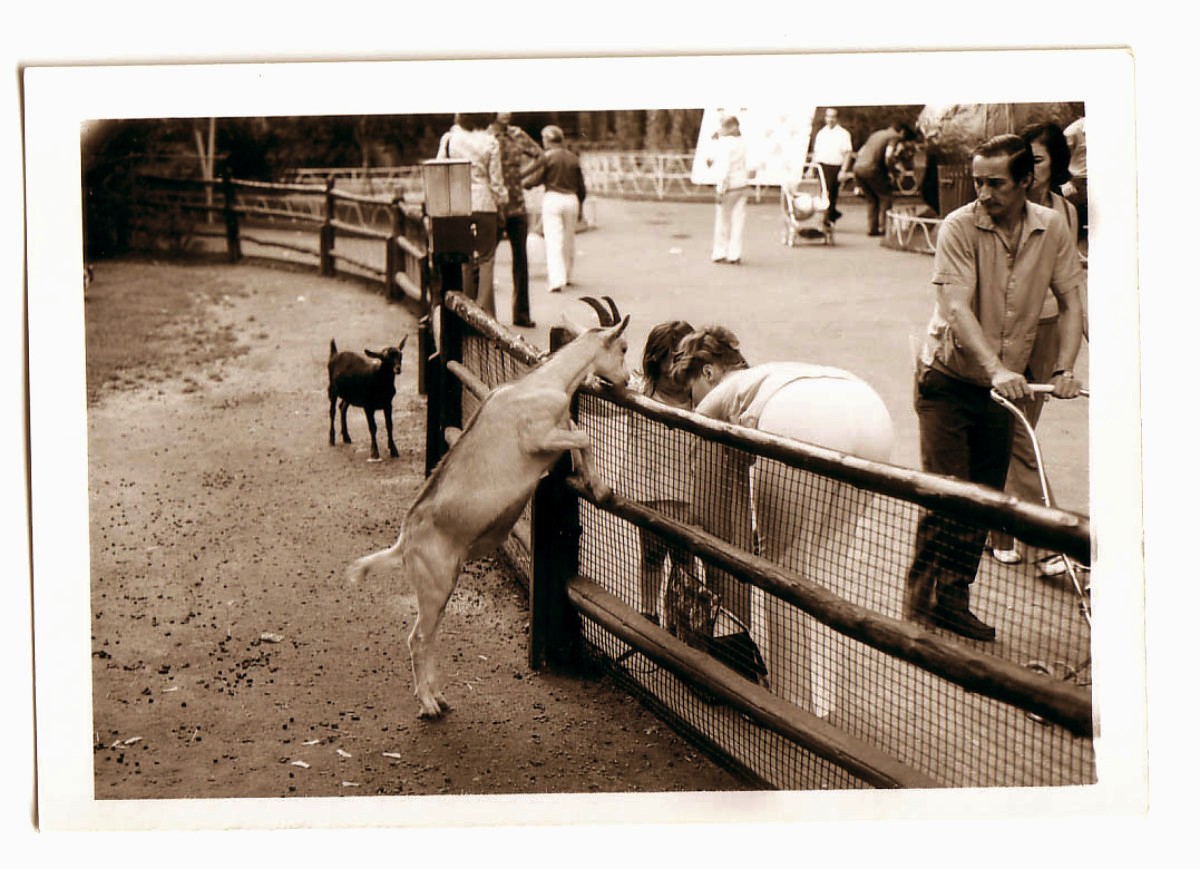
who is watching who?

Toronto. I shot this photo some 46 years ago in Montreal’s Lafontaine Park. It showed my family searching for some food while the goat and the other family watched what was happening. The photograph is a still but has lots of activity going on. Like Henri Cartier-Bresson’s decisive moment, it was taken with a Leica.

This morning I read my favourite newspaper, the Globe, and there I saw an article called “On Sight” by author and photographer, Rawi Hage. In the article he discusses what “drew him to photography”.  Have a read on the link here (or in your morning newspaper).

Posted in photos | Tagged , , , , , , | Comments Off on on sight

the brick

Argus C3
LIFE May 5, 1952

Toronto. No, not the famous Canadian furniture discounter, but an American camera made in the very late 1930s to mid 1960s by an Illinois company that touted itself as the “world’s largest manufacturer of 35mm cameras“.  The company began as a branch of the “International Research Corp. in Ann Arbor, Michigan, later moving to Illinois and in 1944 renaming itself as Argus, Inc. after its most famous and popular cameras.

The inexpensive C3 was commonly called the brick due to its weight and shape. My friend Terry proudly owned one in the late 1950s. The biggest fault was a tendency for the rangefinder to drift. To fix it, the camera had to be disassembled and the rangefinder adjusted. Once adjusted the camera had to be reassembled to test the setting.  Not a great idea.

The barrage of 35mm cameras came at a time when Germany was at war seriously curtailing camera sales. Post war, the Japanese models soon over whelmed the Germany models while the American models silently disappeared, reappearing occasionally as a brand name pasted on an Asian made and designed camera bearing no relation at all to the original.

My thanks goes to George Dunbar who thoughtfully emailed me when he found the original ad on page 114, in the May 5, 1952 issue of LIFE magazine, a time when American cameras were in their heyday –  Britain and Germany were still struggling post-war, and Japanese models had yet to reach its shores.

Posted in camera | Tagged , , , | Comments Off on the brick