pottering about …

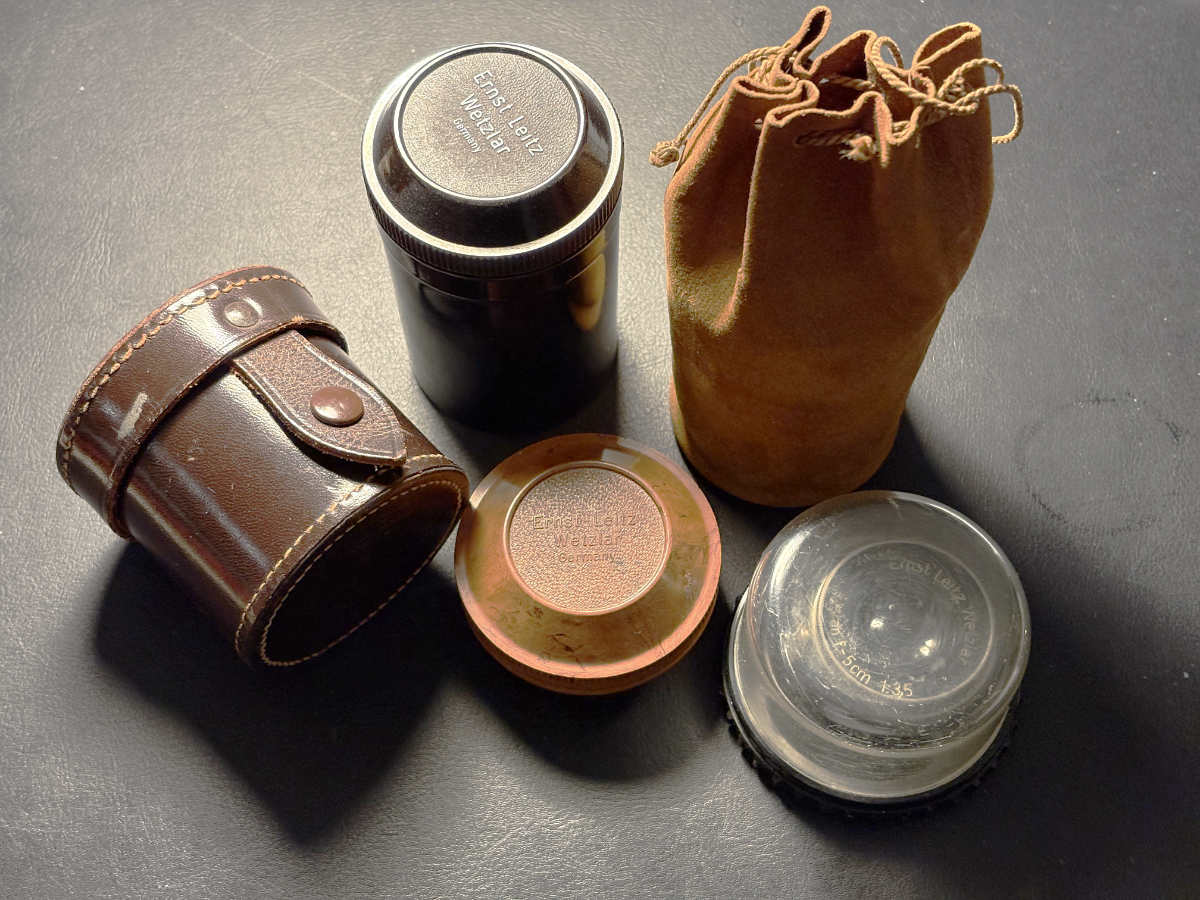
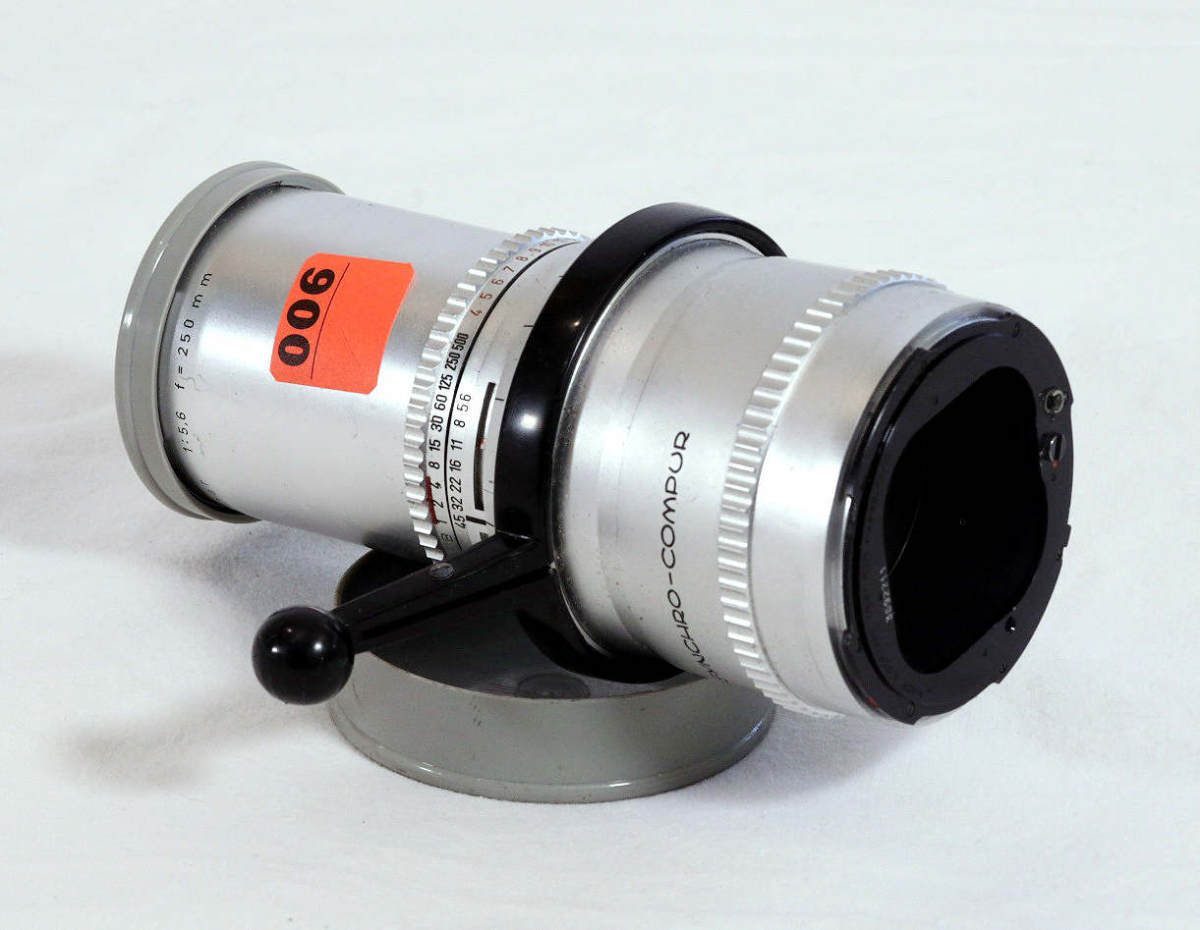
Rapid Rectilinear lenses from Mike Robinson’s collection

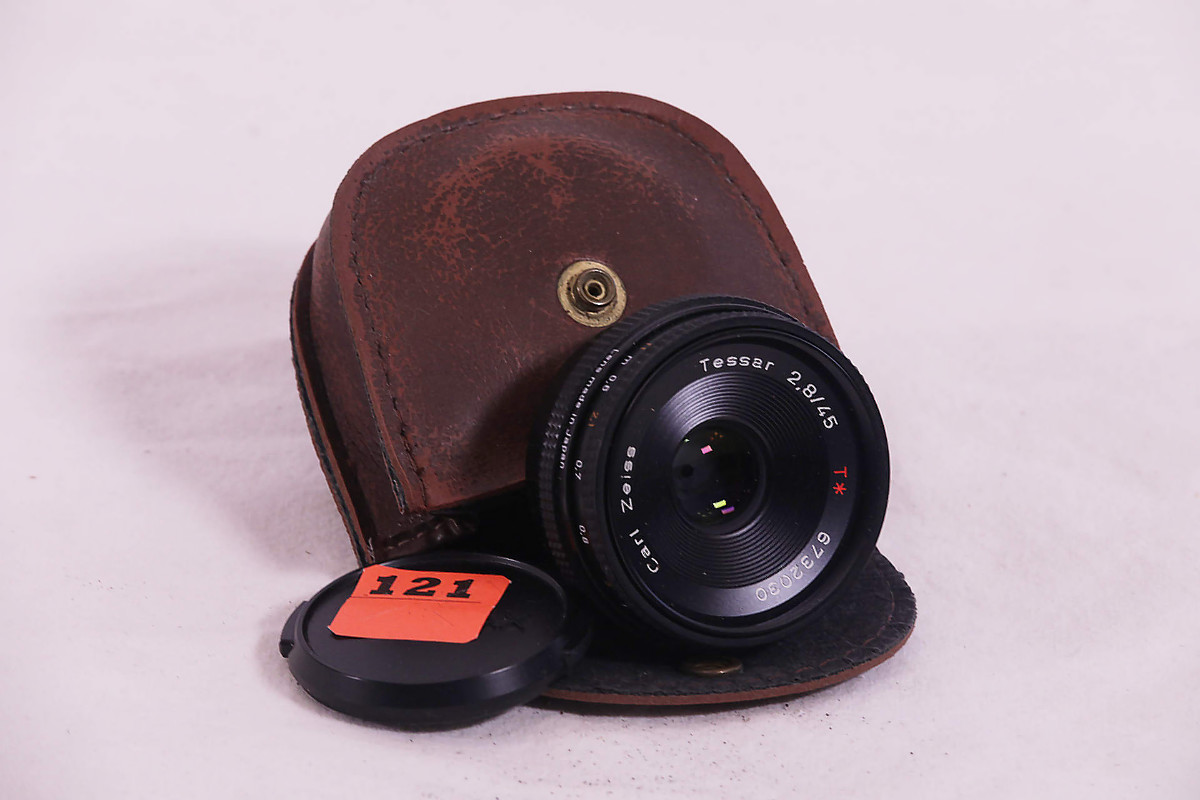
Toronto. A small subset of PHSC members who collect cameras also collect microscopes. For example, the late Ron Walker collected Zeiss cameras and old microscopes. At some point in time, I noted Chas. Potter (Toronto) as a microscope maker. Ron did some research on the establishment and suggested it was a retail operation that re-badged European or American microscopes, cameras, lenses etc., for sale.

A short while later the journal issue 26-1 carried an update to an issue 25-1 article. The 26-1 update is titled “Canadian Marked Lenses” and sets out to clarify Bill Belier’s column in 25-1 which discussed whether lenses in the 19th century were made here.

The update begins, “Bill Belier’s column in our May/June 1999 issue describing a lens with a Hearn & Harrison, Montreal marking, and Bob Wilson’s study of that optical company’s Canadian history, caused us to wonder what other lenses might similarly have Canadian markings.

“Andrew Birrell of the National Archives of Canada wrote in 1978: …there remains a yawning gap in information about the hardware supply industry in Canada. By this I mean the manufacture and sale of cameras, chemicals, plates, films and other photographic supplies.

“Naturally this industry never reached the proportions here that it did in the United States and Europe, but surely there must have been some inventive individuals or industrious types who attempted to make their fortunes in this fashion rather than taking photographs. We know of the efforts of John Connon, William Notman and James Inglis, but there must have been others. If readers know of any I would be delighted to hear of them.

“It is still unknown when it was first possible to purchase a camera that was commercially made in Toronto but Charles Potter and Augustus F. Potter, opticians and instrument dealers, advertised photographic apparatus for sale in the 1860s. It seems likely that Augustus was a camera manufacturer while Charles teamed up with William Hearn and supplied surveying equipment for the H.Y. Hind 1858 expedition to the Assiniboine and Saskatchewan districts.

“They could have made photo equipment as early as the 1850s but conclusive evidence is lacking. – Lilly Koltun. An advertisement in the August 1892 issue of The Canadian Photographic Journal indicates that C. Potter at 31 King Street East was selling off his cameras and Rapid Rectilinear lenses at less than cost. Was it the same Charles Potter closing out?

“In the same CPJ issue photo dealer Mulholland & Sharpe on Bay Street in their advertisement (pg. 165) list for sale a 5 x 8 camera, complete with holders, a Potter R.R. lens and shutter for a reduced price of $23.50. Such an inscribed lens would be a pleasure to locate today.” …

Members read all the update and viewed the illustrations in the 26-1 pdf file on the free members-only DVD/thumb drive. See above and at right to join. Any membership questions may be sent to member@phsc.ca.

Those searching for old lenses and microscopes should check our 2026 events. Confirmed events will be posted in the right hand sidebar. A post will be pinned up a few weeks before each event to provided details. Lots of old lenses (and the occasional microscope) pop up at our events.

Posted in history | Tagged , , , | Comments Off on pottering about …

bird shot

Flamingo by Leana Kuster at the ROM until Mar 29, 2026

Toronto. While we collectors are busy searching for old photos, old camera, etc. for our collections, modern day photographers are busy taking photos that future collectors will lust after.

A case in point is the 2025/6 exhibit of the exquisite works by wildlife photographers. Each year the best of the best is chosen and the best works are displayed. This year the display is at the ROM (Royal Ontario Museum, Toronto) from Nov 8, 2025 to March 29, 2026 on Level 4, in the Roloff Beny Gallery.

Typical is the stunning photo of a Flamingo (copyright) by Leana Kuster courtesy of the PhotoEd blurb (thanks for the notice, Rita).

Our 2025 events are now over and the 2026 PHSC Events are beginning to form. First is our Jan 25, 2026 auction. Check the right sidebar for future event dates and locations. The  events will be shown as they are planned. A poster will be pinned here a few weeks before each event.

Posted in activities-other | Tagged , , , | Comments Off on bird shot

lordy, lordy, lordy

c1956 Lordomat camera (screen shot from show and tell)

Toronto. We held our monthly meeting for December on Wednesday the 17th. I managed to hang in for about an hour before my eye issue intervened. I saw/heard the AGM speech by our president and the first of the series of show and tell episodes. First up was Lilianne with her c1956 Lordomat.

The Lordomat was designed and manufactured by Leidolf, a precision engineering firm, in Wetzlar where Leicas were first made. Oddly enough, Leidolf was bought by Wild-Heerbrugg in Switzerland. who later merged with Leitz to become Wild-Leitz (their Canadian branch in Toronto repaired my Leica shutter mechanism). Both Lordomat and Leica are from Wetzlar – small world!

Lilianne showed her Lordomat and a short video on the well engineered and manufactured little camera. The screen shot shown here doesn’t do justice to the camera – bad timing on my part caused the poor image.

You may spot a Lordomat at one of our events. The PHSC 2026 Events will be posted initially in the right sidebar and as the date of each event looms closer, as a post on this site.

Posted in history | Tagged | Comments Off on lordy, lordy, lordy

niagara

ready to walk under the Horseshoe Falls c1975 summer

Toronto. The mighty Niagara Falls straddle the American and Canadian borders with the Canadian side full of parks and many areas of interest including rides like ‘the Maid of the Mist’ and walks like that under the massive Horseshoe Falls.

Since the earliest announcement of photography, the falls have been a frequent subject for the new art. Collectors of old images enjoy collecting Niagara Falls photos taken from both countries (one of our earliest daguerreotypes is a photo of the falls).

Our events often include images of interest to collectors (generally studio portraits rather than outdoor scenes or work scenes). While our 2025 PHSC Events are finished, the 2026 PHSC Events are just weeks away. First up is the January 2026 PHSC Auction – more details will be posted as they become firm.

Posted in history | Tagged , | Comments Off on niagara

really, really, really close.

the Eagle camera as it appears in the 1910 Eaton’s photographic supplement ready for a very close ‘close-up’

Toronto.  In 1969, Neil Armstrong stated the first of  his iconic statements, “the Eagle has landed” as the Lunar Module ‘Eagle’ touched down on the moon ready for  his decent into history.

In 1910, the T. Eaton Drug Company produced a small catalogue titled “Cameras and Photographic Supplies”. The catalogue included cameras too, often re-badged with no indication of the origin.

Through member Dr Robert Wilson’s diligent efforts, the source of one camera was identified.  The camera at left, known as “The Eagle Field Camera”, was made in England by the “Camera Construction Co.” of Hackney, London, N.E. (reasonable since before WW2, Canada was tightly aligned with England as part of the British Commonwealth).

Bob’s article titled, “Source Identified for the ‘Eagle’ Camera”, begins, “About 1910, Eaton’s department store sold many cameras which we never see today. Most of them had unusual names such as the Emerald, the Lark, the Diamond and the Sharon. These cameras were listed in a Cameras and Photographic Supplies catalogue issued by the T. Eaton Drug Company.

“A facsimile of this catalogue was mailed to all PHSC members last year. The source of most of the cameras listed in this catalogue are unknown… however, now we are able to identify from where one of them [Eagle] originated.” …

Please note; through the generosity of Dr Wilson, the 1910 catalogue pdf is available here and on this site under PRESS above at no cost.

Members read more about the Eaton’s cameras and saw the photos in the 26-1 pdf file on the free members-only DVD/thumb drive. See above and at right to join. Email all membership questions to member@phsc.ca.

Posted in history | Tagged , , | Comments Off on really, really, really close.

annual AGM and Show and Tell

Toronto. It’s that time again!  Our annual AGM and Show and Tell Event. Contact Celio at program@phsc.ca for a link to our fabulous event. Join or participate (tell Celio if you wish to show an S&T item).

Our AGM – Show and Tell
Wednesday, December 17, 2025

Posted in program | Tagged , | Comments Off on annual AGM and Show and Tell

predating the minicam revolution start

the 1892/3 Kombi made in Chicago

Toronto. In 1888 Eastman marketed the famous “Kodak” camera to use its newly developed roll film. Initially stripping film was used due to issues with the transparent material but the issue was resolved quickly and in a few months tradition material was used.

In 1893 Chicago, the Alfred C Kemper Co released a miniature camera and viewer called the Kombi. The company looked east to Rochester for its custom made roll film – a few years after Eastman’s success!

In issue 26-1 there are a couple of Kombi related articles. This is the first: (A Miniature from the past). Walter Shean of Shelburne brings many a treat to our meetings and Fairs to tempt our collecting addictions. This all-metal Kombi was one camera that attracted attention despite its miniscule size.

“McKeown’s indicates that it was introduced in 1892 [other show date as 1893] and was the mini-marvel of the decade. It consisted of a 4 ounce seamless metal box with oxidized silver finish. As new it sold for $3.00 and the manufacturer’s ads (Alfred Kemper) proclaimed ‘50,000 sold in one year’.

“Although not rare, they are a prized collector’s item, particularly with the original box. T.G. Winks of Winnipeg, Manitoba, became the western Canadian distributor for the Kombi and ran the advertisement (below) in the Nov. 7, 1895 issues of the Qu’Appelle Progress and The Brandon (Weekly) Mail. By then the price was listed at $4.00 Canadian with a suggestion that Boy or Girl could use it.

“No description of size was given. Eastman countered with the Pocket Kodak (box) in 1895.”

Members read the other story of the Kombi and saw the photos in the 26-1 pdf file on the free members-only DVD/thumb drive. See above and at right to join. Email all membership questions to member@phsc.ca.

Posted in history | Tagged , , , | Comments Off on predating the minicam revolution start

look ma, no glasses …

a new way to take and view 3D scenes

Toronto. In the 1950s, a new ‘lenticular’ technology threatened to turn the 3D world  on its ear. A camera took multiple shots from slightly different angles. When the images were printed, a special lenticular screen was added to the print to display each ‘strip’ of image making a 3D scene sans glasses.

Unfortunately a special camera was required as well as special print processing resulting in limited appeal. Traditional 3D technology continued on, thank you and the Nimslo camera and process faded into history.

Here is the start of the story in issue 26-1: “Stories in Volume 25 #2 concerning the Nimslo and Its Vancouver Connection and The Wonderview S–102 Single Lens 3–D Photo System have brought our attention to an earlier multi-lensed camera featured in the accompanying advertisement from the 1954 British Journal Photographic Almanac.

“The 1953 issue of the BJP Almanac has the following to say about the process and the equipment: A Portable Camera for Autostereoscopy

“Autostereoscopic three-dimensional pictures – pictures which appear to the observer in full natural relief without any artificial viewing aid such as polarizing spectacle – have become known in this country chiefly through the examples of Deep Pictures which have been exhibited here and used in advertising.

“These used the lenticular system as developed in France by the firm La Reliephotographie, using the Bonnet process. In the Bonnet process each (vertical) lenticular element has twenty strip-images. The negative is obtained by what is termed a “camera sweep”, the one taking lens moves along on an arc round part of the subject, the plate and the lenticular selector remaining however parallel to the plane photographed.

“The camera required to do such a job may weigh as much as half a ton. The twenty strip-images necessarily call for considerable camera-sweep, and thus also for bulky apparatus. Deep pictures were made in a similar manner.

“Maurice Bonnet designed a 26-lens camera called the Multiobjectif, to enable the lenticular system to be used for instantaneous photography, but this was not really portable. Now Mr. Colin Butement, formerly associated with Deep Pictures, in conjunction with Ferrari, of Maidstone, Kent, have produced the Lentic camera which, as the illustration shows, really is portable.

“The best way of describing the Lentic system is to say that the technique has been turned back to front. The making of the strip-images takes place after the exposure has been made. This is achieved by making a specially designed enlarger “sweep” over the lenticular elements.

“The necessary controls, including an electric motor, are incorporated in the enlarger and make for automatic printing. Portability of the camera has been obtained by reducing the number of strip-images to the very minimum possible. This has been found to be six, hence there are six lenses in the camera.

“These six perspectives are projected by the special enlarger on to the lenticular screen placed in contact with a sheet of bromide paper. A master negative is made if large quantities are to be printed.” …

Members read the entire story of the predecessor to the Nimslo and the lenticular system in the 26-1 pdf file on the free members-only DVD/memory stick. See above and at right to join. Email all membership questions to member@phsc.ca.

Posted in history | Tagged , , | Comments Off on look ma, no glasses …

what big teeth you have …

Ambrotype portrait of elderly woman by John Turner of Toronto

Toronto. The Ambrotype at left is one of few cased images with details of the photographer. Bob Lansdale adds this note: “For the story on our cover photograph see page 9 and read the details of discovering a labelled image-case dating to 1860-63. Toronto photographer John Turner left his mark on this family photograph but the question is: Who is the lady? ?”

Collectors of old photos thrive on identifying the process, place, photographer, and subject of their treasures. The earliest portraits, etc, were often cased images – cased for ease of viewing and protection of the delicate image.

We often see these images offered at our events. The 2025 PHSC Events are over now and we will soon announce our 2026 Events (first up is an auction on January 25, 2026 – details to follow). The photo at left and the Toronto photographer who snapped the portrait are dealt with at length in the page 9 article. Members read the article in the issue 26-1 pdf file on the free members-only DVD/thumb drive. See above/at right to join. Email any membership questions to member@phsc.ca.

Posted in history | Tagged , , | Comments Off on what big teeth you have …

an accidental tourist

Bob’s 1949 Speed Graphic and a new fangled electronic flash (Multiblitz)

Toronto. As a kid, I often thought about seeing Europe. Some youths took physical action to do so. In the 1950s, a young news photographer from Toronto found himself in Germany to review the Canadian Military presence there when he was abruptly told to drop every thing and hit the Atlantic shores of France – Marilyn Bell was about to swim the Channel – the youngest person to make the attempt.

Along with Bob was his trusty Speed Graphic and Multiblitz electronic flash.  The story is told by Bob to Bill Belier in Bill’s column “A Treasure From My Collection … “.

Bill begins the story, “For some time I’ve been pestering our editor, Bob Lansdale, to ‘come clean’ and tell me something about his career as a young press photographer… the equipment that he used, and some of the major stories that he covered in his ten-year association with Federal Newsphotos of Canada.

“As a preliminary, Bob let me have access to his well organized print files of hundreds of national events that he had covered. One particular file caught my attention and took me back forty-five years… but this is Bob’s story, so let him continue as he reminisced with me.

“’Press photography’, recalls Bob, ‘has come a long way since the early days of flash powder and glass plates when it was a rarity to capture action and an instant of history. Today [c2000] the press boys klack off a full roll of 35mm film with their Nikons and motor drives so that every instant is covered; their built-in mini-strobes keeping pace with the camera’s chattering shutter.

“By the mid 1950’s things had progressed to a higher level but still shy of the technology enjoyed today. In the summer of 1955, I was touring the Canadian Forces Bases in Germany as a photo journalist for a Toronto press agency, Federal Newsphotos.

“I received an urgent message to drop everything and head for Calais, France to join the Marilyn Bell crew as she made ready to become, at age 17, the youngest person to swim the English Channel. The swim was sponsored by the Toronto Telegram and when I arrived I was received with cool reservation as assignments in Toronto usually identified me with the rival Toronto Star.

“When the Star refused to make use of me (they had their own men on the scene) a deal was worked out for me to act as backup to the official photographer, Jack Judges, a veteran lensman for the Tely.” …

[In those days, the Tely (Telegram) was the more conservative of the three main dailies in the big smoke – we read the Tely daily and my grand parents read the Star. Dad occasionally read the Globe …]. Members read all of Bill’s column and saw the many photos contained in the story  in the issue 26-1 pdf file on the free, members-only DVD/thumb drive. See above and at right to join, Email any membership questions to member@phsc.ca.

NB. The post title is a riff on the acclaimed 1988 movie, “The Accidental Tourist” (of course Bill’s story has nothing to do with the movie plot …).

Posted in history | Tagged , , | Comments Off on an accidental tourist