
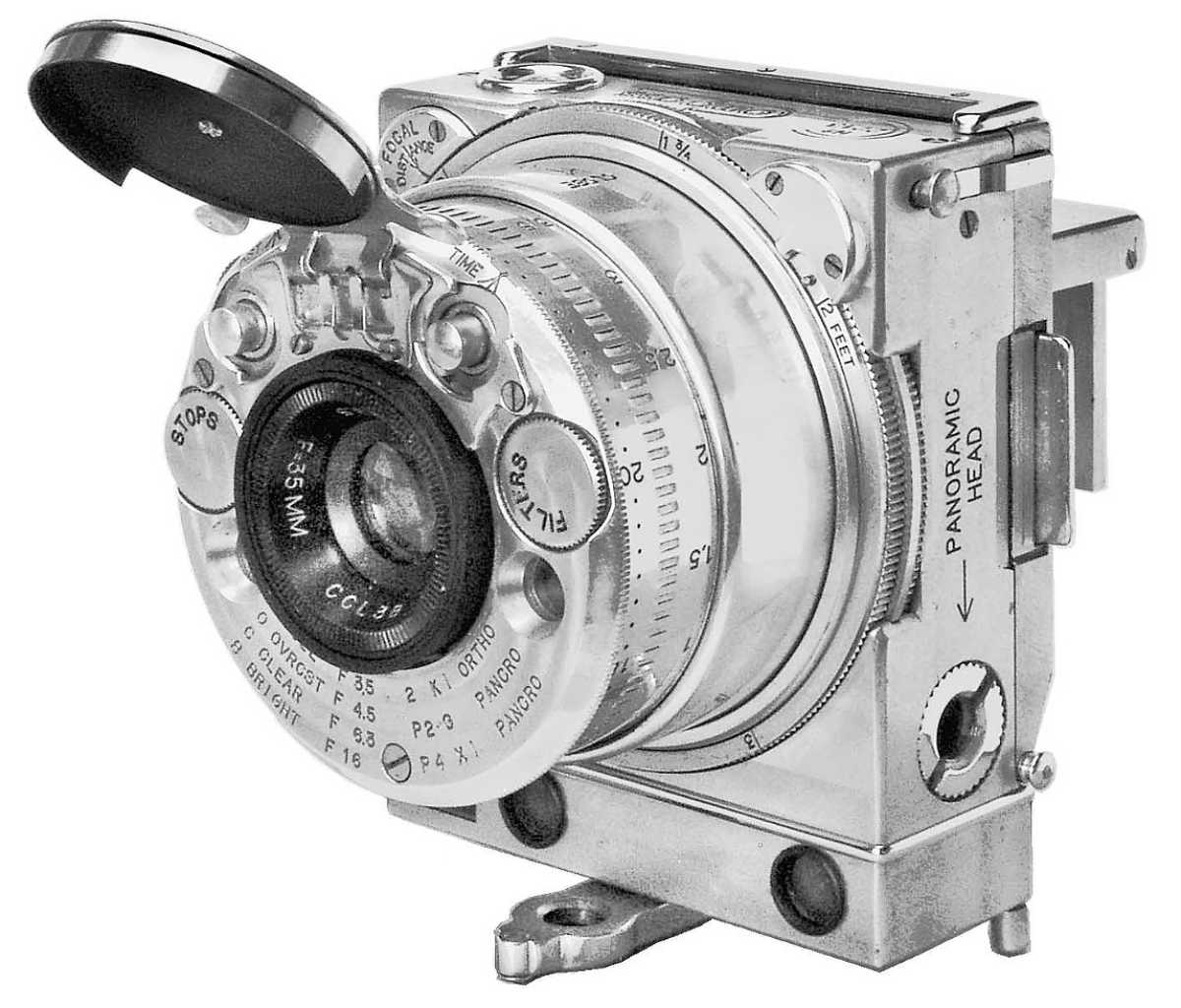
the famous Compass camera c1936
Toronto. …every boy scout has a compass to find the way back home. Ditto savvy hunters etc. The Compass camera discussed here was acquired at one of our earlier fairs.
In the minicam revolution, the utilitarian Leica led the way. To compete, a British firm developed the famous and short lived Compass camera – a literal swiss army knife in design and usage complexity.
Issue 28-2 features this iconic Compass camera and the story of its inventor, Pemberton-Billing, in Bill Belier’s column, “A Treasure From My Collection …”. The Compass camera was patented in 1936. Bill begins his column, “It has been stated that the Compass Camera was in a class by itself. No other camera with similar features and design preceded its introduction or followed its demise.
“It was unique, it was complex, and it attracted controversy as to its merits, characteristics that could also be applied to the camera’s inventor, Mr. Noel Pemberton-Billing.
“The Compass was patented on May 16, 1936. Its manufacture was contracted out to a highly reputable firm of precision watch makers, Jarger Le Coultre & Cie., of Switzerland.
“The marketing of the product followed in 1937 under the corporate name, Compass Cameras Ltd., with headquarters in London.
“In addition to normal corporate advertising and sales promotion expected for the launch of a new product, the Compass was being featured by many prominent photo dealers throughout the country as evidenced in display ads appearing in such magazines as Amateur Photographer. One enterprising dealer invited Pemberton-Billing to demonstrate the camera and lecture on the merits of Compass photography.
“To accommodate the expected large audience, the popular Westminster Hall in central London, was hired …the date being March 10, 1937.” …
Of course members read all the article either in print or in the pdf file for issue 28-2 on the free members only DVD/thumb drive. You can join or renew easily – follow above or at right under ‘Membership’. Email any questions to member@phsc.ca.


