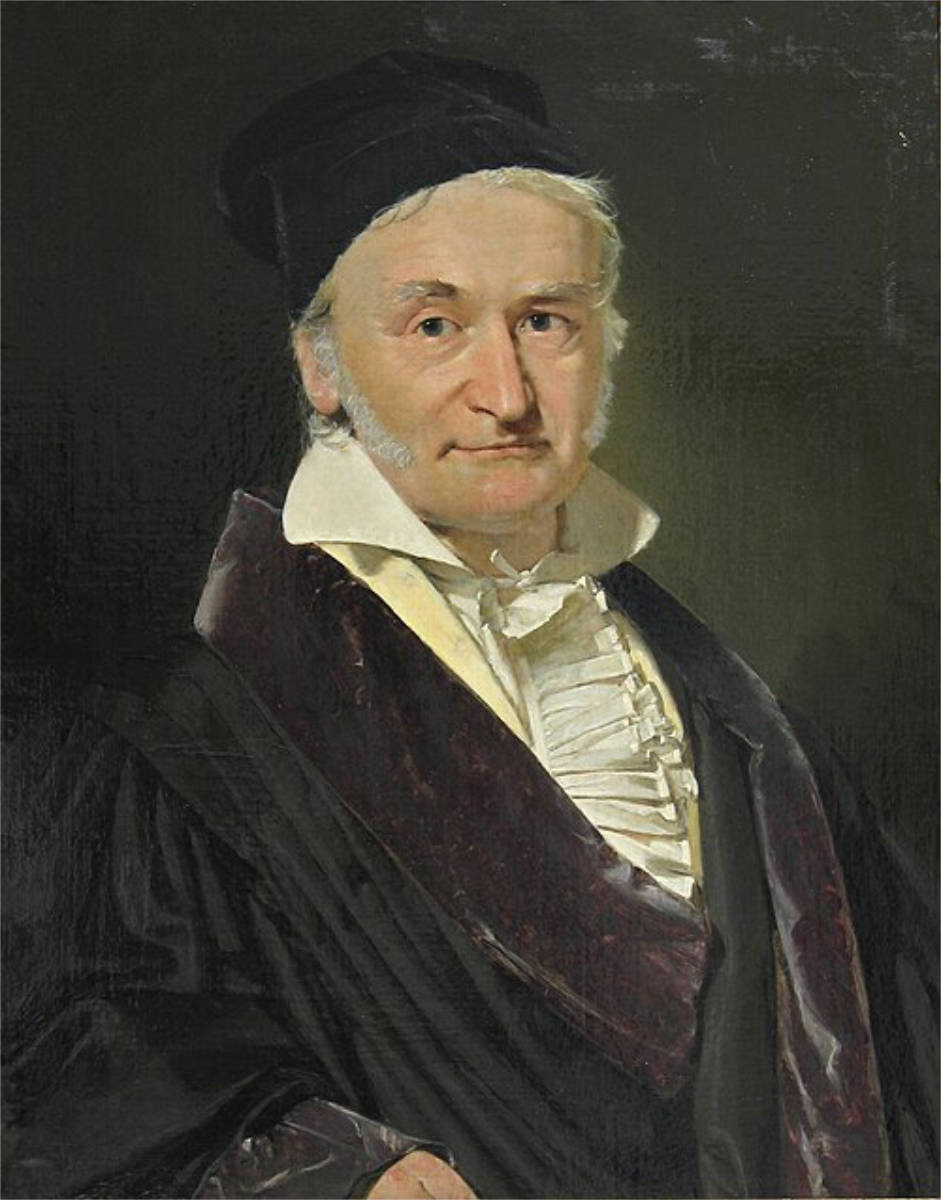
Painting of C F Gauss in 1840 by Jensen (courtesy of Wikipedia)
Toronto. Those of us who have delved into lens design in even a small way recognize the Gauss design. Before computers, lens design was calculated manually by mathematicians called (oddly enough) ‘computers’. This practice predated photography and lasted into the 1950s.
The idea was to use a particular type of glass and curve for each element’s two main surfaces so each element reduced a particular image distortion. The number of uncoated elements was limited since each added element reduced the contrast of a lens by giving rise to more internal reflections.
C F Gauss who initially created the Gauss two element design in 1817 was actually pre-occupied with celestial bodies and telescopes. His original element design was flawed by image distortion and was only suitable for telescopes (besides, photography didn’t emerge (as we know it) for a couple of decades plus later in 1839).
We have all heard of Petzval and his contribution to photo lens design that made Daguerrian photography much faster. In a recent email from Ms Fuller in the Big Apple, she states Lomography has reintroduced the Gaussian design in their new Petzval Metamorphose lens. The ‘bokeh’ created by the original Gaussian design can be controlled and the geometry of each point changed by slip-in apertures that look like Waterhouse stops.
While you may not find a Lomography lens at one of our events, you will certainly find something to capture your interest and your heart! This month we are hosting our fall fair event (October 18th). Come out and enjoy the fall air and renew old acquaintances. Cheap admission, good food, free parking.