
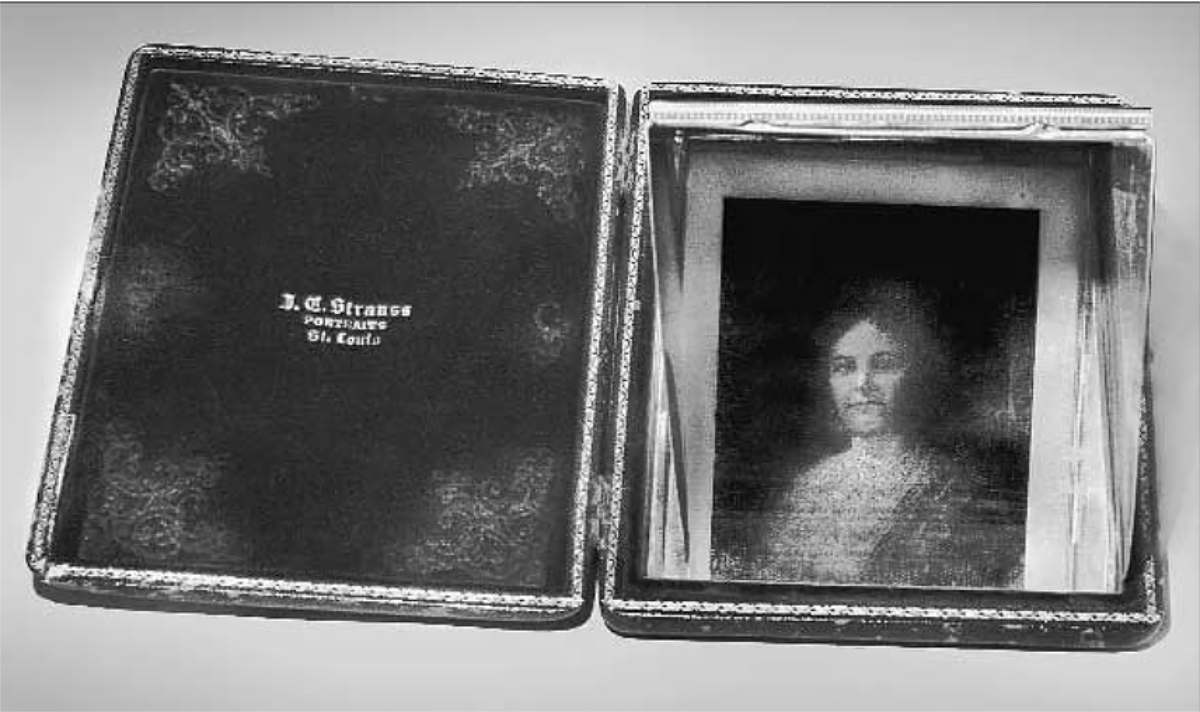
a cased colour portrait
Toronto. The early colour processes were usually additive and as such incredibly slow. In to the mid last century the alternative was to take a good B&W portrait and colour it with special dyes.
In issue 27-4, Editor Bob Lansdale discusses the early colour processes and efforts to view the result. Bob begins his tale, “At the turn of the century (1900) a number of colour processes were being promoted, causing the public to expect true colour portraits soon to be provided by their local studio.
“Colour illustrations appearing in magazines stirred the desires but the photo processes were too complicated to become readily available at a reasonable price. The Autochrome transparency process invented in 1904 by the Lumière Brothers took until 1907 to work out manufacturing problems.
“But portrait photographers faced the challenge of how to market the easily processed colour plate. The public was used to the traditional paper print in a folder or frame while coloured prints from such a transparency were prohibitive.
“I wondered how a commercial portrait studio might put this early colour system to viable use. In the April 1908 issue of The St. Louis and Canadian Photographer, it is reported that “some excellent samples of color photography were exhibited, the work of Mr. J. Kennedy” of Toronto.
“The Autochrome process was later demonstrated by portrait photographer John Kennedy when the Lumière representative failed to appear at the 1908 convention of the Photographic Association of Canada. No clues were given as to how the finished picture was to be presented – just its novelty.” …
Members enjoyed all of editor Lansdale’s research in the issue 27-4 pdf file on the free member-only DVD/Thumb Drive. Join or renew by following ‘Membership’ above and at right. Email questions to member@phsc.ca.
Our 2026 Events are moving along smartly. Next is the Spring Fair on May 24th. Join us and find more interesting items for your collection – perhaps even an Autochrome or a Diascope!


