brave new world

Editor Lansdale (centre) and new Versant 180 at Aries

Toronto. Aldous Huxley wrote his novel “Brave New World” in 1931. As a youth I read a paper back copy of the story. back in the time when a profusion of paper back titles offered a cheap education to everyone. In this book, originally published a year later in 1932, his tale envisioned a new and strange world.

And like the story, our editor discovered he was in a brave new world when he took the file for his 100th issue down to be printed. Bob Lansdale describes the event like this, “[I] was down to Aries to start the printing of our September issue. Their new machine turns out to be a Versant 180 Xerox machine… very compact and not what I expected it to be. The machine prints both sides of the page, then stacks them in a bin. When the individual book is ready the machine staples the pages together and spits it out the back of the machine.

“Seems to take about a minute to do our 64 page book and it will take a day and a half to do the whole batch. Needless to say I did not stay around for the whole printing. They say everything will be ready for packaging on Thursday but if it is possible for everyone we can do it on Friday.  No rush as we can’t mail it until [after] September 1st.

“There is no screen on the pictures. The image is toner on top of the page surface whereas our former litho printing is wet ink that sinks into the page. [The] Machine guy says that for photographs the litho system is best to get good blacks. I’ll have to work my self thru this again [i.e. how to set the darkest/lightest blacks for optimal printing. Check out any journal issue to see how fussy our editor is with print reproduction.].”

Posted in magazine | Tagged , , , , | Comments Off on brave new world

… blinding me with science …

B&H ad in LIFE Magazine September 16, 1957

Toronto. The second release of Thomas Dolby‘s CD “The Golden Age of Wireless” (after the song “She’s Blinding Me With Science” became a hit single in 1982 and was added to the CD) was the inspiration for this post.  In August of 1983, I was in Atlantic City, NJ on a week long security conference. As I wandered around one of the many casino’s, I heard a familiar tune – it was a small group covering Dolby’s famous song.

George Dunbar spotted this 1957 ad for a Bell & Howell 8mm movie camera (p145) using an electric eye mechanism to adjust exposure as the bright daylight shifted in intensity with the clouds and shadows.

The ad touted a “computer” that translated light into movement of the aperture. The tiny 8mm film demanded a short focal length lens which by the laws of physics has a wide depth of field regardless of the normal range of apertures. I don’t ever recall seeing a camera with coloured electric eye cells, but that may have been me since I tended to ignore 8mm movie cameras in those days.

Posted in magazine | Tagged , , , , | Comments Off on … blinding me with science …

collecting and using classic cameras

Ivor’s 1986 book on classic cameras

Toronto. When I joined the newly formed PHSC back in 1975, I was looking for good used lenses and accessories for my Leica M4 which I bought a few years earlier. In the late 1970s, I ordered Dr Neill Wright’s Collector’s Checklist of Leica Cameras. That helpful document introduced me to Ivor Matanle, who sold, collected, and used many of the fine old cameras.

In 1986, Ivor published a book on collecting and using classic cameras. That year, I wrote Ivor for a personal copy of his book which he sent on October 31 from his store.

Unlike the traditional histories and detailed models/years/serial numbers lists, Ivor’s book gave a brief history of the “golden years“of what Ivor calls “classic cameras” – the 1930s when film overtook glass plates for professional work into the 1960s when electronics and plastics began to replace mechanical and metal technology to lower manufacturing costs. In his book, he uses the classic cameras to take then modern photos and offers advice on which models to use and which to avoid.

Today, the digital era has annihilated film cameras as practical devices for artistic and personal records. This has created a tiny, loyal niche society that favours the old film technology. Ivor’s book would certainly attract those folk if only to see what can be accomplished with classic cameras of the golden era in photography. N.B. if you want to try the film technology, drop by our fall fair, or auction and get some bodies and lenses and darkroom gear to start this adventure!

Posted in book | Tagged , , | Comments Off on collecting and using classic cameras

isn’t it ironic

Jpg file from Huawei P30-Lite smartphone camera

Toronto. As Alanis Morissette sings on her 1993 album “Jagged Little Pill“. The irony is that the camera with the highest Mpx in the house is a P30-Lite smartphone by Huawei with a 27mm (equivalent) ASPH f/1.8 24 Mpx rating. The more expensive P30 and P30 Pro models have cameras boldly badged as “Leica” who collaborated with Huawei on this line. With a regular price of about $470 in Canada, it cost me zero dollars with a 2 year $40/month Canada wide voice and messaging service contract (before taxes and discounts). The camera has AI to determine the scene and many other options. Leica digital cameras and Leica lenses are of course in the many thousands of dollars prices these days.

I bought my first digital camera back when  they were pricy, awkward, and incredibly low resolution. My very first camera was a Chinon ES-3000 from the mid 1990s. Highest resolution was 758×504 pixels (about 0.3 Mpx). No preview screen. Windows only. And glacially slow downloads. My first shot was Larry Boccioletti as he stepped downstairs at our store in the Kingsway. Continue reading

Posted in camera | Tagged , , , , , | Comments Off on isn’t it ironic

Lenses in Photography

1951 – Rudolf Kingslake

Toronto. The late Rudolf Kingslake was born and educated in London, England. In 1938 he joined Eastman Kodak in Rochester NY as a lens designer. By the time he published this book in 1951, he was the Director of Optical Design at Eastman Kodak.

This book is intended to be, “the practical guide to optics for photographers“. It is written in plain English with a few charts, graphs, diagrams, and formulae to clarify some items.

In University we learned from an older/newer (1949/1958) book titled, “Optics” and  written by Francis Weston Sears. Illustrated in colour in this printing, Sears used many more formulae, and much more intense writing to convey the basics of optics for those intending to specialize in the field.

It may be surprising to some that photography demanded special lens designs (dating back to Petzval’s portrait lens for a Daguerreotype camera). The goal was to keep the field of sharpest focus flat to match glass plates and film; to cancel out as much distortion as possible; to focus at least two wavelengths of light in the same plane (anastigmatic) and ideally three (apochromatic); and to have a wide aperture to let in enough light to allow fast shutter speeds to be used in spite of very insensitive (slow)  media (glass plates and film).

Posted in book | Tagged , , | Comments Off on Lenses in Photography

Karl goes digital

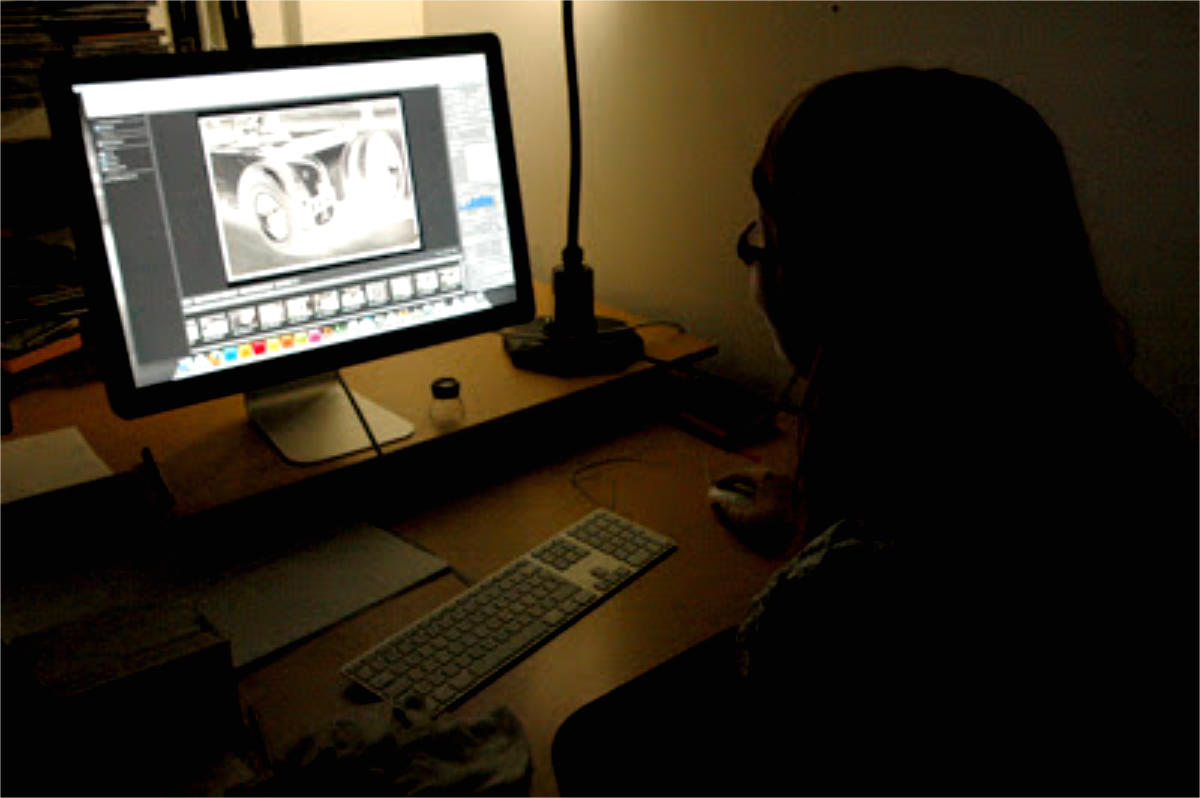
Digitizing Zotán Glass Photo

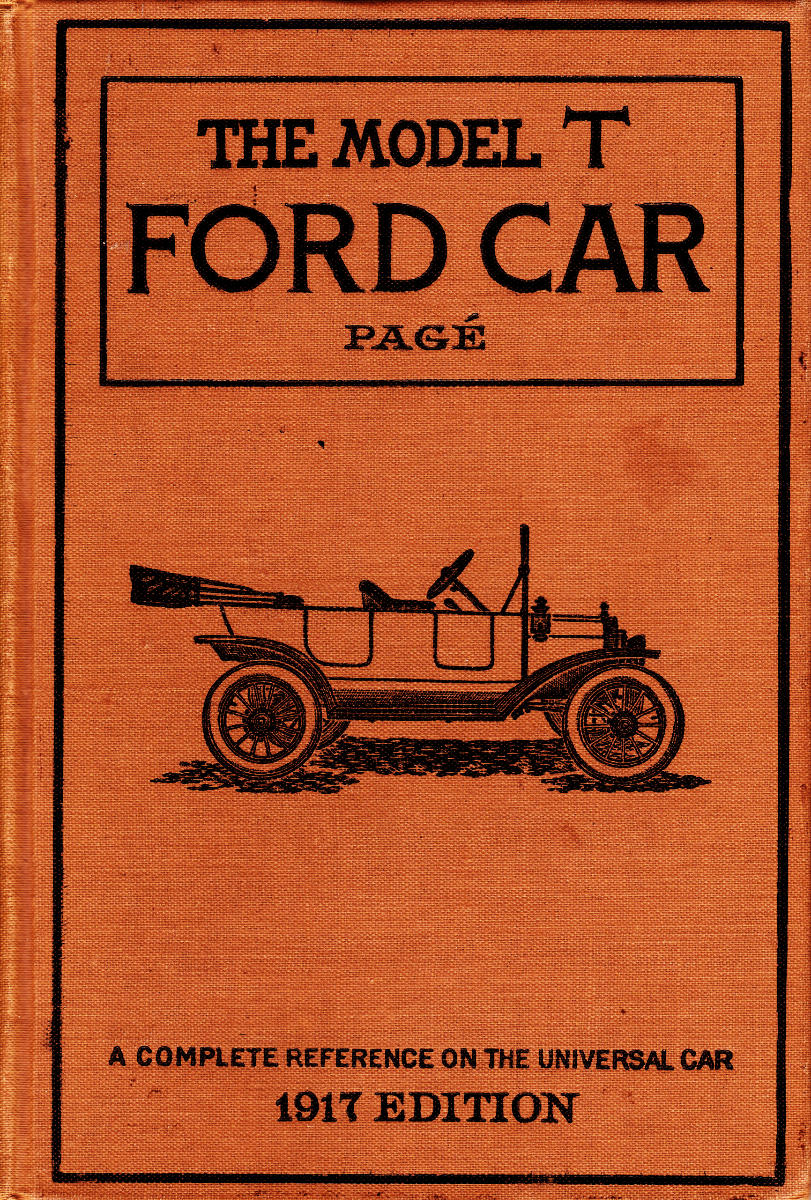
Toronto. Mankind has always been fascinated with transportation: horses, trains, bicycles, cars, ships, aircraft, etc. As a kid I always thought Henry Ford invented the automobile. Not so! Ford adapted the assembly line to automobile manufacture and dropped the cost and price so any of his employees could afford a car, like his Model T.

The invention of the first practical automobile was in Germany in 1885 by Karl Benz, whose company evolved into Daimler-Benz,  makers of the famous Mercedes-Benz.  In 2009, Mark Green of the Science and Media Museum in Bradford, England told how the museum was commissioned by  Daimler AG to digitize 10,000 motoring photographs taken in the 1930s by Zoltán Glass like this photo of Hans Stuck in a  Mercedes-Benz SSK racing car.

My humble thanks to George Dunbar for the patience to find this page and the decision to copy me, Thanks George – a great find.

Posted in history | Tagged , , , , , , , , , | Comments Off on Karl goes digital

le magasin des Galeries Lafayette de Paris en 1912

Galaries Lafayette, Paris

Toronto. What a wonderful use of photography – and architecture! A 1912 photograph shows how the Lafayette Galaries (retail department store) used natural lighting at their flagship store in Paris with this beautiful dome. The new store opened in 1912. Check it out on Google maps!

The huge open area reminds me of the Toronto Reference library at Asquith and Yonge!

Galaries Lafeyette is still in operation today as an international chain. The flagship Paris store offers clothing from off the shelf budget wear to high fashion. Same location as in 1912.

Their website shows some of goods n offer, while the Wikipedia site shows international stores in operation, closed, and planned. My thanks to Russ Forfar for thoughtfully emailing me his find on facebook. By the way, the photo was posted by a person with the nom de plumeLumière de l’Atelier” – check his blog for his fascinating lighting creations.


Posted in Uncategorized | Comments Off on le magasin des Galeries Lafayette de Paris en 1912

a blast from the past…

Aires 35 IIIL ad in LIFE

Toronto. … to borrow a line from a local radio station. Aires cameras were made in Tokyo, Japan. The Aires Camera Industries Company lasted less than a decade (1952 – 1960). While short lived, the company rode the wave of Japanese cameras crashing on the shores of the Western world routing most of the competing non-Japanese manufacturers.

This ad, tucked away on page 108, in the June 17, 1957 issue of LIFE magazine touted the modest little 35mm camera made by Aires Camera and imported by Kalimar Inc in St Louis Missouri for North American consumption. The Kalimar company imported and rebranded many photographic products. At the end of 1999 it was bought by Tiffen of Tiffen Filters fame.

I remember admiring Aires cameras around the time I purchased my Minolta Super A and being pleasantly surprised by the quality of the Asian cameras (complete with their instruction books written in a strange language a bit similar to English :-).

Thanks to fellow PHSC member George Dunbar (once an IBM photographer) for sharing the Aires ad in Life magazine…

Posted in camera | Tagged , , , | Comments Off on a blast from the past…

double your pleasure

Whoops! c1981

Toronto. The “double your pleasure, double your fun” jingle may have applied to Wrigley’s Double Mint gum but it certainly did not apply to accidental photographic double exposures.

In fact, camera makers went out of their way to tout their designs as “double exposure proof”.

Unfortunately, we all succumb to those momentary periods of stupidity –  even Leica users. Usually my mistake was rewinding a fully or partially exposed roll of film then forgetting to mark it. It would then be used some weeks or months later in the camera and re-exposed to totally different scenes. Bah!

Posted in history | Tagged , | Comments Off on double your pleasure

the long and the short of it

extension tubes

Toronto. Those photographers wishing to get closer to their subject than their camera allowed had two choices: an auxiliary lens could be added to the front of the normal lens, or if the lens was interchangeable, the lens could be mounted away from the body using extension tubes, or if money was no object, a bellows.

The remaining issues then where how to focus and how to frame the camera so the subject was in sharp focus and framed without accidental surgery, like missing heads or feet in normal shots. The major camera companies not using an SLR design had lots of options – spider legs, focussing mounts, mirror boxes, tape measures, tables etc.

A tripod or a copy stand was often essential to keep the subject framed and in focus – spider legs or a fancy wire frame could be substituted.

Posted in camera | Tagged , , , , | Comments Off on the long and the short of it